

 Posted By
By Dale Roberts, CutTheCrap Investing, Retirement Club
Special to Financial Independence Hub
More Canadians feel nervous and unsure about retirement. About 60% of Canadians feel they will outlive their money. I’m here to bring good news. There are a few, simple strategies that will set you up for retirement success. If you read the retirement experts, if you watch all of the wonderful Canadian advice-only financial planners’ YouTube videos, you’ll notice they all repeat the same core strategies. It’s a version of going around the internet and back. Eventually you can stop and realize ‘wow, this is easier than I thought’. It is a good feeling when you discover that creating a successful retirement plan is not that difficult, at all.
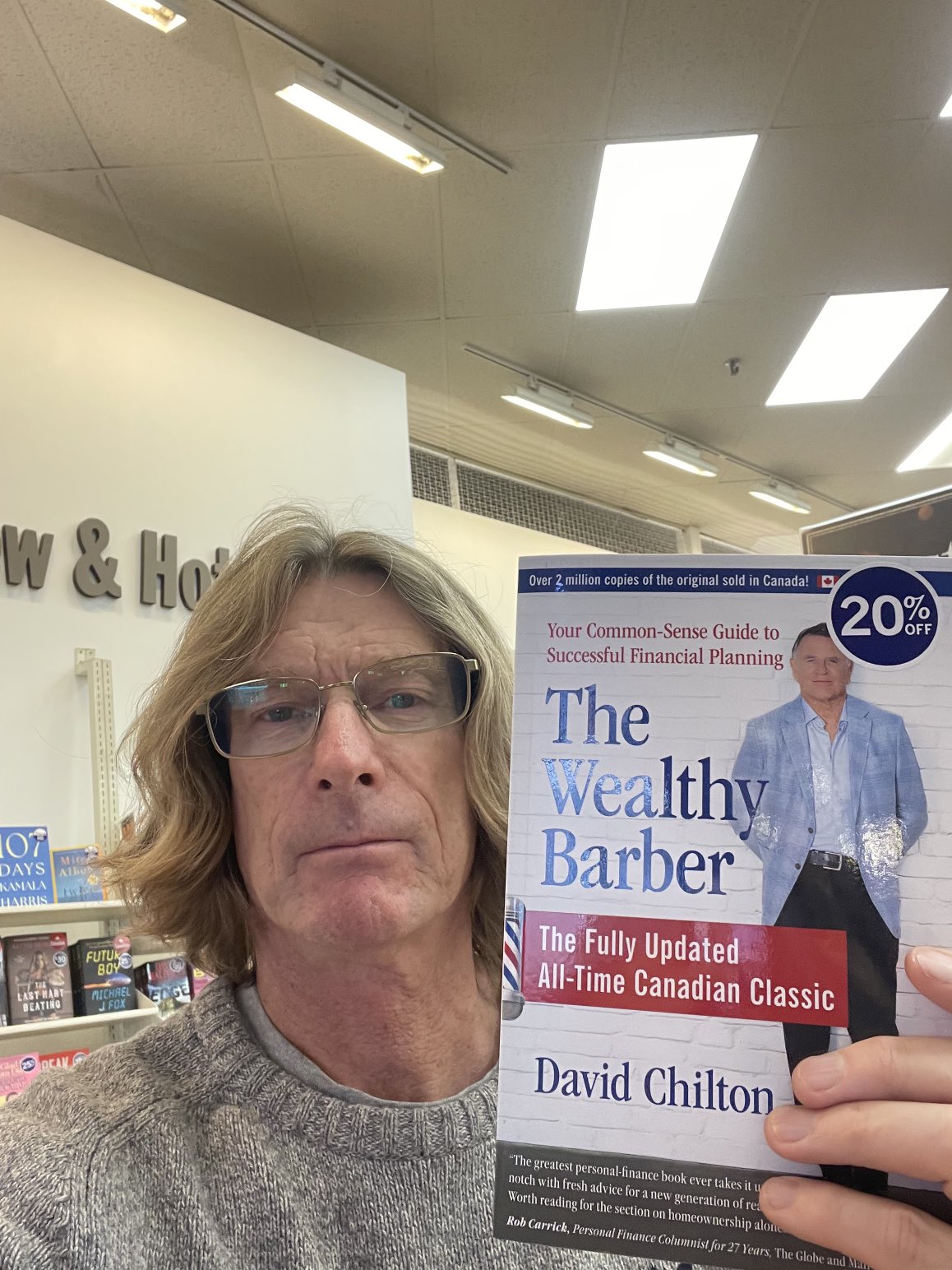
Let’s assume that you’ve done most everything right. You’ve read The Wealthy Barber books. You need to pick up another one, and ask your kids, nieces and nephews to read it, as well.
I condensed my financial planning book down to 1200 words …
Oh look, I just found $888,000 in your coffee.
Dave needed 250 pages this time. 😉
You paid yourself first, you invested successfully, on a regular schedule, in a low-fee manner (stocks and ETFs).
How much do you need to invest to become a millionaire?
You cleared your debt, good debt and bad debt. You got the house purchases right, you got the car purchases right. Perhaps you’re entering retirement with no mortgage and no vehicle payments (not a bad idea). You have or had proper insurance, created a will, etcetera, etcetera. If need be, you took advantage of the Spousal RRSP account.
You’re in very good shape.
The retirement basics
Now on to the simple core strategies that will set you up for a successful retirement. You’ve been a very successful DIY investor in the accumulation stage. You might create your own retirement plan. With some research and the retirement tools available, it is certainly ‘doable’ for most Canadians.
And that’s why we started Retirement Club for Canadians.
If you want more help or a second opinion you can certainly contact an advice-only planner. Yup, those same folks who (many of them) offer the advice for free in blogs and via video channels. You can pay a one-time fee, there’s no need to have an advisor in your pocket every day. You’ll receive conflict-free advice, they are not attached to any poor performing Canadian mutual funds, ha. 😉
Retirement Cash Flow Plan
You’ll use a free-use or very affordable retirement cash flow calculator to discover an optimized, tax-efficient spending strategy. There’s comfort in seeing and knowing that your money is going to last.

Delay CPP and OAS for greater payments

Most Canadians (many planners suggest it’s almost all Canadians) will benefit if they delay The Canada Pension Plan (CPP) and Old Age Security (OAS) payments. From age 65 to age 70 you’ll receive a 42% boost to your CPP payments and a 36% boost to your OAS payments.
The retirement cash flow calculator will show you the way. It’s different for everyone, of course. To enable the delay of those government monies (let’s call those pensionable earnings), you’ll enact the RRSP meltdown strategy.
The RRSP / RRIF meltdown. A Canadian retiree’s greatest hack?
You’ll spend down your RRSP / RRIF in an accelerated fashion early in retirement to provide a bridge as you await those larger pension-like earnings from CPP and OAS.
The flexible cash flow plan

You’ll embrace a variable withdrawal strategy. The retirement cash flow calculator will show you that a flexible spending plan offers a much higher success rate compared to a static or rigid plan. For example, you might set a desired spending range of $90,000 – $100,000 annual after taxes, compared to a rigid $100,000. If we enter a severe recession and market correction you’re OK to spend a little less.
The investment returns and life events will shape your retirement plan over time. We will certainly evaluate the plan every few years.
The U or You-Shaped spending plan
Speaking of life events, out of the gate you might start with a U-shaped retirement spending plan.

Of course, we build the cash flow plan around your life plans, and the life you want to live in retirement. You might embrace and plan for a U-shaped retirement plan.
- Spend more in the early go-go years
- Spend less in the mid slow-go years
- Boost spending in the no-go years
Spend more when you have your health and energy. Be prepared for surprisingly high healthcare and residence costs in the late-in-life stage.
Income splitting, sharing is caring
When you run a retirement calculator you might be shocked by the low-tax environment you are entering if you are ‘with spouse’.

To lower the tax burden you can split employer pensions, RRIF amounts and even CPP in some situations. Income splitting with strategic use of your RRIF, TFSA and Taxable accounts can enable a ridiculously low effective tax rate for many Canadian retirees.
Admittedly the single tax filer is at a severe disadvantage. I am writing a post that will show what a single retiree might do to help their cause.
Pensionable earnings tax credit
There are a few important tax credits for Canadians retirees, when they reach age 65. . The federal nonrefundable pension income tax credit is on the first $2,000 of eligible pension
income, which translates into maximum federal annual tax savings of $300.

When you turn 65 in Canada you also receive an ‘age amount’. Yes the tax breaks just keep coming – for 2024, the maximum amount is $8,790, which is reduced based on net income. Unused amounts may be transferable to a spouse or common-law partner.
Of course, the basic tax calculation starts with Basic Personal Amount. Canadians can earn $16,129 in 2025 before the income tax clock starts ticking. Add up these credits at age 65 and a Canadian couple can start with a $54,000 annual base that’s ‘tax free’. Who says we need an employer pension in the mix? The tax system is designed quite favourably for the Canadian retiree who has modest to even generous spending plans into the six figure range.
A $700,000 portfolio might take you to the $80,000 annual income range (after tax).
Consider the estate planning basics
The estate plan is a life plan. You’ll factor that into your retirement cash flow plan. You will want to balance how you protect you and your spouse while enriching your heirs and beneficiaries, all while not writing a massive and unnecessary cheque to the CRA at time of death. An important consideration is the proper use of beneficiary forms for registered accounts. Be sure to properly manage your capital gains in taxable accounts as well.

For sure there is more to consider. And we can keep making things better with our use of portfolio construction and perhaps the use of annuities and the Purpose Longevity Pension Fund. We might pensionize more of our income. We can consider the sensible and modest use of reverse mortgages and the HELOC.
At Retirement Club we have had Zoom call presentations from experts on those subjects. We’ll have an expert estate planning presentation in December.
All said, the above 7 slides and topics show how the core moves do an immense amount of heavy lifting. They set you up for retirement success. Also be sure to read …
The most common mistakes in retirement to know where to not step.
Add your thoughts in the comment section. Are there any other retirement considerations that belong in this post? I’m happy to consider.
More Sunday Reads
At Findependence Hub – Mini, semi or early retirement: Which path fits your life (and wallet).
At Booming Encore, NEO, a humanoid robot designed for home use has just been announced for pre-order. This could could fundamentally change how people could age in place. But there is also a dark side that we need to consider before we embrace this new technology.
Let’s take a look at the dividends received, portfolio purchases and earning summaries for Dividend Hawk’s Portfolio. I was more than encouraged to read the results for Canadian pipelines.
At Stocktrades’ YouTube channel Dan is loading up on a fallen tech stock …
And be sure to check out last’s week’s …
How much do they need to save and invest to retire with $110,000 annual income?
Join Cut The Crap Investing
You can follow this blog, it’s free. Newsletters, plus other free content and ‘ideas’ will be delivered to your email inbox. Enter your email in the subscribe area, or ‘join us today’ on the home page.
ETF Portfolios / Stock Portfolios / Retirement Strategies / Wealth Creation/ Retirement Club

Join us at Retirement Club today
Do retirement right. … a series of monthly Zoom Presentations, newsletters, plus a secure and private online space where we learn, share ideas and connect with members. Here’s the Retirement Club overview page. New members are signing up now. You’ll join Retirement Club Group Two for the last two Zoom presentations of 2025, and then carry on with the full Group Three in January of 2026.

Make sure you’re doing retirement right. It’s also suitable for those who are approaching retirement. Use Contact Dale if you’d like more info, or to sign up.
While I do not accept monies for feature blog posts please click here on the mission and ‘how I might get paid’ disclosures. Affiliate partnerships help me (try to) pay the bills for this site. But they don’t, ha. That will allow me to keep this site free of ads and easy to read.
 Dale Roberts is a former advertising writer and creative director and long time index investor. In 2013, he followed his passion to become an investment advisor, and then trainer at Tangerine Investments. He won Advisor of the Year in his first year. He left Tangerine in 2018 to start Cut The Crap Investing, where he helps investors learn how to use ETFs, simple stock portfolio models and Robo Advisors to full advantage in the accumulation stage, and especially in retirement. A ‘hyper-focuser’ Dale has spent thousands of hours studying retirement – from the financial planning aspects to the portfolio models that make it happen. Early in 2025 he co-founded Retirement Club for Canadians, described in this Findependence Hub blog. Keep in mind Dale is not a financial planner. Retirement Club provides ideas and learning for consideration. As we know, self-directed investors are responsible for their own investment decisions. This blog first appeared on his site on Nov. 9, 2025 and is republished here with his permission.
