

 Posted By
The only investment benchmark that truly matters is whether you’re on track to meet your financial goals
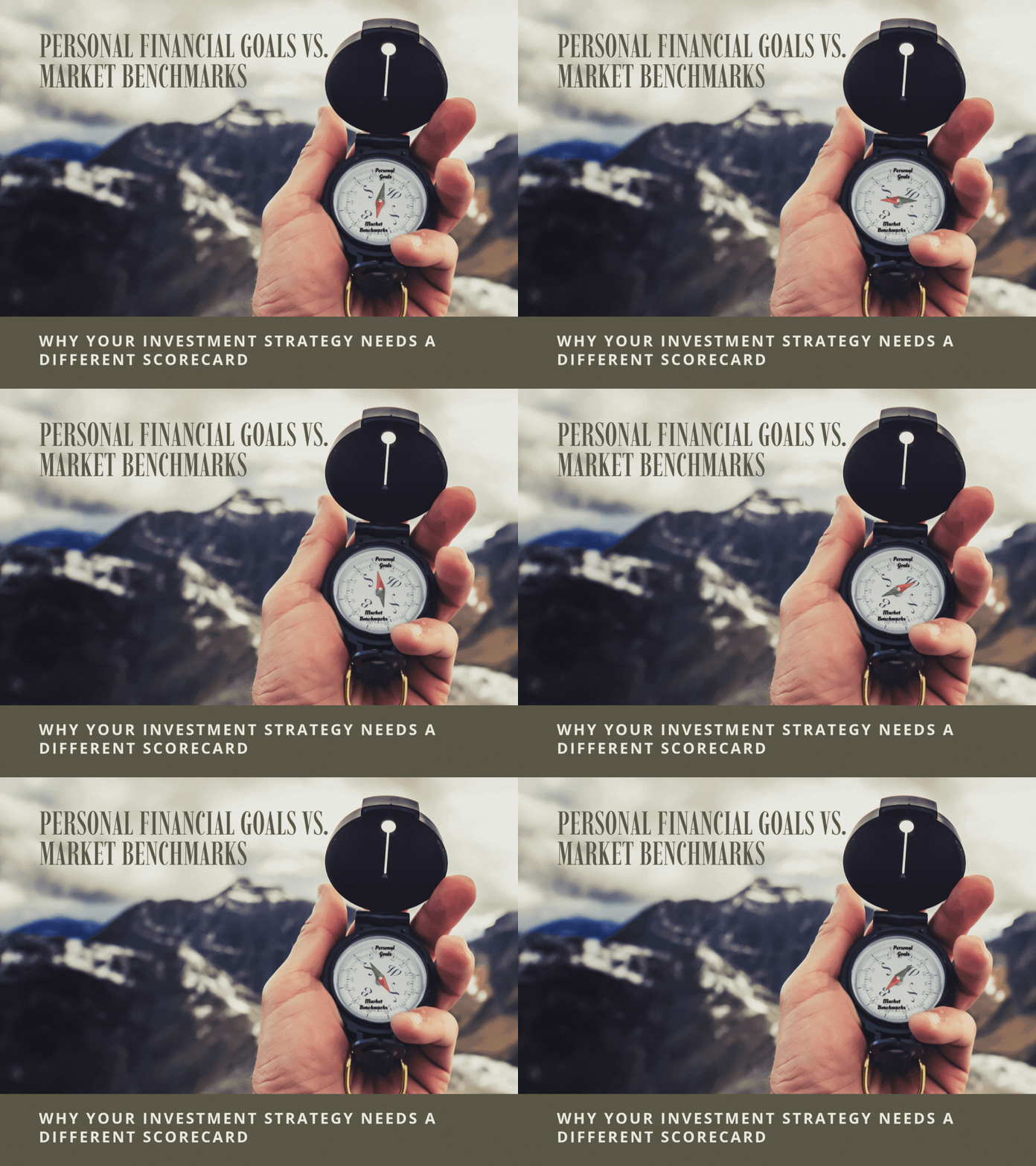
By Steve Lowrie, CFA
Special to Financial Independence Hub
We all like to know how we’re doing. It’s human nature. Whether it’s checking your golf handicap, your step count, or your investment portfolio, we’re wired to compare.
When it comes to investing, though, comparing can quietly pull you off course.
A client once asked me, “How’s my portfolio doing compared to the market?” It’s a fair question. But the real question is: how do you define the market?
In my experience, that definition changes over time. When one area of the world is outperforming, that’s suddenly what everyone calls “the market.” Over the last decade or so, U.S. stocks have led the way, so many people now define the market as broad U.S. stock indices like the S&P 500, or even narrower ones such as the NASDAQ, which is largely a measure of technology stocks. But in the decade before that, Canadian stocks did significantly better than U.S. stocks, so back then “the market” meant the TSX Index.
So, the idea of “the market” shifts with whatever happens to be doing best lately. That’s a moving target, and it makes for a poor benchmark.
Here’s the truth: unless your goals, timeline, and tolerance for risk are the same as that shifting version of “the market,” the comparison doesn’t tell you very much. In fact, it can distract you from what truly matters.
The Problem with Traditional Investment Benchmarks
Every night, the financial news tells us how some financial market did that day. The TSX was up. The S&P 500 hit a record. Bonds bounced back.
It’s easy to wonder, “Am I keeping up?”
But those numbers have nothing to do with your life. They’re designed to measure markets, not people. They don’t know when you want to retire, how much income you will need, or how much you can save. The list goes on.
When you start judging your progress against those numbers, you’re borrowing someone else’s scoreboard. It might look objective, but it’s not built for your personal situation.
That’s what we call tracking-error regret: the uneasy feeling that your portfolio is “falling behind” when it isn’t mirroring a benchmark or your friend or neighbour’s latest success story. That feeling often leads investors to make changes that feel smart in the moment but work against their long-term goals.
Setting Personal Investment Benchmarks that actually matter
There’s nothing wrong with measuring performance. The key is to measure what matters.
Ask yourself questions like:
- Am I on track to retire when I plan to?
- Can I fund the life experiences that matter most to me?
- Do I have the financial flexibility to enjoy life without worrying about every headline?
If the answer is yes, you’re succeeding. That’s your true benchmark.
Remember, you can beat an index, or outperform a family member, friend, or colleague, but that doesn’t necessarily mean you’ll meet your financial goals.
It’s not about beating an index. It’s about building the life you want and staying on the path that gets you there.
A Road Trip worth taking: Planning your Financial Journey
Imagine you’ve always dreamed of doing a ski road trip through Western Canada. You plan a route from Calgary to Vancouver, hitting some of the best slopes along the way: Banff, Revelstoke, Big White, Whistler.
It’s not the fastest or cheapest way to get from point A to point B. You could fly to Vancouver in a couple of hours for a fraction of the cost.
But that’s not the point, is it?
The goal of your trip isn’t efficiency. It’s the experience itself: the mountain views, the fresh snow, the time with friends.
That’s exactly how a good investment plan works. It’s designed around your goals, not someone else’s shortcut (which, over time, may end up as a long cut). Your journey might look different from someone else’s, but if it takes you where you want to go, it’s the right route.
The Dangers of Portfolio Comparison and Tracking-Error Regret
When you compare your portfolio to an index or to what someone else is doing, you are like the skier who keeps checking flight prices mid-trip. You will always find a cheaper, faster, or flashier option. But constantly changing direction will make it impossible to finish the journey you started.
Comparison is powerful. It plays on our emotions, especially when markets are volatile or when others seem to be “winning.” But most of the time, those comparisons leave us feeling anxious rather than informed.
Any five- or six-year-old can look at two numbers and tell you which one is bigger. In fact, they will tell you that in a second. That is the easy part. The harder part, the adult part in an investing context, is not only spotting the bigger number, but understanding why one number is bigger than another.
It is easy to observe performance. The real insight comes from understanding what caused it and whether those same factors are relevant for your investments going forward.
From an investment perspective, it is natural to be drawn to what has done well lately. But focusing on recent past performance without understanding why it happened is like driving while staring only in the rearview mirror. Those results are already behind you. If you jump on the trend today, you do not get the journey that created those past returns; you only get what happens next. And that is often a very different road. Looking at bigger numbers from the past without understanding their context can quietly steer your financial health off course and away from the plan that was built for you.
4 Steps to Staying Focused on your own Financial Benchmark
Here are a few simple ways to stay grounded in what really matters:
- Define success clearly. Make sure your goals are specific enough to measure. “A comfortable retirement” means different things to different people.
- Measure progress over time. Look at how you’re advancing toward your goals, not just how you did last quarter or last year.
- Stay disciplined. Focus on what you can control — your savings, costs, and behaviour — and accept that markets will always move unpredictably.
- Revisit your plan, not the headlines. The best benchmark is your own financial plan, updated regularly to reflect your real life.
Measuring Investment Success: Your Personal Benchmark Strategy
At the end of the day, investing isn’t about keeping up. It’s about getting where you want to go.
Benchmarks can provide context, offering a sense of whether the investing environment is good, bad, or somewhere in between. But they’re not the scorecard that defines success.
The only benchmark that really matters is whether your money is helping you live the life you’ve planned for.
If it is, you’re right on track.
No index can measure that.
Want to stop worrying about beating the market and start focusing on building the life you’ve planned for? Let’s talk.
FAQ: Understanding Personal Investment Benchmarks
What does “benchmarking” mean in investing?
A benchmark is a standard used to measure the performance of your investments. Many investors compare their returns to market indices like the S&P/TSX or S&P 500, but the most meaningful benchmark is progress toward your personal financial goals.
Why shouldn’t I compare my portfolio to the market?
Because “the market” changes over time and doesn’t reflect your unique goals, timeline, or tolerance for risk. A market index measures markets, not people.
What is tracking-error regret?
Tracking-error regret is the frustration investors feel when their portfolio performs differently from a market benchmark, even if their plan is still on track.
How should I measure my investment success?
Measure success by how well you’re progressing toward your long-term goals — such as retirement readiness, lifestyle freedom, or legacy plans — rather than by short-term performance versus an index.
Can benchmarks still be useful?
Yes. Benchmarks provide context about market conditions. Just remember they are tools for perspective, not scorecards for success.
 Steve Lowrie is a Portfolio Manager with Aligned Capital Partners Inc. (“ACPI”). The opinions expressed are those of the author and not necessarily those of ACPI. This material is provided for general information, and the opinions expressed and information provided herein are subject to change without notice. Every effort has been made to compile this material from reliable sources; however, no warranty can be made as to its accuracy or completeness. Before acting on the information presented, please seek professional financial advice based on your personal circumstances. ACPI is a full-service investment dealer and a member of the Canadian Investor Protection Fund (“CIPF”) and the Canadian Investment Regulatory Organization (“CIRO”). Investment services are provided through ACPI or Lowrie Investments, an approved trade name of ACPI. Only investment-related products and services are offered through ACPI/Lowrie Investments and are covered by the CIPF. This article originally ran on Steve’s blog on Nov. 17, 2025 and is republished on Findependence Hub with permission
