

 Posted By
By The Yearwell Team
(Sponsored Blog)
Most Retirement advice is about getting to the finish line: saving, investing and making the most of your RRSP and TFSA room. Far less is said about what happens next, when the paycheque stops and you start drawing down what you’ve built.
For many retirees, that switch is harder than expected. The question changes from “How much should I save?” to “How much can I safely spend this year?” And it comes back every time you move money out of a RRIF, a TFSA or a non-registered account.
Start with one number for the year
A simple way to answer it is to turn your savings into a yearly spending allowance. Many people start with a withdrawal rate, such as the well-known 4% rule: take about 4% of your portfolio in the first year, then adjust that dollar amount for inflation in the years that follow. Some prefer 3% for an extra margin of safety; others go a little higher because they have a pension or plan to spend more in their early, active years.
None of these numbers is a guarantee, and the right rate depends on your age, other income, taxes and comfort with market swings. That’s a conversation for you and your planner. But having one clear number for the year makes every other decision easier.
Don’t forget the RRIF minimums
In Canada, RRIFs add a wrinkle. Once you convert, you must withdraw at least a minimum percentage each year, starting at 5.28% at age 71 and rising after that. If your RRIF minimum is more than you plan to spend, the extra can go into a TFSA or a non-registered account instead of being spent. Keeping track of what you’ve withdrawn, and from which account, also means fewer surprises at tax time.
Track your pace, not just your total
The other half of the job is following the plan through the year. Spending in retirement is lumpy: a new roof in the spring, a trip in the fall, gifts in December. Looking at account balances alone won’t tell you whether you’re ahead of or behind where you meant to be. A simple monthly check will: compare what you’ve actually withdrawn with an even pace for the year, and you’ll know whether to ease off or relax.
Rising costs make this matter more. When fuel, heating and groceries jump, a budget that felt comfortable in January can feel tight by the fall. Reviewing your allowance once a year, and checking your pace every month or two, is usually enough to stay on course.
Where Yearwell fits
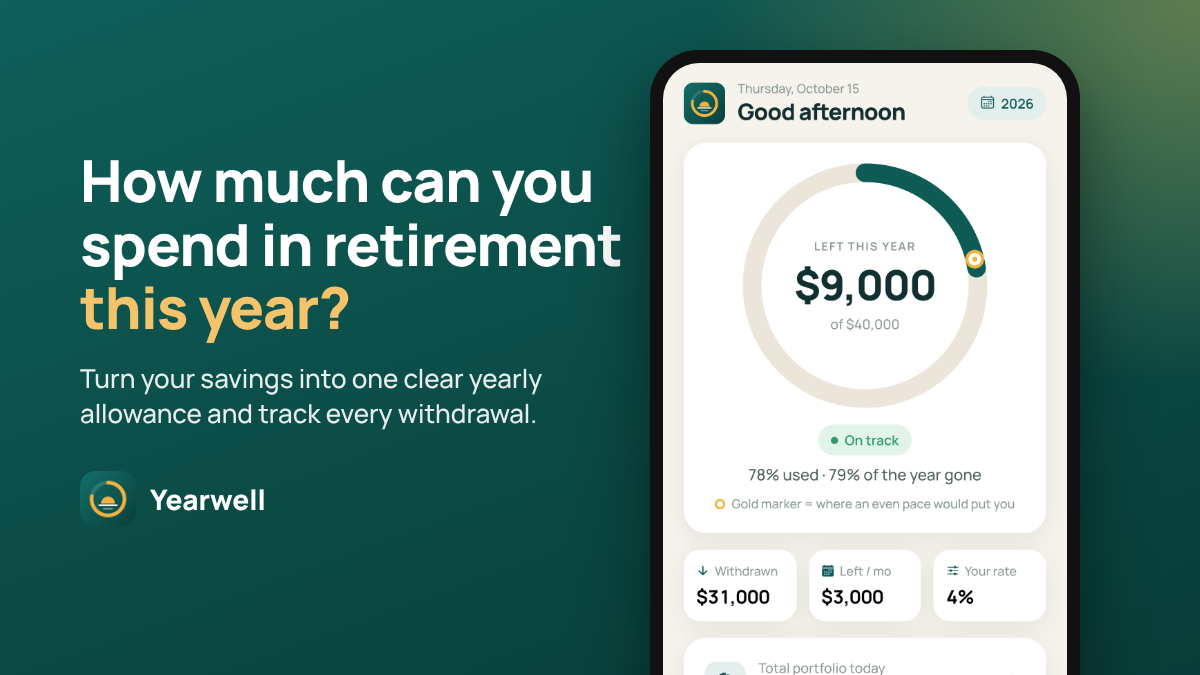
We built Yearwell to make this routine easy. You add your accounts, such as a RRIF, RRSP, TFSA or non-registered investments, and pick a withdrawal rate. Yearwell turns that into a yearly allowance, lets you log each withdrawal in a few seconds, and always shows how much is left for the year and how you’re pacing month by month. You can test different rates to see roughly how long your savings could last, and at year end it creates a one-page summary you can share with a partner or planner.
It’s private by design: there are no bank logins and no sign-up, and your information stays on your phone. Yearwell is free to download on the App Store and Google Play, with optional Pro features. Learn more at yearwell.app.
The bottom line
Retirement income doesn’t need a complicated spreadsheet. Pick a sensible yearly number, know your RRIF minimums, and check your pace as the year goes on. Whatever tool you use, the goal is the same: spending with confidence instead of guessing.
This post is for general information only and is not financial advice.
About the author

Yearwell is a free retirement withdrawal tracker for people living off their savings. Set your withdrawal rate, see your yearly spending allowance, log each withdrawal and always know what’s left, with no bank logins. Learn more at yearwell.app
