Posted By
By Aman Raina, Sage Investors
Special to the Financial Independence Hub
When I first started learning about investing in university, my training revolved solely around the mechanical side, specifically learning and understanding formulas and financial ratios like Return on Invested Capital, Cost of Capital, and Economic Profit.
I learned to leverage theories like Discounted Cash Flow Analysis and learned to interpret financial statements. In most of my career, I have continued to lean on these theories and concepts to frame and make investment decisions. I paid very little attention to the behaviorial side of investing which I’ve learned over the years can be just as important.
 Misbehaving
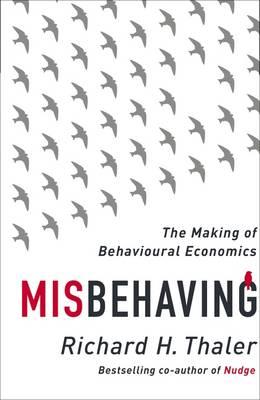
In Richard Thaler’s book, Misbehaving: The Making of Behaviorial Economics, Thaler discusses this whole notion of how investment decisions are driven more so by peer pressure than by analysis of technical indicators.
Thaler’s anchor point is economist John Maynard Keynes. Thaler felt that Keynes was particularly insightful on this front. He thought emotions or what he called “animal spirits” played an important role in individual decision making including investment decisions
Keynes likened picking stocks to a picking out the prettiest faces from a set of photographs. Keynes observed that the winning photo was the photo that most nearly corresponded with the average preferences of the competitors as a whole. Thus people did not just pick the prettiest face they thought but also the face people thinks other people will think is pretty. It really isn’t a decision about picking the prettiest face then. Keynes believed that people try to anticipate what average opinion thinks the average opinion to be.
Bringing this back to investing, investors — whether value oriented or growth oriented — are trying to buy stocks that will go up in value. The processes may be different but at its purest form investors of all stripes will try to buy stocks they think other investors will later decide should be worth more. And these other investors will make their own investment decisions based on other‘s future valuations.
This is fine … as long as the other people eventually come around to your thinking and bid up your stocks or in the Keynes analogy, pick your photo. The big challenge for investors is then how long are you willing to wait for that to happen because according to Keynes, “in the long run we are all dead.”
When we make an investment decision we are ultimately trying to make an educated guess. To frame that educated guess we rely on measurement and analysis. If we leverage Keynes’ thinking, we also need to get a sense of the mindset or psychology of other investors (i.e. the market) and try to rationally evaluate what they are thinking and how we expect them to behave.
In other words, we need to also understand the mood and behaviour of other investors can help us determine when and if they make will make certain decisions that will ultimately feed into our investment decisions. Keynes’ analogy of picking the prettiest face has tinges of populism and peer pressure. It also complements one of the core cognitive biases that challenge us every day which is Groupthink and Herd Behaviour Biases. In my next post, I will dig deeper into Thaler’s take on herd behaviour and how it plays into the concept of mean reversion.
Aman Raina, MBA is an Investment Coach and founder of Sage Investors, an independent practice specializing in investment coaching and portfolio analysis services. This blog was originally published on his web site and is reproduced here with permission.