All posts by Financial Independence Hub

June Checkup: Healthcare & Technology

Image courtesy Harvest ETFs

By Ambrose O’Callaghan, Harvest ETFs

(Sponsor Blog)

The United States stock markets have delivered positive returns through much of 2024, continuing the positive momentum that was established in the previous year.

However, that performance has increasingly been powered by a smaller segment of large-cap companies. Indeed, readers have undoubtedly heard about the outsized performance of the “Magnificent 7” in the tech space over the past year. If we strip out the “big six” of Amazon, Meta, Nvidia, Microsoft, Apple, and Alphabet from the S&P 500, we have experienced three calendar quarters of negative earnings growth across the rest of the market.

Investors took profits in the month of April. Demand resumed in the month of May, but with a broader range of equities. Nvidia continued to show its dominance, but there were other sectors and stocks that were able to catch up with the leaders to close out the first half of 2024.

The summer season is historically slow in the markets. Harvest’s portfolio management team expects volatility to persist for both bonds and equities. Moreover, the team emphasizes that this summer is a key moment to stay active, attentive, and invested. A prudent strategy in this environment involves looking under the surface for opportunities while generating cash flow from call options to support total returns.

June Healthcare check up

The healthcare sector pulled back slightly in the month of May 2024. Negative moves in the healthcare sector over the course of May 2024 were driven by stock specific events. Macroeconomic data sets impacted the healthcare sector in line with others. Within healthcare, the managed care subsectors experienced volatility earlier in 2024 and changes to reimbursement structures impacted valuations in the near term. The Tools & Diagnostics sub-sector has also proven volatile due largely to a slower-than-expected recovery in China.

Regardless, there are still very promising opportunities in the GLP-1 drug category space for diabetes and obesity. The uptake of these drugs in the U.S. has been significant at a still-early stage in their lifespan. A recent study from Manulife Canada found that drug claims for anti-obesity medications in Canada rose more than 42% from 2022 to 2023.

Harvest Healthcare Leaders Income ETF (HHL:TSX) offers exposure to the innovative leaders in this vital sector. This equally weighted portfolio of 20 large-cap global Healthcare companies aims to select stocks for their potential to provide attractive monthly income as well as long-term growth. HHL is the largest active healthcare ETF in Canada and boasts a high monthly cash distribution of $0.0583.

Harvest Healthcare Leaders Enhanced Income ETF (HHLE:TSX) is built to provide higher income every month by applying modest leverage to HHL. It last paid out a monthly cash distribution of $0.0913 per unit. That represents a current yield of 10.44% as at June 14, 2024.

Where does the technology sector stand right now?

Investors poured back into technology stocks in May 2024 after taking profits in the month of April. However, they were more discriminating than in previous months and showed a preference for hardware stocks, specifically semiconductors.

Nvidia maintained its leadership position. It has soared past a $3 trillion market capitalization in the first half of June 2024. However, other AI-related tech stocks encountered turbulence which may give some investors pause around the broader bullish case for AI. Continue Reading…

Noah Solomon: The Times they are A-Changin’

Shutterstock/ Photo Contributuor PHLD Luca.

Come gather ’round people
Wherever you roam
And admit that the waters
Around you have grown
And accept it that soon
You’ll be drenched to the bone
If your time to you is worth savin’
And you better start swimmin’
Or you’ll sink like a stone
For the times they are a-changin’

  • Bob Dylan © Sony/ATV Music Publishing LLC

By Noah Solomon

Special to Financial Independence Hub

In this month’s commentary, I will discuss both how and why the environment going forward will differ markedly from the one to which investors have grown accustomed. Importantly, I will explain the repercussions of this shift and the related implications for investment portfolios.

The Rear View Mirror: Where we’ve been

After being appointed Fed Chairman in 1979, Paul Volcker embarked on a vicious campaign to break the back of inflation, raising rates as high as 20%. His steely resolve ushered in a prolonged era of low inflation, declining rates, and the favourable investment environment that prevailed over the next four decades.

Importantly, there have been other forces at work that abetted this disinflationary, ultra-low-rate backdrop. In particular, the influence of China’s rapid industrialization and growth cannot be underestimated. Specifically, the integration of hundreds of millions of participants into the global pool of labour represents a colossally positive supply side shock that served to keep inflation at previously unthinkably well-tamed levels in the face of record low rates.

It’s all about Rates

The long-term effects of low inflation and declining rates on asset prices cannot be understated. According to Buffett:

“Interest rates power everything in the economic universe. They are like gravity in valuations. If interest rates are nothing, values can be almost infinite. If interest rates are extremely high, that’s a huge gravitational pull on values.”

On the earnings front, low rates make it easier for consumers to borrow money for purchases, thereby increasing companies’ sales volumes and revenues. They also enhance companies’ profitability by lowering their cost of capital and making it easier for them to invest in facilities, equipment, and inventory. Lastly, higher asset prices create a virtuous cycle: they cause a wealth effect where people feel richer and more willing to spend, thereby further spurring company profits and even higher asset prices.

Declining rates also exert a huge influence on valuations. The fair value of a company can be determined by calculating the present value of its future cash flows. As such, lower rates result in higher multiples, from elevated P/E ratios on stocks to higher multiples on operating income from real estate assets, etc.

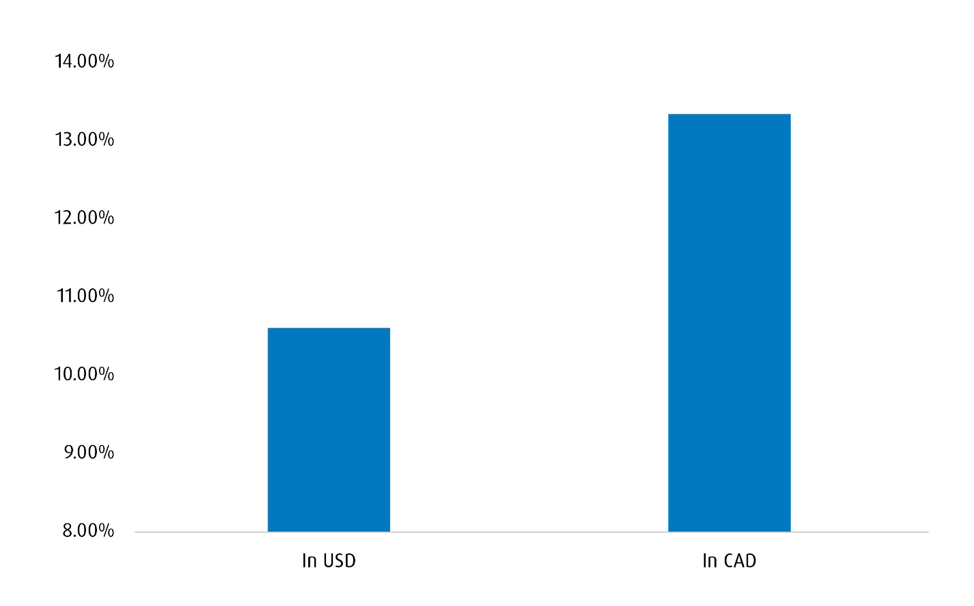
The effects of the one-two punch of higher earnings and higher valuations unleashed by decades of falling rates cannot be overestimated. Stocks had an incredible four decade run, with the S&P 500 Index rising from a low of 102 in August 1982 to 4,796 by the beginning of 2022, producing a compound annual return of 10.3%. For private equity and other levered strategies, the macroeconomic backdrop has been particularly hospitable, resulting in windfall profits.

From Good to Great: The Special Case of Long-Duration Growth Assets

While low inflation and rates have been favourable for asset prices generally, they have provided rocket fuel for long-duration growth assets.

The anticipated future profits of growth stocks dwarf their current earnings. As such, investors in these companies must wait longer to receive future cash flows than those who purchase value stocks, whose profits are not nearly as back-end loaded.

All else being equal, growth companies become more attractive relative to value stocks when rates are low because the opportunity cost of not having capital parked in safe assets such as cash or high-quality bonds is low. Conversely, growth companies become less enticing vs. value stocks in higher rate regimes.

Example: The Effect of Higher Interest Rates on Value vs. Growth Companies

The earnings of the value company are the same every year. In contrast, those of the growth company are smaller at first and then increase over time.

  • With rates at 2%, the present value of both companies’ earnings over the next 10 years is identical at $89.83.
  • With rates at 5%, the present value of the value company’s earnings decreases to $69.91 while those of the growth company declines to $64.14.
  • With no change in the earnings of either company, an increase in rates from 2% to 5% causes the present value of the value company’s earnings to exceed that of its growth counterpart by 9%.

Losing an Illusion makes you Wiser than Finding a Truth

There are several features of the global landscape that will make it challenging for inflation to be as well-behaved as it has been in decades past. Rather, there are several reasons to suspect that inflation may normalize in the 3%-4% range and remain there for several years.

  • In response to rising geopolitical tensions and protectionism, many companies are investing in reshoring and nearshoring. This will exert upward pressure on costs, or at least stymie the forces that were central to the disinflationary trend of the past several decades.
  • The unfolding transition to more sustainable sources of energy has and will continue to stoke increased demand for green metals such as copper and other commodities.
  • ESG investing and the dearth of commodities-related capital expenditures over the past several years will constrain supply growth for the foreseeable future. The resulting supply crunch meets demand boom is likely to cause an acute shortage of natural resources, thereby exerting upward pressure on prices and inflation.
  • The world’s population has increased by approximately one billion since the global financial crisis. In India, there are roughly one billion people who do not have air conditioning. Roughly the same number of people in China do not have a car. As these countries continue to develop, their changing consumption patterns will stoke demand for natural resources, thereby exerting upward pressure on prices.
  • Labour unrest and strikes are on the rise. This trend will further contribute to upward pressure on wages and prices.

A Word about Debt

The U.S. government is amassing debt at an unsustainable rate, with spending up 10% on a year-over-year basis and a deficit running near $2 trillion. Following years of unsustainable debt growth (with no clear end in sight), the U.S. is either near or at the point where there are only four ways out of its debt trap:

  1. Raise taxes
  2. Cut spending/entitlements
  3. Default
  4. Stealth default (see below) Continue Reading…

Big tax tips for small business owners

Image by Pexels: N. Voitkevich

By Aurèle Courcelles, CFP, CPA

Special to Financial Independence Hub

Small businesses play a sizeable role in shaping Canada’s economy, contributing significantly to national employment numbers and our country’s gross domestic product (GDP).

According to Statistics Canada, in 2022 businesses with 1 to 99 employees made up 98 per cent of all employer businesses in this country. But today’s economic environment has triggered new financial challenges for this cohort. Canadian entrepreneurs can help offset the cost of rising inflation, rising cost of inputs, and rising interest rates, and keep more money in their pockets, by adopting some or all of these key tax strategies.

Consider employing your immediate family

Income splitting, whereby the higher-earner transfers part of their income to a lower-earning family member, can reduce the tax owed by your household. Consider paying a reasonable salary to your spouse and/or children for the services they provide for your business to reduce your tax obligations.

Incorporate your business

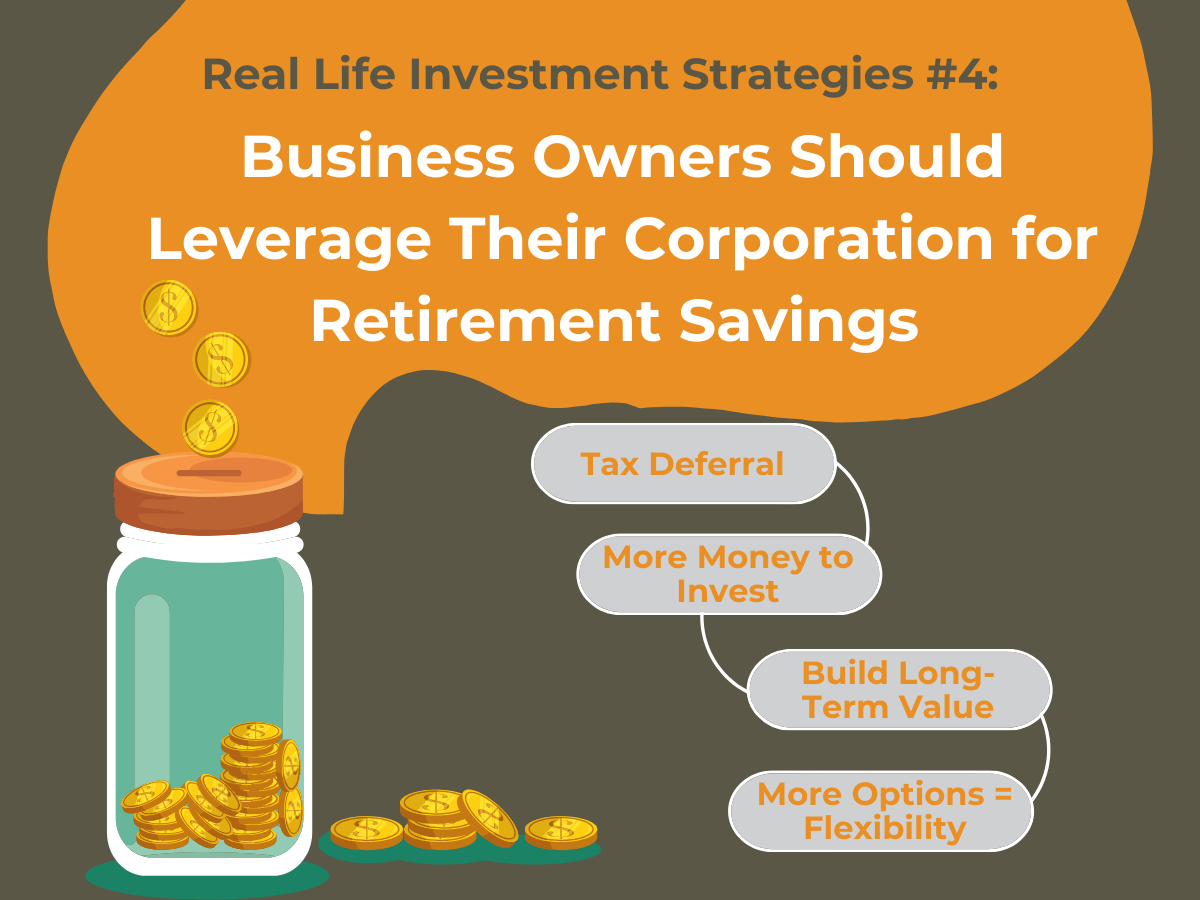
If your business generates more profit than you need to live on, incorporation is a highly effective tax strategy. It could lead to a significant tax deferral by qualifying for the lower small business tax rate for active income – the longer the profits are left in the company, the larger the tax deferral. If shares of the business are ultimately sold and are eligible for the lifetime capital gains exemption, the tax deferral gained through incorporation can create a permanent tax saving.

Other potential advantages of incorporation include having family members own shares (so as to have access to multiple capital gains exemptions) and possibly paying out dividends to actively participating family members who are taxed at a lower rate.

Maximize tax breaks with registered plans

Consider your RRSP contribution room when setting and reporting remuneration for services provided by yourself and family members who also work in the business. Employment income creates RRSP contribution room for the following year which, for 2024, can represent up to $31,560 of room. RRSP contributions are tax deductible, provide tax deferral and allow for business owners to diversify their future retirement income.  Contributing to a tax-free savings account (TFSA) can also work in your favor by allowing you to withdraw funds if needed without penalty. Continue Reading…

Exploring Early Retirement Strategies: My Journey towards Financial Independence

Image by Pexels.com: Cotton-Bro Studio

By Abid Salahi

Special to Financial Independence Hub

If you had told me in my early twenties that I’d be already planning for retirement before my first major job promotion, I might have laughed it off.

Like many young professionals, I was more concerned with navigating the beginnings of my adult life and my first ‘real’ job than retirement, far in the future.

However, a deep dive into the financial world revealed the concept of ‘Financial Independence’ or ‘Findependence,’ a state where you have sufficient personal wealth to live without having to work actively for basic necessities. Essentially, what it means is that you can retire way earlier than what society considers ‘retirement age’ and enjoy your retirement while you’re still relatively young.

Today, as I share my experiences and the strategies that I’ve learned along the way, I hope to inspire you to start thinking about retirement sooner rather than later. After all, achieving financial independence is not just a goal; it’s a journey that offers profound peace of mind.

Start Early and Embrace the Power of Compound Interest

Let’s talk about the first and most important strategy I adopted; harnessing the power of compound interest.

Compound interest is like a snowball rolling downhill; as it rolls, it picks up more snow, growing bigger and faster. When you save money, compound interest works by earning interest on both your initial amount and the interest already earned.

This means your money grows faster over time. For example, investing just $200 a month starting at age 25 could grow to more than $500,000 by age 65, assuming an average annual return of 7%.

Diversify your Investment Portfolio

Diversification is key to managing risk and maximizing returns over the long term.

I’m going to say it again … DO NOT invest all of your money in one single asset!

My approach has been to spread investments across a variety of asset classes including stocks, bonds, real estate, and even some alternative investments like cryptocurrencies.

But again, if you spread your investments into too many different assets, the profit you might obtain from each investment could become very small and not that significant. So, not too many but also not too few.

Take advantage of Tax-Efficient Accounts

In both Canada and the U.S., you can take full advantage of tax-advantaged retirement accounts. How? Let me elaborate.

In Canada, utilizing the RRSP (Registered Retirement Savings Plan) and the TFSA (Tax-Free Savings Account) can significantly enhance your savings growth by deferring taxes or allowing tax-free gains.

In the U.S., similar benefits are offered through IRAs (Individual Retirement Accounts) and 401(k)s.

The amazing thing about these accounts is that they not only reduce your tax liability but also allow your investments to grow unhindered by taxes, which can make a substantial difference over the decades.

Consider Real Estate Investments

When talking about investments, it’s impossible to leave out investing in Real Estate.

Real estate can be an excellent addition to any retirement strategy, offering both capital appreciation and potential rental income. Continue Reading…

Best high-yield Canadian HISA ETFs: Should I invest in them?

Image courtesy Tawcan/Unsplash

By Bob Lai, Tawcan

Special to Financial Independence Hub

Earlier this year, I discussed three key reasons why we don’t invest in GICs and have no plan to invest in them any time soon. After reading that article, a few readers asked about Canadian high-yield high interest savings account (HISA) ETFs or cash-alternative ETFs.

Does it make sense to invest in one of these ETFs like CASH, HSAV, or PSA?

I get it, putting your hard-earned cash in the stock market can be considered risky for those risk-averse Canadians. More importantly, what should you do with short- or medium-term savings to allow such money to work extra hard for you?

Due to the shorter timeline, investing money that you need in the short or medium term in the stock market simply doesn’t make sense, because you might get caught by market volatility and a downturn and be forced to sell when you’re in the red.

Given that GICs force you to lock your money in for a set period and therefore are restrictive, these high-yield HISA ETFs can be quite enticing for some Canadians

Here are the best high-yield Canadian HISA ETFs available today.

Why you should keep some cash reserve

I believe it’s important to keep some cash reserves. How much cash reserves you set aside will depend on many different factors:

  • Are you working or are you retired?
  • If you’re working, do you have a relatively high savings rate to give you extra cash flow every two weeks?
  • Do you have any debt?
  • Do you have any big expenses planned for the next year?
  • How much money do you need in your banking account to make you sleep well at night?
  • Let’s also not forget that most banks have a minimum requirement for chequing & savings accounts or you’d have to pay a monthly fee.

This is why personal finance is personal. I can’t tell you how much is the right amount to set aside for your cash reserve or how much money you should have in your emergency fund. It will be different for everyone.

The key reason for keeping some cash reserves is to have liquidity. I can’t emphasize enough that you don’t want to be forced to sell your investments when the market is down simply because you need the money.

Imagine that you needed $7,000 to repair a leak in your house’s roof in March 2020 and you didn’t have any cash reserve. The market was in turmoil at that time and it would be terrible to have had to sell investments to fund this repair.

A couple of important notes on HISA ETFs

Before we dive into the best high-yield Canadian HISA ETFs, there are a couple of important notes I want to point out.

CDIC Protection

The Canadian Deposit Insurance Corporation (CDIC) insures savings of up to $100,000. Most Canadian financial institutions are members of the CDIC. This means when you have money deposited in a bank, you are protected up to $100,000. Provincial credit unions, such as Coast Capital Savings, are protected by the province’s deposit insurer with no limits.

Unlike cash savings, the high-yield HISA ETFs are not eligible for CDIC insurance. But you shouldn’t be too concerned. All the Canadian HISA ETFs use big Canadian banks to hold their money. It is virtually impossible for these big Canadian banks like TD, Royal Bank, and BMO to go under. If that were to happen, the Canadian economy would be in turmoil.

Furthermore, all of these high-yield HISA ETFs I am going over in this article are provided by reputable ETF companies, so there shouldn’t be any concerns for these ETF companies to go bankrupt.

OSFI Rules

In October 2023, the Office of the Superintendent of Financial Institutions (OSFI), which regulates banks, announced new guidelines regarding HISA ETFs.

The OSFI essentially requires HISA ETFs to support 100% liquidity so withdrawals by other financial institutions can be supported on demand. Before this requirement, banks typically maintained a 40% runoff rate on HISA assets.

So what does the OSFI ruling mean?

Basically, the new rule means that the yield from these HISA ETFs isn’t as high as previously.

OSFI can impose further rules, reducing the yields further. This is something investors should keep in mind when investing in a HISA ETF.

Best high-yield Canadian HISA ETFs

Here are the best high-yield Canadian HISA ETFs you can easily buy and sell with your discount broker: Continue Reading…