All posts by Financial Independence Hub

The changing perceptions of Normal

Image courtesty Outcome/Creative Commons

By Noah Solomon

Special to Financial Independence Hub

In response to rapidly accelerating inflation, central banks began raising rates aggressively at the beginning of 2022. Ever since, wild swings in bond markets have had a tremendous impact on virtually every single asset class.

This month, I examine the recent spike in rates from a historical perspective. Importantly, I will discuss the likely range of interest rates over the foreseeable future and the associated implications for financial markets.

When the Fed and other central banks were confronted with financial disaster in late 2008, they slashed interest rates to zero and deployed additional stimulative measures to ward off what many thought could be another Great Depression. Global rates then remained at levels that were both well below historical averages and the rate of inflation for the next 13 years.

In 2008, the runaway inflation of the 1980s and the painful medicine of record high rates that were required to subdue it were still relatively fresh in people’s minds. At that time, had you asked anyone what would be the most likely result of keeping rates near zero for over a decade, their most likely response would have been runaway inflation. And yet, inflation remained strangely subdued. According to most experts, this unexpected result is largely attributable to a relatively benign geopolitical climate and a related push toward global outsourcing.

This led to the notion of a “new normal” in which inflation was permanently expunged. Over the span of only 13 years, people went from fearing inflation to believing that it was a relic of the past unworthy of serious consideration. This false sense of comfort caused central banks and investors alike to be caught off guard in late 2021 when they realized that inflation had not been permanently vanquished but was merely hibernating.

These sentiments were evident in bond markets. After rates were slashed to zero during the global financial crisis, investors were skeptical that they would remain there for long before stoking inflation. Longer-term rates remained well above their short-term counterparts, with the yield on 10-year U.S. Treasuries retaining an average 1.9% premium above the Fed Funds rate from 2009 – 2020.

However, 13 years of ultra-low rates with no sign of inflation allayed such fears, with the yield spread crossing into negative territory late last year and reaching a low of -1.5% in May of 2023. Even the rapid acceleration in inflation in late 2021 failed to fully disavow investors of the notion that the era of low inflation had come to an end, with current 10-year rates falling below their overnight counterparts.

10 U.S. Treasury Yield Minus Fed Funds Rate (1995 – Present)


Equity markets danced to the same tune as their bond counterparts. When central banks cut interest rates to zero during the global financial crisis, investors were dubious that inflation would not soon rear its ugly head. Multiples remained relatively normal, with the P/E ratio of the S&P 500 Index averaging 16.4 for the five years beginning in 2009.

Over the ensuing several years, investors became complacent that the world would never again experience inflation issues, with the S&P 500’s P/E ratio climbing as high as 30 by early 2021. Multiples have since remained somewhat elevated by historical standards, indicating that markets have not fully embraced the fact that inflation may not be as well-behaved as what they are used to.

S&P 500 P/E Ratio (1995 – Present)


The Rising Tide of Declining Rates: Not to be Underestimated

According to legendary investor Marty Zweig:

“In the stock market, as with horse racing, money makes the mare go. Monetary conditions exert an enormous influence on stock prices. Indeed, the monetary climate – primarily the trend in interest rates and Federal Reserve policy – is the dominant factor in determining the stock market’s major direction.”

The 2,000-basis point decline in interest rates from 1980 to 2020 not only turbocharged aggregate demand (and by extension corporate revenues), but also dramatically lowered companies’ cost of capital. In tandem, these two developments were nothing short of a miracle for corporate profits and asset prices. Continue Reading…

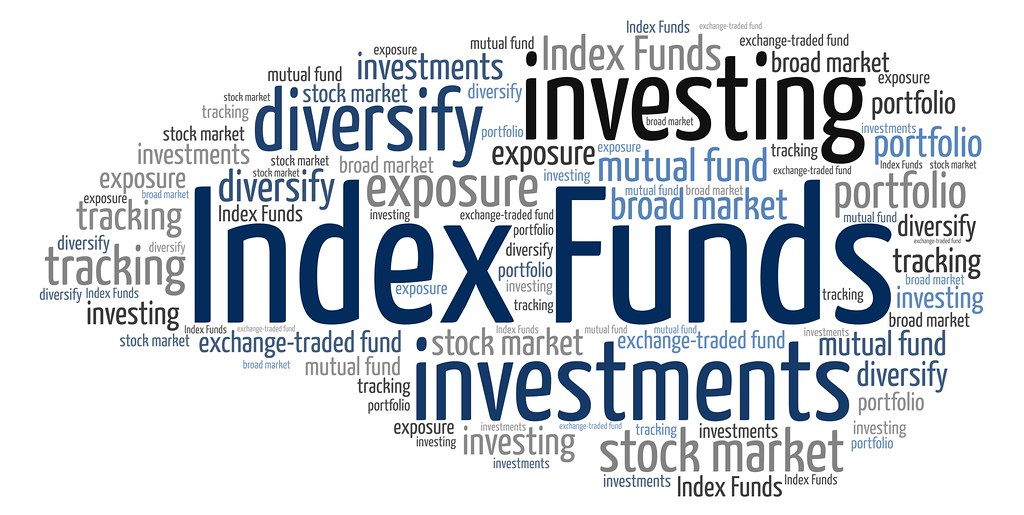
These three ETFs are responsible for most of my wealth

AlainGuillot.com

By Alain Guillot

Special to Financial Independence Hub

I was a day trader for almost 10 years.

Oh, I was so smart. I was smarter than the market and all its participants. But I was not, I was delusional. I wasted my time trying to guest the direction of the markets. I had good months in which I felt I was going to be a millionaire, and then in one bad trade I would lose most of my gains.

The one lesson I discovered, and maybe was worth the price of all my losses was that passive investment works.

The strategy create by John Bogle many decades ago is till paying huge dividends. Mr. Bogle was the founder of Vanguard Funds, the inventor of Passive Investing, a strategy created for the masses. Ever since I started passive investing my portfolio has been going up at a staggering rate.

My investments are composed of three main investments:

VFV (Vanguard S&P 500 US Index ETF)
XIU (iShares S&P/TSX 60 Index ETF)
VIU (Vanguard FTSE Developed all caps ex North America)

Plus other individual stocks that mostly lose me money. Continue Reading…

A Wake-up Call for those choosing Mutual Fund fees over Robo-Advisors

Image courtesy Questrade/iStock

By Scarlett Swain

(Special to Financial Independence Hub)

It’s that time of year. The leaves have started to shift to brilliant shades of crimson, orange, and yellow. The days are getting shorter. And, suddenly, it’s “jacket weather” again. For many Canadian families, the transition into cooler months signals a time to begin the process of reviewing their finances from the past year with the goal of being better prepared in the years ahead.

With the cost of living in Canada incrementally higher than it has been in recent memory, there is a renewed opportunity for families to ask a familiar question: what is a simple, one-step investment strategy that they can use to help stretch the most out of their money, both now and for the long haul?

Well, like the changing seasons, it may be a good time for families to consider changing up a dated investment approach in favour of one that will take their money a little further. That is, using a low-fee, low-touch, robo-advisor in place of costly mutual fund investments … and, here are a few reasons why:

Accessibility

Robo-advisors have ushered in a new era of accessible investing. Designed to be user-friendly from the get-go, they are an excellent choice for both novice and experienced investors. With just a few clicks, investors can select a portfolio that matches their risk tolerance and fund it with little to no hassle.

Diversification

A well-constructed portfolio needs variety. Robo-advisors excel at this by spreading investments across different asset classes, thus reducing risk. Mutual funds, while also diversified, often lack the customizability and personalization offered by low-fee robo-advisors.

Automated Rebalancing

Investing with a robo-advisor provides nimble, automated rebalancing, ensuring that investments stay aligned to goals, even as market conditions shift. Mutual fund investors often need to manually (and worse, reactively) adjust their portfolios, potentially missing out on market opportunities or exposing them to unnecessary risk. Continue Reading…

The waiting is the hardest part, and the most profitable times for investors


By Dale Roberts

Special to Financial Independence Hub

Investors are starting to notice that their portfolios have been treading water for a couple of years. Over the last two years, a global balanced growth portfolio would essentially be flat. Of course, move out to 3-year, 5-year and 10-year time horizons and we have very solid to generous returns.

At times investors have to wait. We build and springload the portfolio waiting for the next aggressive move higher. In fact, these holding periods can be beneficial: we are loading up on stocks at stagnating or lower prices. We’re able to buy more shares. The waiting is the hardest part for investors. But it is essential that we understand the benefits to sticking to our investment plan.

In January of 2021 I wondered aloud in a MoneySense post if the markets might not like what they see when we get to the other side of the pandemic. That’s an interesting post that looks back at the year 2020, the year the world changed with the first modern day pandemic. That suspicion is ‘kinda’ playing out as the markets stall and try to figure things out.

That’s not to suggest that my hunch was an investable idea. We have to stay invested.

Stick to your plan when the market gets stuck

Patience is the most important practice when it comes to wealth building. When done correctly, building life-changing wealth happens in slow motion and it is VERY boring.

Boring is good.

Waiting can be boring. But maybe it can look and feel more ‘exciting’ if we know what usually happens after the wait. Stock markets work like evolution. There are long periods of stagnation and status quo and then rapid moves and change.

Instead of boring, maybe it should feel like a kid waiting for Christmas. The good stuff is on its way.

Here’s an example of a waiting period, from 1999. The chart is from iShares, for the TSX 60 (XIU/TSX). The returns include dividend reinvestment.

And here’s the stock market ‘explosion’ after the wait.

That’s more than a double from the beginning of the waiting period.

And here’s the wait from 2007, moving through the financial crisis. Ya, that’s a 7-year wait. Talk about the 7-year itch, many investors filed for divorce from the markets.

It was a costly divorce.

Markets went on a very nice run for several years. Continue Reading…

Before you Retire: 5 things to do before Pursuing a Conservatorship

Conservatorships can be a great tool for protecting finances in the right situations. Learn about some vital things to do before pursuing a conservatorship.

Adobe Image by contrastwerkstatt, via Logical Position

By Dan Coconate

Special to Financial Independence Hub

As you approach retirement, you want to accelerate your planning for the future, and one crucial consideration might be a conservatorship.

A conservatorship is a legal arrangement that provides a responsible adult (the conservator) with the authority to make decisions for another person (the conservatee) incapable of making them on their own.

This not only affects individuals within the United States, but it can be done throughout the world.

If you’re considering pursuing a conservatorship, you should be as prepared and informed as possible. We’ll discuss five things you should do before pursuing a conservatorship so you can make the best decision for your loved one or for yourself.

Learn all you can

The first step in conservatorship planning should always be to learn as much as you can about the process, requirements, and potential pitfalls. Start by asking some important questions, such as what are the different types of conservatorships, how they function, and whether you even need one. You should also consider consulting an attorney with experience in conservatorship law, who can help answer these questions and provide further guidance.

Assess the Need

Next, carefully assess whether a conservatorship is the best option for your situation. Consider alternatives like power of attorney, living trusts, or other legal arrangements that may be less restrictive. If possible, involve the person who may be the subject of the conservatorship in discussions about their needs and desires. This can help ensure you hear and respect their wishes in your decision.

Evaluate your own Capability

Before pursuing a conservatorship, another thing you should do is think hard about your own capabilities. Remember that these legal bindings involve significant responsibility. Ask yourself whether you’re able and willing to dedicate the necessary time and effort to managing someone else’s affairs. Do you possess the knowledge and skills to make sound decisions about their financial, legal, and personal matters? It may feel daunting, but honestly assessing your readiness can help ensure you’re making the right choice.

Understand the Costs

Additionally, prepare yourself for the financial implications of pursuing a conservatorship. Pursuing a conservatorship can be expensive, from court fees to ongoing legal, accounting, and fiduciary costs. Factor these expenses into your decision-making and explore ways to reduce costs if necessary, such as seeking pro bono legal assistance. Continue Reading…