Hub Blogs contains fresh contributions written by Financial Independence Hub staff or contributors that have not appeared elsewhere first, or have been modified or customized for the Hub by the original blogger. In contrast, Top Blogs shows links to the best external financial blogs around the world.
The majority of Canadians are afraid they’ll run out of money in Retirement, especially women and young people, according to a survey released Wednesday morning by the Canada Pension Plan Investment Board (CPPIB).
The 2025 CPPIB Retirement Survey (for Financial Literacy Month) says 59% of all Canadians are afraid of running out of money during Retirement, with the percentage jumping to 63% for women, compared to just 55% of men. It also found a whopping two thirds (66%) of Canadians aged 28 to 44 share the same fear. As the CPPIB graphic below illustrates, those who have a financial plan are slightly less worried.
As you’d expect the CPPIB to point out, the Canada Pension Plan (CPP) helps protect retired Canadians from this risk: as it says above, CPP “benefits are payable as long as you live and [are] indexed to inflation.”
Indeed, CPP and the other main government retirement income program, Old Age Security, are both valuable sources of inflation-indexed retirement income. CPP is available as early as age 60 and OAS at 65 but a staple of Canadian personal finance commentary is that the longer you wait to receive benefits, the higher the benefits will be. In the best of all worlds, you’d wait until 70 for both programs to start paying out, even if you have to keep working longer and/or start withdrawing money from your RRSP before it’s mandated at age 71/72. (While the CPPIB doesn’t mention it, retirees with no other savings may also benefit from the Guaranteed Income Supplement to the OAS: and the GIS is tax-free.)
The second graphic reproduced below is less straight-forward: it appears to present various excuses for delaying the creation of a proper financial plan to help get to Retirement. Roughly half of younger Canadians cite their need to advance their careers and make more money, and to buy their first home as priorities.
While it’s true that if nothing else, the future arrival of CPP and OAS benefits should put minds partially at ease about covering off basic Retirement expenses, it seems to me pretty obvious that at least for those who lack a generous employer-sponsored pension plan (ideally an inflation-indexed Defined Benefit pension), that it will be necessary to maximize savings in RRSPs and TFSAs as soon as possible.
Because of the Time Value of Money and the magic of compounding investment returns (especially when tax-deferred in RRSPs and TFSAs), the sooner you start saving in these vehicles the better. There’s no excuse not to make RRSP contributions from the get-go, ideally as soon as you land your first real job, since it reduces your income tax. Yes, decades from now when RRSPs become RRIFs you’ll have to pay some tax on the ultimate withdrawals, but that’s more than made up by the tax-deferred investment growth. Continue Reading…
Can you really achieve Financial Independence when you still have a mortgage looming over you? Our insights will help you avoid feeling trapped by payments.
Image: Iryna for Adobe
By Dan Coconate
Special to Financial Independence Hub
Achieving Financial Independence early brings freedom, flexibility, and opportunities. But entering this new chapter requires thoughtful planning, especially when it comes to housing.
Avoid being trapped by a mortgage in early retirement by adopting a strategic approach that aligns with your financial goals. Whether you plan to downsize, relocate, or stay put, being proactive can preserve your hard-earned independence without a mortgage becoming a financial burden.
Below are five essential tips to guide you through managing your mortgage while protecting your financial independence.
Prioritize Paying off your Mortgage
Carrying a mortgage into Financial Independence can feel like dragging a heavy anchor. If you can, aim to own your home outright before retiring early. This eliminates one of the largest monthly expenses, giving you greater control over your budget. Many Canadians find success by accelerating their payments or making lump-sum contributions when possible. Debt-free living provides immense peace of mind and opens up new possibilities for pursuing the lifestyle you envisioned.
Consider Downsizing
Scaling down your home can offer financial and lifestyle benefits. Downsizing can free up home equity, reduce maintenance costs, and even lower property taxes. However, a well-thought-out plan ensures you don’t trade your current home for another financial burden.
It is possible to buy a new home before selling yours: you just need to be strategic about it. You also don’t have to limit yourself to smaller square footage; consider homes in less expensive areas or those better suited to your needs.
Explore Passive Income from Real Estate
Turning your property into a source of income can significantly offset costs. For instance, renting out a portion of your home or owning a rental property can transform your mortgage payment into a cash-flow opportunity. Many pursuing Financial Independence have increasingly tapped into short-term vacation rentals or long-term tenants to supplement their budgets. Proper research and planning ensure this approach aligns with your goals while providing notable financial advantages. Continue Reading…
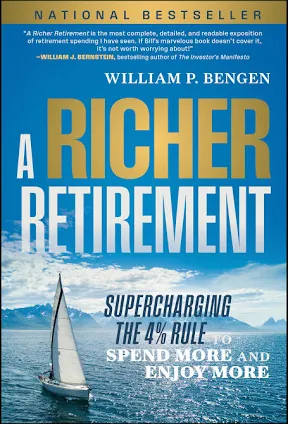
My latest MoneySense Retired Money column looks at a must-read new book on Retirement as well as two related books on DIY stock-investing. You can read the full column by clicking on the highlighted headline: Who you gonna trust: Barry Ritholtz or Jim Cramer?
The must read and main focus of the MoneySense column is William Bengen’s A Richer Retirement: Supercharging the 4% Rule to Spend More and Enjoy More. If that sounds familiar it should: Bengen’s original book on the 4% Rule is considered the bible of retirement, with his famous “SAFEMAX” guideline of 4% a year being an annual amount of withdrawals that should be “safe” for retirees to continue for a full 30 years, even after inflation. The original book, titled Conserving Client Portfolios During Retirement, was first published in 2006.
Never mind that even Bengen considers 4.7% be a more universal SAFEMAX. The original book was aimed at financial advisors and professionals while the new one ostensibly is aimed at retail investors and retirees. I say ostensibly because I was a little disappointed with it and found the plethora of complicated charts and tables a bit much for lay investors. Still, there’s a lot of common sense there: Inflation is big long-term threat to retirees as are bear markets. Withdrawing too much from portfolios can be disastrous if you are unfortunate enough to retire just as a bear market hits and/or inflation starts to bite.
On the other hand, sticking with the old 4% rule or even the smaller amounts of 3% or even 2% advocated by some cautious souls, could result in you withdrawing less than you really need to enjoy retirement, although the tax department and any heirs might commend your caution and frugality.
How to make money in any market
Amazon.ca
While it’s rare for me to buy new hardcover books because I receive so many “free” review copies of financial books, I actually did buy A Richer Retirement as soon as it was available on Amazon. Plus, unusually, I also bought two other brand new books on the related topic of investing and stock-picking.
One was Jim Cramer’s How to make money in any market, by the sometimes revered but often maligned host of CNBC shows Mad Money and Squawk on the Street. It’s fashionable for some financial journalists who believe in efficient markets and indexing to diss Cramer but I am not in that crowd. In fact, Cramer recommends that newcomers to investing put the first US$10,000 into an S&P500 index fund or ETF.
However, for seasoned investors and even retirees, Cramer suggests putting half a portfolio in index funds and the other half in individual stocks. Where we part company is his recommendation that the bucket of stocks be restricted to just five names, which would mean 10% in each. For my money, that’s way too concentrated and risky, even though he often brags about how he is often accosted by Nvidia Millionaires who tell him they bought that stock as soon as he announced on air that he had renamed his dog Nvidia.
How NOT to invest
Amazon.ca
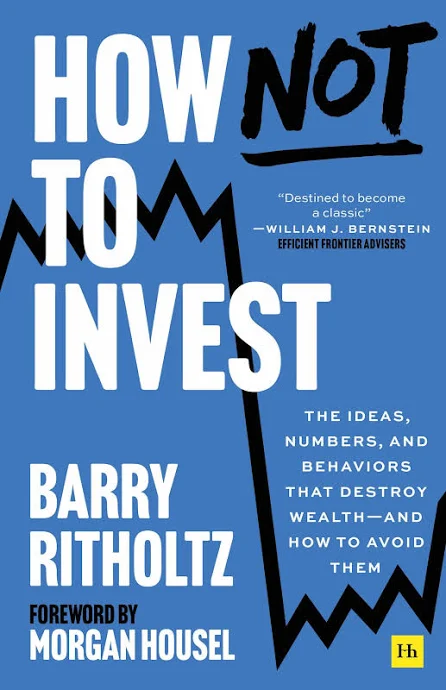
Finally, regulars to this site may already have read Michael Wiener’s review of Barry Ritholtz’s How NOT to invest, which appeared here in this blog a few weeks after appearing on his Michael James on Money blog.
To be sure, those who are fond of disparaging Jim Cramer might quip that should have been the title of his own book, seeing as there are actually ETFs out there that try to profit by shorting Cramer’s picks. As of this writing, my copy has arrived but I have not yet finished reading it, as it’s a bit longer than the other two.
But based on the book blurbs and Michael’s review, I have no doubt it will be worth reading, whether for younger investors or seasoned ones and/or retirees.
Finally, while I only just received my review copy, I note that David Chilton is publishing a new edition of his classic financial novel, The Wealthy Barber, which any young person just starting to invest should acquire. I look forward to revisiting it.
The interplay between politics and economics has never been starker. We have an American President who is doing more to stick his nose into the affairs of those that are supposed to be at arms length than any of his predecessors ever dreamed.
Despite this, people who offer commentary on both the economy and capital markets (they are separate things) act as though what’s going on on Capitol Hill is so unremarkable that they conspicuously fail to work any acknowledgement of the dysfunction into their commentary.
Last week, I sat in on a webinar hosted by Jeff Schulze, CFA, who is managing director, head of economic and market strategy for Clearbridge Investments. In his presentation, Schulze noted that the S&P 500 is currently trading at 23 times forward earnings and that only the late 1990s saw a higher number. He added that there has been recent downward pressure on the federal funds rate and opined that the ‘one big beautiful bill’ will offer further fiscal stimulus down the road.
In a dashboard of 12 indicator variables, only one was flashing red (recession). Four were yellow (neutral) and seven were green (expansion). He went on to opine that corporate profits don’t look recessionary. He concluded that a near-term recession is unlikely. I’m not disputing his economic evidence: I’m simply noticing that there was not a word about political implications or developments. That silence strikes me as conspicuously odd.
There are many smart people who look closely at all manner of economic indicators who also look the other way regarding politics. As if they are not related. Why is that? They don’t talk about what’s going on Capitol Hill at all. The topic is taboo. It’s “polarizing.” Some even allege it’s beyond the purview of their mandate. I disagree.
EMH vs Active Management
The efficient market hypothesis (EMH) posits that capital markets do an excellent job of digesting all available information (from all fields of endeavour) quickly and accurately. By synthesizing information into a consistent worldview, EMH implies that no one can reliably ‘beat the market’ through security selection or timing strategies.
The economic forecast offered by Clearbridge seemed predicated on the assumption that what’s going on in Washington is normal, but it also seemed predicated on market inefficiency since Schulze made multiple references to the need for active management. If the market is efficient, then it is already reliably taking the dysfunction in Washington into account. If, on the other hand, it is inefficient, then the vagaries of an unpredictable President stand out as being meaningful and should be noted. So if the conduct of the President is a meaningful consideration, why wasn’t it mentioned by a guy who implicitly rejects EMH? Continue Reading…
Retirement planning experts suggest current market conditions may present an opportune moment for retirees to consider annuities. With potentially higher yields available in today’s interest rate environment, strategic approaches like partial annuitization and laddered purchases offer ways to enhance retirement security. Financial advisors emphasize the importance of weighing tax implications and long-term income stability before making decisions about annuities in a changing economic landscape.
Ladder Annuity Purchases to Capture Peak Rates
Favorable Market Creates Opportunity for Retirement Security
Strategic Timing for Annuities in High Rates
Consider Tax Implications before Rushing to Annuitize
Tax Strategy matters more than Current Rates
Lock in Higher Yields while Maintaining Diversification
Balance Security and Flexibility with Partial Annuitization
Act Now before Rate Cuts Lower Lifetime Income
Ladder Annuity Purchases to Capture Peak Rates
Through my work with United Advisor Group helping advisors serve elite clients, I’m seeing a critical window right now for partial annuitization that most people are missing. The current 5-6% immediate annuity rates are the highest we’ve seen in over a decade, but here’s what’s different from typical advice.
I’m recommending clients ladder their annuity purchases over 12-18 months rather than going all-in immediately. We’re working with carriers like Lincoln Financial where a Phoenix client recently locked in 5.4% on a $300K immediate annuity in January, then waited until rates hit 5.8% in March for another $200k portion. This staging approach captures rising rates while securing baseline income.
The sweet spot I’m seeing is 30-40% annuitization for near-retirees, not the 20% most advisors suggest. With our four-custodian structure at UAG, we’re tracking how this higher allocation actually reduces overall portfolio risk more than expected. A Scottsdale couple we work with annuitized 35% at current rates and can now be more aggressive with their remaining assets.
What makes this timing unique is the Federal Reserve’s clear signalling about holding higher rates through 2024. Unlike previous cycles where advisors played wait-and-see, the current economic indicators we track suggest these annuity rates have more staying power, making the decision timeline less pressured than typical rate environments. — Ray Gettins, Director, United Advisor Group
Favorable Market creates Opportunity for Retirement Security
Annuities aren’t flashy: but in today’s rate environment, they’re finally getting their moment.” With interest rates at multi-year highs, this is one of the most favorable environments we have seen in a long time for retirees to consider annuitizing or partially annuitizing. Higher rates mean better payout terms, especially for fixed annuities, giving retirees more predictable income in retirement. But timing is still very important. The decision to annuitize should still be in line with your personal retirement goals, risk tolerance & need for guaranteed income. Partial annuitization provides a great balance for retirees, allowing them to create a stable income stream to cover essential expenses and still have portfolios flexible enough for legacy planning and growth. It’s much more than a response to market conditions. It’s a calculated move towards peace of mind.
Now might be the smartest time in 15 years to consider annuitizing.
It’s actually quite a favorable time for retirees to annuitize, partially or fully, considering the interest rates today that are at their highest levels since before the Great Financial Crisis. Higher interest rates essentially mean stronger payouts than what we have seen over the past decades. This makes them a more attractive option for those looking for a guaranteed lifetime income. Having said that, I still recommend retirees to think of annuitization the same way they think about diversification, strategically, not emotionally. While having a steady stream of income for essential expenses can provide peace of mind, I would never recommend anyone to put all their eggs in one basket.
Employing a blended approach — one that combines annuities with passive real estate investing or dividend-generating assets — can be a much smarter way to go. It’s the right time now to explore annuities as part of a broader retirement strategy. Just make sure that it aligns with your lifestyle goals, risk tolerance, and legacy planning. — Lon Welsh, Founder, Ironton Capital
Consider Tax Implications before Rushing to Annuitize
After working with retirees for 19 years through my accounting firm, I see this timing question differently than most financial advisors. The real issue isn’t just interest rates: it’s the massive tax implications that nobody talks about.
I had a client couple from North Carolina who were considering annuitizing $300K of their retirement savings when rates hit 5.8% last year. Before they pulled the trigger, we ran the numbers on their overall tax strategy. That annuity income would have pushed them into a higher bracket and made 85% of their Social Security taxable instead of 50%.
Instead, we structured a business strategy where they started a simple consulting venture based on his 40 years of manufacturing experience. Now they’re deferring some retirement income, writing off business expenses that were previously personal costs, and timing their annuitization for when they can control their tax bracket more effectively.
The current rate environment is tempting, but I’m seeing retirees lock themselves into higher lifetime tax bills. Run the tax projections first: sometimes waiting 2-3 years while implementing proper business structures saves more money than chasing today’s rates. — Courtney Epps, Owner, OTB Tax
Tax Strategy Matters more than Current Rates
I believe the decision to annuitize in today’s higher-rate environment is more complex than most retirees are told. The bigger question isn’t just the interest rate, it’s how the IRS will tax that income stream over time. Continue Reading…


 Posted By

 Posted By