Debt & Frugality

As Didi says in the novel (Findependence Day), “There’s no point climbing the Tower of Wealth when you’re still mired in the basement of debt.” If you owe credit-card debt still charging an usurous 20% per annum, forget about building wealth: focus on eliminating that debt. And once done, focus on paying off your mortgage. As Theo says in the novel, “The foundation of financial independence is a paid-for house.”

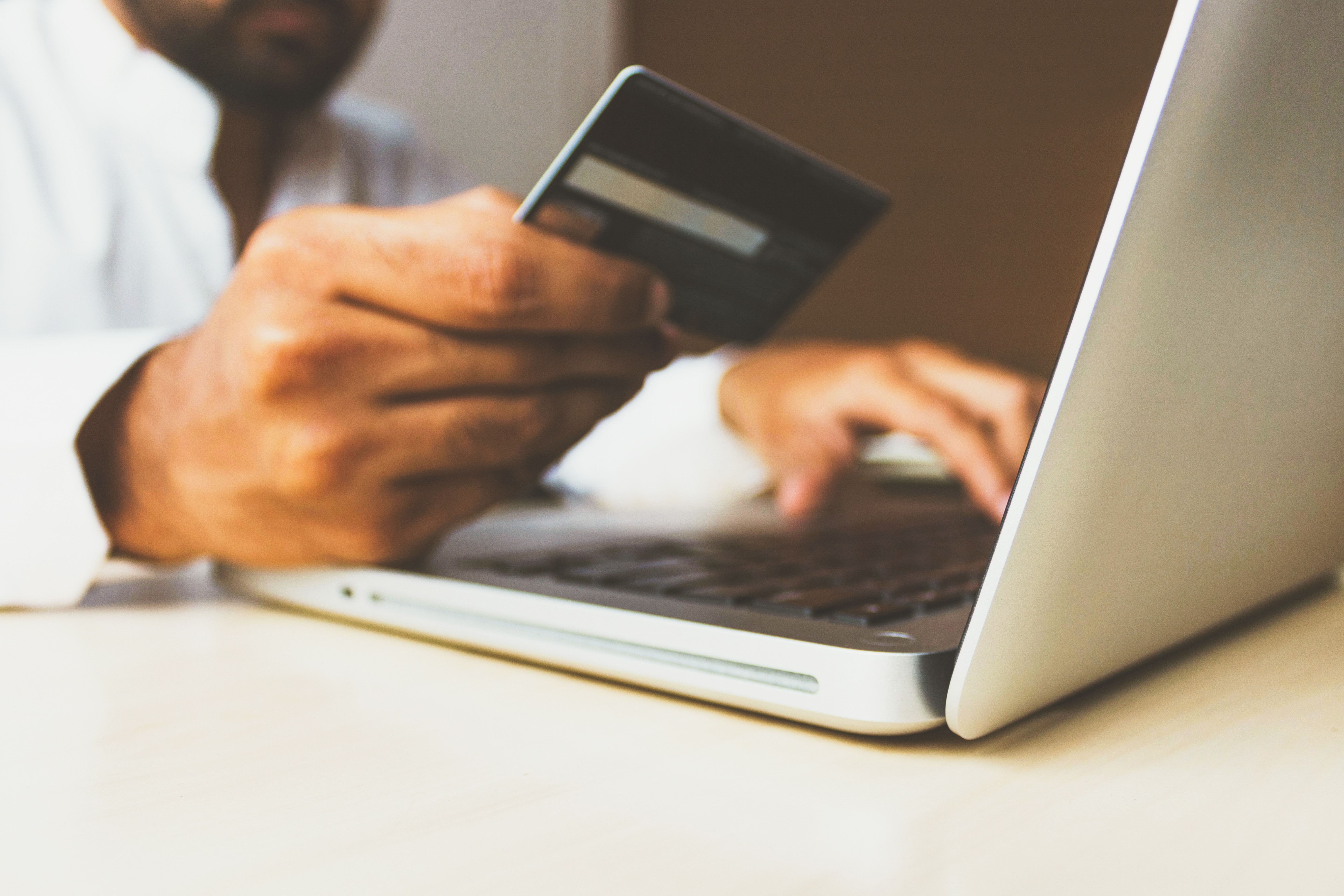
How many credit cards should you have?

Photo by Blake Wisz on Unsplash

By Barry Choi

Special to the Financial Independence Hub

If you’ve recently walked into the mall, your bank or even the grocery store, there’s a good chance you’ve been asked if you want to sign up for a new credit card. Your first thought might be to say no since you’ve already got one, but with so many different credit cards that come with a variety of offers, it can be tempting to apply on the spot.

You may also be wondering “how many credit cards should I have” in the first place or “does it hurt me to have multiple credit cards?” There’s no straightforward answer so let’s take a look at when it does and doesn’t make sense to get another credit card.

When it makes sense: Pros

Getting another credit card can actually improve your credit score since it’ll increase your credit utilization ratio, which is one of the major factors that determines your credit score. Your credit utilization ratio is based on the amount of credit you’re using relative to the amount of credit you have available to you.

Let’s say you have a single credit card with a limit of $1,000 and you typically charge about $600 on it; that would give you a utilization ratio of 60%. If you applied for a new credit card and you were given a limit of $1,000, your overall credit utilization ratio would drop down to 30% since you now have access to a total of $2,000 in credit. As a general rule of thumb, your credit utilization ratio should be no more than 30%.

You may also want to maximize rewards by using a combination of cards for different spending categories or scenarios. For example, it would be to your benefit to use one of the best Mastercards in Canada if it earns you more points on grocery or gas spending compared to a Visa card. Alternatively, if you currently only have an American Express credit card, you could also apply for a credit card with no annual fee (Visa or Mastercard) and use it only where your Amex isn’t accepted. Since the card has no fee, you won’t need to worry about paying an annual fee on two different cards.

Sometimes it also makes sense to apply for a new credit card for a specific reason. Let’s say you like to travel, a card that comes with no foreign exchange fees or has airport lounge access would be pretty handy to have. You could also offset the cost of your trip by applying for one of the best Aeroplan credit cards, since the welcome bonus could be enough points to pay for your flight.

The above are great reasons why you should have more than one credit card, but that only applies if you’re responsible with your spending. In other words, if you’re always paying your bills in full and on time every month, then there’s nothing wrong with getting another credit card.

When it doesn’t make sense: Cons

The tricky thing about getting another credit card is that you could be tempted to overspend since you’ll have access to more credit. Studies show that people spend more when using credit cards instead of cash, so having access to a higher credit limit or multiple credit cards could potentially result in more spending.

More credit cards also means having to stay on top of more bills.
Continue Reading…

The rising cost of owning pets

By Ted McCarthy

Special to the Financial Independence Hub

People are spending more on their pets than ever. No matter the pet type (hamster, dog, snake, etc.), people are willing to pay a pretty penny on their pets. The APPA reported that US$72 billion was spent on pets in 2018.

People are spending so much on their pets, LendEDU wondered if people were willing to go into debt for their pets, or spend more on their pets’ wellbeing than their own?

Pet insurance is becoming more popular with pet owners, with 2.1 million pets insured in 2017.

LendEDU surveyed 1,000 adult American pet owners to see how much they spend on their pets, with or without pet insurance.

Spending breakdown on pets

The survey showed the breakdown of pets:

  • 24% of expenses go to healthcare/vet costs
  • 55% of expenses go to food
  • 13% of expenses go to toys & accessories
  • 8% of expenses go other

These statistics are about in line with the APPA’s statistics, as over US$30 billion out of the US$72 billion spent on pets in 2018 was food alone.

The pet business is massive in America and will continually grow according to the APPA. As consumers treat their pets better and more as part of the family than before, spending per pet will increase, and people are willing to spend that money.

Pet types

Out of the six pet types surveyed, dog owners spent the most acquiring their pet at an average of US$327.13, and fish owners spent the least at an average of $53.58.

Monthly expenses stack up to about the same. Dog owners spend an average of US$157.39 per month, bird owners, an average of $127.38, and cat owners an average if $95.11. Continue Reading…

Small changes that have a big impact on your Credit Score


By Amanda Huon

Special to the Financial Independence Hub

If your goal is to boost your credit score then it’s important to know what factors affect it. There are a lot of variables that come into play when it comes to getting your perfect credit score. These variables range from payment history to credit utilization. It’s important to always be aware of your credit score because it plays a significant role in weighty decisions, such as purchasing a house, earning an amazing career, and having financial independence!

These quick tips will help you improve your credit score:

Level of Debt 

If you have a high level of debt, you’ll most likely suffer from damaged credit in one way or another. The amount of debt that you owe affects 30 per cent of your overall credit score. That’s a large chunk! However, all hope is not lost. There are always opportunities for you to repair your credit. In fact, there are credit repair companies out there that use personalized methods to help fix damaged credit score.

Payment History 

Another critical determinant of your credit score is your payment history. If you have a long history of on-time payments then your credit score is more likely to be in good condition.  However, missing a payment will negatively impact it. Of course, the longer the bill goes unpaid the greater effect it has on your credit. This is why it is extremely important to always pay your bills on time. 

Credit Usage

This tactic can yield speedy results. It can either quickly boost your credit or quickly slash it. Credit usage mainly focuses on the ratio between the balance you owe and your total credit limit on all you revolving accounts. This ultimately means that using your credit card at a lower rate can result in a better credit score.  Continue Reading…

Those TV ads about financial advisors

By Darren Coleman

Special to the Financial Independence Hub

There is an Oscar Wilde quote that goes like this: “A cynic knows the price of everything and the value of nothing.” I think of it every time I see one of those Questrade TV commercials where the client meets with their wealth-management advisor so they can tell the person they are fired. Why? The fees are too high.

The commercials drive home the point that advice costs more than doing things yourself, which is no surprise. I’m also flattered because in one of the ads, the character has my name – Darren – and it makes me think I might be in that seat. But that’s as far as the similarity goes because in all the years I have been in this business no client has ever told me they are leaving because of my fees. Not one.

This is where I think those TV ads miss the point. The issue at hand should not be about price. It should be about Value.

All those ads focus on the price of advice and the implication is clear: that advisors are gouging their clients. The advisor gets to retire early because of fat fees while the client, according to the ads, loses up to 30% of their retirement savings to fees. While the math in these ads may be  questionable, the ads also ignore any benefit that the Advisor’s advice may bring.

The ads showcase clients not experiencing true value

Let’s explore what these ads are really about. What they showcase is that the client is not experiencing true value in the relationship. So, the client decides to go it alone and hire Questrade’s robot to do things for them. Questrade, and ‘robo-advisors’ as they are called in the industry, offer a discounted trading commission to do-it-yourself traders, along with pre-built portfolios for more passive investors. As there is no personalized advice on any financial matters for the client, the fees are much lower. Which is as it should be.

I, for one, would never use such a service. I don’t even like those robot vacuum cleaners; the one my wife bought always gets caught under the couch because it can’t find its own way out, which is annoying. I also dislike those robot attendants which more and more companies are using for navigating their telephone systems. And I use these analogies for good reason.

As far as handling your investments and financial matters, does going it alone or going with a pre-built model portfolio actually work? The evidence shows this is not the best solution for most people.

Behavioural mistakes rob people of bulk of their returns

Every year Dalbar, North America’s leading independent expert for evaluating, auditing and rating business practices, produces its annual Quantitative Analysis of Investor Behaviourstudy, which shows that most investors underperform their own investment portfolios. Year after year, investors buy and sell at the wrong times. They do this because they allow their emotions to get in the way. Consider it part of the human condition. Believe me, professional advisors know all about these tendencies: that behavioural mistakes rob people of the bulk of their returns.

For example, in March 2019, Dalbar calculated that the average investor lost more than twice as much as the market in the previous year! The average investor saw their portfolio drop by more than 9% while the market was down only 4%. And this was no fluke. Over a 20-year time period, these mistakes have continued and investors, on average, underperformed the broad market by about 4% annually. Continue Reading…

How much are your old Mobile Phones worth?

By Charles Duke

Special to the Financial Independence Hub

Selling a used smartphone is an excellent way to make some extra bucks and buy recently released phones. Today, phone prices drop drastically (sometimes by 50% in a month) as soon as new devices are released. This rapid depreciation allows buyers to find flagship smartphones at modest prices when they appear on the used market. Buyers are even more likely to find better bargains when they buy phones that are a couple of years old when new devices are launching. 

There are numerous sites to help users sell their old smartphones, including sellmymobile.com. Here are the prices buyers should expect when selling different phone models:

Apple iPhone

The price of an old iPhone depends on the model and where you want to sell it. Sites like sellmymobile.com should provide a range within which you can sell the device. Generally, private sales make more cash than shops or online retail stores since they need to mark up their sale prices. Sellers can expect more when selling the iPhone 6S, max models and high capacity phones (i.e. more than 16GB of storage). Other features that increase the value of an old iPhone include: 

  • The condition of the Apple device
  • An unlocked handset (Apple phones tired to a network). Users whose devices are tied to a network should consider unlocking it before selling.
  • If the battery has been replaced. Apple offers to replace batteries on iPhone models from version 6 and above for £25-£29 only.

Samsung

Samsung is known for its flagship Galaxy Note and Galaxy S series. The manufacturer develops high-end devices that can be out of reach for most people. As a result, many users opt to sell past generation Galaxy phones, which are often still in demand in a bid to purchase the latest phones. Prices vary from one site to another, and the longer the user waits to sell the device, the less money it attracts. Galaxy S4 for example retails at £133 on AT&t (black), £78 on Sprint (blue) and £151 (white) on T-Mobile.

OnePlus 

The manufacturer is known for making smartphones with high-end components and features without charging high prices. However, smartphones have lost popularity over time with prices plunging to as low as £ 40 for the OnePlus 3.

LG

Most LG users sell their old phones using the manufacturer’s buy-back program. The program allows users to earn cash and buy the latest devices. It also supports all carriers, i.e., AT&T, T-Mobile, US Cellular, Virgin Mobile, Boost Mobile, Cricket and MetroPCS, among others. The flagship smartphone series for this company is the G2, G3 and G4 models. Additionally, unlocked T-Mobile, Verizon and AT&T smartphones hold value longer than Android phones on carriers. Users should also ensure the IMEI or ESN of the phone is clear for activation on new wireless plans. As such, it can’t be reported stolen or lost and should not have an outstanding balance.

Oppo

Oppo is ahead of the curve when releasing new devices. It was the first company to introduce 5MP and 16 MP front cameras, 5x dual zoom technology and rotating cameras. As such, buyers of used devices are likely to find a pretty good bargain for used models. Find X, the company’s latest phone retailed at £1099, but users can now find a second-hand version at only £220. The smartphone has 8GB of RAM and 256 GB memory and is powered by a Qualcomm Snapdragon 845 processor.

Huawei

The market for used Huawei smartphones recently took a plunge since the US suspended the use of Android OS on its mobile phones. As such, buyers can take advantage of potential bargains as phones have dropped by £200-£300 since the ban. The P30 Pro, the manufacturer’s latest phone, now retails at £100.

Charles Duke is a content writer, covering topics relating to technology, investing, business and finance. He specialises in online article copywriting and has produced work for countless blogs over his 6 years of writing for the online community. He has a particular interest in psychology and behaviour when it comes to people and money and enjoys looking to the past for lessons that can be learnt from history.  

.