Decumulate & Downsize

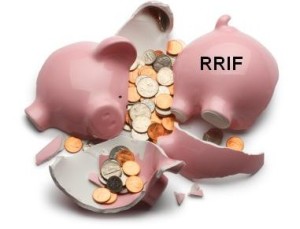
Most of your investing life you and your adviser (if you have one) are focused on wealth accumulation. But, we tend to forget, eventually the whole idea of this long process of delayed gratification is to actually spend this money! That’s decumulation as opposed to wealth accumulation. This stage may also involve downsizing from larger homes to smaller ones or condos, moving to the country or otherwise simplifying your life and jettisoning possessions that may tie you down.

Timeless Financial Tip #7: 6 Steps to Retiring as Planned

Canva Custom Creation: Lowrie Financial

By Steve Lowrie, CFA 

Special to Financial Independence Hub

Retirement isn’t the only reason to set aside current income for future spending. But since it’s usually the elephant in the financial planning room, it’s worth a Timeless Tip of its own.

The following are 6 ways to leverage lifelong financial planning, so you can retire on your own terms and on your own timeline.

  1. 1. Don’t Delay Retirement Planning, Start Today

I know, it’s easy to assume retirement planning is for when you get older. How old? Well, older than you are today (you tell yourself).

It’s also true that a detailed retirement plan is unlikely to come into focus until you’re at least mid- if not late-career. It’s hard to take clear steps toward hazy targets.

But none of this means it’s wise to be too Rip-Van-Winkle-like about your retirement planning. Even if it’s decades away — and especially if it’s not — a few sensible financial planning steps should help you avoid having to take any huge leaps 20 years down the road.

  1. Do Some Financial Forensics

To get started, try doing some Family Spending Forensics. Don’t worry, no forceps will be required to get a grip on what you’ve got and where it’s going. No judgment! Just take a few hours every year or so to ask yourself:

  • How much am I currently spending, in what categories?
  • How much am I saving for upcoming expenses?
  • How much am I investing for the future?
  1. Have a Personalized Financial Plan

Once you have a sense of where you’re at, create a financial plan that outlines where you’d like to go, including in retirement. Your plan should describe what your goals are, when you would like to achieve them, their approximate cost, and where the money will come from. Revisit your plan annually to freshen it, as needed. Having a plan in place will help you:

  • Spot any spending or saving leaks early on. It’s easier to heal a hole when it’s still small.
  • Make the most of new income. If you receive a raise, pay off your mortgage, receive an inheritance, or otherwise come across “new” money, your financial plan will inform you how to use the assets for maximum benefit, instead of randomly spending them on “whatever.”
  • Make good lifetime choices. Few families have more money than they know what to do with. Instead, most of us must bridge gaps between our assets and our aspirations. So, think about:
    • How will you bridge your gaps?
    • Will you work longer or pursue a higher-paying job?
    • Should you spend less, now or in the future?
    • Will you choose to invest more aggressively?

A financial plan helps you make good choices among spending/saving tradeoffs: during your working years and into retirement.

  1. Invest Toward and In Retirement

For most of us, our financial success comes from income earned during our career years. But it’s usually essential to also have invested a significant portion of that income into an inflation-beating, globally diversified investment portfolio we can tap in retirement. A financial needs analysis quantifies what your investment portfolio might look like to sustain a satisfying lifestyle in retirement: Continue Reading…

Canada’s Best Energy Dividend Stocks 2023

By Dale Roberts,

Million Dollar Journey

Special to Financial Independence Hub 

Canada’s energy stocks have been a key part of my investing strategy for some time now.

In August of 2020 I asked if Canada’s energy dividends were in trouble?

Of course that was before energy prices and energy stocks were dominating the headlines. At the time Canadian oil prices were about $30 a barrel and energy dividends were under a lot of pressure due to collapsed earnings.

That price has more than tripled, was above $115 U.S. and now sits near $70 U.S. in 2023. Those generous oil prices have fuelled incredible earnings and dividend growth. There is no sector over the last few years with greater free cash flow.

The oil and gas sector was also the only sector in Canada to provide positive total returns in 2022. This came as no surprise, as energy is the only sector known to provide reliable inflation protection.

That said, the price of oil has been coming down thanks to the rising rate environment that is designed to cool economic activity and by extension bring down troubling inflation. We have global recession fears and the Chinese lack of demand has also weighed on oil prices.

The following chart reflects the price of Canadian oil priced in U.S. dollars. In Canadian dollars the price is in the $57 range.

cci graph
Source: Oilsandsmagazine.com

Here is a video that explains the spread (difference in prices) between Canadian oil and U.S. oil.

Higher oil prices are wonderful for top Canadian energy companies, mostly operating or active in the Canadian oil sands, but many of the producers also have global operations. They have already become free cash flow gushers. More investors, fund managers and retail investors are going along for the ride.

While the last year hasn’t exactly been spectacular (with the TSX Capped Index ETF XEG down 16%), I’m still up over 270% since I started writing about Canadian energy stocks in August of 2020.  That’s before we really dig into the juicy dividend raises and special dividends that poured into my brokerage account over the last few years.

energy stocks dividend graph
Source: YCharts.com

In October of 2020, on my blog, I had suggested that investors take a look at Canadian oil and gas stocks:

“The Canadian energy sector has been beaten up. Foreign investors have given up and so have many Canadian investors. Where there is incredible pessimism there can be incredible rewards. But there is certainly no guarantee that the pessimism for the Canadian energy patch is not deserved.
That said, it is also certainly possible that the pessimism has jumped the shark. There may be incredible value in the energy sector for Canadian investors.”

Canadian investors who went against the flow were rewarded handsomely, and it was not as big a risk as many would think. The macroeconomic and energy-specific story was quite simple. Continue Reading…

Lean FIRE (as opposed to Fat Fire)


By Alain Guillot

Special to Financial Independence Hub

I was told on Twitter that living on less than $24k per year is very frugal. Maybe it is, but I would like to explain how I live on less than $24K and I feel that I live like a king. 

(Editor’s Note: The Twitter discussion below followed Monday’s Hub post on by Myownadvisor blogger Mark Seed: Is Fat Fire realistic?)

First of all, my net worth right now is about $500,000. If we use the 4% rule, I should be able to withdraw $20,000K/year ($1,667/month) in perpetuity.  

How I live  

Map of Alain’s neighbourhood in Montreal

I live in one of the best neighborhoods in Montreal. It’s called “Le Plateau Mont Royal.” I have a beautiful park 10 minutes walking distance to the east, and another more beautiful park 10 minutes walking distance to the west, and I have the Old Port, 20 minutes walking distance to the south. 


Alain on Duluth Street


The street where I live is pedestrian only; it’s a cobblestone street.

Because I have been living in the same apartment for the past 12 years, my rent is low. $815/month. 

One of my small pleasures is to go downstairs, to a little park on the corner and drink a beer with my neighbors. (beer from the convenience store $2)

My apartment is what’s called a 3 ½. One bedroom, one living room, a kitchen, and a bathroom. I live on the second floor of a two floor building. 


The local supermarket

I do my groceries at a small family-owned supermarket where I have been shopping for 12 years and where I know the cashiers and the owners by first name basis. Because I follow a plant based diet, I eat 99% of the time fresh fruit and vegetables. My grocery bill hardly exceeds $10 per day ($300/month). I buy my fruits and vegetables daily. 


Continue Reading…

Is Fat FIRE realistic?

By Mark Seed, myownadvisor

Special to Financial Independence Hub


Weekend Reading - is Fat FIRE Realistic
Image Source: Pexels, Gantas Vaičiulėnas

Is Fat FIRE realistic?

Before my answer to that question, for those outside the personal finance, devout FIRE (Financial Independence, Retire Early) bubble, a primer based on what I know …

What is FIRE?

I would like to provide a universal definition from the personal finance community today but there isn’t one. There are, however, some general thoughts/themes when it comes to FIRE and those who follow the philosophy around it:

  • Financial Independence, Retire Early (FIRE) is a movement related to extreme/aggressive savings rates and investment tactics that allow individuals to retire sooner than potentially any traditional budgeting or retirement planning approach might permit.
  • When it comes to savings rates: in some circles, by saving up to 70% of your annual income, some FIRE enthusiasts aim to retire early (and live off small portfolio withdrawals from their accumulated assets).
  • When it comes to portfolio withdrawals: in some circles, by withdrawing a small % of the accumulated assets (e.g., 4% of the portfolio), said FIRE enthusiasts may expect their portfolio to last a lifetime without fear of running out of money.

The FIRE movement – new term, old concept

The FIRE movement takes direct aim at some traditional retirement ages, such as age 60, 65 or even later on but there is no consensus on what is / is not a retirement age, of course.

The theory and movement goes: by dedicating the majority of your after-tax income to savings and specifically saving for retirement, well, you could “retire” sooner than most. Probably true.

From this perspective, FIRE is not a new concept even though the moniker is somewhat newish.

I’ve written multiple times about the FIRE movement and my thoughts on FIRE.

I’ll link to those thoughts here for additional reading as well.

I’m hardly anti-FIRE; this movement/approach/philosophy has always resonated how I live for the most part:

  • To live within your means or slightly below what you make as income.
  • To save early and often.
  • To avoid long-term debt that is not used for wealth generation.
  • To optimize your investing (i.e., keep your costs low and diversified, and avoid money managers).

Several FIRE retirement variations have emerged over the years to frame a particular lifestyle expectation that could come with FIRE. I’ll rank them in order of cashflow significance although these terms also vary based on the FIRE enthusiast you’re talking to:

1. Lean FIRE

As the first word suggests, lean is a strict adherence to a minimalist lifestyle. Many Lean FIRE adherents live on $25,000 per year, or less per year. Here are a few examples:

Jacob Fisker – Early Retirement Extreme. How he used to live on just $7,000 per year. Not a typo.

There is Jessica from Financial Mechanic, who spent less than $20,000 in 2020.

In more recent years, A Purple Life, wrote about a nomadic life earlier this year, living off less than $25K USD.

These are certainly jaw-dropping low numbers …

2. Barista FIRE

Not that you have to become a barista, rather, the term is used to highlight a combination of work-life balance that can be juggled – a form of semi-retirement if you will.

Barista FIRE is a type of semi-retirement whereby you can consider part-time work or work on your own terms, and still enjoy the benefits of some income and workplace benefits. (The term was coined as such since Starbucks offers benefits to part-time workers … something to consider for your semi-retirement plans!?) Continue Reading…

Uncovering the Truth behind Short-Term Trading

Short-term trading may seem appealing to beginning investors, but it’s unpredictable and can lead to significant losses

TSINetwork.ca

Beginning investors may develop an unrealistic idea of how much money they can make by delving into short-term trading. It seems obvious to them that all it takes is some good advice from an expert.

However, any true investing expert understands that random factors play a big role in short-term stock price fluctuations. That’s why these movements are unpredictable. No outsider consistently profits from them.

In fact, there’s a lot of randomness in the stock market and a lot of conflicts of interest. You have to take that into account if you hope to succeed as an investor.

Many investors try to outperform the stock market by going in and out of it erratically, based on their assessment of risk and potential reward. The trouble is that these risk assessments rise and fall with day-to-day or month-to-month economic and business developments, which are also subject to the influence of random factors and conflicts of interest.

As a result, these investors tend to “buy on strength,” as the saying goes. That is, they do more of their buying when confidence is high and stock prices have gone up. By then, however, much of the rise they hoped to profit from will have already taken place.

They are also inclined to “sell on weakness,” when investors are generally nervous and prices have dropped. That way, they hold on to their stocks during much of the decline they hoped to avoid. They may even wind up selling at or near the bottom in prices.

It may seem like a self-evident truth, but it’s worth repeating. While it’s hard to outperform the market, it’s easy to underperform it. In fact, some investors do it almost every year.

Understanding the realities of short-term trading

Many people start out investing with unrealistic ideas of how much money they can make from short-term stock trading, and how quickly they’ll get rich.

Inexperienced investors are shocked when they learn that successful investors rarely if ever do any short-term trading. (That applies to everybody from “The Wealthy Barber” to Warren Buffett.) After all, many stockbrokers, investor newsletters, cable TV financial kibitzers and so on seem to talk about nothing but day-to-day or hour-to-hour market trends. They make it sound easy to GRQ (Get Rich Quick).

It’s easy to sort through yesterday’s investment news and pick out a reason that seems to explain why a stock or the entire market went up or down today. Trying to spot tomorrow’s winners today is vastly harder. Nobody does it consistently. Continue Reading…