General

Withdrawing from your Retirement Nest Egg

MarieEngen
Marie Engen, Boomer & Echo

By Marie Engen, Boomer & Echo

Special to the Financial Independence Hub

You’ve been saving all your working life and now that you have entered your retirement phase, it’s time to start drawing from your savings. In some circumstances there will be people who will be able to live off their dividends and interest alone. Most retirees, however, will have to start spending the money they have saved.

Once you have decided on the amount of income you need annually for your retirement lifestyle and determined how much of it will come from your guaranteed pensions, the remainder must be withdrawn from your nest egg.

You may have multiple accounts and both registered and unregistered savings. Your investments could be stocks and bonds, ETFs and/or mutual funds. You might be in a position where you must withdraw a minimum amount from your RRIFs.

This example will show you how you can manage your retirement withdrawals, taking the total of all your accounts as a whole. It assumes dividends and interest will be reinvested, but you can use them as part of your yearly cash allotment if you so choose. You just have to adjust as necessary.

A model for retirement withdrawals

Meet newly retired Rodney and Pamela O’Brien. They have a retirement nest egg totalling $500,000. Continue Reading…

The truth about Handhelds — it’s not pretty

Two young people looking into smartphones while walking on city street
Millennials distracted by their Handhelds

By Andy Sherwood

Special to the Financial Independence Hub

Young people today, and I’m talking about Millennials and those who just made it into Generation X, think they can do everything on their Smartphones,  Handhelds or other mobile devices. But I have news for them. They can’t.

In Germany a pedestrian who was typing on a Handheld walked into a busy intersection, and was promptly killed by a passing car. It wasn’t the motorist’s fault. The person on foot was oblivious to where they were and what they were doing.

Nowadays people are apt to check their precious mobile devices twice a minute. Every thirty seconds. They exist in total crisis mode. This is a huge problem in terms of productivity. Here’s why.

Prioritizing impossible with Handhelds

First, it is impossible to prioritize your day if you live on your Handheld. On the other hand, Microsoft Outlook is an efficient way to do that – but only if you know how. Think of Outlook as a ten-ton truck that can carry ten tons of steel (i.e., a lot of information.) But if that’s a ten-ton truck, then your Handheld is a motorcycle and no motorcycle can carry ten tons of anything. It just doesn’t have the power to put your tasks into any intelligent order or scheme. You will be much more efficient, and productive, if you recognize what your Handheld won’t do.

Continue Reading…

3 ways to pay off High-interest Credit-card Debt

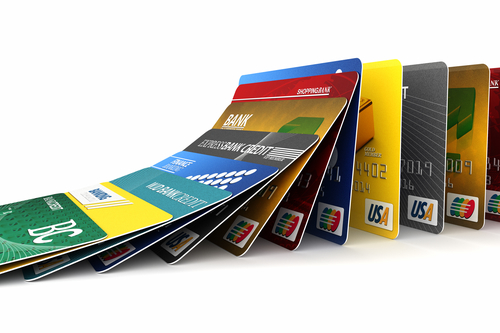
Credit cards in a row falling - credit card debt concept

By Alyssa Furtado, RateHub.ca

Special to the Financial Independence Hub

Credit-card debt can be debilitating.

Because of high interest rates, once you find yourself in the hole, it seems almost impossible to pay down your debt. Not only will this debt put a damper on any future plans of saving for a home or even a vacation, it also negatively impacts your credit score, which will make the idea of owning a home even more difficult to imagine.

If you eventually want to own a home or go on a vacation that doesn’t add to your debt, employ one of the strategies below to start your journey on becoming debt-free.

Consolidate your debt

If you have debt on multiple credit cards, you should consolidate it into one place. You can either consolidate everything onto a balance transfer credit card or apply for a personal loan/line of credit with either the bank or a peer-to-peer lending company, like Grow.

Continue Reading…

Navigating a U.S. election year stock market

patmckeough
Pat McKeough, TSINetwork.ca

By Pat McKeough, TSINetwork.ca

Special to the Financial Independence Hub

The U.S. election year stock market rule can be profitable for investors in any political climate.

As we’ve pointed out in the past, an election year stock market tends to go on an above-average rise in U.S. Presidential election years. This provides a statistical rationale for optimism in 2016, since the next election is this November. But it’s no guarantee that the market will rise substantially, for a couple of reasons.

First, several ominous factors are weighing on the market right now, in addition to the election. These include the outlook for interest rates; the trend in prices for oil and other commodities; the rise in terrorist activity; the Chinese economic slowdown; and the sharp rise in the U.S. dollar and corresponding drop in the Canadian dollar.

An abrupt shift in any of these factors could have a big influence on the market for the remainder of the year and beyond.

Obama diverging from usual pattern

Second—more important—the election-year indicator works because U.S. politicians have a characteristic way of behaving during these years. President Obama is diverging from the traditional pattern that helped spur market gains in past election years.

Continue Reading…

Mother’s Day and your future role as Mom’s money manager

Depositphotos_6869353_s-2015By Josh Miszk, Invisor.ca

Special to the Financial Independence Hub

Most of us will care for our aging moms at some point in our lives, but helping our parents maintain their independence as they grow older can be a juggling act, particularly when it comes to their finances.

Before we are thrown into the overwhelming responsibility of managing Mom’s investments, it’s important to do some advance planning. For many, starting the conversation with Mom is the biggest hurdle, and what better time than on Mother’s Day?

Whether it’s day-to-day or long-term investments, here are a few things to consider when helping Mom with her finances:

Get a holistic view

Start by getting a complete picture of Mom’s current and expected cash flow needs. Look at her sources of income (like pension and CPP) and her living expenses to get a better idea of any cash shortfall her investments will need to cover.

Next, get a holistic view of her investment portfolio, including what investments she holds and where. Continue Reading…