

 Posted By
Even when parents try to shield their children from financial worries, a new study suggests kids are hearing more than parents realize.
 As the cost of living continues to squeeze Canadian households, a new survey from Vanguard Canada suggests the strain isn’t confined to parents’ bank accounts; it’s also shaping how their children think and feel about money too.
The survey of just over 1,000 Canadian parents of children under 18 found that households that talk openly about money raise more financially literate kids, while households that avoid the subject may be doing more harm than good.
The Instinct to Protect backfires
Many parents try to keep financial stress away from their kids. Among parents who describe themselves as financially stressed, more than two thirds said they feel pressure to hide their worries from their children, and roughly a third said they avoid discussing money at home altogether.
But the survey suggests that instinct doesn’t work the way parents hope. Seven in ten financially stressed parents said their children overhear money conversations anyway. In fact, those children were found to be nearly five times more likely to feel anxious about money than their peers.
Sal D’Angelo, Head of Vanguard Investments Canada, said children pick up on far more than parents assume, even when adults try to keep financial matters private. He framed early financial education as key to helping the next generation build healthy money habits.
A Literacy Gap that starts early and closes late
The survey also points to a timing problem. Households where money is discussed regularly produce children with markedly stronger grasp of core concepts like banking, debit and credit, which is nearly three times higher comprehension according to the findings.
Yet the majority of parents said substantive money conversations don’t begin until their child is between 15 and 18 years old, well after attitudes toward money have already started to form.
“The reality is that many parents tend to show up a little late,” D’Angelo added. “Kids are curious much earlier than we realize so having those conversations a few years earlier can help, even if it includes fairly simple concepts.”
That educational gap has fueled calls for schools to take on a bigger role. Close to half of parents surveyed said they believe teachers should be involved in their children’s financial education. Ontario has already moved in that direction, recently mandating that high school students pass a financial literacy test in order to graduate.
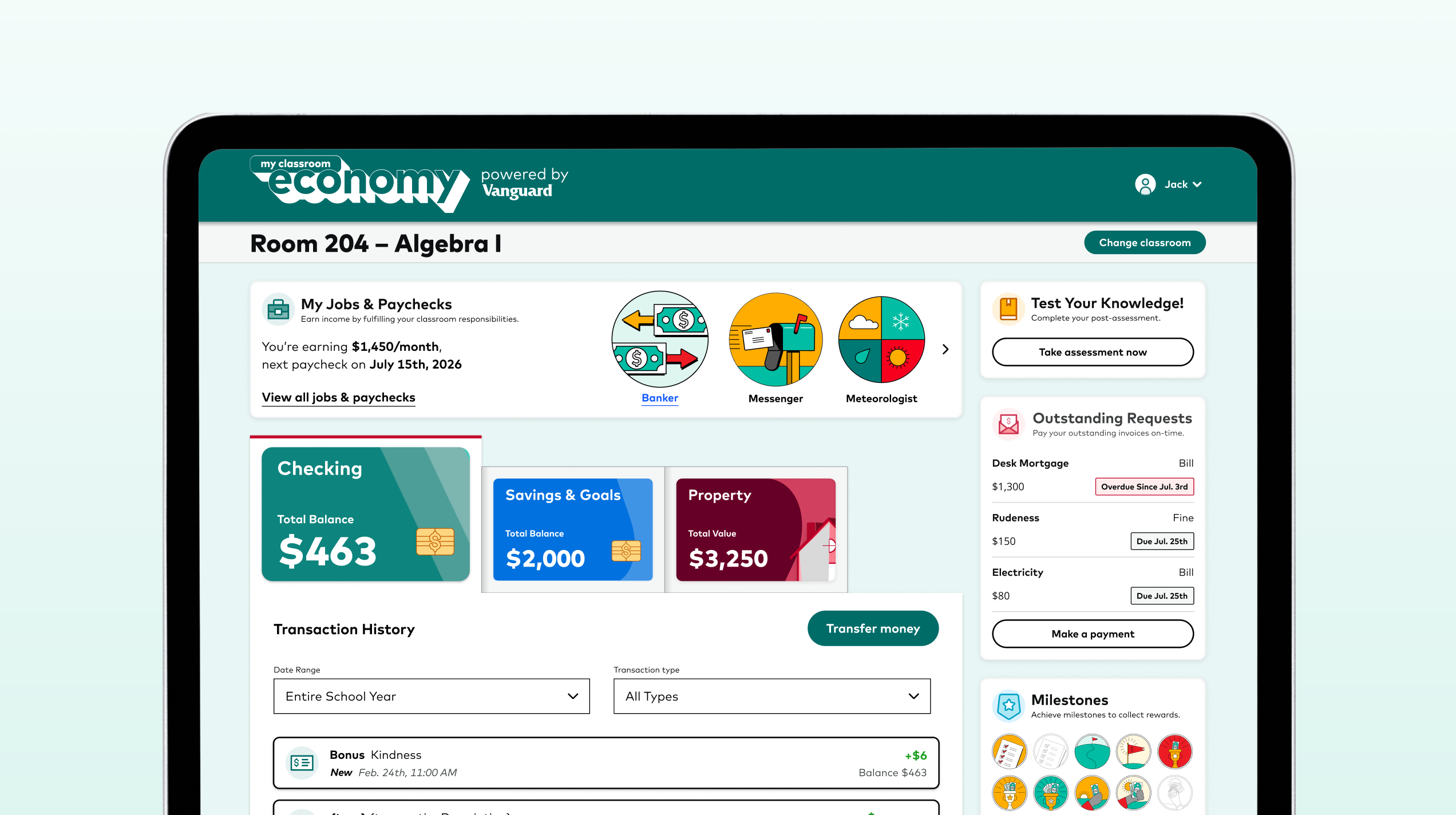
Addressing this financial literacy gap is why Vanguard introduced its MyClassroom Economy digital program in Canada last year, after more than a decade of use and success in the United States. (Link below)
It is available for free to teachers (and parents) and provides students with an interactive and hands-on experience to help understand basic financial concepts such as budgeting, spending and money management.
“We have seen the positive impact this program can have both for teachers in helping manage their classroom and for students in learning new concepts in a fun way which can pay big dividends down the road when they become adults and can apply these lessons,” said D’Angelo.
For more information, please visit here.
