

 Posted By
By Hamilton ETFs
(Sponsor Blog)

Hamilton ETFs recently hosted renowned Wall Street strategist Ed Yardeni in Toronto for a discussion on his outlook for markets, the economy and the risks facing investors.
With more than 40 years of experience forecasting economic and market trends, Yardeni has built an impressive track record, perhaps most notably for his “Roaring 2020s” thesis, which he introduced in August 2020.
From his updated 2020s forecast to the return of the bond vigilantes, here are six of the most interesting takeaways from the conversation:
Roaring 2020s Case lowered to 70% Probability
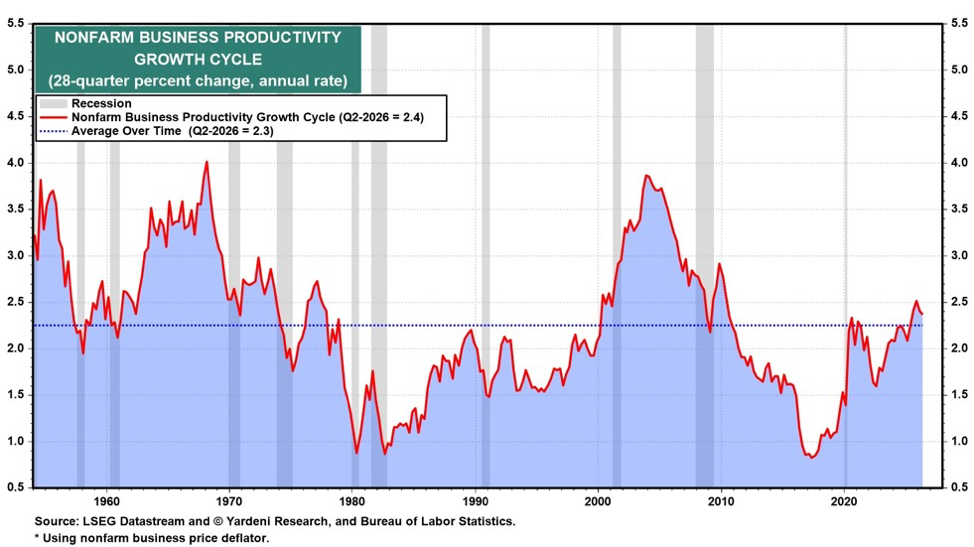
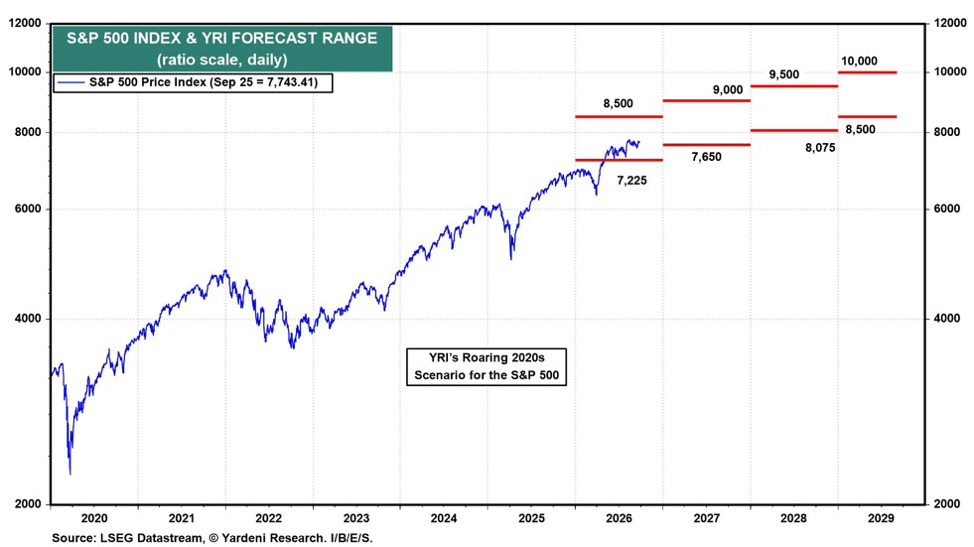
- Ed Yardeni’s base-case Roaring 2020s scenario draws parallels between the 1920s and 2020s (both began with pandemics, recessions and pessimistic outlooks and saw great economic prosperity). He predicts technology-driven productivity gains will drive economic growth throughout this decade, which will end without a recession and the S&P 500 index at 10,000.
- With just over three years left to go in the decade, he has lowered the odds of his Roaring 2020s scenario from 80% to 70%, raising the probability of a bearish outcome from 20% to 30%. He also lowered his S&P 500 target for the end of 2026 to 7,900 from 8,400 and moved his 8,400 target to mid-2027.
- The main risk has shifted from the war in the Middle East and rising oil prices to rising bond yields and their potential impact on price-to-earnings (P/E) multiples. He cited the bear market in 2022 as an example of how falling multiples can drive shares lower even when earnings hold up.
- Nevertheless, he sees stocks as long-term investments and pullbacks, corrections and even bear markets as potential buying opportunities.
Quote: “This Roaring 2020s story is basically productivity based. Productivity-led economic growth keeps inflation down, boosts margins, and actually boosts real wages. Wages rise faster than prices when productivity is moving.”
Reasons for Bullishness
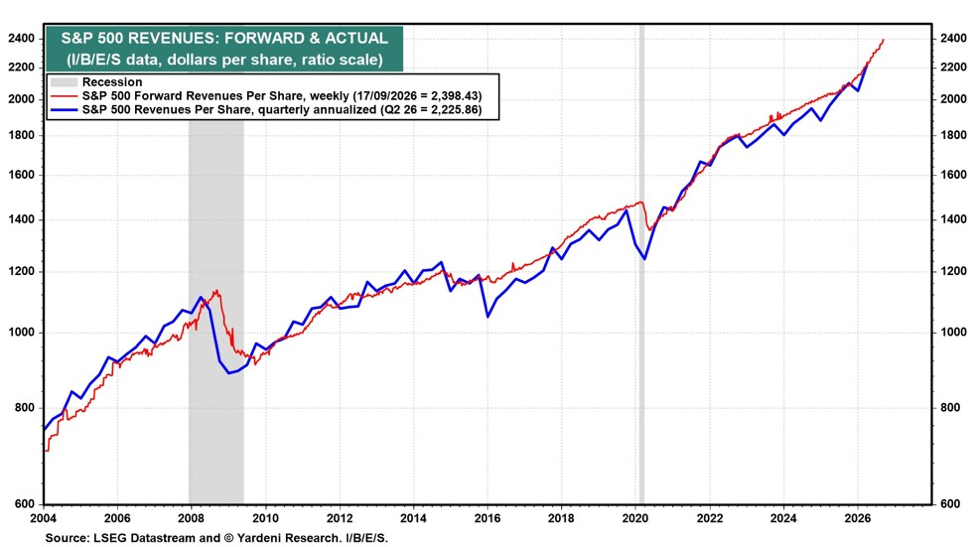
- Yardeni believes the current bull market is being driven by “FEMO” (Fabulous Earnings Momentum) not “FOMO” (Fear of Missing Out) and points to rising analyst consensus expectations (see chart below) and the Q2 2026 earnings year-over-year growth rate being around 25% even after excluding unrealized gains on equity investments held by Big Tech.
- He says if the U.S. economy is resilient, earnings will be resilient, and the economy has shown resilience in the face of several shocks (the pandemic, supply chain disruptions, inflation, Fed rate hikes, war, high oil prices etc.). The reasons for this are mainly strong consumer and capital spending.
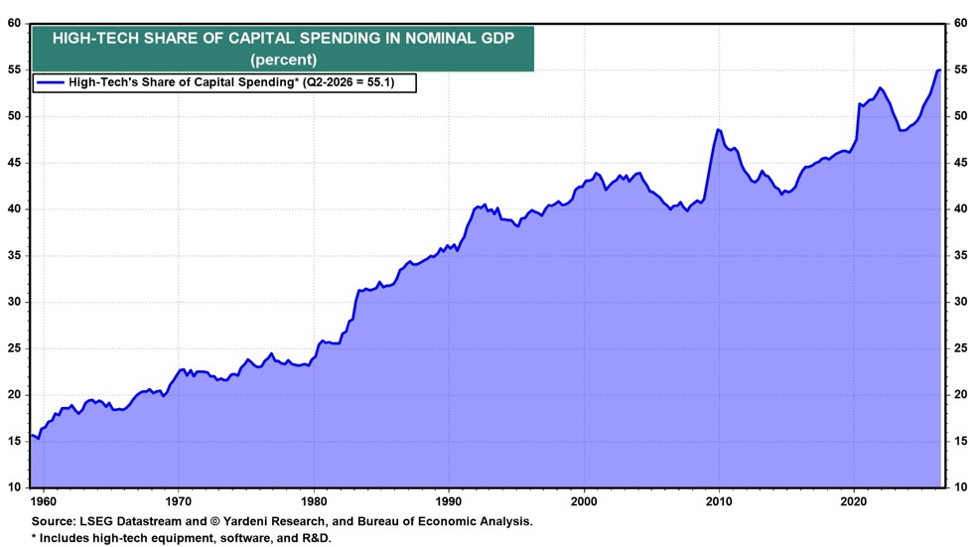
- Although consumer confidence has taken a dive, this weakness isn’t reflected in retail sales. He says consumer spending is supported by the retiring baby boomer generation spending from their record net worth. Capital spending is supported by the AI boom. (see chart below).
- He also acknowledged the U.S. economy’s resilience has been in part due to significant fiscal stimulus. This is a weakness in his bullish argument.
Revenge of the Bond Vigilantes: How High is Too High? Is it Time to Buy?
- Yardeni, who coined the term “bond vigilantes” in 1983, said their influence was suppressed during years of quantitative easing and zero interest rates that kept yields low. They may return for “revenge” as bond markets operate more freely and interest rates get back to normal, demanding higher yields in response to the large government debts.
- He sees several forces pushing yields higher globally, including government deficits, tightening monetary policies, inflation, strong economic growth and the unwinding of the yen carry trade. He’s watching the Bank of Japan’s actions closely as it faces pressure to strengthen the yen by raising interest rates, which in turn impacts bond markets.
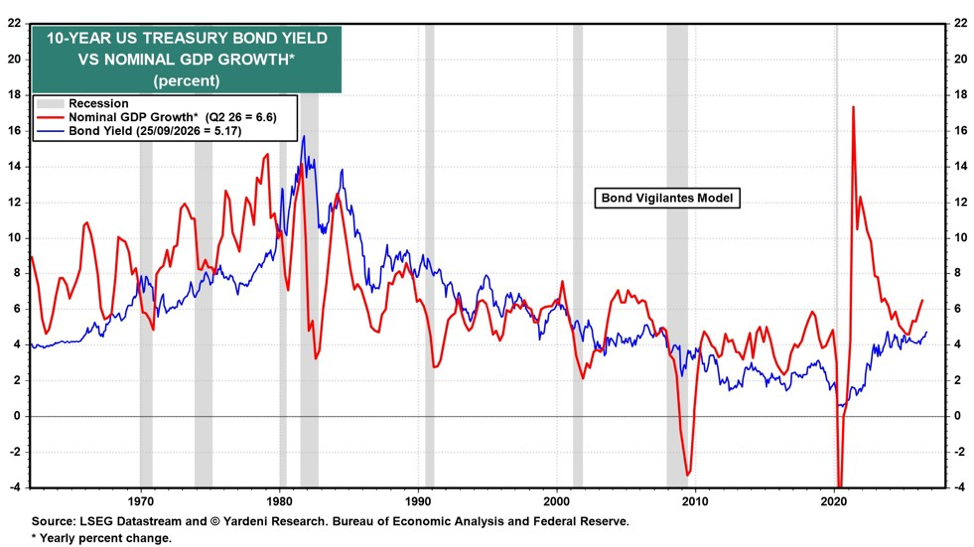
- He thinks it would take U.S. 10-year Treasury yields rising over 7% to seriously impact the U.S. economy. With nominal GDP growth at 6.6% in Q2 2026, the 10-year Treasury yield exceeding the economy’s growth rate could make the U.S. government debt burden much harder to manage. (see chart below) But a rapid rise in yields could be “destabilizing” before that, for example if borrowers cannot refinance.
- He argues the U.S. economy is less interest-rate-sensitive than it used to be: baby boomers would be happy to earn higher yields on their investments, and many homeowners have paid off their homes or locked in low mortgage rates.
- He thinks this is a great opportunity to buy bonds, but there’s potential for yields to go higher. He added that U.S. municipal bonds are looking attractive.
The Fed and U.S. National Debt
- Yardeni expects one or two more rate hikes this year. He interpreted Fed Chair Kevin Warsh’s remarks about removing a “dose of accommodation” as suggesting there is more monetary policy accommodation the Fed may want or need to withdraw.
- He said a debt crisis is a “plausible” scenario, but not an imminent one. He added that the Fed would move very quickly to provide liquidity “if something breaks” and Treasury Secretary Scott Bessent may pull out the “bazooka” to buy back $25 billion or $50 billion in bonds by financing it with short-term bills: a super yield curve control approach.
- With the U.S. midterm elections coming up, he said gridlock in Congress is “usually bullish,” but it may make it harder to resolve the problem of unsustainable fiscal deficits. In his bearish scenario, which he has assigned a 30% probability to, there could be a conflict between the bond vigilantes and politicians.
Quote: “[A debt crisis] could really force the politicians to finally put together some sort of legislation which convinces the bond vigilantes that on a long-term basis, we are going to raise more revenues …”
AI, Productivity and Semiconductors
- Yardeni believes AI is the “real deal” and the next stage in the digital revolution that began with the IBM mainframe in the mid-1960s. It will boost productivity as the baby boomers retire and leave the workforce. Data is now the fourth factor of production, besides land, labour and capital.
- He points to the comeback that productivity has made and said it will eventually have a disinflationary impact on the economy, if not a deflationary one. This makes him optimistic that the current inflation problem is cyclical in nature, and not structural.
- Amid the dizzying news updates on AI, he recommends taking a broad, diversified approach to investing in the technology sector instead of stock-picking unless “you know what you’re doing.”
- He doesn’t subscribe to the doomsday scenarios about AI.
- He says semiconductors are trading like cyclicals and praised them as “structurally sound” and long-term “good investments because they’re the ones that are going to continue to innovate.”
Quote: “Nobody does creative destruction better than technology, particularly semiconductors. They literally eat their young in the sense that once they’ve introduced one very successful product, they’re already working on the next one.”

Yardeni’s preference for diversified technology exposure reinforces the importance of portfolio construction rather than trying to identify individual winners. For investors looking for broad exposure to leading technology companies, Hamilton ETFs offers QMVP, a low-cost, diversified solution with a 0.19% management fee.
Sector Outlook, ‘Go Global’ and China
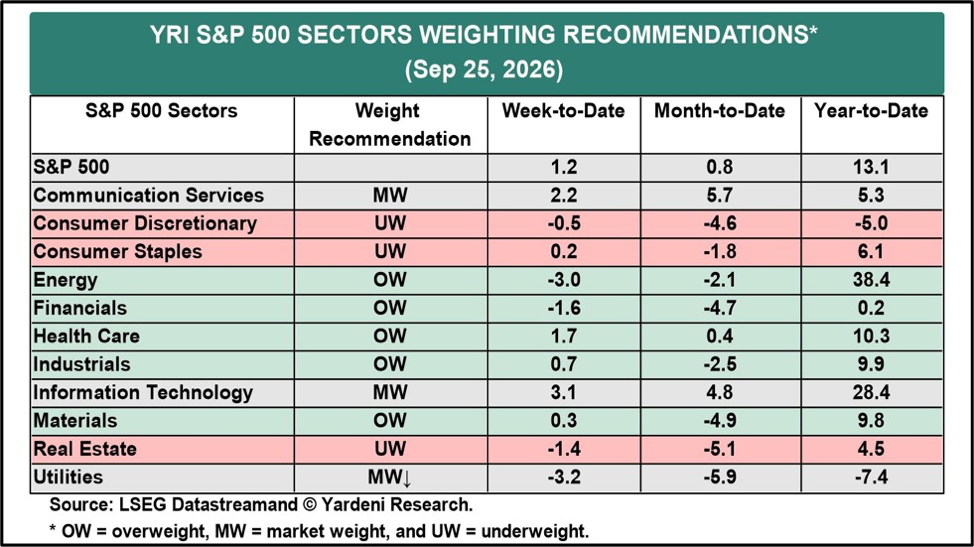
- Yardeni is overweight on Energy, Financials, Healthcare, Industrials and Materials. He called Energy “a great hedge against geopolitical uncertainties,” said Financials should benefit from AI in terms of productivity, and noted that Industrials could benefit from committed projects even if construction slows, provided local authorities do not intervene.
- He began recommending a “Go Global” strategy at the end of last year, advising investors to diversify out of the U.S., but acknowledged that the U.S. has performed equally well this year. He said the growing middle classes in emerging markets are aspirational and seek a higher standard of living, which is benefiting consumer, healthcare and financial companies.
- China is one of the biggest challenges facing the global economy, according to Yardeni. He said the economy is in “really bad shape domestically,” pointing to year-over-year retail sales growth (adjusted for inflation) hovering near zero and the ageing population.
______________________________________________________________________________
Disclaimer
The comments or statements contained herein may not represent the views of Hamilton ETFs. The information contained herein should not be construed as investment advice or considered as a recommendation to purchase or sell the mentioned securities.

Views expressed regarding a particular company, security, industry or market sector should not be considered an indication of any trading intent of any investment funds managed by Hamilton ETFs. Any reference to a particular security is for illustrative purposes only and should not be considered as investment advice or a recommendation to buy or sell any particular security.

Commissions, management fees and expenses all may be associated with investments in exchange traded funds (ETFs) managed by Hamilton ETFs. Please read the prospectus before investing. ETFs are not guaranteed, their values change frequently, and past performance may not be repeated.

Certain statements contained in this website may constitute forward-looking information within the meaning of Canadian securities laws. Forward-looking information may relate to a future outlook and anticipated distributions, events or results and may include statements regarding future financial performance. In some cases, forward-looking information can be identified by terms such as “may”, “will”, “should”, “expect”, “anticipate”, “believe”, “intend” or other similar expressions concerning matters that are not historical facts. Actual results may vary from such forward-looking information. Hamilton ETFs undertakes no obligation to update publicly or otherwise revise any forward-looking statement whether as a result of new information, future events or other such factors which affect this information, except as required by law.

The S&P 500 Index (“Index”) and associated data are a product of S&P Dow Jones Indices LLC, its affiliates and/or their licensors and has been licensed for use by Hamilton ETFs © 2026 S&P Dow Jones Indices LLC, its affiliates and/or their licensors. All rights reserved. Redistribution or reproduction in whole or in part are prohibited without written permission of S&P Dow Jones Indices LLC. For more information on any of S&P Dow Jones Indices LLC’s indices please visit www.spdji.com. S&P® is a registered trademark of Standard & Poor’s Financial Services LLC (“SPFS”) and Dow Jones® is a registered trademark of Dow Jones Trademark Holdings LLC (“Dow Jones”). Neither S&P Dow Jones Indices LLC, SPFS, Dow Jones, their affiliates nor their licensors (“S&P DJI”) make any representation or warranty, express or implied, as to the ability of any index to accurately represent the asset class or market sector that it purports to represent and S&P DJI shall have no liability for any errors, omissions, or interruptions of any index or the data included therein.
