All posts by Financial Independence Hub

8 Creative Financing options for the New Normal


Companies of all sizes are taking a closer look at budgets and shifting resources around to power through the financial strain of the COVID-19 pandemic. Some are even turning to unconventional methods to finance operations. The ability to solve problems in creative ways is a common trait of innovators and entrepreneurs and will become crucial to staying afloat as we navigate tricky economic situations.

So what are some creative financing options for businesses looking for funds? We asked eight thought leaders to join the conversation and share their innovative methods for financing business operations.

Make products available Online

Selling digital items or services is a great way to gain income without much work. If you are a company with a following on social media, switching to have some products online could benefit both the customers and you. You can also help others sell their services for a cut of the profit. — Andrew Roderick, Credit Repair

Debt Financing

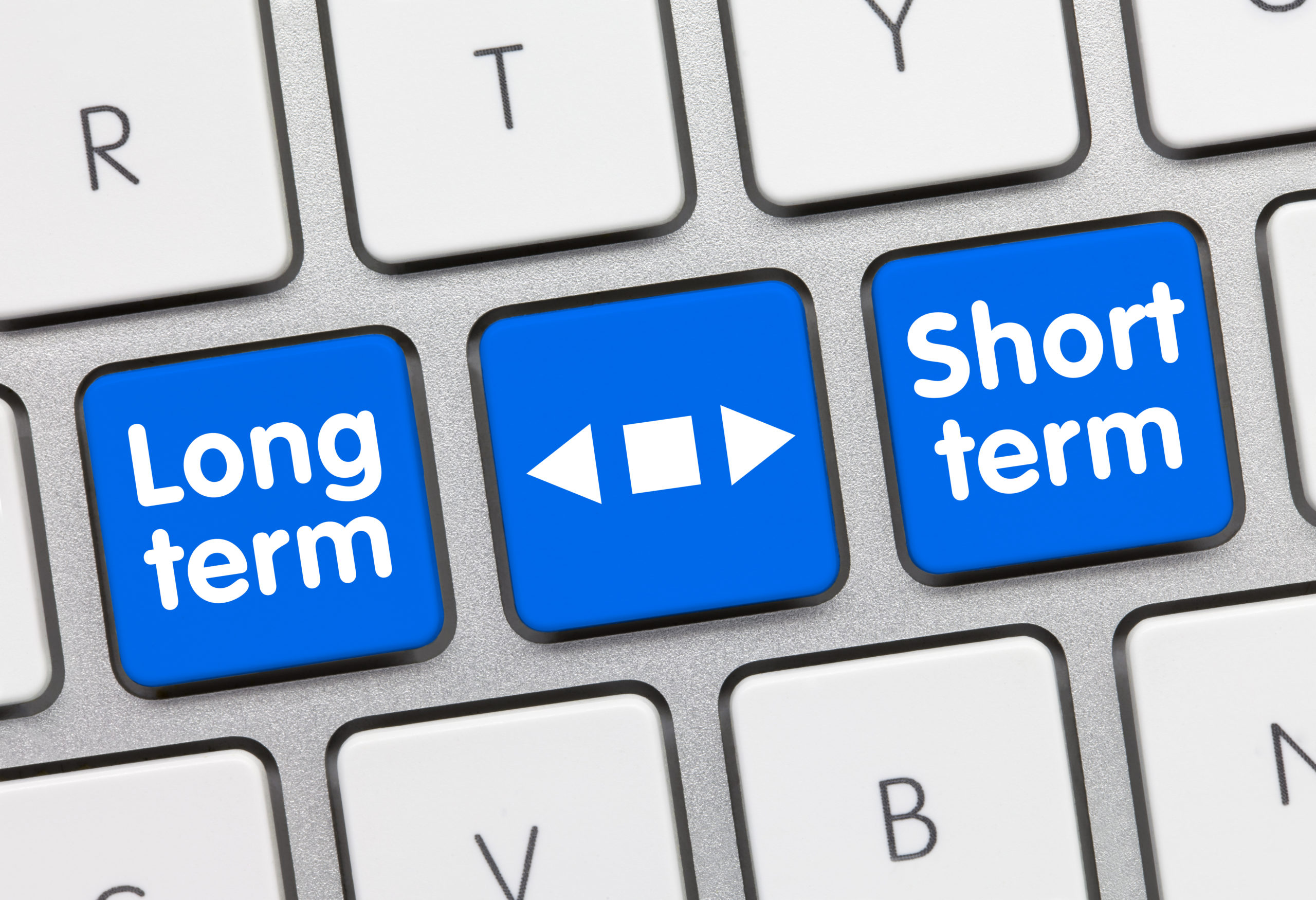
To get through the new normal, companies might consider debt financing options. Based on the type of loan you are seeking, debt financing can be either long term or short term, so this type of loan can be used for whatever your business might need to survive the new normal. — Kimberly Kriewald, AVANA Capital

Equity Financing

Equity financing is a way to raise funds by selling ownership in your company, proving to be a viable option for businesses looking to get creative with their finances. In exchange for money from investors, you give them a portion of ownership and control in your business. The investors may be angel investors, venture capitalists, or even a family member or friend. — Rex Murphey, Montauk Services

Consider a Line of Credit

The only type of financing businesses should consider is a line of credit if you have a profitable business. Continue Reading…

Connecting Dots

By John De Goey, CFP, CIM

Special to the Financial Independence Hub

The distinction between solid analysis and wonky forecasts can be tiny.  As a Portfolio Manager who has spent more than his fair share of time dealing with the media, I am highly mindful of the need for the fifth estate to look for controversy as clickbait.  As the saying goes, opinions are like noses – everybody has one.  The question this begs is “just how credible are the opinions we’re hearing these days”?

Theme 1: Worst is over for Covid-19 storm

There are two themes that I have been hearing a fair bit these days.  The dominant (but by no means universally-held) view in the financial media seems to be the storm has passed, the worst is over, and markets have already resumed an upward trajectory.  The other theme is that, with protests throughout the U.S., and increased sensitivity to Black Lives Matter, a massive bout of unemployment and record-breaking outbreaks of COVID-19, Donald Trump’s chances of re-election are teetering between slim and none.

Theme 2: If Biden wins, expect scaleback of Trump tax cuts

What I find interesting is that so few commentators have taken the time to link those two presumptive trends.  I say that because there’s a strong first-derivative consensus that should Joe Biden become President of the U.S., he will almost certainly repeal or at least significantly scale back the Trump tax cuts – and likely institute a wealth tax on the ultra-rich to boot.  If those things happen, pretty much everyone thinks it’ll be bad for the American stock market.

My question, therefore, is: “how do so many intelligent, forward-looking people think we can have strong capital markets when it looks increasingly probable that Biden will win in November?”  I have gone on record a number of times to say I think markets are dangerously overvalued.  That remains my position.  What is adding to my concern in July, 2020, is that we’re less than four months away for a Presidential election and the presumptive Democratic nominee is toying with a double-digit lead in the polls… and that no serious commentator thinks the American economy will not take a hit if the lead translates into a victory.  My sense, therefore, is that a number of financial commentators are opining that WANT Trump to win even though most of them don’t think he’ll be able to pull it off.  Analysts seem to be talking with their hearts; not their heads.

John De Goey, CIM, CFP, FP Canada™ Fellow, is a Portfolio Manager with Winnipeg-based Wellington-Altus Private Wealth Inc. John works from the Toronto office. This blog originally appeared on the firm’s “Newswire” site on July 10, 2020 and is republished on the Hub with permission.

Absurdity in certainty: finding yield during a pandemic

Franklin Templeton/iStock

By John Beck, Franklin Templeton Fixed Income

(Sponsor Content)

An inverted yield curve, historically a harbinger of a recession, lived up to its reputation this year. The beginning of 2020 saw an inverted curve in both the United States and Canada as equity markets reached record highs. Then came the realization that COVID-19 was not simply a regional issue centralized in Wuhan, China, but a pandemic that would turn the global economy completely on its head.

A precipitous drop in stock valuations followed, reaching a nadir in mid-March, but stocks have rallied strongly since then, recovering many of the losses of that late-February/mid-March period. In the bond markets, unprecedented monetary stimulus and across-the-board rate cuts meant yields remained anemic throughout the crisis. That started to change in early June when better-than-expected job and growth numbers saw bond yields edge up. A steepening yield curve with a wider spread between short and longer duration securities is good news for both fixed income investors and the wider economy.

Across the Atlantic, the European Central Bank (ECB) announced in early June that its bond purchasing program would run to at least this time next year, spurring a rally in European bond markets.

Central bank policy

Any macro forecast must come with the caveat that a prolonged economic recovery is entirely contingent on the pandemic. A second wave of COVID-19 this fall or winter will likely mean further lockdown measures across the globe. The French philosopher Voltaire famously said: “Uncertainty is an uncomfortable position, but certainty is an absurd one.” Apt words for the current environment, but investors can take encouragement from the efforts of governments and central banks throughout this crisis. Continue Reading…

Choice overload, decision fatigue, and your investments

Let’s face it; pandemics can be exhausting. Earlier this year, you may not have loved your daily routines, but at least you were familiar with them; they took little energy to implement. Then, along came the coronavirus. Suddenly, many of even our simplest tasks required rigorous rethinking. You are not alone if you ended up feeling overwhelmed by what behavioural psychologists call decision fatigue.  

On Investing and Jelly Jars

Decision fatigue isn’t just for troubled times. It can happen whenever you’re faced with too many choices, whether we’re talking about your life’s savings or free jars of jam. 

What does jam have to do with being a successful investor? 

In a landmark 2000 study, a pair of academics tested the widespread belief that more choices were more motivating for most of us. Offering free samples of a variety of jams in a high-end grocery store, they found that patrons who could sample up to 6 flavours were far more likely to subsequently purchase a jam than those who could sample up to 24 flavours. 

Since then, other academics have published a litany of similar studies, all substantiating this important finding: Choice overload creates decision fatigue, which can generate poorer outcomes.

Simplifying the Menu

Your financial decisions are not immune from choice overload. For example, in the U.S., employees typically decide how to invest their employer-sponsored retirement plan contributions by selecting from a menu of funds that can range from lean to large. Through the years, multiple studies have looked at how to optimize these menus. Two academics from The Wharton School of the University of Pennsylvania published one study in 2016. This article summarized the results (emphasis ours): 

“Decreasing a blizzard of options to a more manageable list reduced participants’ self-defeating buying and selling, cut the expenses the average participant paid and, in typical cases, could increase the size of the account over a 20-year period by $9,400 per participant … Moreover, participants’ portfolios were less risky after streamlining than before.”

Continue Reading…

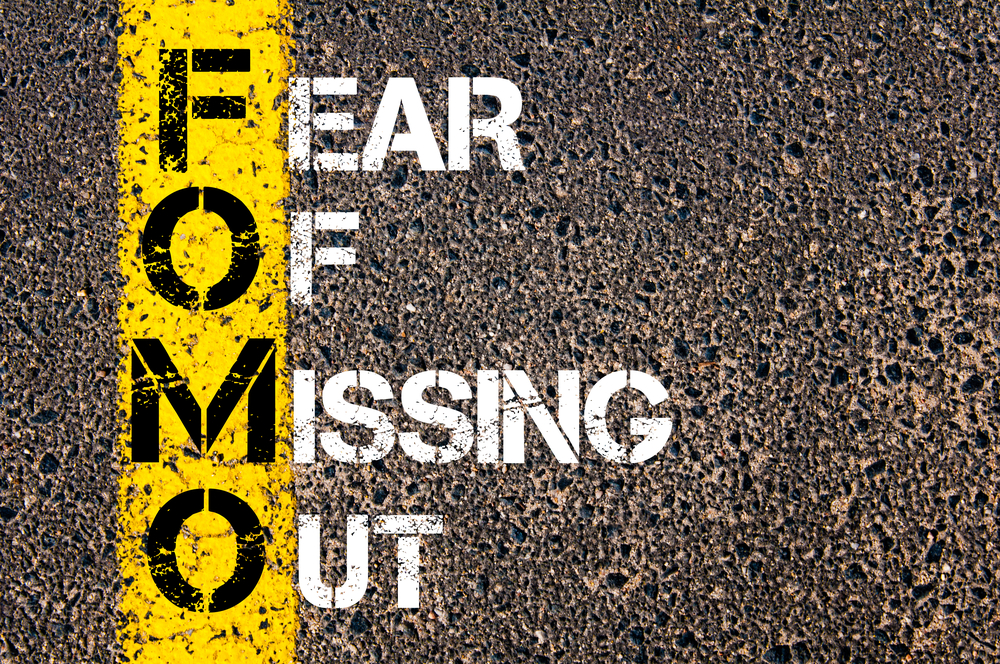
The Covid-19 Fight: Round 1 goes to Fear, Round 2 to FOMO

Photo courtesy Pikrepo.com

By Noah Solomon

Special to the Financial Independence Hub

Round One goes to Fear

Prior to the COVID pandemic, it had been some time since investors felt anything close to the level of fear that gripped markets during the global financial crisis of 2008. As global stock indexes plunged over 30% from their late February 2020 peak in little more than four weeks, media pundits and investment managers were predicting Depression-era scenarios.

Round Two goes to Fear of Missing Out (FOMO)

Just as investors were fearing the worst, the cavalry (primarily in the form of the Federal Reserve and the US Treasury) saved the day, unleashing an unprecedented amount of both monetary and fiscal stimulus. These initiatives gave a strong boost to risk assets, which were deeply oversold on a short-term basis. As markets initially bounced off their late March lows, there were few optimists.

As stocks continue to climb to within striking distance of their pre-pandemic highs, many investors have not only become less fearful, but have embraced the notion that stocks have significant upside potential over the near to medium term. Refrains of “Don’t fight the Fed” and “Powell put” have gained increasing acceptance and have caused many market participants to shift from fear to FOMO.

For What It’s Worth (this has nothing to do with the way we manage money … but we can’t resist)

If it turns out the worst is indeed behind us, this would be the first bear market that put in its lows within five weeks of its pre-selloff peak. After the dot com bubble burst, it took the S&P 500 Index approximately two and a half years to finally hit bottom in October of 2002, at which point it had declined 47% from its March 2000 peak. During the global financial crisis, it took the index about one and a half years from its July 2007 peak to finally bottom out in March of 2009, by which time it had suffered a decline of about 55%.

To be clear, we are not insinuating that the massive monetary and fiscal responses that have occurred are irrelevant or that, all else being equal, they are not positive for markets. But the trillion-dollar question is whether they justify the stock market’s 45% gain from its late March lows (in the case of the S&P 500 Index) and the halving of high yield bond yields.

Without going into an exhaustive list of positives and negatives, it is probable that markets have over-discounted good news while under-weighting potential risks. In our view, at current levels the odds aren’t in investors’ favour. There is a distinct possibility that the mighty market brontosaurus has been bitten on the tail, but that the message has not yet reached its tiny brain. This is not to say that markets can’t creep higher, but merely that the probability distribution is unfavourable.

Einstein’s Definition of Insanity

Regardless of whether you think that markets are going higher or lower over the short, medium or long term, what is clear is that the current level of uncertainty is elevated if not extreme. Continue Reading…

Powered by the Financial Independence Hub.
© 2013-2026 All Rights Reserved.
Financial Independence Hub Logo

Sign up for our Daily Digest E-Mail!

Get daily updates from the FindependenceHub.com straight to your inbox.