All posts by Financial Independence Hub

How can you create a supplementary source of income?

By Beth Morris

(Sponsored Content) 

Is your job failing to provide you with money to spend on the things that you always wanted to have for yourself? Since you most likely have free time other than the typical eight hours of sleep per day, you should use it to earn additional income.

If you need further convincing as to why you should seek to build a source of income aside from the one that your current job provides, you should consider talking to a financial advisor or planner like those from Capstone who can walk you through the nitty-gritty of how to plan out your finances going forward. But if you already want to get straight to it, here’s how you can create a supplementary source of income:

Build an online store

Shopping online has become a common activity for some, especially those with tons of money to spend but don’t want the inconvenience of driving into town. However, instead of settling at becoming an online shopper yourself, why not try selling products via the Internet?

You might want to consider registering a seller account first at an e-commerce platform such as Amazon or eBay. You can set up shop in your chosen e-commerce platform in only a matter of minutes, thus allowing you to focus more on spreading the word about your online store and targeting potential buyers.

Once you’ve established yourself as an online seller, you can then consider creating a dedicated website for your onlinestore where you can have fuller control of all the profit generated by your side business. Just remember to retain your day job for the time being until you can already live comfortably using the earnings that your online store receives.

Work as a Freelance Writer

You may have a knack for writing about anything under the sun, but your current job might find you doing anything but that. However, since you don’t spend your entire day working at your job, you can use your free time in an income-generating way by rekindling your passion for writing and finding work as a freelance writer.

Website owners and bloggers who find very little time to write content – especially if they have a hectic schedule – often hire freelance writers and pay them to create articles and posts. Once you become a freelance writer for a website owner or blogger, your research skills will be put to the test, thus making you learn more about specific topics in a more active way compared to when you stumble upon a random article on the Internet and read it in your spare time. Best of all, you can work anytime you want as a freelance writer. Continue Reading…

How to get the better of the big Canadian banks

By Larry Bates

Special to the Financial Independence Hub

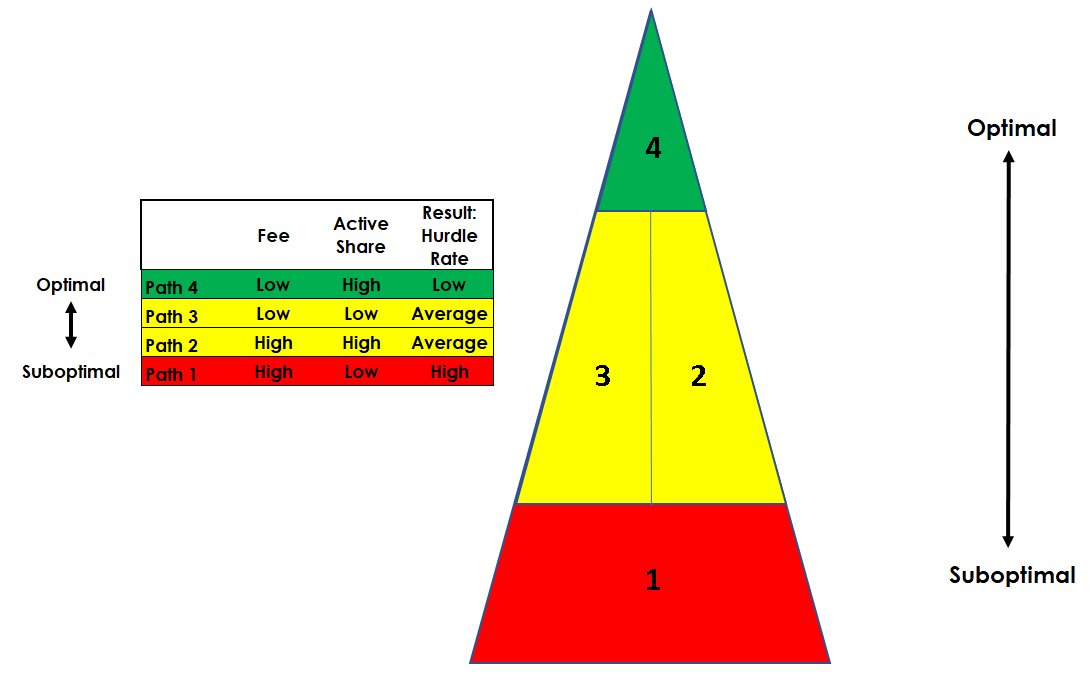
The big Canadian banks, and by extension the entire Canadian financial industry, occupy a position of paternalistic authority that too many individual investors respect unquestioningly, and even appreciate to some extent. The industry brilliantly capitalizes on a combination of poor understanding of fees, deep loyalty, and misplaced trust by charging Canadians the highest mutual fund fees in the world. This leaves most Canadian retirement investors with 100% of the market risk but only about 50% of market returns.

The impact of these high (and often unseen) investment fees on Canadian retirement accounts is more than a consumer issue, it is a major social issue of our time.

Government pensions will not be nearly enough to provide a satisfactory retirement lifestyle for most Canadians, and guaranteed employer pensions are rapidly becoming a thing of the past. In order to live well in retirement, you now likely need to build significant savings and make those savings grow through investment. So,while previous generations of Canadians with guaranteed pensions could casually observe the markets from the sidelines, most of us today must participate directly in the markets to secure a comfortable retirement.

In other words, you, and only you, have the burden of responsibility to get investing right. But the structure and practices of the investment industry continue to conspire against the ability of the average investor to succeed, to maximize that retirement nest egg. This compromises not only the financial well-being of individual Canadians, but also the health of our retirement system and of our society as a whole.

But there is good news. There are a growing number of very efficient, low-cost investment products such as index ETFs and services such as online discount brokers and “robo-advisors” that enable Canadians to keep a much larger share of their investment returns where they belong … in their retirement accounts. And these lower-cost products and services are offered by the big banks as well as several independent institutions. But you need to know the basics in order to take advantage of these opportunities and build bigger nest eggs. Continue Reading…

Planning an epic Boomer adventure? Don’t forget these 5 pre-travel tips

By Neil Henderson

Special to the Financial Independence Hub

It’s no secret that many Canadians think about escaping the cold winter months for some place warmer. While some may like to spend their vacation days relaxing beside the beach or pool, boomers are increasingly seeking out unforgettable travel experiences.

While embracing bucket list travel might mean trying new things off the beaten path, like driving a Ferrari in Italy, hiking the Inca Trail or helping build clean water wells in Africa, there’s always a risk that adventure could turn into misadventure. A recent TD Insurance survey revealed more than a third of Canadian boomers who travel annually say they or someone they’ve travelled with has had a travel emergency, such as an injury that required a trip to the doctor.

The survey also revealed many boomer travellers report they don’t purchase travel insurance because they’re already covered under their work benefits or credit card. Although existing travel insurance plans may cover certain travel emergencies, it’s important to take the time to review them for any gaps in coverage, especially if you’re planning activities you haven’t tried before, and purchase supplementary coverage if needed.

For Boomer travellers setting out to check off their travel bucket list items, here are a few more pre-travel tips, so your epic adventure can be exactly that:

1.) Follow your interests

What’s on your travel bucket list is very personal and will vary widely depending on your interests. Do you want to test your physical limits by hiking along the Great Wall of China? Do you dream of seeing the annual migration on the Serengeti Plains? Bucket list travel are trips of a lifetime, so take the time to not only decide what you want to see or do, but also properly prepare in advance of your travels.

2.) Pre-departure prep

Proper preparation is key to making your bucket list trip terrific. Prepay or set up autopayments for bills that will be due while you are away. Verify whether you need any vaccinations for where you’re travelling to. Ensure you have enough prescriptions to last the trip. There’s lots to be done ahead of time so that your bucket travel is as dreamy as imagined. Check out TD Insurance’s Travel Checklist for more tips. Continue Reading…

Electric Scooters providing a buzz, but is there any profit in this Fad?

By Aaron Burdick

Special to the Financial Independence Hub

Are electric scooters the future of urban transport?

Only time will tell, but at this point, the buzz is huge about these cool vehicles gaining mileage around city streets and sidewalks across the United States and as far away as China.

Bird, Skip, Scoot, Lime and Spin are some of the popular electric scooter rental services giving cars, SUVs and trucks a run for their money, and talk about the economic advantages.

It’s simple, fast and done from your cell phone app. For instance, the Bird company will charge $1 to start each ride and 15 cents per minute after that. The dockless scooters are activated and unlocked via your smartphone, and you get billed by credit card.

Dockless bike and electric scooter rental businesses seem like no-fail methods for big companies and investors to make an easy buck, lots of them. However, oversaturation could become a problem for these modern, eco-friendly modes of urban transportation, and China is one example.

Oversaturation in China?

According to an item in the BBC, in the country that launched the dockless bike phenomenon it has possibly become too much of a good thing. Two of China’s leading bike-sharing companies have yet to turn a profit there, and mountains of abandoned bicycles piled along city sidewalks show that maybe the fad is wearing off.

Some in sunny San Diego, CA, are not worried though and see the investment in scooter and bike share programs as an excellent approach to creating more accessible and livable cities.

LimeBike, based in San Mateo, is being funded by Silicon Valley’s leading VC firm Andreessen Horowitz. The brand is also branching out to Europe and deploying electric scooters, electric-assist bikes and the standard pedal bike. LimeBike is currently available in 46 markets. Continue Reading…

Federal tax changes and the Individual Pension Plan

By David Miller, CFP, RFP

Special to the Financial Independence Hub

Changes are coming. Small business owners and professionals can feel it like a frosty winter breeze that lets you know winter is here. It’s time to get your winter tires on and prepare for longer hours commuting and shorter daylight hours. It’s time to understand and strategize for some cold Liberal government small business tax changes that may have a significant impact on your retirement plan through the changes to the income splitting and passive investment tax rules that will take effect in 2019.

You’ve worked extremely hard growing your business, for you, your family, and your employees. You’ve taken risks and sunk a lot of money and sweat equity into your company, and in your opinion, there should be a nice reward for taking this entrepreneurial path. And you may be right; but with rising costs, interest rates and tax rule changes, it’s getting harder to remember why you got in the business in the first place.

Maybe you don’t know how the tax changes will affect you and your family. Strategies for your business that have been implemented and worked in the past, may no longer work for you. To help you avoid being left out in the cold, let’s take a quick look at one relatively underutilized strategy that still exists for small business owners and professionals: it’s called an Individual Pension Plan (IPP).

It’s all about a level playing field

You are an incorporated small business owner, top executive, doctor, lawyer, veterinarian, or dentist, over the age of 40, consistently making over $200,000 gross/year and have been paying yourself T4 salary for a few years now.  You likely know about the recent passive investment tax rule changes that make it even less enticing to save money within your corporation for retirement and you wish there was somewhere else you could save. You may be taking a T4 salaried income from your corporation instead of dividends to reduce your corporation’s gross taxable income. In turn you will lean on making RRSP contributions to reduce your annual personal tax bill.

The strategy discussed below can put you on the same playing field as a person with a Defined Benefit pension. If you were an employee of a company or government agency and qualified for a Defined Benefit pension program, you would be in a relatively rare and advantageous position. The IPP has different rules, but it is playing the same game.

A supersized RRSP

The IPP is often referred to as a “Supersized RRSP,” as in the IPP allows for you to contribute more annually than an RRSP. The extra contributions will allow you to save for their retirement like a Defined Benefit pension set up for one person. Establishing an IPP can provide you with greatly enhanced retirement benefits when compared to your regular RRSP contributions.  The company is responsible for making the contributions and is a deductible expense.

What’s in it for you and your business

It is all about how much you can save, tax deferred, for your retirement and how much tax you can save in deductions for your company today. Continue Reading…