Posted By
  By Dale Roberts, CuttheCrapInvesting
Special to the Financial Independence Hub
Most Canadians do not have a defined pension with guaranteed income. Speaking of birds and nest eggs, those guaranteed pensions are going the way of the dodo bird. Just 33% of Canadians have a defined benefit workplace pension where the income is guaranteed and usually indexed to inflation.
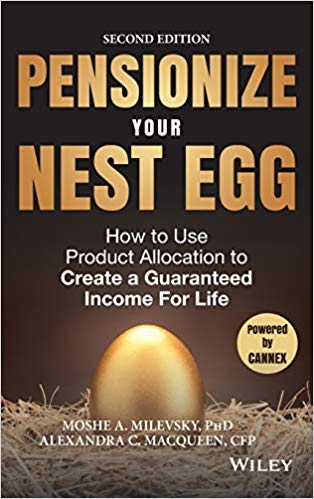
That’s according to Pensionize Your Nest Egg: How to Use Product Allocation to Create a Guaranteed Income For Life.
There’s only one way for me and you to create a generous and guaranteed income stream and that’s by way of the annuity. It’s a topic and product category that gets little attention. And when it gets attention it’s often negative. Annuities are offered by insurance companies. Strike One. Annuities come with ‘high fees.’ Strike Two. Let’s not go to Strike Three; we want to keep this blog post alive. In the process we might keep your retirement in good shape as well.
Hear me out. I’ll admit that I have not been a fan of the annuity in the past. I’ll also admit that I knew very little about annuities. That’s always a good way to form an opinion, right? Give that thumbs down based on the headlines and 5 minutes of research. So please join me in a more than surprising and interesting discovery of just what the heck an annuity is.
With an annuity you simply purchase your own pension
Yup, it’s that simple. As an example, you hand over $100,000 and the insurance company will pay you monthly income, guaranteed for life. Of course that’s a Life Annuity. There are a few types of annuities, but for now we’ll stick to the most common and most popular annuity.
And of course the rates available will fluctuate based on a few factors. Here’s a site that will give you an idea of the rates available in today’s market.
In March of 2019 here are the rates for a Canadian single male. The payment is in the range of 6% annually for a male at age 65.
 You can purchase an income stream for life. And of course, the longer you wait to purchase that annuity the greater your payments. You might stagger your annuity purchase(s) over many years and periods of your retirement. That’s typically the advice found in Pensionize Your Nest Egg and offered from advisors who Pensionize a portion of their clients’ nest eggs.
When you hand over your money, it’s a done deal
These are irreversible contracts. When you purchase an annuity you usually exchange control of those funds for guaranteed income for life. When you die, your money goes to the insurance company. To be exact, a portion of your monies goes to the survivors: to those who purchased annuities and who might live to 85, 90, 95 or 100. That’s how insurance companies can afford to pay you rates that are well beyond the bond and GIC rates of the day. With an annuity the unlucky (the dead) pay for the lucky (the living).
In the above quote table there is a 10-year guarantee, meaning that the payment would continue for 10 years from time of purchase even in the event of an early death.
Many Canadians are living well into their 90s
And from the many tools available at pensionizeyournestegg.com here’s a shocking survivability table for a 65-year-old male.
 For a 65-year-old Canadian male there’s a 25% chance that they’ll live to age 94. Yikes. What side of the annuity grass will you be on? This table demonstrates why a certain level of guaranteed income might be a good idea. You might at least cover your basic living needs for life and projected oldage home payments with guaranteed income.
The 3 product allocation buckets
The main theme of Pensionize Your Nest Egg is to think product buckets, not traditional asset allocation that would normally include your mix of cash, GICs, stocks and bonds. Instead the theme and 3 buckets is …
- Guaranteed Income For Life.
- Guaranteed Income Plus Growth Potential.
- Asset Growth Potential (your personal portfolio) Continue Reading…