All posts by Financial Independence Hub

The Longevity Game Show: Stay Hungry for the Bonus Round

markvenning
Mark Venning, Change Rangers

By Mark Venning, Change Rangers

Special to the Financial Independence Hub

If you thought that getting through the long 2015 federal election campaign — the “spin the wheel for tax dollars” game show – -was more than your attention span could handle; think again. The Longevity game show is in full swing! And by all accounts, we have barely begun to see the peak in audience participation.

As one of over 9 million Baby Boomers playing from home with your finger on the buzzer, your first question is – “What is your longevity expectation? Quick thinking might suggest to you, based on the last statistical survey you read, that you are an “average Canadian,” so your immediate answer could be 82.

Finger off the buzzer. Depending on what perspective you have from the perch you sit on in your age band, how you envision your life expectancy will depend on so many variables. Living beyond that average 82 may appear like a short or a long game. So the second question is: “How will you feed your longevity?”

Financing your longevity

Continue Reading…

What it means to Retire with Debt

doug
Doug Hoyes

By Douglas Hoyes

Special to the Financial Independence Hub

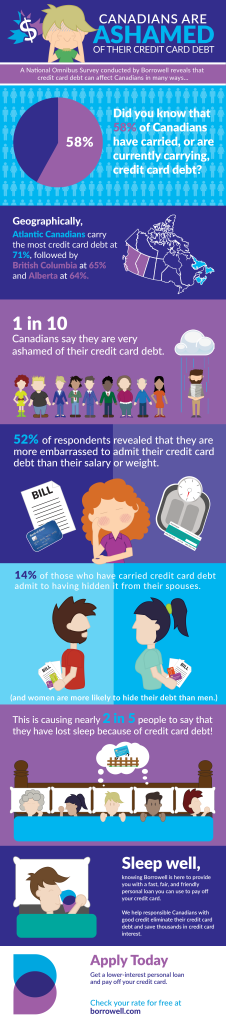
It’s a reality that Canadians are increasing their personal debt load.

Whether or not the debt levels they are carrying are cause for concern depends on who you talk to and on what day. On one day you will see a story that debt-to-income ratios, now at 163%, are at record highs and households are standing on the precipice. The next day you will read an article about how interest rates are at an all-time low, making debt affordable.

I can confidently say that my opinion doesn’t change from season to season or year to year. In my opinion, debt does not go well with either retirement or Findependence.

Seniors accounting for more bankruptcies

Granted, I’m an insolvency professional: a bankruptcy trustee who sees people who have accumulated an extreme amount of debt. Every two years at my firm, Hoyes, Michalos & Associates Inc., we review all of our client files to determine who is carrying debt and why. In our Joe Debtor study this year we discovered that seniors represent an ever increasing percentage of total bankruptcy filings. Even worse, they have the highest level of unsecured debt of any age group at the time of filing, with over $69,000 of unsecured debt. Continue Reading…

Stop Doing # 6: Stop Trying to Correct for Market Corrections

stevelowrie
Steve Lowrie

By Steve Lowrie, Lowrie Financial

Special to the Financial Independence Hub

Recently, the market has been playing right into an important addition to our financial “STOP Doing” list: Stop trying to correct for market corrections.

The subject is not a new one to us. In August 2014, we posted this Q&A: “Is there going to be a market correction (and, if yes, then what)? In light of current events, we’ve now updated that post with 2014 year-end information.

Just as it takes no special skill to predict some days of sub-zero temperatures this winter, we were not being prescient a year ago, when we said that we would probably experience a correction sooner or later. One need only consider abundantly available evidence to recognize that, viewed seasonally, the market frequently “corrects” itself, sometimes dramatically. It’s only when we take the long view that we can see the market’s overall upward movement through the years.

For example, consider the Dimensional Fund Advisors slide shown below, which depicts the U.S. stock market’s gains and losses over the past 35 years. Continue Reading…

Should we change the word “retirement”?

humphriesmarionphoto
Marion Humphries

By Marion Humphries

Special to the Financial Independence Hub 

Let’s start by defining the word retirement. A quick online search reveals that the literal meaning of the word retirement is: to withdraw, retreat; the time at which one withdraws from the workforce.

By definition, the act of retiring has a very passive connotation. No wonder there is apprehension by some to enter into this phase of life.   The word Retirement suggests inactivity, slowing down, isolation, loneliness, and withdrawal from society.

Perhaps we can gain a better understanding of why such a negative spin was placed on retirement by briefly examining its history. The concept of retirement was introduced in North America a little over 100 years ago when the industrial revolution was taking place.

It was thought that elderly workers would slow down production. Job opportunities were limited, and older workers were preventing younger workers, with families to support, from much needed employment.   Paying elderly workers to stop working seemed like a good idea.  Initially, the US government paid the matured workers to step aside and withdraw from the labour force.

Social Security, 1935

Eventually, in the United States, the Social Security Act was introduced in 1935, whereby workers would pay into the program throughout their employment and eventually fund their own retirement.

Continue Reading…

Business Owners Beware!

IRC Photo - Low Resolution
Ian Campbell

By Ian R. Campbell, Business Transition Simplified

Special to the Financial Independence Hub

I recently read a headline that said Business Owners Need To Be Very Afraid. The first line or two of the article paraded a litany of things that were unlikely to frighten a business owner’s dog, let alone a business owner.

However, while the article content was uninspiring the article title was “on the money.” The heading I have chosen for this post likewise wouldn’t frighten a business owner’s dog – but only because dogs can’t read.

If you are a business owner or an advisor to business owners here is a list, with brief reasons, of six things you need to keep front of mind and continually update your opinion on.

Government debt

Debt is higher than it has ever been in most developed and developing countries at the municipal, provincial/state and federal levels. Governments at root are no different than individuals, households or companies – unless of course you are an American who thinks the U.S. Federal Government can print new fiat currency forever without consequence.

Eventually, Peter can no longer rob Paul and debt needs to be repaid. How: by levying multiple forms of taxes on those who can pay. Businesses almost certainly will see both direct and indirect taxes at all levels increase in coming years. This is but one factor that will negatively impact business after-tax free cash flows – and in the end it is current and prospective “after-tax free cash flow” that is the most important business value metric.

Industry consolidation

Continue Reading…