All posts by Jonathan Chevreau

Wealthsimple moves its Robo Adviser service upmarket

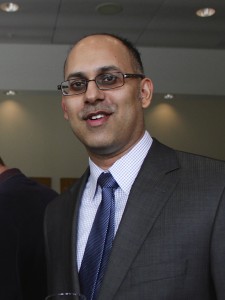
Wealth simple founder and CEO Michael Kitchen

My latest Financial Post blog looks at Tuesday’s announcement by Wealthsimple of a new premium service it calls Wealthsimple Black. See Robo-adviser Wealthsimple targeting more sophisticated investors with premium service.

Wealthsimple Black is aimed at investors who have accumulated at least $100,000 in assets with them and brings down the previous annual management fee of 0.5% to 0.4%: a threshold previously reserved for those with $250,000 invested in the automated online investment service (popularly known as Robo Advisers).

The new “premium” service includes personalized financial planning, tax-loss harvesting, tax-efficient accounts and access to more than a thousand airline lounges around the world.

The company now calls the previous version of the service available to investors with less than $100,000 “Wealthsimple Basic.” It charges the 0.5% management fee but manages the first $5,000 for free, and provides automatic portfolio rebalancing and dividend reinvestment, plus “on-demand” advice from portfolio managers.

Wealthsimple is largely a company founded by and targeting Millennials but the new premium service makes it clear it won’t say no to more affluent investors, including soon-to-retire Baby Boomers who are shifting from wealth accumulation mode to so-called Decumulation. In a press release, Wealthsimple founder and CEO Michael Kitchen (pictured above) made it clear the company is now targeting not just young beginning investors but “all investors, no matter how far along they are toward reaching their financial goals.”

Happy New Year! Time to add $5,500 to TFSAs

Welcome to 2017. We’ll keep this one brief but a reminder that on the money front, there’s already a positive action you can take, either online now or whenever your financial institution opens its doors this week: make the 2017 contribution to your TFSA, or Tax-free Savings Account. That’s $5,500 per individual, amounting to $11,000 for couples.

Remember, if you don’t have the ready cash you can make transfers-in-kind if you have securities in non-registered investment accounts. (Some tax may have to be paid if this triggers capital gains).

Speaking of taxes, Jamie Golombek has a good column in this weekend’s Financial Post on current tax brackets and other tax data: click on Here are the New Numbers you need to get a jumpstart on your 2017 taxes.

How investing can help you achieve Financial Independence

While today’s blog is necessarily brief, a reminder that Saturday’s guest blog provides a timely summary of how investments performed in 2016, and an overview of how successful investing is a key ingredient  to achieve Financial Independence (aka Findependence). Click on the second link to get to our sister site’s republishing of the Boomer & Echo review of the new book, Victory Lap Retirement.

Tapping “Flow” to boost Creativity

flowcreativityLast year,  the Hub reviewed a classic (i.e. not recent) book called Flow, written by a University of Chicago professor, Mihaly Czikszentmihalyi. This time, we’re going to take a look at the same author’s followup book, Creativity, which bears the subtitle Flow and the Psychology of Discovery and Invention.

It’s a fascinating read for anyone who has fancied themselves an “artiste” or musician, but were never able to extract a living from their creativity. But of course, one bonus of achieving financial independence is that it’s never too late to cultivate one’s creativity. One of the author’s concluding points is that we should strive in various ways to boost our creativity, whether or not it leads to the world’s recognition of our talents. The concluding words are these:

“… what really matters, in the last account, is not whether your name has been attached to a recognized discovery, but whether you have lived a full and creative life.”

Much depends on what “domain” one chooses: there is a chapter on the domain of words: for writers, poets, novelists and those who are “vendors of words,” to use an expression often used by the British journalist and author Malcolm Muggeridge Continue Reading…

Retired Money: Retirement planning is about more than money

Meta at her 100th birthday party early in December

My latest MoneySense Retired Money column was published today. Click on the highlighted text for the full piece: Retirement planning is about more than money.

The piece is based on a recent Seniors’ Luncheon hosted by the Toronto church I attend and as you will read, I was struck by how the experiences of these seniors — who ranged in age from 82 to 100 — reinforced the theme of my recently released co-authored book, Victory Lap Retirement.

In short, every senior at the table believed in continuing to work in some fashion even in their looming old age. Including 100-year-old Meta, pictured. While I changed the names of the other seniors in the article, Meta is a real name and used there and here with her permission.

Here’s the thing. Until she suffered a hip injury earlier this year, Meta was still working one or two half-days a week at a nearby printing firm. And at her 100th birthday celebration earlier this month, this continued work connection meant several of the people celebrating with her were from work, as well as the church, neighbours and various other circles.

And now that the din over her 100th birthday milestone has subsided, Meta told me last week that she wanted to return to work one day a week, because she misses her co-workers and she likes to get out of the house (she lives in the top floor of a house overlooking Lake Ontario, and has been there since the 1960s. The last thing she would want would be to move to an institution catering to seniors.)

The danger of retiring “too soon”

As for the senior men I chatted with that day, one regretted having voluntarily retired “too soon” at the tender age of 58: Kevin (not his real name) said he did so because he had a good teacher’s pension but when his wife passed away soon after, found himself with too much time on his hands.

Continue Reading…

Americans worried about Retirement, unlikely to save more in 2017

While 70% of Americans say they saved for retirement in 2016, many are anxious about the level of their savings and the need to direct money towards other goals and expenses, says a Harris Poll of 2,000 American adults conducted by the personal finance site NerdWallet. You can find the full results here.

Other major financial concerns include lack of emergency funds (cited by 35%), health care expenses (also 35%)and credit-card debt (27%). Retirement remains the most commonly cited savings priority (mentioned by 28% surveyed) but only 29% feel confident they saved enough in 2016, while one in three aren’t saving for retirement at all (including 43% of Millennials aged 18 to 24). Lesser forms of financial anxiety in 2016 include making mortgage or rent payments (19%), stock market volatility (17%), student debt (14%), and paying income taxes (13%).

Next year may not be much better: of those with workplace pensions, only 32% plan to increase their contributions in 2017. Older Americans aged 45 to 54 are most likely to report concern about lack of retirement savings (40% surveyed), while only 20% are confident they saved enough this year.

Savers should favour tax-advantage accounts over savings accounts

Continue Reading…