Hub Blogs contains fresh contributions written by Financial Independence Hub staff or contributors that have not appeared elsewhere first, or have been modified or customized for the Hub by the original blogger. In contrast, Top Blogs shows links to the best external financial blogs around the world.
How much is enough? This is the number we all want to know as we strive to determine how much needs to be set aside to fund our aspirations for freedom of life after work. The industry’s tool of choice, to answer this question, is the retirement calculator.
While these calculators provide a rough guideline for those early on in their accumulation years; once the count down for retirement begins (around ten, nine, eight years before retirement lift-off), you need to shift your attention from the rough guestimates of retirement calculators to a more disciplined planning process. Failure to do so robs people of the retirement they dream of and keeps them from achieving the security they deserve.
Reality Oversimplified
I recently re-watched the movie Apollo 11: a film that focuses on the spaceflight that first landed humans on the moon.
While Commander Neil Armstrong and pilots Buzz Aldrin and Michael Collins garnered most of the headlines, as I watched the mission unfold, it occurred to me that the unsung heroes of this mission were really the 100+ engineers back in Cape Canaveral. These were the people tasked with planning and then monitoring every single detail of the flight.
Complex? Unquestionably. Yet, this mission did have a pre-planned duration (8 days), a known destination (the lunar surface), a highly-researched flight plan and the ability to pre-determine fuel consumption: prior to lift-off.
Those approaching or currently living in retirement should be envious of the simplicity of this type of mission. Why? Because baby boomers face a much more daunting mission. A journey of unknown duration (often 11,000+ days), to an (all too often) poorly defined destination, along an uncharted course (Baby Boomers are redefining retirement), while constantly worrying and wondering if they will run out of fuel (money) before their journey’s end.
Unfortunately, the guidance system offered by the financial services industry is based upon the simple math of retirement calculators. Google “Retirement Calculator” – you will find every financial planning institution has an on-line version readily available. Continue Reading…
The real estate industry has always been promising. Though the year 2019 saw a downfall in real estate, the industry still seems to prosper and shine in 2020. Some of the prominent property trends to look forward to this year are discussed below:
Technological transformation
Technology has always played a major role in bringing transformational change in any industry. Real estate is no different. Technology has brought a change in almost all parts of the real estate sector.
Starting from construction to the purchase process and continue until after-sale service, technology has helped in improving the construction quality and fastening the construction process. Similarly, technology has changed the entire buying process. The concept of augmented and virtual reality has enabled customers to view the property without even visiting the site physically. Numerous forex software tools are another gift of technology to the real estate industry.
Conventional loan requirements less stringent
Getting a home loan has become much easier compared to what it was a few decades ago. Less strict rules and easy loan approval process has made property buying easier. Financial institutions are boosting property purchases by lowering credit scores, as well as the down payment. Potential buyers who were not eligible for taking a loan in the past can now get the loan without facing many difficulties.
Mortgage rates expected to remain lower
Mortgage rates play a critical role in the growth of the real estate industry. Lower the mortgage rates and more people would think about buying a property. Stability in the mortgage rate is another factor that stimulates the future of the real estate industry. The rates were quite lower in the year 2019, and many economists believe that this trend will continue in 2020 also. This is good news for interested buyers.
An increase in mortgage rates acts as a demotivating factor for potential buyers. Lower the mortgage rate and enthusiasm rises among property buyers. People prefer buying property when mortgage rates are lower, as instalment payments are that much lower. Continue Reading…
The big 5 banks ranked by DALBAR in order of client preparation for Retirement
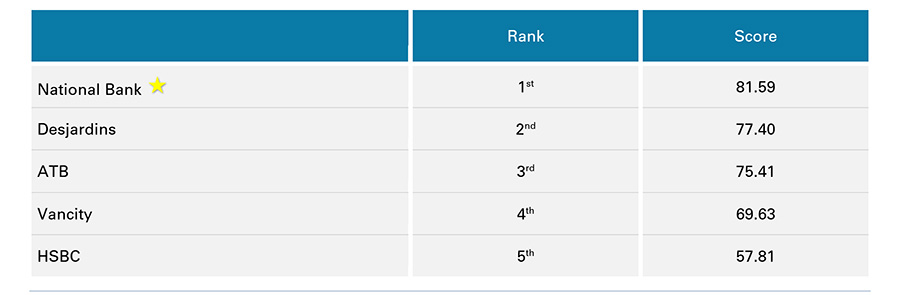
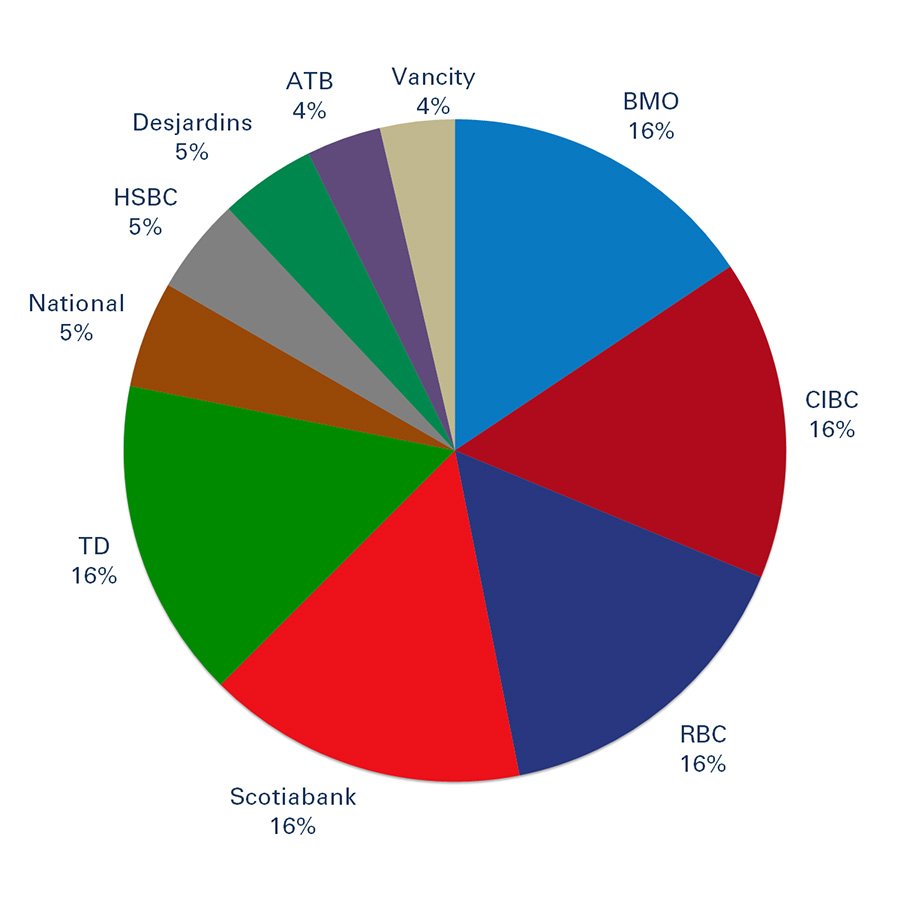
The Royal Bank of Canada (RBC) topped the list of big Canadian banks in serving the Retirement needs of Canadians, according to a new DALBAR study released this month. A first of its kind, the study — released on Feb. 5th and covered in the trade press — sought to assess how the Big 5 handled Retirement conversations through its retail branch network. It also rounded out the study with research on smaller banks, credit unions and regional financial institutions: 1,800 Canadians were polled, all with ten years or less until Retirement. 57% were males and and 74% had portfolios in excess of $100,000.
5 major alternative Financial Institutions ranked by client preparation for Retirement.
In this press release, DALBAR said “Retirement is an ever-growing concern for many Canadians, with increasing life expectancies, diminishing pensions, and a rising cost of living: the retirement nest egg has become more important than ever.”
Well, you’ll get no argument from me on that score, now that I’ve personally started to draw down on my own little nest egg. (Our family uses both RBC and TD, both for banking and through their online brokerage divisions. That’s typical, by the way: 29% of those polled had retirement money with more than one institution.)
Percentages of clients polled at major banks and other financial institutions
“RBC representatives used their experience and expertise to ease client fears, imparted useful knowledge about closing retirement shortfalls, and made the client feel it was a financial coaching experience instead of a transactional one,” DALBAR said. To me, the significant phrase their was “financial coaching experience instead of a transactional one.” Clients rated their experience with RBC to be one of “financial coaching” 70% of the time, higher than the 53% rate at the other big banks.
Only 50% of bank reps introduced the benefits of proper financial planning, although 82% of clients were promised a financial plan. Only 44% of the meeting featured itineraries. And while CIBC, RBC and National Bank led in offering followup meetings with 90% or more of clients, Scotiabank (number 2 overall) led in talking about digital retirement tools at 80% of meetings.
DALBAR vice president Anita Lo said many Canadians realize that government safety nets alone (i.e. CPP/OAS/GIS) are not enough to support healthy retirement lifestyles, so “this is the time for the banks to shine in helping Canadians plan for retirement.”
No surprise that when it comes to Retirement (and I’d argue just about everything else), Canadians prefer speaking to a real person for financial advice instead of relying on online information: DALBAR cited a CIBC study that found that’s the case for 70% of us.
Wide variance in placement of CFPs and PFPs before clients
Staffing with personnel with key financial designations is obviously a plus. DALBAR found RBC places staff with either the CFP or PFP designation 83% of the time for client conversations about Retirement, compared to just 40 across financial institutions generally. Continue Reading…
Our finances can be a source of stress and frustration at the best of times. For many of us, our budgets account for our expenses for the month, with perhaps a little left over for savings and disposable income. Which can make it particularly difficult when the unexpected occurs.
There are, of course, a variety of solutions to emergency situations. However, in the heat of the moment these can lead us to the financial band-aids that solve the problem in the short term, but perhaps put us at a long-term financial disadvantage. Credit card payments, loans, and financing may well be quick fixes to stressful issues, but you may find it difficult to cope as time progresses and your circumstances change.
We’ll take a look at a handful of the most common unexpected expenses that may arise. What are some useful, intelligent financial responses to these? Are there low-cost preparatory steps you can take to fend off larger-scale consequences?
1.) Medical Expenses
There’s certainly an element of injustice in the fact that people so often go into debt as a result of illness. However, the current US health system isn’t always well designed to provide adequate care without incurring huge bills. So, in the absence of complete systemic overhaul, what are your options for unexpected healthcare?
Of course, the simple preventative answer is to take out adequate health insurance. It can be tempting to just select the plan with the lowest monthly premium, but this could find you seriously out of pocket; particularly as lower premiums are usually leveraged by higher deductibles. That said, if you can mitigate this effect by investing a little from each paycheck into a Healthcare Flexible Spending Account (FSA). The funds paid into these accounts [in the United States] are deducted from your paycheck, but are not subject to tax. The amount accumulated can then be used to help pay for deductibles, co-pays, and indeed anything not covered by insurance in the event of an emergency.
If you have been involved in an accident that was the fault of a third party, it is certainly advisable to seek assistance from personal injury lawyers. While we all want to avoid unnecessary litigation, fair compensation may be obtained in order to cover your emergency and ongoing medical expenses. This may not be an adequate short term solution, so it can also be useful to find ways to minimize your initial outlay. Attend walk-in clinics in place of large hospital emergency rooms if appropriate, look into prescriptions of generic drugs rather than brand names.
2.) Funeral Expenses
None of us like to think about the passing of ourselves or those closest to us. However, we have to accept that death is one of the few guarantees we have in life. That said, for all its inevitability, death can take us by surprise; with the costs associated with it adding additional stress to our emotional pain.
Funerals are notoriously expensive affairs. When an unexpected death occurs, we can understandably tend to opt for solutions that place the responsibilities of organization on third parties such as funeral directors. It’s worth noting that these are usually the most expensive options, and don’t usually provide us with the opportunity to do our due diligence in investigating the necessity of services which drive prices even higher.
The fact is, there is no legal requirement in any U.S. state for a funeral director to take charge of planning and executing a funeral. It is perfectly possible for you to undertake a low-priced, meaningful ceremony. Cremation is usually one of the most cost-effective methods of handling the remains of a loved one, with the cost of cremation urns certainly tending to be lower than caskets. In fact, if you donate the body to scientific study, the remains are usually cremated and returned to you free of charge.
If you are set on burying a loved one, there are certainly options which can keep costs low. Direct burial — a process which forgoes a viewing in favor of almost immediate interment — can be around the same price as cremation, and does not require the additional expenses associated with preparation of the body. Also be wary of “extras,” such as gaskets on caskets; these are ostensibly to protect the remains after burial, and can raise the price of the casket by as much as $800.
3.) Vehicle Problems
Vehicles can represent one of our more substantial investments. Not simply in the material cost of the vehicle itself, but also its maintenance and ancillary charges such as insurance and road tax. It’s no shock, then, that when something goes wrong with our vehicles, it can be a costly affair. Continue Reading…
We keep regular tabs on many factors throughout our lifetime. I submit that a best practice is to apply the same principle to the family nest egg: whether it is the starting portfolio or your retirement fund. A new year often prompts investors to consider making changes to portfolios. Hopefully, well thought out changes that improve your desired outcomes.
I’ve designed a simple checkup tool and I invite you to adopt it. If you desire to manage family wealth, you should be conversant with each point. I suggest making it high priority.
The 7-point tool is a small bundle of steps that assesses your precious nest egg. A big picture check of family wealth typically delivers more simplicity alongside value.
However, it’s easy to get swamped. Too many investors latch onto walls of worry that cloud decisions. Fears of low returns, rising health care and running short of money come to mind.
My checkup tool helps seal the cracks found in a variety of financial foundations. Particularly for investors who make high demands on the nest egg.
Vital Issues
You need to first identify the cracks, as opposed to the minutia. Then initiate swift, corrective actions for the long run. The resulting analysis is a simple grouping of your “Yes/No” answers.
Let’s probe your portfolio on these vital issues:
Vital Portfolio Issues
Your Replies
1. ▶Are your goals achievable with the current action plan?
Yes: ___ No: ___
2. ▶Are you saving enough to fund the retirement targets?
Yes: ___ No: ___
3. ▶Are your retirement assumptions realistic for today?
Yes: ___ No: ___
4. ▶Are you investing within a comfortable asset mix?
Yes: ___ No: ___
5. ▶Are you aware how the advisor is paid?
Yes: ___ No: ___
6. ▶Are you happy with the direction of the portfolio?
Yes: ___ No: ___
7. ▶Are you receiving objective and unbiased advice?
Yes: ___ No: ___
A fitting portfolio starts at five “Yes” replies. Now to assess your portfolio health:
Number of “Yes” Replies
Your Portfolio Health
6 to 7
Robust nest egg
4 to 5
Needs some tweaks
2 to 3
Urgent attention required
0 to 1
Design new action plan
Apply my concise suite of nest egg checks to establish a sense of your direction. They are also early warnings that highlight portfolio weakness.
Any one of the issues can impact your family’s progress. For some, two or more “No” replies can inflict undesirable outcomes.
These remedies provide you added values:
Make certain your game plan is logical and sensible.
Revisit your asset mix targets every three to five years.
Prune some investments if you own too many.
Reduce excess complexity in your nest egg.
Ensure that your family nest egg delivers on expectations. Actions that turn “No” into “Yes” replies improve your portfolio pillars. Continue Reading…


 Posted By
  By Doug Dahmer

 Posted By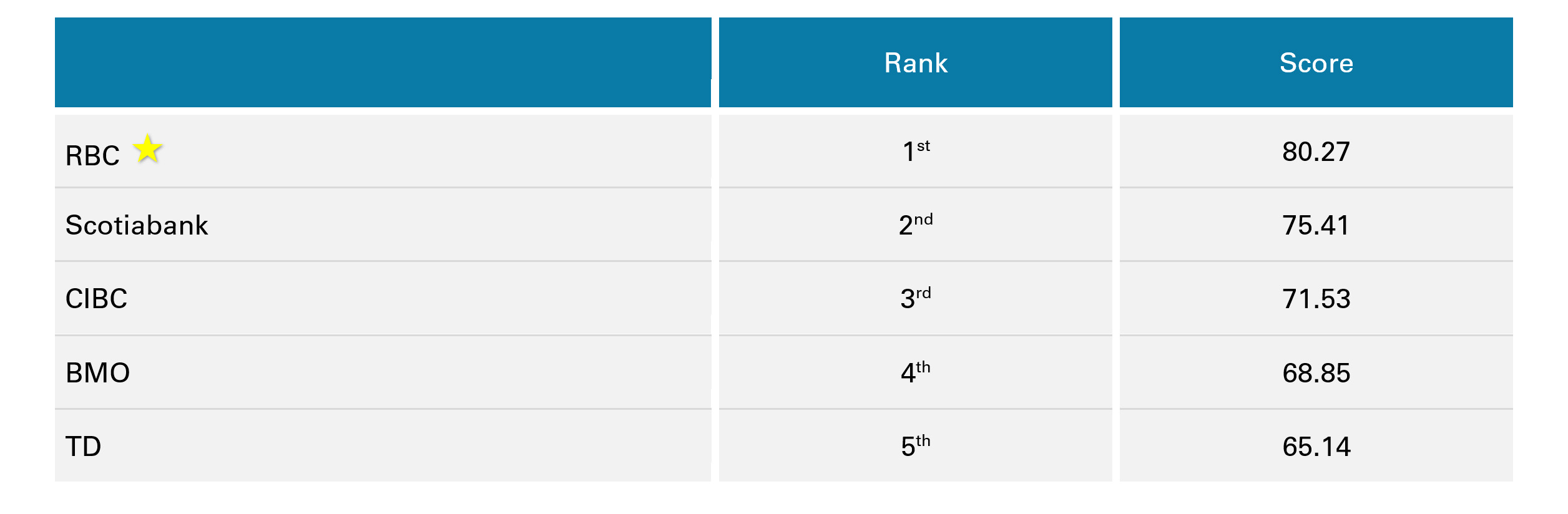

 Posted By