
Hub Blogs

Hub Blogs contains fresh contributions written by Financial Independence Hub staff or contributors that have not appeared elsewhere first, or have been modified or customized for the Hub by the original blogger. In contrast, Top Blogs shows links to the best external financial blogs around the world.

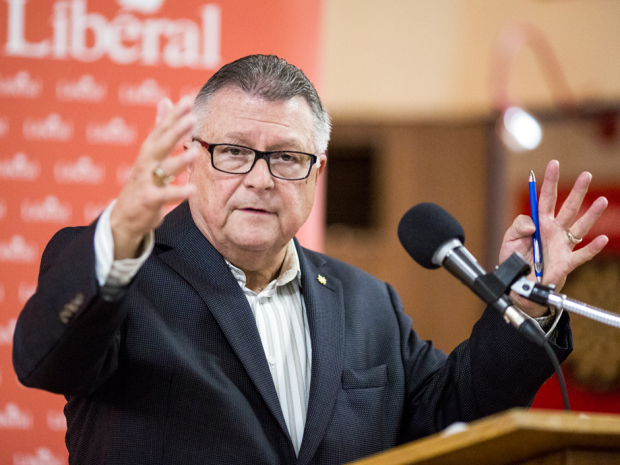
Bring it on! Tories to launch voluntary CPP expansion

Financial security and retirement fund insurance symbol with a golden egg in a nest protected by a black umbrella against down turns in the economy and as a tax shelter on a white background.

Details are still sketchy but both major daily newspapers are reporting a plan by the Conservative Government that would let Canadians boost their payouts from the Canada Pension Plan by letting them voluntarily contribute more.

You can find the Globe article here under the headline Tories propose voluntary Canada Pension Plan expansion, and the FP article (via Bloomberg) under the headline Ottawa to consider voluntary Canada Pension Plan expansion, Joe Oliver says.

Whether this constitutes enough federal action to get the much-criticized Ontario government proposal for an Ontario Retirement Pension Plan (ORPP) overhauled or aborted remains to be seen. All along, it seems, Ontario went out on a limb with ORPP out of frustration that the federal government seemed disinclined to expand the CPP. Certainly an involuntary expansion that would have forced businesses to take on higher payroll expenses would not have been an easy sell but a voluntary scheme is quite a different matter.

Consultations will be held in the summer to flesh out the details, Finance Minister Joe Oliver said in the House of Commons Tuesday. The Globe observes that labor groups and seniors advocates like CARP do not believe that voluntary savings vehicles work and that therefore a mandatory expansion of the CPP is needed to make sure Canadians save enough for retirement.

Oliver sees the voluntary expansion working in concert with the new improved TFSAs as well as Ottawa’s PRPPs (Pooled Registered Pension Plans).

Voluntary CPP expansion makes sense, especially for those who lack true DB pensions Continue Reading…

Crashing Through The Retirement Barrier

A green word Freedom crashes through the walls of a maze to break through the barriers of oppression

By Michael Drak,

Special to the Financial Independence Hub

On May 6th 1954, Roger Bannister became the first person in the world to run a sub-4 minute mile. At the time no one believed the human body was capable of going that fast and although many had tried none had succeeded up to that point. Then along came Roger Bannister, who ignored the nay-sayers and posted a mile of 3 minutes 59.4 seconds.

The interesting thing is that after the sub-4 minute mile limitation was broken many other athletes posted sub-4 minute times, starting almost immediately after Roger Bannister proved it could be done.

Self-imposed mental barrier

So what happened, why the sudden success? Continue Reading…

Memo to Liberals: lots of older middle-class Canadians have $10,000 TFSA capital “lying around”

ralph-goodale
Liberal deputy leader Ralph Goodale (National Post.com)

The Financial Post ran an op-ed written by me today (A10), titled simply How to Max Out your TFSA. We’ve written on this topic before of course, but it specifically addresses an oft-repeated Liberal comment that few middle-class Canadians have “$10,000 lying around” for a TFSA contribution.

On the contrary, I argue, many middle-aged middle-class Canadians have hundreds of thousands of dollars in non-registered or “open” investment accounts, money that is subjected to annual rounds of tax on interest and dividends, and often capital gains, and which would love to find a tax-free home in a Tax Free Savings Account.

Similarly, many seniors already in retirement have large RRSPs or RRIFs that can also be a source of funds for a TFSA, once withdrawals are made and a one-time tax hit is sustained.

In fact, this weekend, I spent time with a 98 year old friend (a woman), who proudly informed me she recently put $10,000 into her TFSA and is saving up from her part-time job to put in another $5,000. Why? She felt she needed a bit of cushion in case some medical problem arises.

As the end of the FP piece notes, there are plenty of other potential sources too, including sale of a principal residence (perhaps in a downsizing situation), severance payments, life insurance proceeds, sale of a business, lottery wins and — this one’s for you, Justin — inheritance.

Gordon Pape on TFSA income investments

In a related column in the Globe & Mail last week, TFSA author Gordon Pape wrote an interesting piece about how TFSAs are now large enough that they can start spinning off tax-free income. His piece looked at ten Canadian dividend-paying stocks like BCE.

Gordon and I will be two of five speakers this Wednesday evening at The Financial Show at the Mississauga Convention Center. Details here.

For continuity and archival purposes, below is the op-ed on TFSAs, with a few subheads added: Continue Reading…

Consider home renovations, but also think about costs

Depositphotos_1845709_xsBy Pat Giles, TD Bank,

Special to the Financial Independence Hub

 With the spring homebuying season in full swing, real estate is a hot topic of conversation and many Canadian homeowners may be thinking of making a move.

A recent TD survey of existing homeowners and those planning to own a home reveals that renovation is also on the minds of many Canadians. In fact, 56% of respondents have considered, or would consider, renovating their current home or buying a fixer-upper rather than buying a move-in-ready one.

Many people find themselves in the situation where they love their neighbourhood but their current home doesn’t have enough space or it is in need of upgrades. These can be motivating factors for many to choose between renovating and relocating; but given the cost and stress associated with moving, home renovation proves to be a popular choice amongst Canadians.

But renovation does not come worry free. When considering the choice to renovate, 61 per cent of survey respondents say that cost is their biggest concern. Continue Reading…

Weekly wrap: Over-taxed rich, starving on bond yields, and the hazards of experts

Tim_on_TV
Tim Cestnick (Twitter.com)

A week after his Globe & Mail article, Overtaxing the Rich: A Cautionary Tale, attracted widespread attention, Scotiabank tax guru Tim Cestnick has followed up with Overtaxing the Rich: Canada’s Tax Debate rages on.

In the original piece, Cestnick floated a colourful parable that suggested the rich are more than paying their share, to the benefit of those less fortunate. But if those with the highest incomes are pushed too far beyond the 50% rate, they may be inclined to leave, making the circumstances of those further down the pyramid that much worse.

With 650 comments and counting, it’s no hyperbole in this case to say there’s a true debate that’s raging here. And with an election coming up this fall, it’s safe to say this topic won’t be going away any time soon. The new higher TFSA limits are certainly a major element of this debate. No surprise that we at the Hub favour the new higher limits and I’d be surprised if Tim Cestnick or any of his well-heeled clients feels any differently.

The Bond dilemma

Meanwhile, rich or not and highly taxed or not, it continues to be a struggle finding yield at today’s paltry levels of interest rates, which of course are fully taxed outside registered accounts. This was one of several themes I picked up at a recent ETF and mutual fund conference in Chicago. Here’s my column in Motley Fool Canada on this topic, titled Caution Ahead: Why Bonds May Soon Become Much Harder to Manage.

In a similar vein, The Daily Reckoning’s Bill Bonner warned this week that Bonds are No Longer a Safe Haven. I guess that leaves cash or stocks. Continue Reading…