
Hub Blogs

Hub Blogs contains fresh contributions written by Financial Independence Hub staff or contributors that have not appeared elsewhere first, or have been modified or customized for the Hub by the original blogger. In contrast, Top Blogs shows links to the best external financial blogs around the world.

Why I Pushed My Findependence Day Back 5 Years

robb-engen
Robb Engen, Boomer & Echo

By Robb Engen, Boomer & Echo

Special to the Financial Independence Hub

Last summer I thought I’d be financially free by 40. Reality – and unplanned expenses – set in this year and I’ve adjusted that ambitious projection by five years. I’m still on track to reach a net worth of $1 million by the time I turn 41, but financial independence will have to wait a few more years.

Here’s why:

Remember, financial independence doesn’t necessarily mean retirement. It simply means the date your income from investments exceeds your day-to-day expenses so that you no longer have to rely on regular employment to meet your needs.

My initial projection was indeed ambitious – with us having a paid-off mortgage by 2020 and increasing the income withdrawn from our business by 100 per cent (from $3,000 per month to $6,000).

But borrowing $35,000 to develop our basement this year meant we couldn’t continue our aggressive mortgage pay-down, and a four-year car loan has cut into our ability to save as much as we wanted.

That’s okay – on paper the original plan didn’t factor in these expenses, plus I hadn’t fleshed out exactly how I’d make those numbers work. Now I have a better idea, but unfortunately it’ll cost us five years. Here’s our financial Freedom 45 plan:

Financial independence at 45

In late 2016, once we pay off the HELOC and car loan, we’ll have $27,000 per year to save toward our ‘findependence’ goal. With that amount, we’ll put $12,000 into my RRSP and $10,000 into our TFSAs, plus throw an extra $5,000 payment toward our mortgage.

That pushes our mortgage freedom date back to January 1, 2025. At that time, our home should be worth $600,000 (using a conservative 3 per cent annual growth rate), my RRSP should be worth $380,000, tax-free savings accounts should total in excess of $150,000, and the commuted value of my defined benefit pension will be roughly $310,000.

The key to paying our monthly expenses after financial independence will come from our business income. We currently withdraw $3,000 per month from our small business, which includes income earned from three websites, freelance writing, and from my fee-only financial planning business.

My original plan showed business income increasing to $6,000 per month in five years, but without any clear path to explain how to double revenue. And, after losing my main freelancing gig at the Toronto Star, this goal seemed unrealistic.

But the fee-only planning service has gone better than anticipated – earning $10,000 in less than one year and expected to grow to $18,000 in year two as existing clients stay on and I continue to add one or two clients per month.

After completing the CFP certification in two years I’ll have the opportunity to ramp up my efforts and potentially offer fee-only planning services full-time. At that point, between existing and new clients, the service could bring in roughly $36,000 per year.

My three blogs collectively earn about the same – $36,000 per year – after expenses and so if I can maintain or increase that income then I’ll be able to meet my $6,000 per month goal for business income.

Our projected expenses haven’t changed. After the mortgage is paid off we could live comfortably on $36,000 per year, which leaves the additional $36,000 of income to go toward taxes, short-term savings, and retirement.

Final thoughts

A financial plan is just words on a page unless you commit to taking action. Even if your financial independence date seems like a moving target, it’ll become more precise as you monitor and update projections based on your true reality.

While it’s disappointing to push financial independence back five years, it’s comforting to know that I’m zeroing in on a target date that’s based on reality and not a wild projection.

Editor’s Note:You can find the original version of this blog at Boomer & Echo earlier this week, here. Note too the several comments at the bottom. When we can coordinate at both ends, we hope to make Robb or Marie’s blog available here as many Thursdays as we can manage. Also, in his original headline, Robb used the phrase “Findependence Date.” When I asked why not “Day,” he said he “didn’t want to steal your thunder.” I realize that good bloggers respect others’  intellectual property but let me make it clear that I’m fine with people using the phrase Findependence Day and Findependence. Half the point of this site is to bring these terms into general usage and displace “Retirement.” — JC

An Aging World: Not to be obsessed

We’ve mentioned Mark Venning and ChangeRangers.com several times in this site as well as sister site FindependenceDay.com. His insights on Aging and Longevity are a big reason why we have included a regular section of the Hub on this topic. One of his aphorisms is particularly insightful and directly related to financial planning and financial independence: “Plan for longevity, not retirement.”

As the previous blog in this section (by Doug Dahmer)  explained, the fatal flaw in most retirement plans is failing to take into account extended longevity. Mark also regularly writes on this theme, as in a recent piece on Financing Longevity, which also provides a nod to the Financial Independence Hub.

Below, specially for the Hub, Mark has composed a year-end reflection on these themes, based on his recent travels. We hope to run more like this in the new year!

markvenning
Mark Venning, ChangeRangers.com

By Mark Venning,

Special to the Financial Independence Hub

Hardly a day goes by that there isn’t some symposium, book or report (not to mention a blog post or three like this one) about an aging world, longevity and retirement. You can even Google search longevity calculators that can project how long you can expect to live. It’s an aging obsession.

As Ted C. Fishman says in his 2010 book, Shock of Gray – “…although the aging world is the sum of choices made by large populations, how we navigate the future of this world – how we love and care for ourselves and those we cherish – will also be an intensely personal matter.”

Continue Reading…

The special challenges of retiring from your own business

DelInSuit
Del Chatterson

By Del Chatterson,

Special to the Financial Independence Hub

What, no pension plan? No early retirement package for the owner?

Of course not, you’re an entrepreneur and not dependent on anybody else to look after your welfare. But have you looked at the hard realities of exiting from your business to a comfortable and happy retirement? There are some special challenges.

When you do start looking it’s hard not to be envious of the friends and family on well-funded civil servant or big corporate pension plans. How did you miss that concept? Well, it may be too late now to change career paths, but it’s not too late to plan your exit strategy. Continue Reading…

5 ways Millennials can achieve Financial Independence

By Hub Staff

Depositphotos_46982951_xsFrom US News -Money,  Intuit Inc.’s consumer money expert  Holly Perez describes five ways Millennials Can Achieve Financial Independence. The article is a straightforward account showing five ways American millennials can and should be preparing themselves for future financial security. Take these steps in your 20s and you may even find yourself a millionaire by your 60s!

  1. Remember Budgeting 101 — Even if you don’t think you need a budget, creating one will help you become more aware of exactly where your money is going, which will help you eliminate any possible over/ unnecessary spending
  2. Ditch the Debt — Pay off all your debts immediately, starting with those high-interest credit cards. Student loans and car payments should be dealt with after.
  3. Make Savings a Priority — A habit that every millennial should get into is to save a few hundred dollars a month. for Americans, ensuring they are contributing to, and understanding their company’s 401(k) is an essential part of this step.
  4. Think About the Future — Make sure to set concrete goals about what you want from your future finances. Making these decisions while you’re young, and sticking with them will be immensely beneficial to your future self. Putting these goals in writing- either on paper or with the help of an app- will help you to follow-through and stay on track.
  5. Track your Credit Score — Your credit score will be invaluable to you when you go to make a big purchase one day, so ensuring it is the best it can be is quite important to maintaining financial independence later on. To keep this number high, the article includes tips like keeping your oldest credit cards open, paying bills on time, and avoiding maxing out cards.

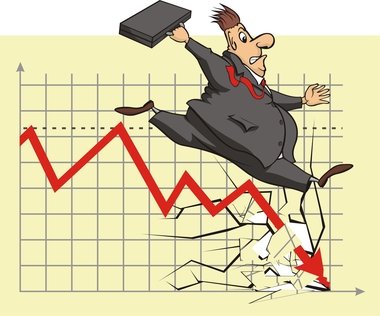
If you can’t take the pain of plunging markets, don’t watch

The Financial Post ran this column by me this weekend about my take on the market mayhem of the past week, most of it triggered by plunging oil prices.  While I’ve chosen to put this in the Wealth Accumulation section of the Hub, it occurs to me that the way things are going, it could also be in Decumulation: albeit not the kind of Decumulation we had in mind when we created the section!

For convenience and archiving purposes, I’ve included the full piece below:

Depositphotos_19057551_xsBy Jonathan Chevreau

The worse it gets, the less I look and the less I act. When it comes to market mayhem, I firmly believe that the time to sell is when stocks are up and everyone is buying.

Except maybe in 2008, when it seemed financial Armageddon was genuinely possible, panic seldom serves the investor well in the long run. I understand the psychology of panic as markets sink: fear takes control and investors become convinced that with every passing day, their wealth will vaporize. And yes, if you knew for sure that markets were due for a 10% correction or 20% bear market, then it would make sense to sell.

But we don’t know for sure what tomorrow will bring, and certainly not what stock market averages will be. We do know that interest rates right now are still near historic lows, even if they are expected to start moving higher in 2015. We know that in the long run, stocks are the best-performing asset class, even measured against fixed-income investments that pay more than what is on offer late in 2014. And therefore, for time horizons of five years or longer, investors accept – or should accept – that a significant portion of their wealth should be invested in stocks.

Preferably quality dividend-paying stocks spread across the major economic sectors. Barring that, a broadly diversified “Couch Potato” portfolio of index funds or exchange-traded funds, with exposure to all economic sectors and roughly equal geographical exposure to Canada, the United States and international markets outside North America.

Did they say were plunging or plummeting?

 “But markets are plunging!,” the recent convert to stocks cries. Or worse, plummeting, if indeed plummeting denotes a bigger drop than a mere plunge. You can be sure that headlines will make liberal use of both verbs if this correction continues.

So what to do? If your mix of investments was decided in happier times and you’re comfortable with the amount of risk you had agreed to, then I’d say do nothing. Or, if you have sufficient cash reserves, I’d say buy stocks while they’re on sale. Certain sectors – oil stocks and commodities in general – certainly appear to be on sale. Oil is a cyclical commodity and it seems like only yesterday when the doomsayers were predicting $150 or $200 oil. That day will likely come again but in the meantime many people and companies benefit from rock-bottom oil prices: airlines to name one, and everyday commuters to name a second group of beneficiaries of low-priced oil.

Pros were buying this week

When the mayhem really started to gather steam this week, I was at a meeting with a group of semi-retired professional pension managers and investors. We barely talked about the markets over the two hours we had together, although when it did come up peripherally, one said he was buying the market across the board at these levels, while another was scooping up specific individual oil stocks.

But what if you’ve come to the sickening realization that your risk tolerance isn’t quite as hardy as you thought it was? If you were 90% in stocks but really can’t handle a 30 or 40% potential drop in more than half your portfolio, then you know your optimal asset allocation would be closer to 50% stocks to 50% bonds, not 90% to 10%. But “rebalancing” your investment mix is much better performed when stocks are rising, not falling. You’ve heard the expression “catching a falling knife?” Selling even more stocks into a broadly based general market sell-off is not a recipe for making long-term profits in the stock market.

Consolation of tax-loss selling

However, since it is tax-loss selling season and if you had previously booked gains on some winners in a taxable portfolio, you could sell a few losers right now and get your cash up to a more tolerable level, and tax-wise merely offset the previous gains. That way, at least, the taxman would share your pain and if markets worsened in the coming weeks or months, you’d have a bit of cash to snap up some real bargains, if indeed they materialize.

Of course, the declines could end as suddenly as they began. Personally, I am taking no action at all during this sell-off. And as my financial advisor often reminds his clients, if you’re in dividend-reinvestment plans, as stocks fall you’ll be reinvesting in those stocks at slightly better prices. High-yielding dividend payers will start to pay out even more tempting amounts. When stocks previously paying out 3 or 4% start yielding 5 or 6% (as the stock values themselves fall), I’d be tempted to load up on more, as many did at the depths of 2008.

Until then, try not to overdose on the day-to-day melodrama of crashing markets. Go for long walks, read fiction or otherwise get your mind off paper losses that may prove to be merely temporary.

Jonathan Chevreau recently launched a North American web portal focused on financial independence: http://www.financialindependencehub.com. He can be reached at jonathan@findependenceday.com