Once you achieve Financial Independence, you may choose to leave salaried employment but with decades of vibrant life ahead, it’s too soon to do nothing. The new stage of life between traditional employment and Full Retirement we call Victory Lap, or Victory Lap Retirement (also the title of a new book to be published in August 2016. You can pre-order now at VictoryLapRetirement.com). You may choose to start a business, go back to school or launch an Encore Act or Legacy Career. Perhaps you become a free agent, consultant, freelance writer or to change careers and re-enter the corporate world or government.
There are many factors that can affect your decision on whether to take CPP at age 60 or 70 or somewhere in between. Here I do a case study of my family’s CPP timing choice.
Both my wife and I are retired in our 50s and had periods of low CPP contributions because of child-rearing and several years of self-employment. So, neither of us is in line for maximum CPP benefits. If we both take CPP at age 60, our combined annual benefits will be $11,206 (based on inflation assumptions described below).
The “standard” age to take CPP is 65. If you take it early, your benefits are reduced by 0.6% for each month early. This is a 36% reduction if you take CPP at 60. If you wait past 65, your benefits increase by 0.7% for each month you wait. This is a 42% increase if you wait until you’re 70.
However, there are other complications. If you take CPP past age 60, any months of low CPP contributions between 60 and 65 count against you unless you can drop them out under a complex set of dropout rules. If my wife and I take CPP past age 65, we won’t be able to use any dropouts for the months from 60 to 65, so we’ll get the largest benefits reduction possible for making no CPP contributions from 60 to 65. Fortunately, CPP rules don’t penalize Canadians any further if they have no contributions from 65 to 70.
Inflation indexing
Another less well-known complication is that before you take CPP, your benefits rise based on wage inflation. But after your CPP benefits start, the payments rise by inflation in the Consumer Price Index (CPI). Over the long term, wage inflation has been higher than CPI inflation. So, when you start taking CPP benefits, you lock in lower benefit inflation.
In this case study, I’ve assumed 2% CPI inflation and 3% wage inflation. These assumptions along with the CPP rules and our contributions history led to our annual benefits of $11,206 if we take CPP at 60.
If we wait until we’re 70, our combined annual CPP benefits will be $29,901. However, don’t compare this directly to the figure at age 60 because they are 10 years apart. If we take CPP at 60, it will grow with CPI inflation for those 10 years. The following table shows our annual CPP benefits in the two scenarios: early CPP at 60 and late CPP at 70.
Age
Early CPP
Late CPP
Age
Early CPP
Late CPP
60
$11,206
75
$15,081
$33,013
61
$11,430
76
$15,383
$33,674
62
$11,658
77
$15,690
$34,347
63
$11,891
78
$16,004
$35,034
64
$12,129
79
$16,324
$35,735
65
$12,372
80
$16,651
$36,449
66
$12,619
81
$16,984
$37,178
67
$12,872
82
$17,324
$37,922
68
$13,129
83
$17,670
$38,680
69
$13,392
84
$18,023
$39,454
70
$13,660
$29,901
85
$18,384
$40,243
71
$13,933
$30,499
86
$18,752
$41,048
72
$14,211
$31,109
87
$19,127
$41,869
73
$14,496
$31,731
88
$19,509
$42,706
74
$14,785
$32,366
89
$19,899
$43,560
It would certainly feel good to start collecting CPP benefits when we’re 60, but by the time we’re 70, we’d never notice that our payments could have been 119% higher. That’s why we plan to wait until we’re 70 for our CPP benefits. Continue Reading…
Owning a business comes with a great deal of freedom, but also with substantial financial responsibility. No matter what business you are in, making a profit is job one. The key to successful money management is organization. These six steps can help.
1.) Schedule
Set aside a block of time each day for minor operations such as scanning paper documents or entering figures into accounting software. One day each week, take an hour to monitor expenses, calculate profits and review the accounting.
2.) Separate
When you first start out, it may seem silly to keep personal funds separate from business funds. After all, you may be dealing with small amounts and infrequent activity. However, if you plan to grow the business, there will come a time when you need to know what belongs to the business and what belongs to you. It is cleaner and simpler to separate finances from the start, rather than trying to untangle your commingled funds later. Your business should have its own bank account and credit card as soon as it has a name, structure and business license.
3.) Prepare
If you have employees, you need to set aside money for several types of payroll deductions including federal income tax, Medicare and Social Security. Your state or province may require income tax and other employee taxes as well. A paystub generator can help you and your employees keep current on state and federal requirements. Accuracy is paramount.
Avoid a surprise tax bill by setting aside a percentage of the company’s earnings from the start. Consult with a tax professional to get an annual or quarterly estimate, then reserve an appropriate amount of money each month.
This works with more than just taxes. You can prepare for any quarterly or annual expense if you know it is coming. Suppose you face an annual regulatory fee of $10,000. Simply set aside $833 each month, then when the bill comes due you can pay with ease. Even better, automate the process by having your financial institution sweep the $833 from the debit account to savings on the same day each month.
4.) Track
You need a good filing system, either paper or digital. A functional system allows you to retrieve information easily and quickly. It should be simple and intuitive, yet flexible enough to grow with your business. General categories may include: Continue Reading…
Retirement! For many of us, it’s an event so far in the future that it almost seems unreal. Taking active steps to plan and invest for the “golden years” feels unnecessary.
Yet as anyone who’s lived through their 30s and 40s can share, those decades go by quickly. And if you want to retire early, the worst thing you can do is wait to start saving or unintentionally sabotage your portfolio.
Long story short, if you want to retire early (and wealthy), you’ll want to start now. But what does “start” mean when it comes to saving for retirement?
The answer is surprisingly complex. The good news is that learning how to build your nest egg won’t consume all of your free time. With attention and discipline, you can retire early: so let’s get started.
1.) Visualize your future and figure out what that costs
You wouldn’t renovate your kitchen without choosing a style and establishing a budget. Think of building your nest egg the same way: you need a goal and a plan to get there. Sure, you know you want to retire early. But what does retirement look like for you once you’re there? Do you want to travel? Live in your hometown? Play bridge? Take piano lessons? Visualizing your retirement home base and how you’ll spend your free time will help you set your savings goal.
Envisioning a loose plan for what you want your post-work life to look like is a great start. But you’ll also need to take into account inflation and investment returns, among other factors. AARP’s retirement calculator can help you understand where you’ll need to be financially in order to achieve your goal. It will also help you prioritize the actions you’ll want to take now so you can actually get there later.
2.) Pay off debt and reapply the payments
Debt is a normal part of life for most Americans. Buying a home or paying for college often requires taking out a loan, and so does starting a business. Borrowing responsibly in these areas can help you get ahead financially, but other kinds of debt, like high-interest credit card payments, can hinder your retirement savings efforts.
First, if you have education debt and think the scholar-”ship” has sailed, think again. There are actually scholarships that pay off education debt for borrowers who have already graduated. And if you have excellent credit, you can also look into refinancing your student loans.
If you have credit-card debt, personal loans, or other high-interest payments, prioritize paying off those balances in full. If the payments were manageable for your budget, repurpose those payments into building your nest egg instead. Bonus: once you’ve paid those debts, your credit score will probably rise. And that helps you qualify for lower rates when refinancing or taking out a new fixed or adjustable-rate mortgage.
3.) Get sneaky with microsavings so you can live life along the way
Small dollars add up fast. That’s great news for people who want to enjoy life and save for retirement at the same time. If you’re aggressive with microsavings, you’ll have an easier time affording life’s little niceties and still be able to save for retirement at the same time. Continue Reading…
A good majority of my clients reach out to me looking for retirement planning advice. They want to know if they have enough assets to retire comfortably, how much longer they should work, what type of investment strategy makes sense in retirement, when to take CPP and OAS, and how to set up tax efficient withdrawals from their savings and investments.
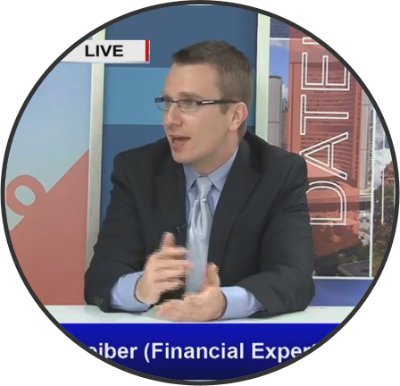
My conversation with Kornel Szrejber for the Canadian Financial Summit this year was about addressing the major gaps in your retirement plan. Below is a summary of what we discussed – but you can check out the full interview, along with the rest of the line-up, at the Canadian Financial Summit website.
Investing is just one part of the Plan
Kornel Szrejber: A common mistake that I see Canadians make is focusing only on what investments to buy, as opposed to seeing the investments that they choose as just one piece of financial planning and their financial wellbeing. Can you talk about what trouble we as Canadians can get into, if we are only focusing on what investments to buy as opposed to looking at the whole picture?
Robb Engen: It is common for Canadians to focus on their investments rather than looking at all aspects of their finances. In fact, most of the clients that come to me want to talk about investing.Yes, investing is important. Setting up a investment strategy that matches your risk tolerance and time horizon, and more importantly one that you can stick with for the long term is crucial to your overall retirement plan. But when you step back and look at the bigger picture, you’ll see that financial planning is about so much more than investing.
It’s a comprehensive look at your spending. It’s about making sure you and your spouse are on the same page – understanding your values around money and aligning that with your spending habits. It’s about disaster proofing your life by having appropriate life and disability insurance, a will, and an emergency fund. It’s about mapping out both your short and long term goals so that you can prioritize your savings into the appropriate vehicle(s).
Attributes of an Early Retiree
Kornel Szrejber (Twitter.com)
Kornel: You’ve worked with many individuals and families here in Canada. Are there any patterns that you’ve noticed between those that are struggling financially vs those that are on-track to retire early? (i.e. actionable things that people can do to be one of those that are on-track).
Robb: The people who seem to have it together tend to have a reasonably low cost of living and can max out at least their tax-sheltered accounts (RRSP/TFSA) each year. They have clearly defined short- and long-term goals that keep them focused on saving. Many have a high income, but that is not a prerequisite to a good financial future. They also automate many of their financial decisions, so they pay themselves first through automatic contributions, they set alerts to pay their credit card balance in full each month, and their investments automatically rebalance (through a robo-advisor or an asset allocation ETF).
Conversely, those who are struggling usually have some high interest debt and have trouble getting through the month without dipping into credit. They may or may not have a good handle on their expenses, but there’s just no wiggle room or margin for error. That means, when something comes up, and it always does, any progress made goes out the window and they can’t seem to get ahead. They treat credit card debt like a way of life and not like the ‘hair-on-fire’ emergency that it is. And, they typically don’t know exactly where their money is going from month to month.
Another major reason why so many people struggle financially is because their list of wants exceeds their ability to pay for them. I love the line from Paula Pant, author of the Afford Anything blog, that goes:
“You can afford anything, you just can’t afford everything.”
I think this is so true when it comes to our personal finances and all of those short-term goals and aspirations that we all have. Money is finite and we simply can’t do everything we want – at least not all at once. So, I think the people who are on track to retire early have a good sense of where their money goes and they’re able to prioritize saving for retirement while juggling all of their other short-term needs and wants.
Not enough attention paid to these Retirement Planning decisions
Robb Engen
Kornel: Are there any important financial decisions that you find Canadians tend to oversimplify and make quick decisions about, when in reality they actually need thorough analysis and have a very significant impact?
Robb: Usually anything involving a bit of math. One that comes to mind is when you leave a job and whether to keep your pension or take the commuted value and invest it in a LIRA. This is not a decision where you just want to take the advice of a friend or colleague. It requires some thoughtful analysis.
This is actually a decision I’ve had to make for myself when I left my day job earlier this year, and even I sought an outside expert opinion help me decide. Another critical decision is when to take CPP. I’ve heard so many myths about CPP and that you should take it as soon as possible (i.e. at 60), but in many cases the most optimal age to take CPP is to defer it to age 70. This enhances your benefit by 42% and provides longevity insurance.
Finally, there’s the question of whether to contribute to an RRSP or TFSA. If you’re below a certain tax bracket it probably makes more sense to invest in your TFSA rather than an RRSP, and vice versa.
Impactful financial decisions
Kornel: What would you say are some of the most impactful financial decisions that we can make to set ourselves up for success? And which ones can we do ourselves vs having to seek out the help of a fee-only financial planner like yourself?
Robb: Starting to invest at a young age and, more importantly, setting up a system to make the contributions automatic. You can start with as little as $25 or $50 a month. It’s not about the starting amount, but about building the habit of saving over time. Be a savvy financial consumer and understand where incentives may be misaligned, or when the seller may not have your best interests at heart. That’s the essence of financial literacy.
Spend less than you earn, obviously, and try to avoid debt where possible. Don’t buy more house than you can afford, and if you do buy make sure you stay there for 10 years. Continue Reading…
Recently I previewed Fred Vettese’s completely updated and revised edition of Retirement Income For Life. I’m giving away an extra copy of the book and asked readers to enter to win by sharing when they took (or plan to take) CPP. The results were interesting.
Deciding when to take CPP is a key consideration of your retirement income plan. What I found interesting about the responses was the rationale or the stories behind these decisions. For instance, there is a lot of misinformation about the Canada Pension Plan: that it is government run (it’s not), that it will become insolvent before you collect benefits (it won’t), and that you could do better investing the money on your own (not likely).
These misconceptions can lead to poor decisions. It’s estimated that just 1% of CPP recipients elect to take their CPP benefits at age 70. Clearly more education is required.
Several of the responses in favour of taking CPP early showed this lack of knowledge or a perceived bias around the CPP program.
Some retired early and took CPP early to “avoid too many zero contribution years.”
While it’s true that your calculated retirement pension may decrease with each year of zero contributions, the amount of the decrease is typically less than the amount of the increase you’d get by deferring CPP (0.6% per month to age 65 and 0.7% per month to age 70).
CPP expert Doug Runchey uses the example that by waiting you will receive a larger slice of a smaller pie, but you will almost always receive more pie.


 Posted By
  By Michael J. Wiener

 Posted By