Once you achieve Financial Independence, you may choose to leave salaried employment but with decades of vibrant life ahead, it’s too soon to do nothing. The new stage of life between traditional employment and Full Retirement we call Victory Lap, or Victory Lap Retirement (also the title of a new book to be published in August 2016. You can pre-order now at VictoryLapRetirement.com). You may choose to start a business, go back to school or launch an Encore Act or Legacy Career. Perhaps you become a free agent, consultant, freelance writer or to change careers and re-enter the corporate world or government.
My latest MoneySense Retired Money column expands on a blog written by Devin Partida on my site while we were away in Malta and Italy. In there you can see three photos from our trip, including the one shown here.
For MoneySense, I reached out through Linked In and Featured.com to bounce this idea off various Retirement Experts and Business Owners in North America.
The full Retired Money column can be accessed by clicking this hyperlink: Financial Independence and Travel: Can you have both? The column runs a normal 1200 words or so but the actual responses ran about five times that long, which you can find by clicking on this link also on Findependence Hub. (It ran over the weekend, as did the MoneySense summary of it).
Naturally, I agree with Devin’s original topline conclusion: that “maintaining Financial Independence while traveling is entirely possible with a proper strategy.” As some of the sources indicate, technology and the Internet means most professionals or so-called “Knowledge Workers” can really practice their craft most anywhere in the world that has Web access.
Digital Nomads
The colourful term “Digital Nomad” is often used to describe such globe-trotting workers. Of course, travelling the world by Baby Boomers like myself is relatively straightforward if you spent decades building up pensions and a Retirement nest egg. Ideally at the end of 30 or 40 years of “working for the man (or woman)”, you end up with the lovely combination of relatively endless time and sufficient financial resources to indulge your globe-trotting desires.
Leisure
But the MoneySense column also passes on several tips that can be used by those who are only semi-retired, or even decades from Retirement but who have embraced the so-called FIRE movement: Financial Independence Retire Early. There’s even a term I hadn’t encountered until I researched this piece: Bleisure, which is of course a contraction of the words Business and Pleasure. Continue Reading…
That blog inspired me to reach out to multiple financial experts and business owners, with the assistance of Linked In and Featured.com, which has been supplying this site with quality content for several years.
Here’s how we posed the question:
Can you pursue Financial Independence (or Retirement or Semi-Retirement) without giving up Travel? See this blog for one opinion on this topic:
Malta: where we spent most of February this year. Photo by J. Chevreau
This particular topic attracted 84 comments by the April 20th deadline: this blog presents 25 or so that I selected. It’s long so I’ve summarized the main points with subheadings.
Note also that my latest MoneySense Retired Money column summarizes some of the main points, more succinctly as there is limited space for that column (about 1300 words, compared to the nearly 6,000 words that appear in the particular blog you are now reading).
To ease the reading burden, I’ve added subheads, some of which include:
Geoarbitrage: Live where cost of Living is lower
Renting RVs for Extended Travel Stretches
Make Travel a regular fixed expense you plan on incurring every month
Treat Travel as a budget category, not a luxury to eliminate
Embrace slow travel, house-sitting, points travel hacking and off-season destinations
Buy property in tourist spots to fund Travel
Majority of Professionals can now work remotely
The “goal isn’t to eliminate travel, but rather to make it more intentional.”
“Bleisure”: Let your career fund your transit
As President of Safe Harbors Travel Group, I’ve spent decades helping organizations use strategic logistics and “Bleisure” to explore the world without draining the bottom line. You can reach Financial Independence by letting your career fund your transit; we often help clients integrate vacation days into business trips to eliminate personal airfare and lodging costs.
A key strategy for the budget-conscious traveler is utilizing “humanitarian airfares,” a specialized airline product Safe Harbors provides that offers significant savings for anyone doing charitable, religious, or mission-based work. These fares are a powerful hack for those pursuing a purpose-driven life while keeping their personal travel expenses at a minimum.
By leveraging our elite tech partnerships for data-driven booking, you can ensure “duty of care” and response speed that prevents the costly emergencies often associated with unmanaged travel. This structured approach allows you to focus on wealth building while Safe Harbors handles the complexities of your global footprint. — Jay Ellenby, President, Safe Harbors
Build Travel into the system, not just a later Reward
Yes: you can chase FI or semi-retirement and keep travelling if you build travel into the system instead of treating it like a reward you “earn later.” I’ve run logistics/transportation businesses for years and now my wife and I host 15 furnished units in Detroit/Chicago, so I’m used to designing operations that still run when I’m not physically there.
What made it work for us is shifting travel from “big expensive trips” to “repeatable, planned mobility.” We use our Detroit-focused blog as a planning engine: when we travel, we test neighborhoods, transit (Q-Line/SMART/MoGo), and local routines the same way a guest would: then we bake that learning back into listings and guest guides so travel time also improves the business.
The practical FI move is making your income less dependent on your daily presence. Guest reviews told us people wanted clearer walkthroughs, so we added walkthrough videos to each property page and saw a 15% increase in booking conversions: less back-and-forth, fewer preventable questions, more freedom to be away while keeping standards consistent.
If you want one tactic you can copy: record a 5-8 minute “first night in the unit” walkthrough (lockbox – thermostat – Wi-Fi – parking – trash) and reuse it forever. That single asset cuts support load while you’re on the road, and it’s the difference between “I can travel” and “travel breaks my cashflow.” — Sean Swain, Company Owner, Detroit Furnished Rentals LLC
Geoarbitrage: Live where cost of Living is lower
Geoarbitrage allows you to live in an area with a lower cost of living for your family while allowing your investment portfolio to grow. The combination of using travel rewards on credit cards and traveling during less expensive times reduces your travel costs. This approach to finding money saving ways to see the world makes international exploration a viable way to maintain your lifestyle versus making it a luxury. — Zack Moorin, Founder, Zack Buys Houses
Geoarbitrage and the Second Act Advantage
In The Second Act Advantage, I show how geoarbitrage lets anyone achieve financial independence without sacrificing travel: in fact, it makes travel the strategy. By earning in strong currencies while living and exploring more affordable parts of the world, everyone can enjoy a richer, more adventurous life while actually spending less. The book teaches readers how to design a life where freedom, fulfillment, and financial efficiency all work together. — Jay Samit, Bestselling Author, The Second Act Advantage
Transitioning from Vacationing to Geo-arbitrage
The Travel-First Strategy: Designing FI Without Sacrifice
A common misconception in the FIRE (Financial Independence, Retire Early) community is that travel is a luxury to be deferred until the finish line. However, in my experience advising lifestyle-focused entrepreneurs, pursuing financial independence without giving up travel isn’t just possible it’s often a more sustainable strategy for preventing burnout.
Shifting from Consumer to Global Resident
The key is transitioning from vacationing to Geo-arbitrage. Traditional travel involves paying retail prices for short-term stays, which can cripple a savings rate. A strategic traveler focusing on FI prioritizes medium-term stays in regions where the cost of living is lower than their home base. By spending months in hubs like Portugal, Mexico, or Southeast Asia, you can often live a high-quality lifestyle for 40% less than in major Western cities. In this model, travel actually accelerates your path to financial independence by lowering your monthly burn rate.
Leveraging Credit Strategy as an Asset Class
From a PR and financial positioning standpoint, we should treat travel rewards not as points, but as a shadow asset class. A sophisticated FI seeker uses strategic credit card optimization to ensure that their transportation and lodging line items remain near zero. When flights and hotels are covered by systemic spending, travel stops being a drain on investment capital and becomes a tool for lifestyle maintenance.
The Semi-Retirement Pivot
The all-or-nothing approach to retirement is becoming obsolete. We are seeing a rise in Coast FIRE, where individuals reach a baseline of savings and then transition into remote-first or consulting roles. This allows for perpetual travel while the core nest egg continues to compound undisturbed. By integrating travel into the pursuit of FI rather than viewing it as a reward for the end of it, you create a life you don’t feel the need to escape from. This ensures that when you finally reach full independence, you already possess the global literacy to enjoy it. — James Tech, SEO Marketer, TripFrog
58% of Millennials and GenZ prioritize Travel over Material Accumulation
Financial Independence and travel are not mutually exclusive; in fact, they increasingly reinforce each other when approached strategically. A growing body of research highlights the rise of “geo-arbitrage,” where professionals leverage remote work or location flexibility to reduce living costs while continuing to explore new destinations.
According to a 2024 report by Deloitte, nearly 58% of Gen Z and millennials prioritize experiences like travel over material accumulation, reshaping traditional financial planning models. At the same time, the World Tourism Organization notes a steady increase in long-stay and work-from-anywhere travel patterns, indicating that travel is no longer viewed as a luxury pause but as an integrated lifestyle choice.
From a workforce perspective, continuous upskilling and digital proficiency — particularly in areas like project management, agile practices, and cybersecurity — enable professionals to maintain income streams while remaining location-independent.
Financial independence, therefore, is less about restriction and more about intentional design: aligning income strategies, skill development, and lifestyle priorities in a way that sustains both economic security and personal fulfillment. — Arvind Rongala, CEO, Invensis Learning
Renting RVs for Extended Travel Stretches
Absolutely yes: and I’ll tell you why from an angle most people overlook: your cost of living on the road can actually shrink dramatically while you’re building toward FI.
I run DFW RV Rentals, placing travel trailers for displaced families and insurance claims. What I see constantly is people discovering — often during the worst moments of their lives — that a well-equipped travel trailer is genuinely livable, comfortable, and cheap compared to a mortgage or apartment lease.
Here’s the FI angle nobody talks about: renting an RV for an extended travel stretch eliminates storage fees, maintenance headaches, depreciation, and insurance costs that crush RV owners. I’ve watched people romanticize ownership, buy a unit, and watch it become a financial anchor: whereas someone renting strategically keeps capital free and mobile.
If you’re pursuing FI and want travel woven in, think of RV rental as a variable living expense you control, not a lifestyle luxury. A few months on the road in a rented trailer can cost less than your fixed housing back home: and that gap is real money compounding toward independence. — Jonathan Dies, Owner, DFW RV Rentals
Maintenance-free Retirement communities
As Executive Director of The Village at Mint Spring and Stuarts Draft Retirement Community for over 16 years, I’ve guided hundreds toward maintenance-free retirement living that supports financial goals without homeownership burdens.
Yes, financial independence or semi-retirement pairs perfectly with travel when you eliminate upkeep costs like repairs, lawn care, snow removal, and property taxes: freeing budget and time for trips.
Our residents use the shuttle for local outings while traveling afar, knowing onsite care partners like Visiting Angels handle needs back home.
Fall incentives like up to $3,500 moving allowance make the shift easier, letting you lock in FI sooner and explore without stress. — David Brenneman, Owner, The Village at Mint Spring
Adopt a “Cash Rules Everything” mindset
As an advisor to business owners earning $400K+, I’ve found that financial independence is about aligning your strategy with your personal values rather than following generic industry models. I build plans for my clients that prioritize clarity and lifestyle flexibility, ensuring travel is a core component of the strategy rather than a sacrifice.
When the April 2025 market volatility caused equities to waver due to new tariffs, clients with high-liquidity strategies avoided the “dash for cash” and kept their travel plans intact. I focus on a “cash rules everything” mindset during periods of uncertainty to ensure market jitters don’t interrupt your personal milestones or global adventures.
I use the Altruist platform to give my clients a technology-driven, transparent view of their wealth from any location. This allows entrepreneurs to monitor their progress toward retirement and make confident decisions via mobile tools without being tethered to an office.
True financial guidance starts with understanding your long-term vision so your portfolio serves your life, not the other way around. By creating a practical action plan focused on stability and growth, you can pursue financial freedom while maintaining the lifestyle you have already worked to build. — Daniel Delaney, Owner, Seek & Find Financial
Make Travel a regular fixed expense you plan on incurring every month
Many people misunderstand the idea of being financially independent as a way to have nothing but austerity during their time of independence; however, the reality is that it’s just about allocating your money in a conscious manner. Too often, people will make travel an ‘additional’ expense that must be eliminated in order to achieve their savings goals: this can lead to burn out and a living arrangement that does not continue.
The problem is that travel is often treated as an item that has been paid for with ‘loose change’ after all of the other ‘necessary’ expenses have been paid each month; therefore when budgeting, travel should be included as a regular fixed expense you plan on incurring every month.
To have travel as part of your work-life balance, you will need to establish your savings plan with this in mind. Business places do this as well; you do not build a business just by lowering your cost structure, you have to build a company based on what gives you the highest return on your investment for the long-term. The same should be true for any travel related goal that you desire to achieve. One of the pitfalls that many individuals fall into when comparing their way of saving to the ways that people in the ‘lifestyle’ mode of saving demonstrate is that they fail to establish their own pace and their definition of ‘enough.’
Finding that work-life balance about not simply doing the math correctly, but making certain to build a lifestyle in which you would prefer to ‘Get up and do it!’ every single day. — Abhishek Pareek, Founder & Director, Coders.dev Continue Reading…
Second Quarter 2026 BMO Macro Regime Model – Strategy Report
By Bipan Rai, BMO ETF & Structured Solutions
(Sponsor Blog)
Upon reflecting on the current state of markets, we’re reminded of the lessons from Barbara Tuchman’s The Guns of August, which illustrates how hubris and rigid systems can override rational decision-making.
While we are not drawing direct parallels to the current situation in the Middle East, the book offers important lessons for investors as they navigate portfolio construction in the months ahead.
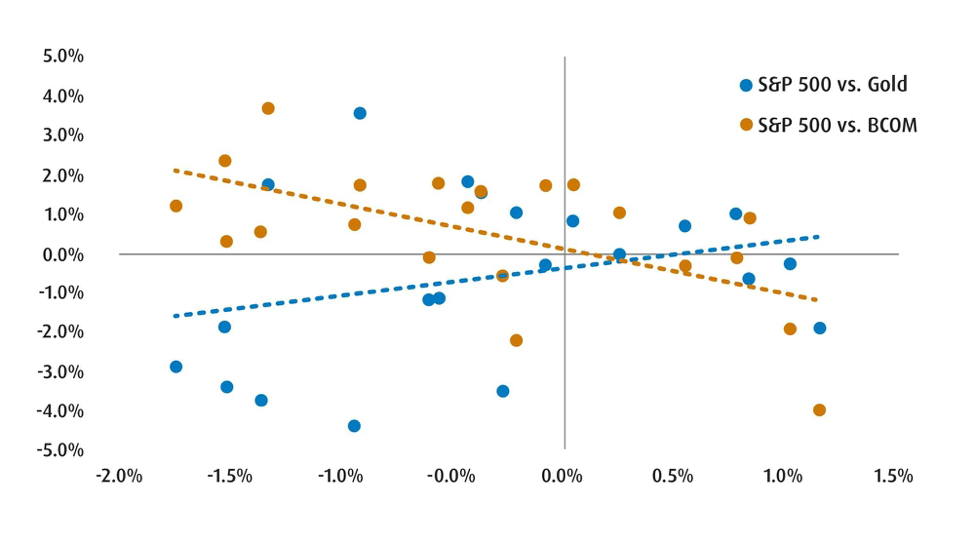
As an example, periods of higher inflation generally increase the co-movement between U.S. stocks and interest rates, requiring a more pragmatic approach to diversification. This often leads to greater interest in real assets like gold, as we’ve seen in recent years.
But what happens when even gold fails to provide adequate diversification during a geopolitical shock? Tuchman’s work reminds us of the importance of stress-testing assumptions before a crisis unfolds. When correlation structures break down and traditional hedges falter, investors who have considered tail risks in advance are better positioned.
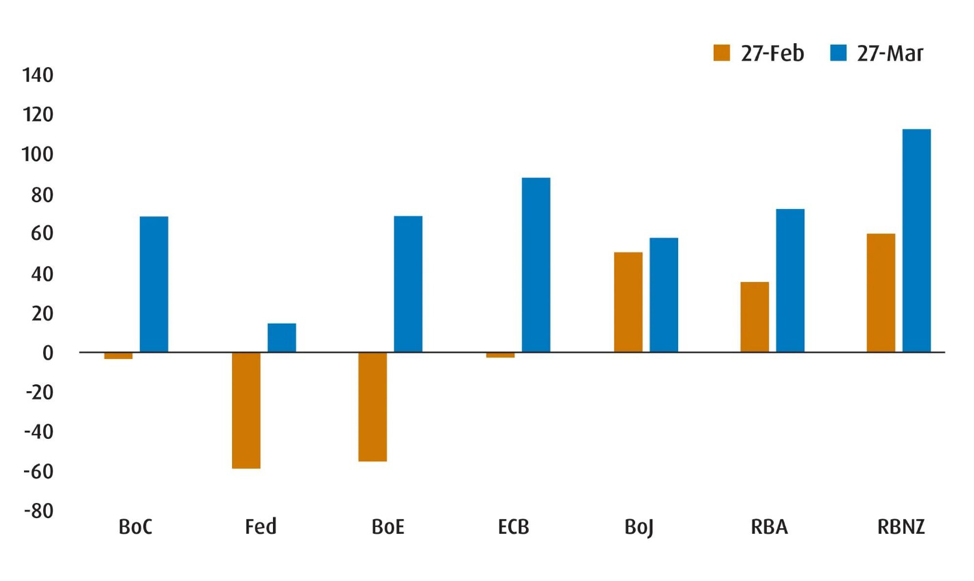
With that in mind, let’s consider the present environment. Even if the Middle East conflict is resolved quickly, the economic and market consequences will likely persist. Inflation risks are no longer symmetrically distributed, and price pressures appear likely to rise. Damage to energy-related infrastructure points to a prolonged period of crude oil and LNG supply disruption, pushing prices higher for longer. This affects refined products (such as gasoline, jet fuel, and kerosene), fertilizer production, and the supply of helium: complicating central bank messaging. Markets have responded by pricing out expected Federal Reserve rate cuts and pricing in aggressive hikes for other developed-market central banks (Chart 1).
Chart 1 – Markets Have Priced in Tighter Central Bank Policy by End-2026
Source: BMO Global Asset Management, as of March 27, 2026.
At the same time, growth risks are shifting in the opposite direction. Higher input costs act as a tax on consumers and weigh on corporate margins. The speed at which rising energy prices feed into slower growth depends largely on a country’s economic slack, which explains why some central banks have recently acknowledged growth risks more explicitly than they did in early 2022.
Indeed, our own proprietary macro regime model is signaling that we are transitioning from a ‘reflation’ backdrop to a more stagflation-like regime (Chart 2).1 This emerging stagflation regime need not mirror the 1970s, but we are still positioning our portfolios to be more robust and resilient. We’re broadening our commodity exposure to provide a more direct hedge against supply shocks. In an environment where inflation surprises are more likely to be positive, this type of convexity is valuable.2
We are also allocating to front-end TIPS (Treasury Inflation-Protected Securities) as a hedge against inflation pressures. While breakevens3 have moderated with recent disinflation progress, they do not fully reflect a sustained energy shock. TIPS offer a cleaner way to express inflation risk without requiring a strong view on nominal growth.
Within equities, we are tilting toward quality and low volatility. If growth slows while cost pressures persist, companies with strong balance sheets, durable margins, and stable cash flows should outperform more cyclical or highly leveraged peers. Low-volatility exposures can also help reduce drawdowns during headline-driven market swings.
History teaches us that conflict does not guarantee crisis. But periods of stress often reveal underlying fragilities. Our role as stewards of capital is not to forecast every geopolitical development, but to recognize that the distribution of macro outcomes is tilting toward a stagflation-like environment: and to position portfolios accordingly.
Chart 2 – Broad Commodity Exposure is Now a Better Diversification Strategy than Just Relying on Metals
Source: BMO Global Asset Management, Bloomberg. Daily returns from February 27 to March 27.
Asset Allocation
Relative to the Q1 edition, we’re making some modest changes to our asset allocation splits. The most notable shifts are that we are paring our positions in the equity and alternative sleeves and reallocating them towards fixed income. Of course, these aren’t big changes: as we still remain underweight fixed income and overweight both equities (slightly) and alts.
Our macro regime model suggests that we are in the midst of a transition from reflation to stagflation: characterized by low growth and high inflation. This is still consistent with the late cycle feel of the macroeconomic backdrop.
Despite the challenging backdrop, the underlying fundamentals remain sound enough to maintain a neutral/slightly overweight broad equity position for now. Ahead of the conflict, we did see earnings growth across several sectors in the U.S. and Canada. At the same time, the situation in the Middle East remains fluid, which requires us to be nimbler and more flexible.
In the fixed-income sleeve, the increase in weight reflects our view that the Canadian yield curve4 provides better value and that we feel U.S. TIPS should outperform in the months ahead. For the alts sleeve, the reduction in weight reflects our shift away from gold and towards a broader set of diversifiers in the commodity and infrastructure spaces.
Importantly, we are bullish on the U.S. dollar (USD) for the coming months. This means that our preference is to keep our U.S. exposure unhedged on a tactical basis. The main reasons for this view are the following:
We expect the CAD swaps market to price out rate hikes for the Bank of Canada in 2026.
We expect USD upside as net long positioning remains relatively light.
Equities
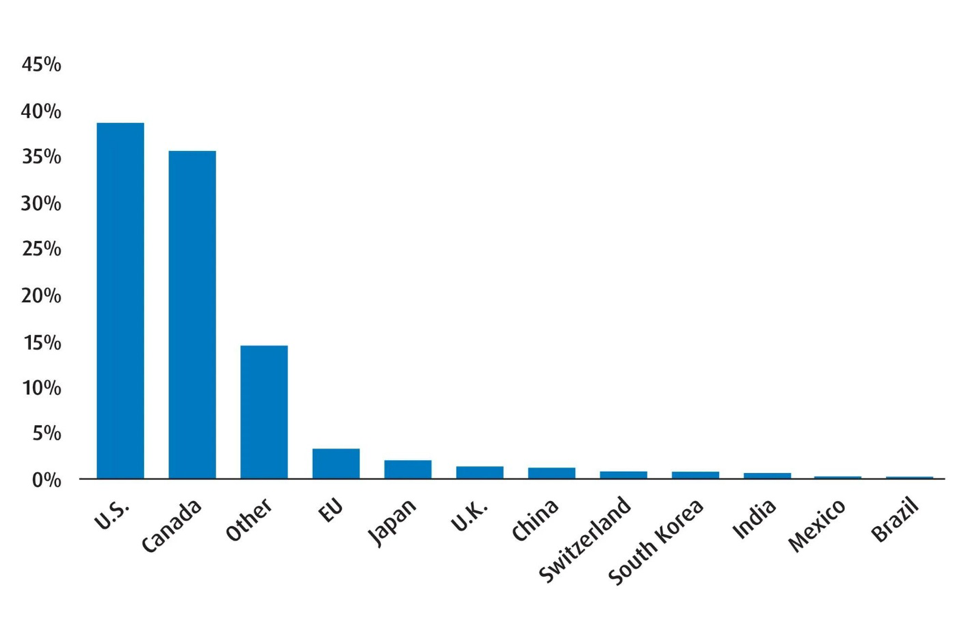
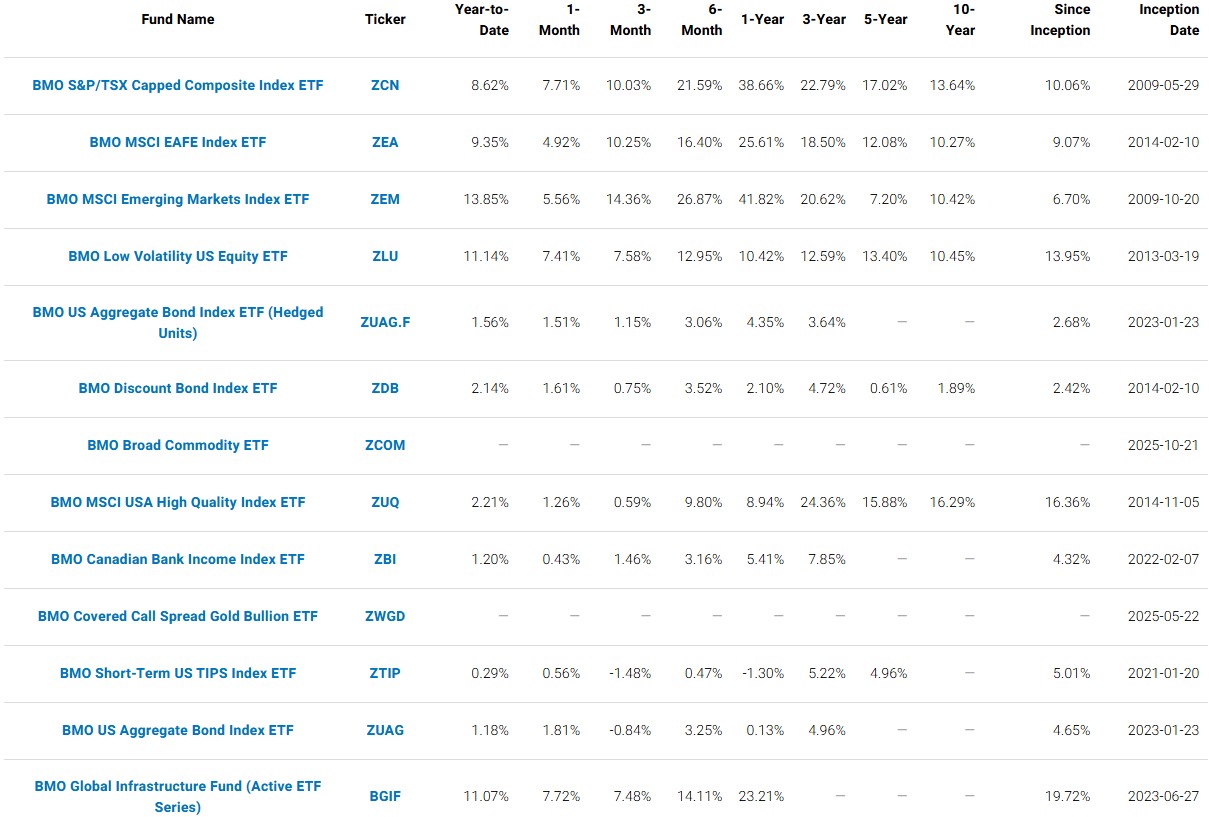
We are increasing our allocation to ZCN (BMO S&P/TSX Capped Composite Index ETF)as Canada remains well positioned as a commodity and energy producer. With energy prices supported by ongoing geopolitical uncertainty, the Canadian equity market should continue to benefit, though outcomes will remain sensitive to the duration of the conflict in the Middle East.
For our U.S. position, we are adding ZLU (BMO Low Volatility US Equity ETF)to complement our existing exposure through ZUQ (BMO MSCI USA High Quality Index ETF). This combination reflects a preference for defensive characteristics and earnings resilience during a period whereby investors remain selective on valuation and fundamentals.
We’ve also added ZTIP (BMO Short‑Term US TIPS Index ETF)as a tactical position as we expect inflation risks to stay firm given energy and broader commodity pressures.
Alts/Hybrids
The most notable change we’ve made in Alts/Hybrids is adding a tactical allocation to ZCOM (BMO Broad Commodity ETF)to broaden our inflation and geopolitical hedge. Energy has led performance on a year‑to‑date basis, but a persistent risk premium can support a wider set of commodities, which improves diversification if equity volatility picks up.
We’ve also upgraded the weight for BGIF (BMO Global Infrastructure Fund ETF)as we continue to constructive on infrastructure, including electric grids, and engineering/construction projects.
Chart 3 – Q2 2026 Regional Exposure
Source: BMO Global Asset Management, as of March 31, 2026.
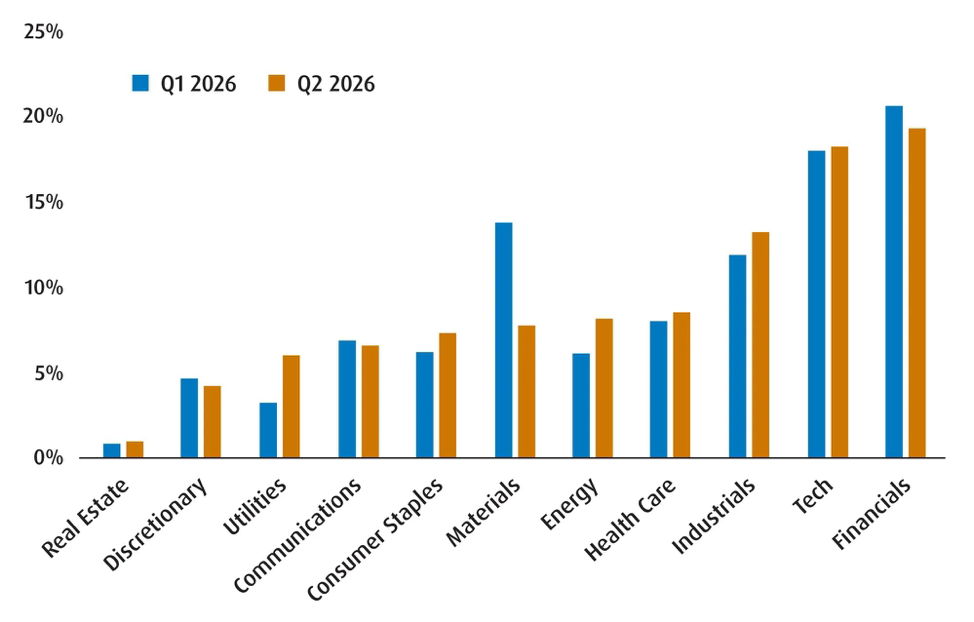
Chart 4 – Global Equity Sector Breakdown
Source: BMO Global Asset Management, as of March 31, 2026.
Akaisha and Billy playing tennis in Arizona: RetireEarlyLifestyle.com
People often tell us they are going to wait a few more years to retire.
They point out that by waiting, they will have health care provided for life and a pension that will let them afford the same lifestyle to which they’ve become accustomed. They won’t have to scale back on spending or make awkward choices concerning their budgets. Not only will they not need to relocate to a city or state that is more affordable, they will be able to own two houses: one at home with their country club membership, and another on a lake, near a beach, or in a foreign country.
Sounds great
These people have worked their entire lives for this remarkable retirement plan.
They have made personal sacrifices throughout the years such as spending time away from the family, not pursuing their hobbies, and not taking long sabbaticals. They have made these choices because in doing so, their retirement plan will be fully guaranteed.
After investing 35 or 40 years of their working lives, saving their money, raising children, and putting their own personal wants on the back burner, they now look forward to that day when they can relax and finally enjoy the life they deserve.
No tough decision making, no cutting back on their consumer habits.
Or at least, that’s how they think it’ll be.
There are no guarantees
What we have learned in our three decades of financial independence is that the perfect time for retirement simply doesn’t exist. Things change, and sometimes radically.
Perhaps your personal plan for retirement was to take big amounts of equity out of your home. But then the housing market takes a dive or your home or is affected by something out of your control. Oops.
Natural disasters can come up, affecting your lifestyle and investments. Forest fires, floods, hurricanes, earthquakes, drought can all threaten your home whether you have insurance or not. What an upheaval! It’s a financial and emotional storm no one wants to go through.
Financial markets have their earthquakes too. While the market over the years has performed at about a 10% annual return including dividends since we retired in 1991, those of us who are older now and receiving Social Security might not have the time to recover from something drastic.
Health challenges
We have a myriad of friends who, as they worked and aged, have had health problems affect either them or their spouses. One man wanted to travel through Europe, but now has developed claustrophobia (due to an earlier trauma he suffered) and can no longer fly, or take a cruise in a tiny cabin, far from shore.
What if you or your spouse find yourselves with a medical condition that doesn’t allow you the freedom you fought so hard to achieve? What if your grandchild has special needs and requires assistance, time, or your financial help?
Where can you look for comfort in circumstances such as these?
Reap reward from your self-reliance
If you have learned to live below your means, have kept your monthly expenses reasonably low, and have not loaded up with huge amounts of consumer debt, the above scenarios could be an uncomfortable bump in the road, but not a life-defining event.
If you find yourself awash in a financial storm and the days down the road seem dark and menacing or if your retirement dreams seem to be permanently shelved, try some of the following steps to regroup:
Stay calm.
People retire every day, in good times and bad. Like deciding to have a child, it’s never the perfect time. Realize that it’s normal in life for unforeseen events to rattle your confidence level, so try not to let it faze you. Above all, do not make a reflexive emotional decision about the rest of your life by making a bad trade, or an impulsive decision about your home.
Be independent.
Make your own retirement investments independent of your employer’s plan. Don’t rely solely on your employer for your retirement, whether it’s through a traditional pension or with company stock in a 401(k). This way, if your company goes under for reasons you cannot see today, you’ll still be in control of your future.
Know where you stand.
Get support from your past good behaviour. If you have been tracking your spending and living below your means, you know exactly where you are financially. The confidence and discipline of controlling spending should give you great self-assurance that you can weather any storm. And you will know exactly where to make spending changes if need be. Look for buying opportunities.
It’s always a good time to review your portfolio to see whether you have been over-concentrated in one stock or in one particular sector. We recommend no more than 4% in any one particular stock, and that includes the companies you worked for. A balanced portfolio with roughly 60% equities to 40% cash/bonds and equivalents for those in or nearing retirement is a good approach.
Invest in no-load ETFs (Exchange Traded Index Funds) such as VTI, Vanguard Total Market Fund or SPY, S&P 500 Index, that you can buy or sell in real time, instead of the market price at the day’s end and use weakness in the market to add to your positions.
If the idea of fully retiring frightens you, consider working part time, cutting back the hours at your current job, doing consulting work, or starting a second career. You’ll still earn income, but you may not have the same work demands that your current job makes of you.
Get creative.
Consider other alternatives for the expression of your retirement life. Perhaps you now have the incentive to think about relocating to a smaller home, a more affordable city, or to own one vehicle instead of two. You don’t need to shelve your future plans entirely. Find other ways of scaling down pressure and moving toward fun, relaxation, and new ways of self-expression.
You are not alone. If you find yourself in a financial or health challenge, there are others who are facing something similar. They may have an answer for you, share some tips or point you in the right direction to receive the help you are looking for.
No matter what your circumstances, there are always opportunities, there are always options. Be open to them and make the most of where you are!
Billy and Akaisha Kaderli are recognized retirement experts and internationally published authors on topics of finance, medical tourism and world travel. With the wealth of information they share on their award winning website RetireEarlyLifestyle.com, they have been helping people achieve their own retirement dreams since 1991. They wrote the popular books, The Adventurer’s Guide to Early Retirement and Your Retirement Dream IS Possible available on their website bookstore or on Amazon.com. This blog first appeared at RetireEarlyLifestyle.com and is republished on Findependence Hub with their permission.
We believe investors will profit most, and do so with the least risk, by buying shares of well-established, dividend-paying stocks with strong business prospects.
That then raises the question, how to tell if a stock pays a solid dividend? How to find out if a stock pays dividends is an important skill for investors.
The best companies to invest in for dividends have strong positions in healthy industries. They also incorporate strong management that makes the right moves to remain competitive in changing marketplaces.
How to tell if a stock pays a sustainable dividend?
These types of stocks give investors an additional measure of safety in today’s volatile markets. And the best ones offer an attractive combination of moderate p/e’s (the ratio of a stock’s price to its per-share earnings), steady or rising dividend yields (annual dividend divided by the share price), and promising growth prospects.
Today we’re going to look at how to tell if a stock pays a dividend and — more important — if it’s likely to keep paying it. You’ll want to recognize these stocks when they are available. Learning how to find out if a stock pays dividends can help you make informed investment decisions.
But first, let’s quickly recap the value of dividends and dividend-paying stocks by looking at some reasons for investing in them.
Why invest in dividend stocks?
1.) Growth and income. The best dividend-paying stocks offer both capital-gains growth potential and regular income from dividend payments.
2.) Dividends can grow. Stock prices rise and fall, so capital losses can follow capital gains, at least temporarily. Interest on a bond or GIC holds steady, at best. But top-quality dividend-paying stocks like to ratchet their dividends upward: hold them steady in a bad year, raise them in a good one. That gives you a hedge against inflation.
3.) Dividends are a sign of investment quality. Some good companies reinvest profit to spur growth instead of paying dividends. But fraudulent and failing companies are hardly ever dividend-paying stocks. So if you only buy stocks that pay dividends, you’ll automatically stay out of almost all the market’s worst stocks.
For a true measure of stability, focus on those companies that have maintained or raised their dividends during a recession or stock-market downturn. That’s because these firms leave themselves enough room to handle periods of earnings volatility. By continually rewarding investors, and retaining enough cash to finance their businesses, they also provide an attractive mix of safety, income and growth.
4.) Dividend income gets favourable tax treatment. Taxpayers who hold Canadian dividend-paying stocks get an additional bonus. Their dividends are eligible for the dividend tax credit in Canada. This means that dividend income will be taxed at a lower rate than the same amount of interest income (investors in the highest tax bracket pay tax of about 25% on dividends, compared to about 54% on interest income). Investors in the highest tax bracket will now pay tax on capital gains at a rate of roughly 27%.
The 7 suggestions
1.) How to tell if a stock pays a dividend? Look for companies with long-term success. These companies are the most likely to keep paying and increasing their dividends. Continue Reading…


 Posted By





 Posted By


 Posted By