Debt & Frugality

As Didi says in the novel (Findependence Day), “There’s no point climbing the Tower of Wealth when you’re still mired in the basement of debt.” If you owe credit-card debt still charging an usurous 20% per annum, forget about building wealth: focus on eliminating that debt. And once done, focus on paying off your mortgage. As Theo says in the novel, “The foundation of financial independence is a paid-for house.”

Should you rent a home or buy a home? That is the question

By Dale Roberts

Special to the Financial Independence Hub

It’s a tough question, especially if you live in one of the major cities where home prices are skyrocketing. Or let’s say the home prices have skyrocketed over the last couple of decades. For many potential homeowners it’s a race against the clock. The price of entry might keep increasing at a rate that is faster than you can amass that initial down payment.

On that front the government agencies are working hard to help first time home buyers with greater access to RRSP home buyer’s plan funds and even down payment monies from the CMHC. Please have a read of Cream and sugar and tens of thousands of dollars for first time home buyers.

Trying to raise enough cash for that initial deposit is more than challenging, and discouraging, when you see home prices increase by several percent or more per year.  We’ll use Toronto area real estate prices to demonstrate the recent history.

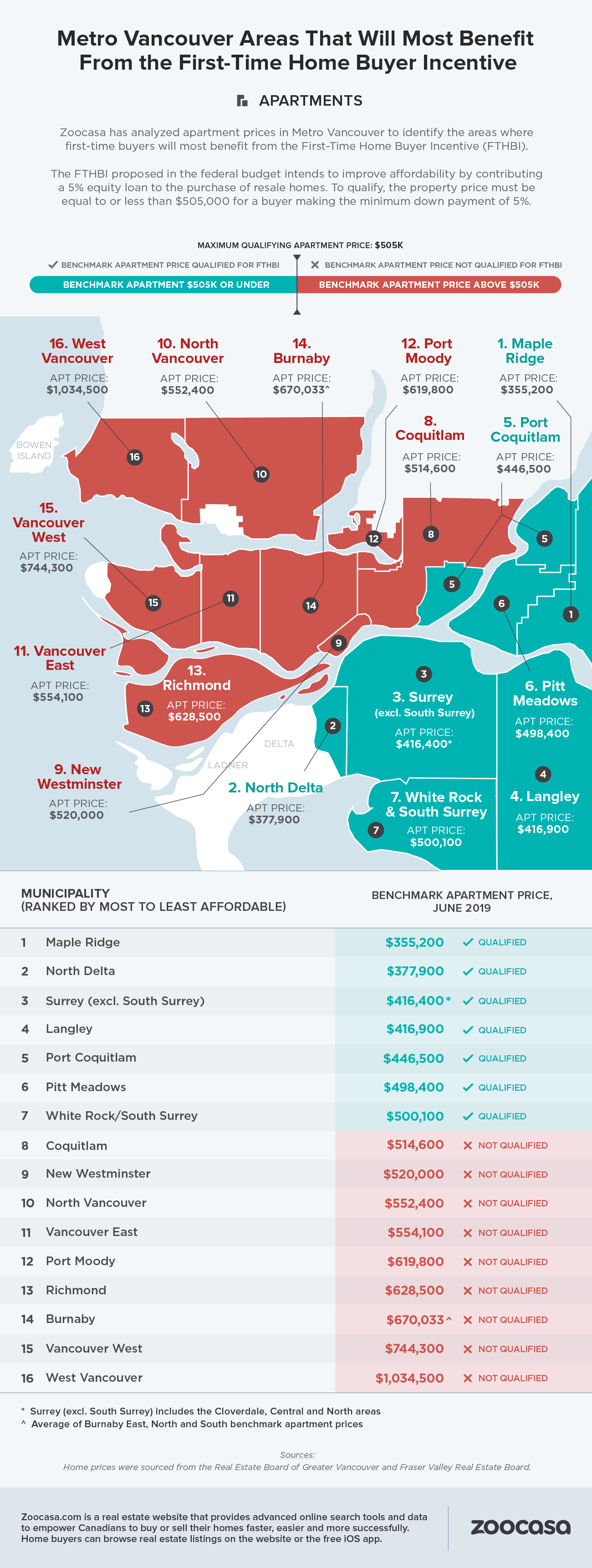
Over the last decade average Toronto home prices have more than doubled. Of course, in certain desirable pockets the price increases have been outrageous. And if we head out to the west coast we’ll see periods when the Vancouver area market had rates of increase over several years that is nothing short of silliness.

You don’t have to own a home or property to build wealth

While home ownership is a wonderful goal, and it can help build that more than important total net worth, it’s not the only route to finding a wonderful place to live and growing your long-term wealth. You can rent and invest the monies that would ‘normally’ go to pay that mortgage and surprising list of costs that come with home ownership.

I recently had a question from a reader on the very subject of renting vs home ownership. For an answer I turned to John Robertson the author of The Value of Simple. John also operates the blog Blessed by the potato. And on that site here is the go-to post for Rent vs Buy. On that page you can click on a rent vs buy spreadsheet.

In an email reply to the reader and me John framed the proposition quite succinctly …

In some cases it can make sense to invest your money and rent instead. Indeed, I’m a renter myself in Toronto. It’s a bit more complicated than the scenario you paint, though. Remember that keeping that house is not just about your mortgage payment, you also have to pay property tax, maintenance, insurance, and somewhere account for the transaction costs for your eventual move — expenses that a renter doesn’t face (or are implicit in the rent). So when you do the math, you’ll have to back those costs out, meaning you need less of a return from your investments to help offset the rent. And exactly what (after-tax) return you use when estimating your investment performance will matter to the decision, too.

The main takeaway from John’s opening remarks is that home ownership (or condo with fees and such) is much more expensive than one might think. Beyond the mortgage and property taxes the additional costs of home ownership is quite surprising.

Check out this home ownership mortgage calculator on ratehub.ca. There are some incredible tools on that site that will help you determine affordability and the expected costs. You’ll discover that you have to add at least several hundred dollars per month in costs above your mortgage.

The Price To Rent Ratio

Continue Reading…

Why I don’t invest in Canadian Dividend ETFs

By Mark Seed

Special to the Financial Independence Hub

Fans of the My Own Advisor site, including many long-time readers and investors who enjoy this site, continue to tout the benefits of low-cost investing to others.

And you know what? They are right and they should!

That’s because when it comes to investing you often get what you don’t pay for: better returns usually come from a lower-fee fund structure.

That means when it comes to money management fees matter.

One way to reduce your investment fees is to own lower-cost dividend ETFs.

Here are some of the great benefits that come from investing in dividend ETFs beyond just distribution income:

Transparency: Within a few clicks of a mouse or few swipes on my tablet, I can see what every single holding is in these funds. I can also read up on the fund’s prospectus to learn how fund turnover is managed and how often.  Portfolio turnover within the fund costs money: someone needs to get paid!  That brings me to my next point below.

Modest fees: You might recall active fund management costs more because money managers are paid to perform. A pay-for-performance mandate encourages the mutual fund money manager to buy and sell stocks frequently in an attempt to beat the market or the index they are tracking.  Buying and selling frequently incurs costs, and those portfolio costs are passed on to you. Instead of all this trading, I think investors should strive to invest in a low-cost ETF that follows a reputable, established, broad market index such as the S&P/TSX Composite Total Return Index or for dividend investors in Canada, an established dividend-oriented index such as:

• S&P/TSX 60 Index, or

• S&P/TSX Composite High Dividend Index, or

• FTSE Canada High Dividend Yield Index

Lower effort: If you’re going to invest in some individual stocks, you need to spend some time understanding these companies and understanding what you own, why you own it. I read annual reports every year and follow metrics like yield, payout ratio, earnings per share, cash flow to name a few.  Dividend ETFs don’t have this complexity: they bundle all these companies together for you.

There are certainly many benefits to owning Canadian dividend ETFs … but I still don’t invest in any of these Canadian funds.  Here are my reasons why:

1.) I thought about building my own Canadian Dividend ETF: and so I did, and I’ll continue to do so!

Many years ago, I learned there is merit to owning the same Canadian stocks the big funds own: so I started that process.  I’ve never looked back.

I went so far as to say Canadian dividend stock selection could still be made easy.

Here is one quick example: Look at this RBC Canadian Dividend Fund in 2011:

RBC Fund 2011

And now the same fund’s top fund holdings as of April 2017:

RBC Fund 2017

Lots of differences eh?  (Images courtesy of RBC’s site.)

Let’s look at another example and pick on BlackRock – XIU.

Now, again, if you don’t want to buy and hold certain stocks, nor try and create your own Canadian Dividend ETF like I have, then no problem.  This fund is arguably one of the best ETFs to own in Canada!!  (I recall iShares XIU was one of the world’s first ETFs.) Continue Reading…

Canadians embracing low-cost ETFs: Is a tipping point on the horizon?

By Dale Roberts, CutTheCrap Investing

Special to the Financial Independence Hub

Data shows that Canadians continue to embrace low-cost ETFs. That said, more monies continue to flow into high-fee mutual funds. As you likely know, Canadians pay the highest mutual fund fees in the developed world. Of course, those high fees are wealth destroyers and can eat up 50% of your investment returns over the decades.

But here’s the good news: more Canadians are moving more monies to low-cost ETF portfolios by the way of self-directing or through Canadian Robo Advisors or by way of those One Ticket Asset Allocation Portfolios.

Here’s a look at the flow comparisons for Mutual Funds and ETFs courtesy of the IFIC site:

Here’s the sales figures for mutual funds in what we would typically call the usually robust RRSP season, January and February:

Mutual Fund Sales 2019 Jan FebAnd here’s the sales figures for the ETF industry for RRSP season:ETF Assets 2019 Jan Feb

If we want to be optimists, that is more than promising. While 2019 was a soft RRSP season for money flows into mutual funds and ETFs (compared to 2018 figures) there was an acceleration of flows to ETFs compared to mutual funds, year over year.

  • In 2019 35% of new monies went to ETFs.
  • In 2018 27% of new monies went to ETFs

That is certainly something to celebrate. While the total mutual fund industry is almost 10 times the size of the ETF industry, they did not even double the size of inflows for January and February of 2019. That aligns with the findings of Nest Wealth, which conducted a poll in RRSP season. Respondents suggested one third of all new account openings would be by way of one of the Canadian Robo Advisors: also known as digital wealth managers. For more on that please have a read of There will be a tipping point for ‘Robo Advisors’ suggests Randy Cass of Nest Wealth. Keep in mind the poll was reading account openings, not the move of assets or amounts of assets.

Here’s another way to frame that more than ‘good news’. Continue Reading…

How are changes to Renewable Energy affecting our daily lives?

By Sia Hasan

Special to the Financial Independence Hub

One of the biggest changes to the energy industry has been the introduction of renewable energy. The idea that energy could be produced without having to burn fossil fuels was extremely foreign to the industry at its inception. Luckily, more and more consumers have made the switch to solar and other renewables to build a greener and more sustainable energy infrastructure. This gradual switch to solar has affected more than just large utilities. So, how have changes to the renewable energy sector affected the daily lives of most citizens?

  • Average Energy Bills Are Falling
  • The Cost Of Installing Solar Is Lower Than Ever
  • More Legislative Actions Are Being Taken To Support Renewable Energy

Average energy bills falling

Homeowners who make the switch to solar will immediately see that they now have lower energy bills. This is because fewer kilowatt hours must now be pulled from the grid because many are already being supplied for free by the sun via your rooftop solar system. These lower bills mean keeping more money in your pocket to spend on other things like better food on the table or a fun weekend getaway for the family. Over the 30+ year lifetime of a solar system, the savings can be massive. Additionally, those who install a solar system usually begin to value electricity more than those who don’t. This can cause homeowners to take additional measures such as installing energy efficient appliances and undertaking LED lighting upgrades which can even further lower energy bills.

Cost of installing Solar lower than ever

Thanks to improved manufacturing processes and higher demand for home renewable energy systems, the average solar panel cost has been falling at a fairly predictable rate over the years. In fact, it is estimated that the cost of solar is falling even faster than some experts expected. So what does this mean for consumers? Continue Reading…

Upside Down … the Yield Curve Inverts

By Kevin Flanagan, WisdomTree Investments

Special to the Financial Independence Hub

Recently, the big news has been that the U.S. Treasury (UST) 3-month/10-year yield curve became inverted for the first time since 2007. It is certainly a noteworthy development in bond-land. As of this writing, the closely watched UST 2-year/10-year spread is still on the positive side at 15 basis points.

Here are some quick insights:

  • The effect of last month’s Federal Reserve (Fed) meeting is still resonating, with any economic data being viewed through that prism accordingly.
  • The catalyst for this latest inversion may have been the continued soft performances of the Eurozone Purchasing Managers’ Indexes (PMIs), specifically those of the manufacturing sector and Germany.
  • The manufacturing PMIs for Germany, France and the Eurozone are now all in recession territory, with Germany’s at its lowest level since 2012.
  • The 10-year German bund yield dropped into negative territory as a result of the PMIs.
  • This is important for the U.S. rate outlook because the Fed mentions global growth as one of its primary concerns.
  • U.S. economic data has been more mixed but does suggest a slowing in Q1 growth.
  • The U.S. PMI came in below consensus for March, but still safely above the “50” threshold of contraction versus expansion.
  • Existing home sales increased by 11.8% in February. Continue Reading…