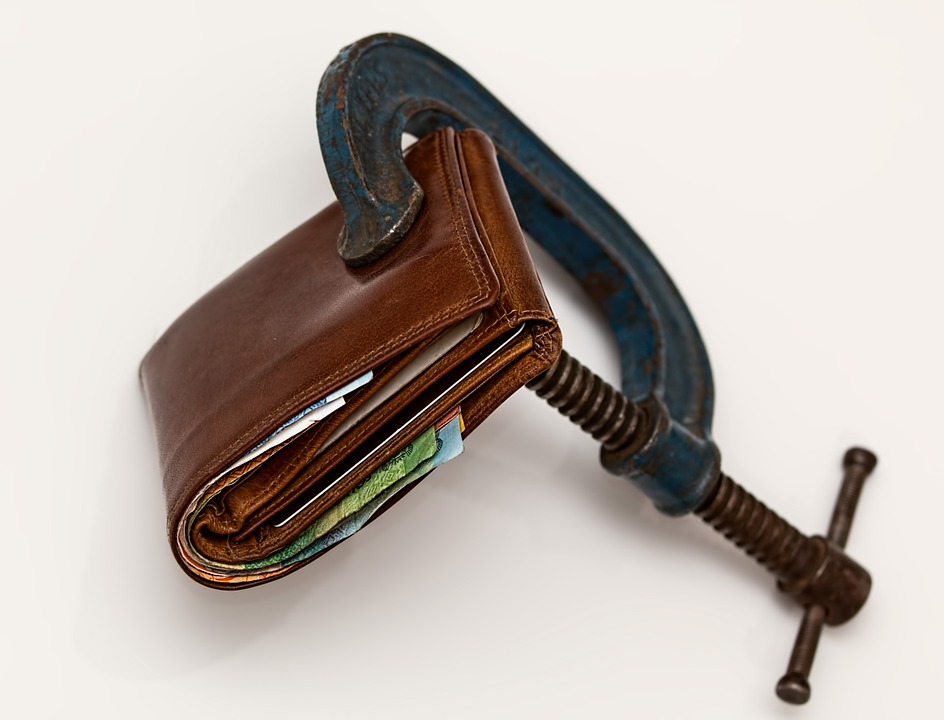
Debt & Frugality

As Didi says in the novel (Findependence Day), “There’s no point climbing the Tower of Wealth when you’re still mired in the basement of debt.” If you owe credit-card debt still charging an usurous 20% per annum, forget about building wealth: focus on eliminating that debt. And once done, focus on paying off your mortgage. As Theo says in the novel, “The foundation of financial independence is a paid-for house.”

Are you financially ready to buy your first home?

By Allan Tran

Special to the Financial Independence Hub

Buying a home is usually the biggest investment you’ll make. Can you afford it?

Recent surveys show that potential buyers are concerned about interest rate increases and new federal lending guidelines. Many people are delaying their home purchases. It can be hard to know when to take the plunge or hit pause. Try these exercises:

Simulate the total expense

When talking to mortgage brokers and real estate agents, you can get preoccupied with rates, what you can get approved for, and listing prices. Those matter, but figure out the bottom line. Can you swing the total costs and still live your life?

Calculate your expected fixed home ownership costs: mortgage payment, property tax, home insurance, utilities, etc. Take that total and compare it to what you’re paying now for rent. The difference is what you’ll need to be able to cover.

Now, set that amount aside every month for a year. That’s long enough to experience all the ups and downs of your annual expenses. See whether you can handlethe monthly savings for the home you want for a sustained period

Take a hard look at your spending

Saving for a home, then managing the ongoing expense, can require a shift in spending habits. You can’t do that without a handle on where you actually spend your money.

Review the last three months of your credit-card statements and other bills. Look at wants versus needs. Think about what costs you could have avoided and how those add up. For instance, many costs that we tap a card for are variable. You can likely avoid some. Try and park that money into savings.

Another strategy is to force savings by tying it into spending. Say you spend $20 a week on coffee. Yes, you can save $1,000 a year by foregoing that. But you want coffee. Well, you also want a home. How about putting the equivalent towards it? It’s just a way of disciplining yourself to save for a bigger dream.

Force accountability

If you’re buying a home with a partner or spouse, get a joint account where you can’t pull out money without both signing off. This will help you think twice about spending and hold each other accountable.

Many couples have different spending and savings habits. The point is to train you to have honest conversations about finances. If you’re going to own a home together, you need to be on the same financial page before, during and after the purchase.

Stress test yourself

The Office of the Superintendent of Financial Institutions has new rules around mortgage underwriting. Potential home buyers must be able to handle a minimum qualifying rate: the greater of the five-year Bank of Canada benchmark rate, or the contracted mortgage rate plus two percentage points. Continue Reading…

6 tips for managing your Kids’ bank accounts

By Emily Roberts

(Sponsored Content)

It’s 2018 and the days of buying your kids a piggy bank are long gone. It makes much more sense to let your kids have a bank account that will not only help them keep their money safe but also teach them how to grow and save it. Unfortunately, it seems as if most modern banks offer little to no incentive for kids to save their money and many focus on charging them as much as possible.

Transaction fees and unexplained charges can easily chew up what little money you deposit. Many banks will continue to charge exuberant monthly fees on small balances to the point where everything that was deposited is gone within a few months. This is why it’s important for you as a parent to find the right bank account for your kids that will help them get the most out of their money and hopefully grow it at the same time.

1.) Check those transaction fees

Most bank accounts come with a PDF or pamphlet (depending on how you apply) that stipulate the charges for every type of transaction. Sometimes these numbers are changed without notice, so be sure to check the fees for each type of deposit, withdrawal, and transaction. Advise your kids to deposit their money through your account or an ATM at the very least, as doing it over the counter is expensive.

2.) Teach your kids about saving

Educating your children about properly managing their money should be done long before they leave for college. Teach them how interest works, how saving their money is the right thing to do, and how to budget correctly. This way, they’ll know how to manage their funds better when they become independent.

3.) Link their bank to your phone number

Doing this means you can see every transaction that goes through. All of these usually come from a single number, so it won’t fill up your inbox. Not only can you see where their money goes, but if its stolen or their bank accounts are hacked, you’ll know first. Continue Reading…

Stop cheating yourself out of tax savings: Tips to get the biggest refund

By Clayton Brown

(Sponsor Content)

The CRA might not exactly be falling over themselves to help you get a nice tax refund. A recent audit showed the agency blocked more than half the calls it was getting (that’s 29 million calls out of 53.5 million) because … well, it just could not handle all of the call volume.

And even when Canadians did get through, agents gave the wrong information about 30 per cent of the time. So, Canadians might need a little help in figuring out how to file their taxes the right way; ideally, so they get the maximum refund they deserve.

Here are some things you can do around tax time to make sure you get the money that should be coming to you:

Take your deductions and claim your credits

The CRA likes its revenue but successive governments have created various options to give the taxpayer some breathing room. Deductions are one of the few variables in your favour, lowering your taxable income, so make the most of them.

Probably one of the best known ones comes from RRSP contributions.

You can contribute up to 18 per cent of your previous tax year’s earned income, plus unused room carried forward from previous years. This helps you pay less tax now, and assuming your income is lower in retirement, also helps you pay less tax later on. By now, you should have all your RRSP receipt slips from your financial institution. (Make sure you keep those receipts, in case auditors come calling).

Another tactic: claiming deductions for child care costs. The government wants to encourage parents to buff up their skills and improve their job prospects. For instance, you can deduct up to $8,000 per child who is under 7 years old. For children aged 7 to 16, you can deduct up to $5,000 for those eligible child care expenses.

Canadians can also claim the interest on certain student loans as a credit. This credit is not like a deduction (where a $1 deduction translates into $1 less taxable income, up to a limit). However, it can still significantly lower a tax bill for those struggling to finally pay off student debt after they’ve finished school.

There are many more deductions and credits available, so don’t leave money on the table!

Love those Spousal RRSPs

Marriage is a beautiful thing. Being with the person you love, sharing memories … and don’t forget about those tax advantages! (Technically, they also apply to common-law spouses, so you don’t have to get hitched to reap the rewards).

These tips generally apply where one spouse earns quite a bit more than the other. In that case, it can make sense for the higher-earning partner to contribute to a Spousal RRSP.

So, let’s say Ned makes $80,000 in salary at his engineering job. Meanwhile, Ned’s wife, Claire, earns just over $50,000 as a manager in an electronics store.

They are both contributing to their own individual RRSPs (Ned saved $6,000 in his. Claire saved $4,000). But Ned also puts $5,000 into a Spousal RRSP. Since Claire’s income is lower, she is the holder of the Spousal RRSP and she will be the one withdrawing income from it. The ideal result, if they’re doing it right: when she makes a withdrawal, it will be taxed at a lower rate than if Ned withdrew it from his own RRSP. Continue Reading…

Where is the most affordable housing for Singles?

By Penelope Graham, Zoocasa

Special to the Financial Independence Hub

It’s no secret that Canadian real estate is expensive, with home ownership financially out of reach for many in the nation’s largest urban centres. Detached Toronto houses, for instance, fetched an average of $1,282,240 in February: and that follows an 18.6 per cent decline from the year prior.

Affordability in Vancouver remains at an all-time low; according to a recent report from RBC, the lender’s Senior Vice President and Chief Economist Craig Wright stated Vancouver home buyers “are being challenged by the worst affordability levels ever recorded in Canada.”

Well beyond expert advice

Financial experts commonly recommend that for homeownership to be financially sustainable, shelter costs should not exceed a third of a household’s take-home pay. This is easier said than done in the majority of Canada’s markets: and not at all possible in some regions for those purchasing a home on a single income, according to data compiled by Zoocasa.

To determine the level of affordability in each market, the study determined the median home price-to-income ratio, based on regional home prices reported by the Canadian Real Estate Association, and median household incomes from Statistics Canada.

This ratio determines how many years it would take to pay off a home using 100 per cent of a household’s annual income:  the higher the ratio, the longer the timeline. And, while dual-income households have their fair share of affordability challenges in hot markets, the numbers paint an impossible picture for solo buyers.

For example, in Vancouver, where a single-income household brings in a median annual salary of $38,164, and the average home cost $1,071,800, homeownership outweighs incomes by multiple of 28. A home in the City of Toronto would set said buyer back 19 years for their home purchase.

Even most affordable markets too pricey for Singles

However, in a market as varied as Canada’s, affordability can change drastically by market, yet single-income households are still theoretically paying too much on homeownership in even the most affordable regions. Houses for sale in Hamilton, a popular secondary market to Toronto, still cost single buyers 15 times their income while in Saint John — the most affordable Canadian market — the average home price of $171,596 still outstrips the regional median income of $39,163 by four times.

Continue Reading…

5 financial tips that save money in the long run

By Sia Hasan

Special to the Financial Independence Hub

The financial steps you take now can have a major impact on your life. Believe it or not, there are changes you can make right now if you would like to save yourself a lot of money.

Below are five tips you can follow if you would like to handle your finances in the best way possible.

1.) Save for Retirement

First, it’s never too early to start saving for retirement. For example, if you don’t already have one, you can open up a self directed IRA (or its Canadian equivalent, the RRSP.) Contributing money to your retirement account now can help you ensure that you save up enough money for when you are no longer able to work. If you start now, you can help ensure that you earn more in interest as well.

2.) Focus on Maintenance

Maintenance of your home, car and other things you own can be expensive. However, not maintaining your home or vehicle can actually be a lot more expensive in the long run. Therefore, even though it can be tough, it’s important to make maintenance a top priority. This can help you ensure that things last longer and can help you avoid more expensive repairs later on down the road.

3.) Take care of your Health

Along with focusing on taking good care of your car, your house and your other belongings, it is also important to take good care of yourself. Not only can taking care of your health help with your overall happiness and well-being, but it can save you a lot of money as well. Therefore, it’s important to avoid smoking or drinking too much alcohol, and it’s also critical to see your doctor and your dentist on a regular basis. Continue Reading…