Debt & Frugality

As Didi says in the novel (Findependence Day), “There’s no point climbing the Tower of Wealth when you’re still mired in the basement of debt.” If you owe credit-card debt still charging an usurous 20% per annum, forget about building wealth: focus on eliminating that debt. And once done, focus on paying off your mortgage. As Theo says in the novel, “The foundation of financial independence is a paid-for house.”

Use your Tax Refund to jumpstart your Savings

By Jordan Lavin, RateHub.ca

Special to the Financial Independence Hub 

It’s tax season, and if you’re like the majority of Canadians you’ll be getting money back from the government.

That’s right. Out of everyone who files a tax return for the 2017 tax year, 58% are getting a refund and the average amount is $1,765.

That’s not a small amount of money. $1,765 is enough for a nice new TV, a beach getaway, or maybe even a deposit on a new car. If you have a big tax refund coming your way, you might already be dreaming of all the ways you can spend it.

But I want you to think of it another way. Your tax refund is a refund. You’ve paid too much money to the government in taxes over the year, and now they’re returning it to you, without interest. If your tax refund is $1,765, that means you paid more than $147 a month too much in taxes over the year.

It’s your money, not free money!

It’s not free money. It’s your money, that you already earned and were forced to save.

You could take your tax refund and splurge on something fun. But since you’ve already saved that money, why not keep it going and use it to earn money that actually is free?

In fact, you can use a tax refund of $1,765 to generate $724 in interest by depositing it in a high interest savings account, TFSA, or RRSP, and allowing it to grow. That’s more “free money” in your pocket.

Need proof?

Today’s best high interest savings account rate is 2.3%. At that rate, a deposit of $1,765 will earn $41.03 in interest in the first year. After 20 years, it will have earned $1,030 in interest. Once tax is taken out, that means the total earnings on your savings would be $2,489 and change.

Wait, taxes?

Yes, money earned in an ordinary high-interest savings account is taxed at your marginal rate. For example, if you make $50,000 per year and live in Ontario, your marginal tax rate is 29.65%. For every $100 in interest your savings account earns, you will owe $29.65 in income tax.

The advantages of TFSAs

Fortunately, there are some ways to reduce the amount the government takes out of your earnings.

Continue Reading…

Tools and platforms for would-be Webpreneurs

By Linda Binklage

Special to the Financial Independence Hub

So you need your own website? Whether you’re a small business, a budding webpreneur or just someone with a message to share, a website is a great way to reach your audience.

Nevertheless, many people are put off starting a website for fear of the costs and expertise involved. What they don’t know is that there are loads of amazing tools and platforms out there that can help them to design an effective website at an affordable price.

Here are some of the best tools and platforms for making a website:

Duda

Duda is a responsive website builder. Choose from a range of ready-made templates then use the drag and drop editor to create the look and the layout you want. You can integrate your site with the likes of PayPal, OpenTable and Disqus. And there are some great website personalisation features, allowing you to adapt your site for different customers.

WordPress

WordPress is a favourite amongst rookie and professional web designers for a reason. It’s great for everything from a basic blog to a fully-fledged e-commerce site. It’s really easy to use. And this is one platform where the cost of a website needn’t be a worry. Free packages cover all of the basics. And if you’re looking for more templates, greater customisation or full control over how your website looks and behaves, there are very reasonably priced upgrades you can sign up for. Continue Reading…

5 rare types of Credit Card Travel Insurance coverage

By Maria Weyman, creditcardGenius

Special to the Financial Independence Hub

Having a form of insurance coverage while travelling gives tremendous peace of mind. And when that important coverage comes from the credit card you already have and you use to book your travels, even better.

Why? Because insurance coverage built in with your credit card has no additional cost, not to mention it’s convenient.

Despite the convenience and potential to save money, it pays to read the details.

Reading your insurance certificate

Your credit card insurance certificate should have the details of what coverage comes with your credit card as well as information on exclusions and limitations.

For example, here’s a list of coverage one credit card offers:

However, even after reviewing this list, it’s always best to still review the certificate to read all the fine details so you know exactly:

  • what is covered,
  • what’s excluded,
  • the maximum amount you can claim per coverage, and
  • any additional terms and conditions.

5 rare types of travel insurance coverage

There are 16 types of insurance coverage we track; however here’s an overview of the five rare types of travel insurance coverage your card might include:

1.) Trip Cancellation

Opting for lower-cost non-cancellable flights and hotels saves money up front. But what happens if you need to cancel? Trip Cancellation coverage takes care of that for you if you’re cancelling for a list of emergency reasons.

Keep in mind there will be a cap to how much you can claim, typically around $1,500. However $1.5K is still better than $0 without this coverage. Continue Reading…

Priced out of the housing market? 5 creative financial ideas to get In

By Sean Cooper

Special to the Financial Independence Hub

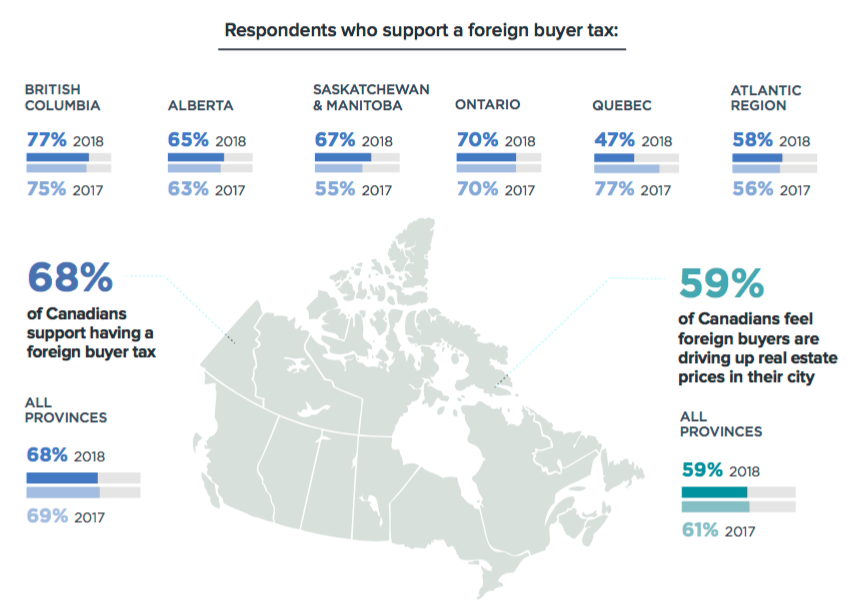
Are you finding it a challenge to buy real estate in the big Canadian cities? If you’re looking to purchase a home in Calgary, Toronto or Vancouver, even buying with the minimum five per cent down can be tough. (The new mortgage stress test sure doesn’t help.)

Despite rising home prices, millennials haven’t given up on buying homes. In fact, they’re still finding ways to get into the real estate market. Survey after survey shows that younger folks still see homeownership as a good long-term investment.

So how do you actually afford to buy real estate in the more expensive markets? Let’s look at five creative ways to still get into pricier real estate markets:

1.) Tapping the Bank of Mom and Dad

The “Bank of Mom and Dad” may be a term you’re already familiar with. Property virgins are increasingly turning to their parents for financial help with a down payment. Parents often gift their adult children some or all of their down payment. Often, this benefits both parties. The adult children can live closer to their parents in a good neighbourhood and see each other more often. The parents may be able to provide childcare, while the adult children can look after their parents in their old age.

2.) Buying with Family and Friends

Are you finding it tough to qualify for a mortgage if you’re single? You don’t have to necessarily buy a property with a spouse. A new trend is to buy with family and friends. If you know a family member or friend that you trust, why not combine your finances and buy a home together? Two incomes and down payments: sure makes it a lot easier to afford a home in a nice neighbourhood. (However, if you buy with family or friends, be sure to have a written agreement in place so that when someone wants to sell, your expectations are in line.)

3.) Buying in a Satellite City and Renting in the Big City

Can’t afford to buy in the big city, but still want to own a piece of the real estate pie? Why not buy in a satellite city and rent in the big city? This is becoming a lot more common in Toronto and Vancouver, where the cost of homeownership is the highest in the country. When you buy in a more affordable satellite city, you can start build up equity to eventually move into the big city. Continue Reading…

The 5 worst financial decisions you can make

 By Alana Downer

Special to the Financial Independence Hub

Sometimes when it comes to your finances it can be difficult to know if you’re making the right decision. What bank account should you pick? Should you buy a car outright or pay it off as you go? Are you eating too much takeaway? Every day we have to make decisions that affect our finances and some are harder and more consequential than others. In fact, sometimes one small financial decision can have a lasting impact on the health of your bank account. Here are the five worst financial decisions you can make, so you can avoid making the wrong choice in the future!

1.) Spending more than you earn

Overspending is probably the number one money mistake that you can make. You cannot build wealth or be financially secure if you are spending more than you’re earning. By spending money that you should be saving you are doing serious damage to your finances and stalling your financial progress.

It’s true that not everyone has high-paying jobs or huge inheritances, but this doesn’t mean you can’t build up healthy savings by simply monitoring your spending. Part of spending less than you earn means putting effort into living below your means. Track your spending and take a hard look at your spending habits. Are you buying two or three coffees a day? Do you pay a lot of money every month for a gym membership you don’t use? Or perhaps on a bigger scale, you have a huge house or luxury car that you just don’t need.

2.) Never Budgeting

Creating a budget goes hand in hand with learning how to spend less than you earn. A budget is a blueprint for financial success. Without budgeting, it is nearly impossible to keep track of your expenses and ascertain whether or not you are spending more than you should. By creating a budget to follow week-to-week or month-to-month you can stay on top of your finances and prevent yourself from making financial decisions that you may regret.

When creating a budget, it’s a good idea to look at your whole year and the payments that you have to make, such as your rent, your bills, your car registration and cost of transport. Use bills, your bank statements and receipts to help you understand all your expenses. Once you’ve figured out roughly how much you spend over a certain period, figure out your net income (i.e. the money deposited in your bank account each pay period). Subtract your expenses from your income and what is left should be what you aim to save.

3.) Not creating an Emergency Fund

Many people have the mindset that bad things won’t happen to them and that if they do, they will find some way to deal with it when the time comes. This is not a financially intelligent way to think and could leave you in serious trouble if something goes wrong. An emergency fund is exactly what the name suggests, a bank account that can you use in the case of an emergency without having to dip into your savings or rearrange your budget. It is money set aside specifically for use when things go haywire.

Continue Reading…