Decumulate & Downsize

Most of your investing life you and your adviser (if you have one) are focused on wealth accumulation. But, we tend to forget, eventually the whole idea of this long process of delayed gratification is to actually spend this money! That’s decumulation as opposed to wealth accumulation. This stage may also involve downsizing from larger homes to smaller ones or condos, moving to the country or otherwise simplifying your life and jettisoning possessions that may tie you down.

Retired Money: What can retirees do about GIC reinvestment sticker shock?

My latest MoneySense Retired Money column looks at the vexing problem retirees and near-retirees face when their GICs have matured in recent months. Click on the highlighted text for the full column: Recovering from GIC sticker shock.

If before you were getting 2 to 3% on 2, 3, 4 or 5-year GICs, you may be shocked to discover you’ll be lucky to get 1% and only then by declining to take the first suggested GIC your brokerage has on offer. Going out 5 years may only gain you 0.5% or so, depending on provider.

Nor will matters improve any time soon. The Federal Reserve, Bank of Canada and other central banks have suggested interest rates will stay “lower for longer.” The Fed in particular has indicated rates are unlikely to rise for at least three years.

The piece passes on the views of financial advisors Adrian Mastracci and Matthew Ardrey on what to do about it. It amounts to grinning and bearing it and settling for lower guaranteed returns, or biting the bullet and taking a bit more risk with equities or alternative investments.

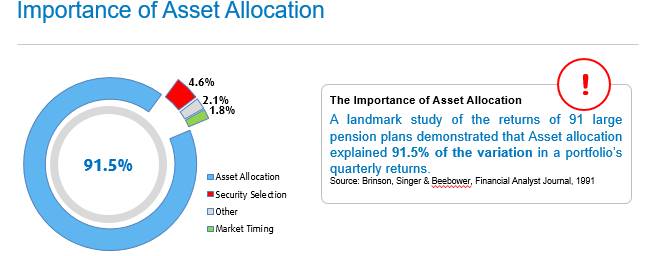
But what if you insist on what our family has done historically: leaving half your fixed-income allocation in GICs? Personally, I aim for roughly a 50/50 asset allocation and for the fixed-income portion historically have split it between laddered GICs and bond ETFs, or asset allocation ETFs with a healthy dose of bonds.

Odds are if you use the major discount brokerages of the big banks, you may need to leave them to find more generous GICs available from independent places like Oaken Financial, which has a 1-year registered GIC paying 1.4% and a 5-year GIC currently paying 2% through Home Trust and Home Equity Bank.

Personally, I have reinvested some GIC cash in 2- or 3-year maturities, on the hope rates start to rise three years from now. While 1% or so is pathetic at least it’s a positive number (ignoring inflation): with so many mentions of negative interest rates in Europe and sometimes floated by central bankers in North America, any positive return at is not to be sneezed at.

Conservative Asset Allocation ETFs are one possible alternative

Among the gambits I’ve tried is to raise risk slightly by moving some of this cash to ETFs like Vanguard’s Conservative Income ETF Portfolio [VCIP/TSX], which is 80% fixed income but provides a modest 20% equity kicker. Those who don’t wish to mess with their pre-existing asset allocation might consider the Vanguard Global Bond ETF [VGAB], roughly split between US and global bonds, all hedged back into the Canadian dollar. Continue Reading…

Top 10 tips on becoming Financially Independent (or “Findependent”)

Financial independence is something for which everyone strives. But most of us never get to a stage of financial independence by choice and we reach this stage when we are very old and can no longer work anymore. And although it is not easy to achieve financial independence (aka “Findependence,”) it can be done if you know how to manage your money effectively.

1.) Develop a budget

The first thing that you need to do when you are trying to save money is to develop a budget. To develop a budget, you need to start by figuring out how much money you need to live on each month and then giving yourself an appropriate amount of money to use over the course of the month.

2.) Get a financial planner

If you have had trouble managing your finances in the past, you should consult a financial planner so that you can get the most out of your money. He or she can help you to plan out what you need to spend, so you will be able to figure out how much money you need to save in order to get where you want to be financially.

3.) Create financial goals

Setting financial goals ensures success, because it helps you to get a sense of what you want to achieve and where you want to go on your financial journey. Giving yourself short term and long term goals is usually the most effective way to achieve financial goals, because it allows you to plan and amend your plans as you go.

4.) Pay off your debts

If you have a lot of debt looming over your head, you should make sure that you pay it off before you start actively trying to save. Start by paying off your smaller debts that have the highest interest rate first, so that you won’t have to pay so much later on when the debt has increased.

5.) Get rid of student loans

When most people think of paying off their debts, they forget about paying off their student loans because they are a different kind of debt to your standard credit card debt or loan repayment. There are a few different options when it comes to repaying your student loan, from paying a fixed amount each week, to contributing a percentage of your average income every pay-day. Continue Reading…

How to think about Retirement Planning

We all need to think about retirement planning at some point in our lives. Relying on rules of thumb like saving 10% of your income or withdrawing 4% of your savings can get you part way there. But it’s also important to think about what retirement will look like for you. When will you retire? How much will you spend? Do you want to leave an estate? Die broke?

Here are some ideas to help you think about retirement planning, no matter what age and stage you’re at today.

Understand your Spending

Much of retirement planning is driven by your spending needs and so it’s crucial to have a good grasp of your monthly and annual spending – your true cost of living.

Of course, any plan that looks beyond one or two years is really more of a guess. What is your life going to look like in five, 10, or 20 years? How long are you going to live, and are you going to stay healthy throughout your lifetime?

We don’t know and so we use assumptions and rules of thumb to guide us. First, think of when you want to retire – is it the standard age of 65, or are you looking at retiring earlier or later? Then, it’s helpful to know that while life expectancy in Canada is around 82 years, there’s a significant chance that you’ll live much longer than that – so perhaps planning to live until age 90 or 95 would be more appropriate.

We’ve heard all types of rules of thumb on retirement spending, but the consensus seems to be that you’ll spend much less in retirement than you did during your final working years. You’re no longer saving for retirement, the mortgage is paid off, and kids have moved out.

In my experience, most people want to maintain their standard of living as they transition to retirement and so you might want to use your actual after-tax spending as a baseline for your retirement planning. Note, this does not include savings contributions or debt repayments, but your true cost of living that will carry with you from year to year.

Now you know your expected retirement date, your annual spending, and a life expectancy target: three key variables in developing your retirement plan.

How much do you need to save?

I remember using an online retirement calculator when I was younger and feeling depressed when it told me I needed to save thousands of dollars a month to reach my retirement goals.

The fact is, you do need to save for retirement and the best way to start is by setting up an automatic contribution to come out of your bank account every time you get paid. You’re establishing the habit of saving regularly rather than focusing on a “too-large-to-imagine” end result.

Treat retirement savings like paying a bill to your future self. You need to pay your bill every month or else “future you” won’t be happy.

There’s great research around automating contributions and also around increasing your contributions whenever you get a raise, bonus, or promotion. Remember, if you contribute 10% of your paycheque when you earn $60,000 per year but then get a raise to $70,000 per year, if you’re still saving $6,000 per year that’s now just 8.5% of your salary – not 10%.

Give “future you” a raise too.

It’s also important to remember that life doesn’t work in a straight line: we don’t just contribute a set amount and earn a consistent rate of return every single year. Our savings contributions could be put on hold for a period of time while we pay off debt, raise kids, or focus on other priorities. You could get a large bonus one year, but then no bonus for the next three years. Investment returns are also widely distributed and so instead of earning 6-7% per year you might get 12% one year, 5% another year, or lose 10% one year.

Don’t get discouraged if you don’t meet your savings targets one year because of some unforeseen expense. Life happens.

Forget about Age-based savings goals

Estimating retirement spending in your 20s or 30s is a pretty useless exercise. Again, we don’t know what our life will look like five, 10, 20 years down the road.

Here are the four areas that young people should focus on in their accumulation years:

  1. Understand how much you spend and where all of your money goes.
  2. Focus on spending less than you earn (or earning more than you spend).
  3. Establish both short- and long-term financial goals. It makes no sense to pour all of your extra cash flow into an RRSP, for example, if you plan on buying a car or getting married in 1-3 years.
  4. Set up automatic contributions into a long-term investing vehicle: a percentage of your paycheque that you can reasonably afford while still meeting all of your current expenses and short-term goals. This doesn’t have to be 10% but strive to increase the amount each year.

Many young investors want to know how they’re doing compared to their peers. I don’t think it’s useful to use any age-based savings goals as a benchmark or guideline. We all come out of the starting gate at different ages and with different circumstances.

Focus on being intentional with your money and establishing a savings habit early. Remember, this is about you and your retirement planning.

That said, once you get into the retirement readiness zone (say 3-5 years away from retirement) you should have a good grasp of your expenses and also the type of lifestyle you want to live in retirement. Your spending will drive your retirement planning and projections, so this is a critical piece to nail down.

Investing in Retirement

Investing has been solved in a sense that the best outcomes will come from staying invested in a risk appropriate, low-cost, broadly diversified portfolio of index funds or ETFs.

It’s never been easier to invest this way. Self-directed investors can open a discount brokerage account and buy a single asset allocation ETF. Hands-off investors can open a robo-advisor account. Even clients who choose to remain at their bank can insist on a portfolio of index funds.

That’s great in the accumulation stage, but what about investing in retirement? Besides potentially taking some risk off the table by changing your asset mix, not much needs to change.

Self-directed ETF investors can simply sell off units as needed to generate retirement income, or switch to an income producing ETF like Vanguard’s VRIF. Robo-advised clients can work with their portfolio manager on a retirement income withdrawal strategy.

The biggest difference might be a preference to hold a cash buffer of one-to-three years’ worth of spending (the gap between your guaranteed income sources like a workplace pension, CPP, and OAS, and your actual spending needs).

What about unplanned or one-time Expenses?

An emergency fund can be useful in retirement to pay for unplanned expenses. But, for routine maintenance and one-time expenses that come up every year, these should be built into your annual spending plan and budgeted for accordingly.

Your cash flows change in retirement as you move from getting one paycheque from your employer to receiving multiple sources of income, like from CPP and OAS (steady monthly income), maybe a workplace pension, and then topped-up by withdrawals from your personal savings. You may find that you need a large cash balance in the early stages of retirement while you adjust to your new reality.

Large expenses like a home renovation or new car should be planned for in advance and identified in your retirement plan so that appropriate funding is in place ahead of time.

Major unplanned expenses may require a change on the fly – and so using a home equity line of credit or dipping into your TFSA (tax free income) could help deal with these items in retirement. Many retirees quickly realize that their TFSA is an incredibly useful and flexible tool for both saving and spending.

Victory Lap Retirement?

Jonathan Chevreau and Mike Drak coined the phrase Victory Lap Retirement (read their book of the same name) with the idea that a full-stop retirement – in other words, going from 100% work mode to 100% leisure mode – was neither sustainable nor desirable. Continue Reading…

Fear the GIC Refugee renaissance

By John DeGoey, CFP, CIM

Special to the Financial Independence Hub

When I started in the business in September of 1993, it was a great time for new client acquisition.  The reason is simple: there were so many new clients to be had – in the form of first-time investors.  As interest rates plummeted from their all-time highs in the early 1980s, the fulcrum began to shift.  Specifically, as the risk-free rate (anything that could be attained on a guaranteed basis) dropped, people became increasingly willing to absorb risk.

Starting around 1982, the long-term macro trend that continues to this day began.  That year marked the cyclical high in long-term interest rates (in the mid to high teens!) along with a multi-generation low in price/earnings ratios (well into the single digit range!).  For nearly 40 years, interest rates have been seeing a secular decline, while market valuations the world over have been creeping up.  The correlation is predictable.  As rates drop, people are prepared to take on increasingly large amounts of risk in their quest for financial reward.  Totally understandable.

Rates are essentially at Zero

Now that rates are essentially at zero throughout the developed world, the trend has become acute.  The question that people might now be asking themselves is: will people stay out of traditional income investments for the foreseeable future?  Continue Reading…

How Travel prepares you for the unexpected

Lake Atitlan, Guatemala

By Billy and Akaisha Kaderli

Special to the Financial Independence Hub

Even before we met, as individuals, Billy and I have always loved to travel.

I have written about my cross-country adventure on the back of a motorcycle when I was 19. Billy also traveled with his van to Guatemala in the 1970s and back again to his hometown of Cincinnati, Ohio.

As a couple we lived and journeyed through Europe for six months before we purchased our restaurant in Santa Cruz, California.

These trips were life-changing experiences and we just got hooked on adventure.

When we left the traditional work force in 1991, we sold everything and began to travel the world. These experiences forced us to be flexible even when we didn’t want to be.

Power outages

For instance, when we lived on the tiny island of Nevis, West Indies, every afternoon or early evening, the power in our home would go out. It could happen at 4pm or at 7:30, but it would happen. Lights would go out and the TV would click off (right as the plot thickened in the movie we were watching). The pump bringing water to the kitchen sink or toilets wouldn’t work without the electricity, so things like doing the dishes, taking a shower or using the restroom had to be prepared for in advance.

We read books by flashlight or had discussions on future travel plans.

No running water!

Speaking of taking a shower, in Nevis we shared the Governor of Nevis’s home with other housemates who were opening the Nevis Four Seasons Resort on the island.

Aside from us and Billy’s best friend who was the head chef, all the rest of the roomies were young twenty-somethings and used to First World Living. One young woman would start her hot shower, go to the kitchen, toast bread, smother it in peanut butter and jelly, eat the sandwich, then return to a steam-filled bathroom with the water still running and take her hot shower.

As natural water-savers ourselves, we thought this was over the top.

However, we had no idea how much so, until one day … we found out the cistern was empty. The only way the tank was filled was by rain that fell or by water trickling out of the city’s pipes from 10 am to 11 am daily. And by trickle, we mean drizzle by drop.

Our spectacular house in Nevis, West Indies with a view of the Atlantic Ocean

We were out of water, with all the conveniences that running water brings to living, so how were we going to take a shower?

Being in the tropics, rain came fairly regularly, like every other day or so. One morning around 9:30, it was a typical tropical downpour. Billy and I saw the flooding of water through the gutters and into our rain barrels and we both grabbed towels and soap. Moving a barrel and standing under the drainpipe of the gutter we lathered up and enjoyed this pleasure of a beautiful shower out in nature. The jungle and sugar cane fields pushed up against our house, and we had a straight shot of Nevis’ volcano. Spectacular.

Then … the rain stopped.

Oh Lord. There we were, soaped up, naked, and out in our back yard when the maid popped in for her thrice weekly cleaning. Continue Reading…