EBooks

EBooks

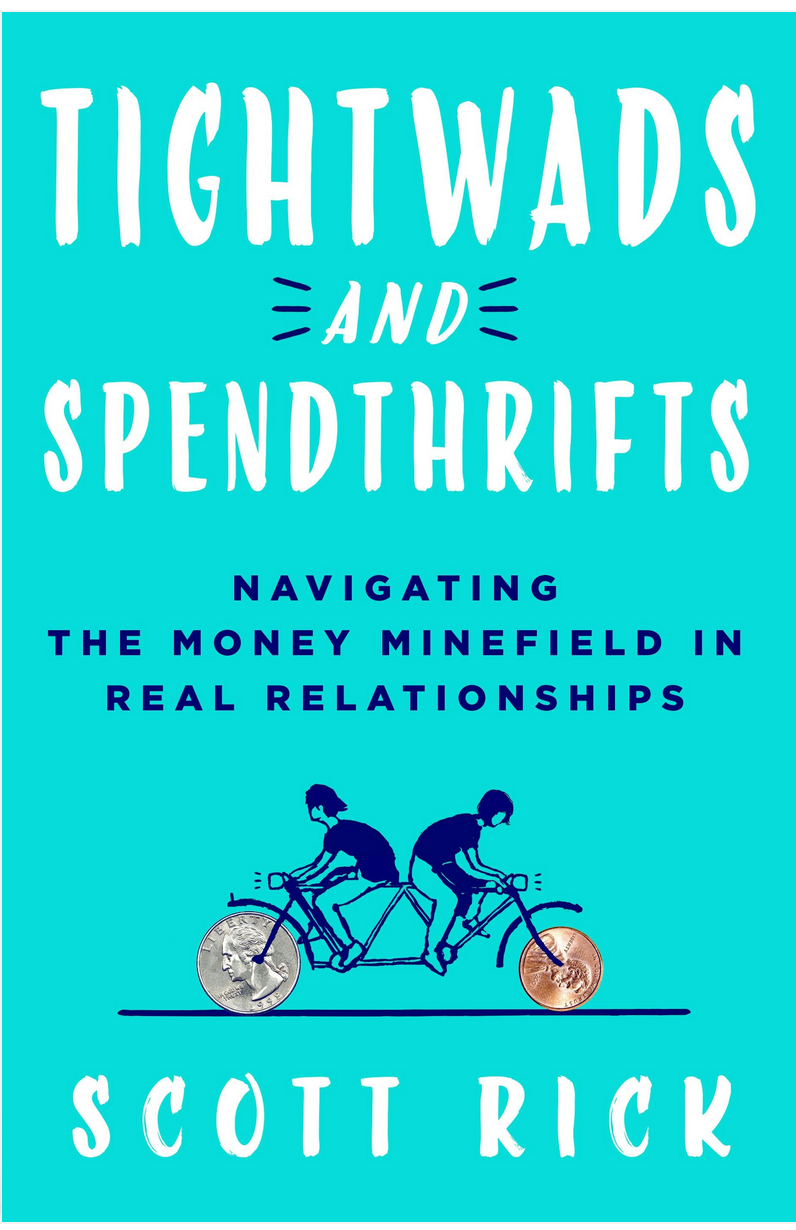
Book Review: Tightwads and Spendthrifts

By Michael J. Wiener

Special to Financial Independence Hub


In his book Tightwads and Spendthrifts, marketing professor Scott Rick promises advice for “financial aspects of intimate relationships.”

What got my attention early is that his guidance “is rooted in rigorous behavioral science.”  Applying the scientific method to human interactions is challenging, but it is generally better than relying on opinions.  The book gives useful insights into how people think about spending money.

The introduction gives a four-question quiz designed to place the reader on a scale from 4 to 26.  Those at the low end of the scale are called tightwads, and those at the other end are spendthrifts.  Roughly half the respondents fell in the middle third of the range and are called “unconflicted consumers.”  Most of the book deals with tightwads, spendthrifts, and their interactions; little is said about unconflicted consumers.

Demographic differences

Extensive surveys revealed some interesting demographic differences between tightwads and spendthrifts. “Tightwads are slightly older than spendthrifts,” but it’s not clear why.  Do people become tighter with money over time (perhaps from getting burned by debt), or are there differences between generations?

“Women were somewhat more likely than men to be spendthrifts, and somewhat less likely than men to be tightwads.  Tightwads were somewhat more likely to be highly educated, and they tended to opt into more mathematical majors, such as engineering, computer science, and natural science.  The most popular college majors among spendthrifts were social work, communication, and humanities.”

How tightwads think

Being a tightwad is not the same as being frugal; “the highly frugal love to save, and tightwads hate to spend.”  “The highly frugal are generally much more at peace in their relationship with money than are tightwads.”

It might seem intuitive that people are the way they are because of how much income they have available to spend, but “in survey after survey, we find no income differences between tightwads and spendthrifts.”  However, “tightwads have far more money in savings and significantly better credit scores than spendthrifts.”

Having higher savings “offers no guarantee that tightwads feel financially comfortable.  Subjective feelings of financial well-being are only loosely related to objective aspects of financial well-being.”  For many tightwads, financial “anxiety stems from economic conditions early in life.”

Tightwads tend to think in terms of opportunity costs when considering spending some money.  In one experiment where some participants had opportunity costs highlighted to them and others didn’t, “spendthrifts were twice as likely to buy the cheaper option” when opportunity costs were highlighted.  “This framing did not influence tightwads.”

While tightwads spend less than spendthrifts in almost every area, “the amount of money both types had donated to charity was the same.”

How spendthrifts think

“Spendthrifts report high susceptibility to shopping momentum and what-the-hell effects.  They commonly report going to buy one thing, then getting carried away.”  “Spendthrifts are significantly more impatient than tightwads.”  Interestingly, spendthrifts tend to understand these facts about themselves, and are not surprised when they later regret their purchases.

“Spendthrifts and compulsive buyers might spend similarly on any given shopping trip, but their underlying psychology differs significantly.  Spendthrifts do not appear or report to be driven by anxiety management or mood repair.”

“Spendthrifts score slightly lower than tightwads on a financial literacy quiz.”  However, Rick says that this is not a defining difference between tightwads and spendthrifts.

Is “spendthrift” an oxymoron?

The word “spendthrift” appears to blend contradictory elements: spending and thriftiness.  However, “thrift here is used as a noun — meaning ‘savings ’— as it was in the seventeenth century.  So spendthrifts are traditionally defined as people who recklessly spend their savings.”

Compensating for financial tendencies

Rick offers ways for tightwads and spendthrifts to compensate for their feelings about money.  The first is to change “payment salience.”  The book offers ways for tightwads to feel the pain of paying money less, and for spendthrifts to feel it more (e.g., by using cash more often).

Tightwads can reframe high-end purchases to think of them as a means to get high quality items.  They can add a line item for indulgences into their budgets to make spending a “to-do” item.  They can also reexamine their finances to confirm that all is well and, hopefully, reduce financial anxiety.

Spendthrifts can be mindful of opportunity costs, try to delay spending (e.g., sleep on it), and set saving reminders for themselves.  Interestingly, spendthrifts might understand “better than tightwads” that “the excitement that comes with a new product usually fades over time,” but this knowledge doesn’t appear to help them reduce spending.

Relationships

When we consider marriages among tightwads and spendthrifts, but not including any “unconflicted consumers,” 58% are between a tightwad and a spendthrift, and only 42% are between two people at the same end of the tightwad-spendthrift scale.  “We tend to marry people who share characteristics that we like in ourselves.  However, a key insight about tightwads and spendthrifts is that they do not particularly enjoy being tightwads and spendthrifts.”

Although some prominent people who advise their followers on personal finance topics consider any money secrets between spouses to be “financial infidelity,” Rick thinks there is room for a small amount of secrecy as long as it’s not the cause of financial shortfalls.  How much secrecy is desirable or tolerable probably varies from one couple to the next.

“Latte factor myth”

Rick adds his two cents to the endless debate on whether we should engage in small indulgences by siding with those who say it’s fine to buy expensive coffee.  Like most others, Rick approaches this debate as a binary choice: lattes are either universally good or universally bad. Continue Reading…

Book Review: Retirement Income for Life (3rd edition)

ECW Press

By Michael J. Wiener

Special to Financial Independence Hub

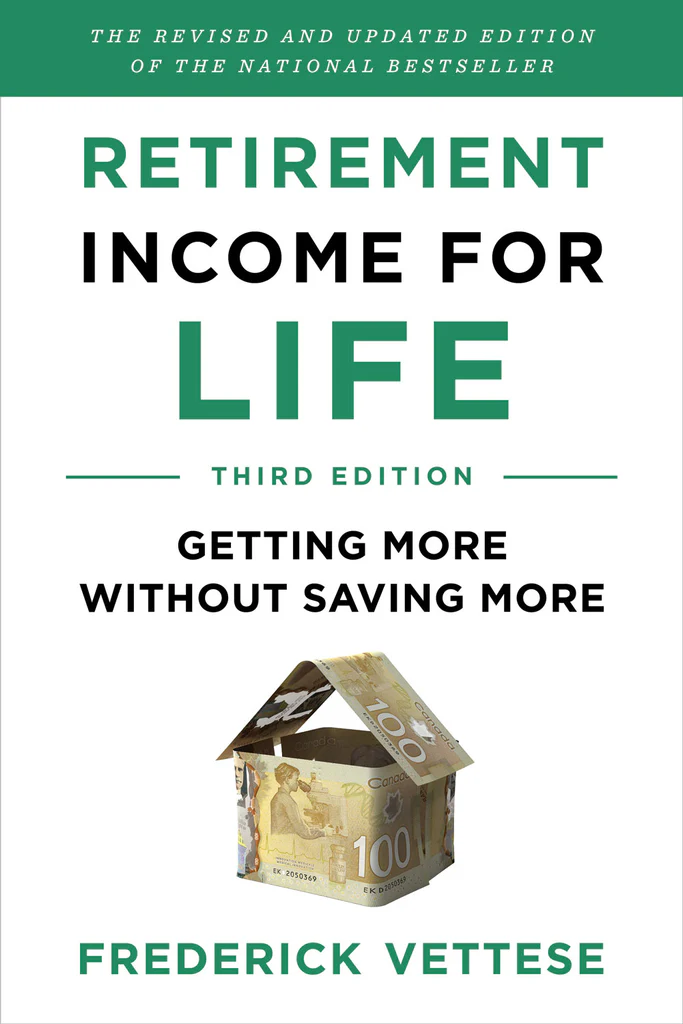
Actuary Frederick Vettese has a third edition of his excellent book, Retirement Income for Life: Getting More Without Saving More.

He explains methods of making your retirement savings produce more income over your entire retirement.

These methods include controlling investment fees, optimizing the timing of starting CPP and OAS pensions, annuities, Vettese’s free Personal Enhanced Retirement Calculator (PERC), and using reverse mortgages as a backstop if savings run out.

This third edition adds new material about how to deal with higher inflation, CPP expansion, new investment products as potential replacements for annuities, and improvements to Vettese’s retirement calculator PERC.  Rather than repeat material from my review of the second edition, I will focus on specific areas that drew my attention.

Inflation

“We can no longer take low inflation for granted.”  “An annuity does nothing to lessen inflation risk, which should be a greater worry than it was before the pandemic.”  “We could have practically ignored inflation risk before COVID hit but certainly not now.”

It’s true that inflation is a potential concern for the future, but it’s wrong to say that it was okay to ignore inflation in the past.  Not considering the possibility of inflation rising was a mistake many people made in the past.  We were lulled by many years of low inflation into being unprepared for its rise starting in 2021, just as many years of safety in bonds left us unprepared for the battering of long-term bonds when interest rates rose sharply.

Inflation risk is always present, and financial planners who have treated it as a fixed constant were making a mistake before inflation rose, just as they would be wrong to do so now.  This underappreciation of inflation risk is what causes people to say that standard long-term bonds (with no inflation protection) are safe to hold to maturity.  In fact, they are risky because of inflation uncertainty.

People’s future spending obligations are mostly linked to real prices that rise with inflation, not fixed nominal amounts.  The uncertainty in future inflation should be respected just as we respect uncertainty in stock market returns.

Maximizing retirement income

Vettese does a good job of explaining that things like CPP, OAS, and annuities provide more income now because they offer your estate little or nothing after you die.  To make full use of this book, you need to understand this fact, and “you have to commit to the idea that your main objectives are to maximize your retirement income and ensure it lasts a lifetime.”

Spending shocks

Retirees should “set aside somewhere between 3 percent and 5 percent of their spendable income each year, specifically to deal with spending shocks.”  “This reserve might not totally cover all the shocks that people … might encounter, but it will definitely soften their impact.”

It’s easy to plug a smooth future spending pattern into a spreadsheet, but real life is much messier than this.  I’ve seen cases of retirees choosing to spend some safe percentage from their savings while also expecting to be able to dip in anytime something big and unplanned for comes up.  This is a formula for running out of retirement savings early.

Retirement income targets

In this third edition, Vettese assumes that retiree spending will rise with inflation until age 70, then rise one percentage point below inflation during one’s 70s, two percentage points below inflation from age 80 to 84, then 1.8% below at 85, 1.6% below at 86, 1.4% below at 87, 1.2% below at 88, 1% below at 89, and rising with inflation again thereafter.

This plan is based on several academic studies of how retirees spend.  I don’t doubt the results from these studies, but I do have a problem with basing my plan exclusively on the average of what other people do.  The average Canadian smokes two cigarettes a day.  Does that mean I should too?

The academic studies mix together results from retirees who spent sensibly with those who overspent early and were forced to cut back.  I don’t want to base my retirement plan partially on the actions of retirees who made poor choices.  Similarly, I prefer to base my smoking behaviour on those Canadians who don’t smoke. Continue Reading…

Gen Z driving surge in mobile Debit spending

Image courtesy Interac Corp.

An Interac survey being released today finds that more than two thirds (69%) of Canada’s Gen Z generation [defined as Canadians aged 18 to 27] have embraced the mobile wallet, while almost as many (63%) would rather leave their old-fashioned physical wallets at home for short trips. Gen Z’s Interac contactless mobile purchases also rose 27% in the first half of 2024, compared to the same period a year earlier.

Gen Z appears to be more enthusiastic than their counterparts in older cohorts: 60% of Millennials [aged 28-43]  embraced mobile wallets, compared to 44% of Gen Xers [aged 44-59] and just 27% of Baby Boomers [aged 60-78.] Only 10% of the older Silent Generation [age 79 or older] did so.

A whopping 63% of Gen Z mobile wallet users have loaded their Interac debit card on their smartphones, and 31% plan to set debit as their default method of payment. For 63% of them, the reason is perceived faster payment times compared to physical card payments.

 “Choosing your default payment method may feel like a small step, but it can play a big role in shaping Canadians’ ongoing spending habits,” said Glenn Wolff, Group Head and Chief Client Officer, Interac in a press release. “When consumers tap to pay with their phones, the decision to select a card from the digital wallet is easy to miss. Canadians could end up unintentionally using a default payment method that prompts them to take on more debt. This differs from traditional physical wallets where the consumer had to select the card they wanted to use each time.”

Majority want to be smarter with money

62% of Gen Z want to be “more mindful when spending” with 57% saying they want the option to use debit when paying in store or online; 79% of them say the cost of living is too expensive and 59% feel the need to be smarter with their money.

Interact says this generation’s desire to control overspending is heightened by back-to-school season: last year, family clothing stores saw almost twice as many Interac Debit mobile purchases in September and October compared to earlier that year in January and February. 54% of Gen Zs see the need to develop new habits to stay in control over their finances, while 56% are setting a timeline for this September to introduce new habits. Continue Reading…

Read these 4 books if you fear for U.S. Democracy

Added Note on July 4, 2024, America’s Independence Day

American stock markets are closed today for Independence Day. I wish all Americans a happy holiday. 

This blog originally ran in February but in light of the momentous events of the past week, we’re republishing and updating it. In fact, emotions have been so raw the last week that some corners of the web fret that July 4, 2024 may turn out to be the last Independence Day. 

I doubt that but the events since last Thursday certainly have grabbed the world’s attention, as well as Canada’s: as ever, when the elephant south of the border sneezes, we in the great white north catch a cold. 

Those new developments are of course President Biden’s disastrous debate last Thursday, June 27th, and then this week’s equally dismaying Supreme Court ruling (on July 1) to grant the Former Guy immunity for any official acts while he was president.

If Democracy seemed on shaky footing back in February, it seems doubly so today, roughly four months from the November election. But that’s still enough time to read the four books highlighted in this blog, and perhaps act on them.

Back to the original text in the blog, which has also been revised and updated where appropriate:

While Findependence Hub’s focus is primarily on investing, personal finance and Retirement, Findependence has given me sufficient leisure time to absorb a lot of content on politics and the ongoing battle to preserve democracy and in particular American democracy. What’s the point of achieving Financial Independence for oneself and one’s family, if you find yourself suddenly living in a fascist autocracy?

To that end, I have recently read four excellent books that summarize where we are, where we have come from and where we likely may be going. (Note, this blog is an update of what I wrote in late November, but with two books added.)

In contrast to two of the books mentioned below, Heather Cox Richardson’s Democracy Awakening is disturbingly current and explicitly names names. There is an extensive recap of The Former Guy’s attempt to highjack the 2020 election and the subsequent event of January 6th and everything that has occurred since.

Yes, I’m sick of reading about him too, which is why I don’t even name him here (even on social media accounts I prefer to use 45). But after his deranged Thanksgiving rant and an equally insane Christmas greeting on the soon-to-be defunct Truth Social (aka Pravda Social), his behaviour has become nothing short of alarming.

There is of course no shortage of mainstream analysis of this. I refer Globe & Mail readers to Andrew Coyne’s excellent column in February (link in highlighted headline, possibly curtailed for non-subscribers; also note the hundreds of reader comments:) First, Trump tried to overthrow Democracy. Now he is attempting to overthrow the Rule of Law. After the Supreme Court’s July 1st decision, Coyne also weighed in with his take on July 2nd: The Supreme Court has just removed the last bar to dictatorship.

On other words, what may have seemed alarmist warnings in these books six months ago now seem scarily more relevant and likely to pass. So what do these books actually say about past dictatorships of history and the possibility of another one coming to pass in the not-too-distant future?

Reclaiming America

Richardson is a history professor at Boston College. For Canadians in particular the book is a valuable primer on the founding of America, the Declaration of Independence, the civil war, the Constitution and its many amendments, the creation of the Democratic and Republican parties, and the politics of the last few centuries. I assume most well-read American readers are taught this in grade school (although maybe not, judging by the millions of deluded MAGA zealots.)

The book itself is divided into three main parts: Undermining Democracy, The Authoritarian Experiment, and Reclaiming America.

Richardson make frequent references to Adolf Hitler and the Nazis. As she writes in the foreword:

“Hitler’s rise to absolute power began with his consolidation of political influence to win 36.8 percent of the vote in 1932, which he parlayed into a deal to become German chancellor. The absolute dictatorship came afterward. Democracies die more often through the ballot box than at gunpoint.”

She goes on to write that a small group of people “have made war on American democracy,” leading the country “toward authoritarianism by creating a disaffected population and promising to re-create an imagined past where those people could feel important again.”  In other words, MAGA.

I’ll skip to the ending but again urge readers to get a copy and read everything between these snippets:

“Once again, we are at a time of testing. How it comes out rests, as it always has, in our own hands.”

Amazon.ca

Hitler: Ascent 1889-1939

Even since I wrote the original version of this blog in November, the press has been full of alarming reports of 45’s Hitler-like rhetoric early in 2024: famously his references to vermin and to immigrants poisoning the blood of the American people, both from the original Hitler playbook. And who can forget his “dictator only on the first day,” an alarming recent example of many a truth said in jest?

A two-book series by Volker Ullrich looks first at Hitler’s political rise and then to his decline and defeat in the second World War that he created.The second book is titled Hitler: Downfall: 1939-1945.

While most of us may think we know this history going back to high-school history classes, not to mention numerous histories, novels and films about World War II, Hitler: Ascent is nevertheless a bracing refresher course.

Ullrich charts Hitler’s improbable rise from failed artist to political rabble rouser, to his failed beerhall putsch in the 1920s, his writing of Mein Kampf after a too-short prison sentence and ultimately his stunning January 1933 manoeuvre to become the Chancellor of Germany, which he soon consolidated as combined chancellor/president and ultimately the dictator he is now known to be.

The book also makes clear his goals for creating a Greater Germany at the expense of most of his European neighbours (famously Poland and France), and his plans for impossibly grandiose architectural structures to be implemented by Albert Speer, with Berlin (to be renamed Germania) the centre of what he hoped would be a global dictatorship.

The second Ullrich book — Hitler: Downfall, 1939-1945 —  is also well worth reading. The final sentences are particularly relevant to today’s environment:

If Hitler’s “life and career teaches us anything, it is how quickly democracy can be prised from its hinges when political institutions fail and civilizing forces in society are too weak to combat the lure of authoritarianism; how thin the mantle separating civilization and barbarism actually is; and what human beings are capable of when the rule of law and ethical norms are suspended and some people are granted unlimited power over the lives of others.”

Of course, for most of us, reading yet another book (or two) about Adolf Hitler doesn’t usually create undue anxiety, since it all seems to be comfortably in the faraway past. Ancient history, as they say. Continue Reading…

Read these 2 books if you care about Democracy

Joe Biden this week carrying a copy of Democracy Awakening, via Threads.

While the Hub’s focus is primarily on investing, personal finance and Retirement, Findependence has given me sufficient leisure time to absorb a lot of content on politics and the ongoing battle to preserve democracy and in particular American democracy. What’s the point of achieving Financial Independence for oneself and one’s family, if you find yourself suddenly living in a fascist autocracy?

To that end, I have recently read two excellent books that summarize where we are, where we have come from and where we likely may be going. These books came to my attention from two relatively new social media sites I joined in the past year.

For those who care, I am still on Twitter (now X) but restrict most of my posts there to the financial matters on which this blog focuses. I post there as @JonChevreau, which is the same handle I have on Mastodon (since Nov 6, 2022) and Threads, which I joined a week after its early July launch this summer. Threads is now almost the polar opposite of X politically, a veritable Blue haven: just last week Joe & Jill Biden both signed on as @potus and @flotus respectively, as well as under their real names. So did vice president Kamala Harris (posting as @VP and @kamalaharris).

Amazon.ca

But back to the books. The first must read is Prequel, by the brilliant U.S. broadcaster Rachel Maddow [cover image shown on the left]. Tellingly, it’s subtitled An American Fight Against Fascism.

The second is Democracy Awakening, by Heather Cox Richardson [cover shown below]. Both are available as ebooks on the Libby app, through (hopefully) your local library. I couldn’t find either book on Scribd (now called Everand) but they do have ebook Summaries of both.

An American Hitler?

Given that the 2024 U.S. election is now about 12 months away, there is a certain urgency to these books. The Maddow book I’d read first since it’s a brilliant historical recap of the rise of German Fascism in the 1930s and — the shocking bit! — how close Germany came to installing fascists in America. It’s literally about Germany’s search for an American Hitler it hoped to install. It’s full of sinister characters you’ve probably not heard about before, like the assassinated Huey Long.

Maddow credits the reader with enough intelligence to extrapolate from that period into the current dangerous environment. One is left to infer how she feels about the parallels to the modern GOP and its fascist leader and would-be dictator: she never says their names although she is usually more explicit in her MSNBC and podcast commentaries.

Modern readers could easily substitute Putin’s Russia for Hitler’s Germany and draw their own conclusions about the parallels to collusion with foreign powers.  There are also similarities between protracted attempts by the U.S. government to try the perpetrators in court and the protracted Delay tactics of the Defence — including many U.S. senators of the 1930s and early 1940s. And as is currently the case, these tactics largely seemed to work, since the Allies won World War II before most of the collaborators were brought to justice. Frustrating indeed, as many of today’s Americans bristled at the ultimate futility of the Mueller Report around 2019 and other protracted legal proceedings that may not be resolved before the 2024 election.

Maddow of course hints at this right at the end, quoting one frustrated prosecutor (O. John Rogge) from the 1940s:

“The study of how one totalitarian government attempted to penetrate our country may help us with another totalitarian country attempting to do the same thing …the American people should be told about the fascist threat to democracy.”

Continue Reading…