Family Formation & Housing

For young couples starting families, buying their first home and/or other real estate. Covers mortgages, credit cards, interest rates, children’s education savings plans, joint accounts for couples and the like.

How did the Fair Housing Plan impact home prices?

By Penelope Graham, Zoocasa

Special to the Financial Independence Hub

The past two years have been tumultuous times for the Ontario real estate market. Not only have prospective home buyers had to contend with the nationally-implemented mortgage stress test, but a round of policies introduced at the market’s peak have contributed to a vastly different price environment in some of the province’s municipalities.

Called the Fair Housing Plan, this 16-part set of measures was introduced by the former Liberal provincial government with the intention of rebalancing supply and demand as well as out-of-control price growth. It was announced in April 2017, prompted by a year-over-year home price spike of over 30% in the Greater Toronto Area.

New rules spooked sellers

The tangible measures included a 15% foreign buyers’ tax as well as beefed up rent controls, the resulting market chill was likely psychological. Sellers, concerned they had missed the market’s price peak, reacted by flooding MLS with listings while buyers waited to see if the opportunity to get into the market at a lower price point would present itself.

That combination, along with the impact from the stress test — which requires borrowers to qualify for a mortgage roughly 2% higher than the actual rate they’ll get from their bank — effectively led to a housing correction. (Text continues below the ad)

However, in the two years since the measures were introduced, the dust has largely settled in markets across the province; though some cities have weathered them better than others, according to new data from Zoocasa.

Some markets harder hit than others

The study, which compares average sold home prices in April 2017 to the same month this year, reveals which markets have sustained an overall drop in home values, while others have actually continued to appreciate. It also examined the sales-to-new-listings ratio in each municipality, which is a metric used by the Canadian Real Estate Association to determine the level of competition in the market. A ratio between 40 and 60% can be considered a balanced market, while below and above that threshold indicate buyers’ and sellers’ conditions, respectively. Prices were sourced from various real estate boards across the province.

Of all the Ontario housing markets, those located in York Region have absorbed the brunt of the new measures, with steep price declines and a considerable change in buyers’ conditions over the two-year time period.

Home prices in the city of Newmarket, for example, have plunged -30% over the 24-month period, dragging the average below the $1-million mark to $725,710. That decline was prompted by a -31% drop in sales; however, as the supply of new listings also declined by -42%, market conditions actually tightened to a ratio of 45% from 37% last year, well within balanced territory, despite the lower price point.

The City of Aurora also saw prices fall by -30%, down to $888,387, following a -35% drop in sales and a -30% drop in new listings, leaving buying conditions unchanged at a ratio of 42%. The community of Richmond Hill also experienced a significant price drop of -27%, though still remains at a high-priced $1,016,216. It remains in a sluggish buyers’ market with a ratio of 38%, down from 40% in 2017.

Prices for Oakville homes for sale were also among the most affected, dropping -18% over the last two years to an average of $1,019,751. However, the market remains balanced with a ratio of 46%. However, homes in some municipalities, such as on the Hamilton MLS and in the Mississauga real estate market, were impacted by a far lesser extent; both cities saw values fall just 4%, to $528,286 and $767,283, respectively. In contrast, conditions are more favourable to sellers in these markets, with ratios of 63% and 59%.

Check out how prices and market conditions have changed across Ontario between April 2017 and 2019 in the adjacent infographic.

Penelope Graham is the managing editor of Zoocasa.com, a real estate resource “that uses full brokerage service and online tools to empower Canadians to buy or sell their home faster, easier and more successfully.”


Motley Fool: Getting out of Debt as the first step to achieving Findependence

Those who are regulars to this site will know that Getting out of Debt is the first step towards achieving Findependence, or Financial Independence.

My latest Motley Fool Canada blog has just been published on this topic, which you can read in full by clicking on the highlighted headline: Getting out of Debt to achieve Financial Independence.

As one of the characters in my financial novel, Findependence Day, says to the protagonists: “You can’t climb the tower of Wealth while you’re still mired in the basement of debt.”

As the article reprises, most of us start our financial life cycle with zero or even negative net worth, depending on how much student debt, credit-card debt or later mortgage debt one has accumulated. So if a young person has graduated from college or university and is able to get out of the hole early in their working life, that should be regarded as a huge initial step towards achieving Financial Independence, or Findependence (my contraction).

Keep up the frugal behaviour that got you out of debt

So how do you get out of debt as quickly as possible? The book coins another phrase, guerrilla frugality, which simply means super frugality, whether brown bagging your lunches, taking public transit or any number of other money-saving activities that ensure that you are living within and well below your means. Continue Reading…

Why I haven’t paid off my mortgage … yet

Followers of this blog know that I tend to focus on saving and investing rather than trying to pay off my mortgage faster. Indeed, our household assets are projected to exceed $1 million this year but we’ve still got a $200,000 mortgage to contend with.

So why don’t I make it a priority to pay off my mortgage? It’s not strictly about dollars and cents. Here are three reasons:

1.) Higher Priorities

Setting priorities is part of any good financial plan, and those priorities change as you move through different stages of life.

For many years we put all our effort into paying off student loan and consumer debt. Then we became laser-focused on saving for a large house down-payment. Priorities shifted again towards maxing out my unused RRSP contribution room. And now, finally, we’re catching up on years of unused TFSA contribution room.

My wife and I are on the same page with our financial priorities. Right now, we’re focused on these four areas:

  • TFSA – contribute $1,000/month
  • RRSP – max out our available contribution room
  • RESP – max out contributions for our two kids
  • Travel – Visit Scotland/Ireland this summer. Vancouver in October. Maui in February.

Paying off the mortgage slides in at priority number five, which leads to the second reason.

2.) Finite Resources

In a perfect world we would all max out our RRSPs, TFSAs, RESPs, and start investing in a taxable account: all while doubling up on our mortgage payments and still having money left over for dining, travel, and sending the kids to hockey school.

Reality check. We don’t have infinite resources, so we need to make choices and trade-offs.

I mentioned above that we neglected our TFSAs for many years. That’s because we decided to get a new car and pay it off over four years. Our TFSA contributions turned into monthly car payments.

Now that the car is paid off, we can go back to funding our TFSAs and hopefully catch up on all that unused room before we need a new car again.

Speaking of cars, ours are now 12 and six years old. This “sacrifice” – if you can call not getting a new car every 4-5 years a sacrifice – allows us to increase our savings rate and fund more of our financial priorities each year.

Unfortunately, there isn’t another $800/month money leak in our budget to close that will allow us to fund a fifth financial priority (extra mortgage payments). Not yet, anyway.

And remember, it’s not simply about earning more money. I’m already combatting stagnant wage growth and creating my own raise by freelancing, selling used items online, and earning credit card rewards. That extra income allows us to do everything we’re doing now, plus keep pace with inflation and feed a growing family.

3.) Mortgage debt and asset allocation

We tend to think of mortgages and investments in isolation, but if an investor has any debt at all – including a mortgage – then he or she is effectively borrowing to invest.

You could say that I have a leveraged investment loan of $200,000. Another way to think about the mortgage is that I am short fixed income. Continue Reading…

Retirement #2 priority but four in ten Americans don’t see it happening

Retirement is a close second to home ownership, according to a LendEDU survey of American saving priorities

While having enough money saved for Retirement is narrowly behind buying a home, more than a third of Americans don’t expect they’ll ever be able to retire, according to a survey released Tuesday from LendEDU.com.

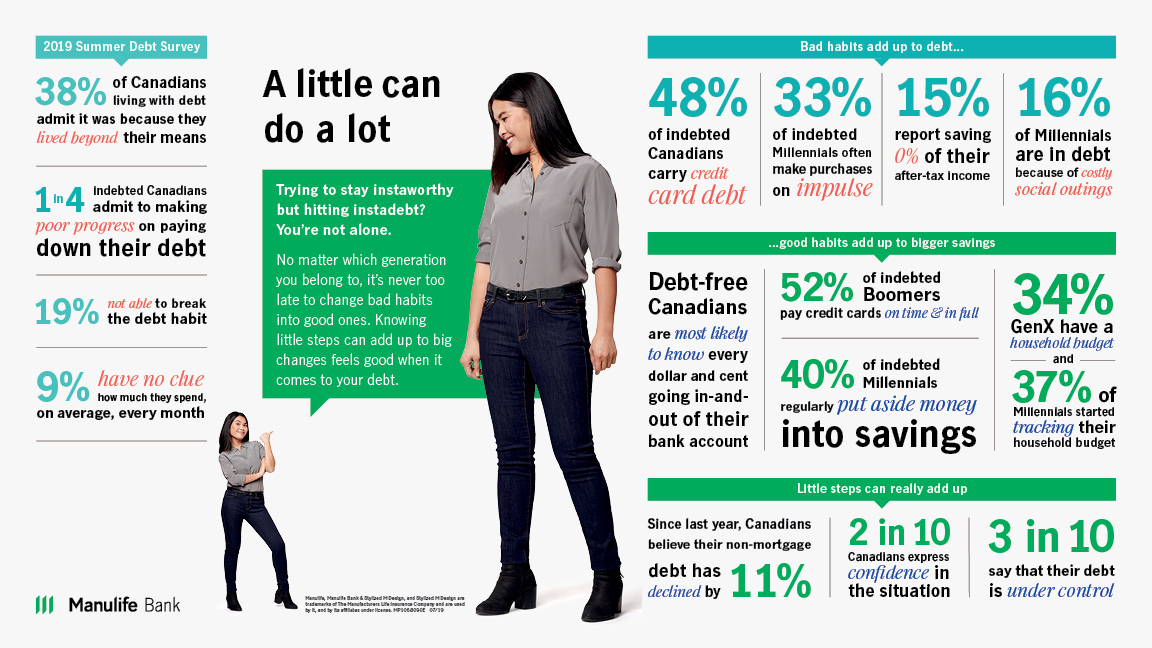
Retirement saving was cited by 19% of 1,000 respondents, versus 20% prioritizing “buying my own house or apartment.” Paying off credit-card debt was cited by 14% and building an emergency fund by 10%.

While there was only a minor lack of confidence about paying off credit cards and building an emergency fund, 17% don’t believe they’ll ever become homeowners and but almost four in ten Americas (39%) don’t believe they’ll ever be able retire.

Of those doubting their ability to retire, 52% were over age 54, 30% were between 45 and 54, and 15% were 35 to 44.

As for emergency savings, 33% said a major bill resulting from an injury would destroy their savings and therefore their long-term financial goals; another 14% cited some form of debt that could quickly get out of hand. However, 28% felt “relatively secure” and did not believe their financial goals could be derailed.

Secondary priorities

After home ownership and retirement, the most cited financial priorities were some form of getting out of debt: 14% cited paying off credit-card debt, 7% paying off student-loan debt, and 4% cited paying off other forms of debt apart from credit cards or student loans. 6% answered “Building my credit score,” 5% wanted enough saved to move out of their parents’ homes and rent a home or apartment, 4% said “Buying a car,” and 3% wanted to start a business.

1% wanted to invest in real estate, another 1% wanted to buy a second home and yet another 1% wanted to buy a second or third car. 3% want to “create a retirement account” and 2% want to “invest in the market outside my retirement account.”

Money a bigger priority than Love?

Of the 37% who were not currently in a long-term relationship, 72% were more focused on their financial targets, versus a minority 23% who prioritized finding a romantic partner. (The rest preferred not to say). The survey sees this as a “glass half full” finding: “It is good that Americans are quite serious when it comes to realizing their personal finance goals. But, on the glass empty side, sometimes one’s finances can’t buy happiness, or in this case love, and it is always important to understand what is truly important in life.” Continue Reading…

An innovative way to solve your family cottage dilemma

By Jason Kinnear, CPA, CA, CBV

(Sponsored Content)

Sipping your morning coffee on the dock with your spouse; teaching your children to waterski; and roasting marshmallows with your grandchildren. These are just some of the treasured memories you’ve created at your family cottage. But times change and those memories can sometimes be replaced with concerns about how to deal with your family cottage dilemma:

You enjoy spending time at the family cottage, but the time, cost and stress associated with it are turning a pleasant summer pastime into an ongoing headache.

To illustrate this dilemma, let’s consider Doug and Barb’s situation. Barb inherited their cottage from her mother just after they got married. They now have three adult children and six grandchildren, and are recently retired. While they’re looking forward to spending more time at the family cottage, they see a number of issues on the horizon:

  • Two of Doug and Barb’s adult children are professionals, while the third owns her own growing company. These time demands mean none of the children are able to visit the family cottage as often as they’d like.
  • There are several steep sections of stairs between the family cottage and the dock on the lake below. While Doug and Barb can navigate these stairs now, they’re concerned they won’t be able to as they get older.
  • Doug and Barb do not know who they will leave the family cottage to.

Time commitment

The most pressing issue for Doug and Barb is the time commitment for maintaining the cottage. They’re the only family members with the time to open and close the property, and maintain it throughout the summer months. While they’re both healthy enough to do this now, they’re concerned that they may no longer be able to as they grow older and their physical health declines.

Costs

There’s also the issue of costs related to maintaining the cottage. The cost of repairs and improvements to host their growing family and their friends means the simple family cottage they inherited from Barb’s mother a generation ago has morphed into a monster home on a lake!

Additionally, there’s the question of how these capital improvements and the maintenance costs will be shared amongst family members. Should Doug and Barb continue to pay for the upkeep? Or should that be split amongst the adult members of the family? How would they split these costs: evenly, or based on actual cottage usage?

Succession planning

Finally, there are the succession and estate planning issues to consider. Which of the adult children will get the cottage? Do any of them really want it? What about the personal taxes triggered when the cottage is transferred, or the probate fees (Estate Administration Tax in Ontario) if they both should pass away unexpectedly?

As you can see, Doug and Barb have a number of issues to contend with. They continue to enjoy the family cottage experience, but need a solution to address these issues.

Consider establishing a Family Vacation Trust

One solution for Doug and Barb to consider is establishing a Family Vacation Trust to pay for their family’s future summer vacations. A Family Vacation Trust would allow their family to continue to enjoy the annual cottage experience without the responsibility and costs of maintaining one.

Here’s an example of how their Family Vacation Trust might work:

1.) Let’s assume the value of the cottage when Barb took possession was $100,000 and it’s currently worth $800,000. Selling expenses will be 5% of the sale price and the resulting capital gain will be taxed at the highest personal marginal tax rate in Ontario*. This situation would result in Doug and Barb receiving approximately $580,000 on the sale of their cottage. Continue Reading…