Family Formation & Housing

For young couples starting families, buying their first home and/or other real estate. Covers mortgages, credit cards, interest rates, children’s education savings plans, joint accounts for couples and the like.

Toronto Rentals vs. Hong Kong: A matter of perspective

There’s been plenty of discussion recently surrounding Toronto’s hot housing market. First-time buyers are being priced out and young prospective home buyers are being pushed further and further away from the city’s desirable centre. With all this talk, it’s easy to get caught up and lose perspective, but lucky for you, I’m here to remind you to count those blessings (however meagre they may be).

Sure, the housing situation in cities like Vancouver and Toronto may be less than ideal, and yes, something should be done to improve the way things are going. However, there are far more dire housing situations in other top-tier cities, which, when compared to Toronto, really make everything here seem — dare I say –breezy?

Related Read: INFOGRAPHIC – July GTA Sales Plunge 40%

Taking A Global Rental Perspective

Take, for instance, Hong Kong. As those who’ve read my posts on Findependence Hub may know, I lived in Hong Kong teaching English. It is one of the most bustling, vibrant cities I’ve ever experienced, but I can only defend it so much once the subject of housing prices comes up. Year after year, Hong Kong tops all the lists of ‘most expensive housing,’ and having rented there for a year, I have to concede defeat on that point. For what you get in Hong Kong, there is much to be desired.


Chevreau’s Hong Kong apartment was tight on square footage.

Chevreau’s Hong Kong apartment was tight on square footage

If you’re like most millennials and looking to break into the housing market for the first time –- perhaps in a Toronto condo –- you’ve most likely experienced the disillusionment that inevitably comes when you realize the prices you’re looking at paying, even after this summer’s price correction. In the city of Toronto, the average price per square foot, or PPSF, is around $649 with an average home cost of around $550,000. This number spikes to $800 PSF if you’re looking to put down roots in ‘downtown Toronto’ (anywhere south of Bloor, west of Yonge, east of Bathurst).

Related Read: 5 Ways to Get Ahead in the Toronto Rental Market

Continue Reading…

Blending families and assets: How to make it easy

By Rowena Chan, TD Wealth

Special to the Financial Independence Hub

Finances can become challenging when adding — or removing — a new partner, stepchild or extended family member into a household. The instances of blended or multigenerational families are becoming more and more common in Canada as the number of multigenerational families has grown in the last 15 years – rising 37.5 per cent. In addition, 12.3% of families in Canada are stepfamilies, according to recently-released 2016 Canada Census data.

A recent TD survey found 66% of Canadians living in a blended family say they face financial challenges because of their household situation. Additionally, 47% find juggling these challenges stressful. The top three financial challenges they faced are determining who pays for ongoing household expenses (25%), having different views on managing the household budget (23%) and determining household saving priorities (21%). Take a look at this infographic here for more survey findings, tips and advice.

No matter your family situation, money matters can get tricky. To guide you through the process, there are some simple steps blended families can implement to help create a more stable financial future for everyone involved. Continue Reading…

Sharing mortgages with unequal incomes

By Alyssa Furtado, RateHub.ca  

Special to the Financial Independence Hub

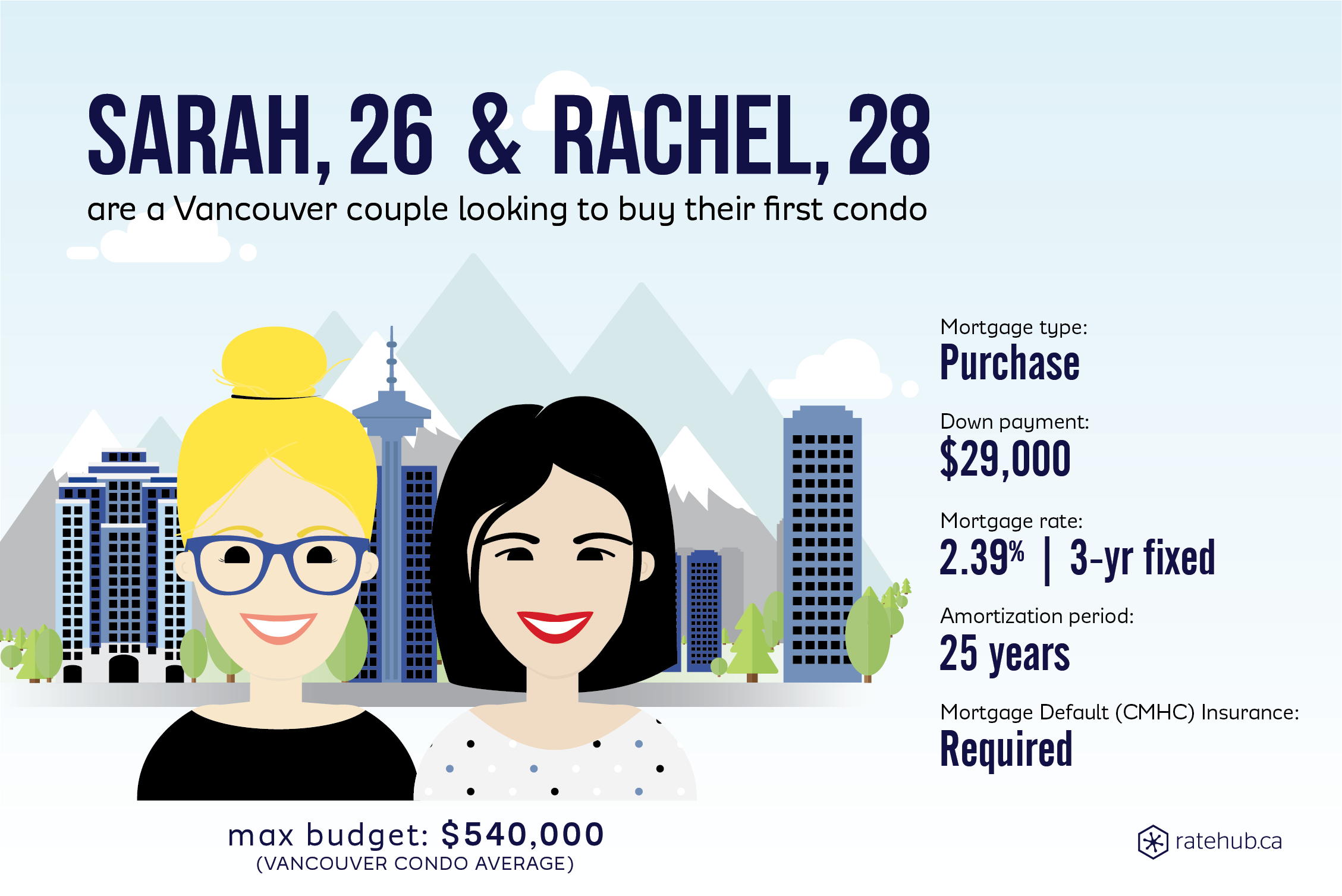
When you decide to buy a home with another person, there’s a good chance there will be a difference in your incomes. Whether the difference is big or small, it raises questions about how expenses will be split up. Two people with unequal incomes getting a mortgage together is a very common occurrence: couples make up a vast majority of homebuyers. But you can also buy a home with a friend or family member.

If you’re planning on sharing a mortgage with someone else, here’s what you need to know to make it work.

How will the home be owned?

If you’re purchasing a home together, you need to discuss how the ownership will be structured. If you’re a married or common-law couple, you’ll probably opt for what lawyers call joint tenancy. Both parties share a 100% stake in the property and both are fully responsible for everything related to the home, including the mortgage, taxes, and maintenance. If one partner dies, the other becomes the sole owner of the home.

If you’re buying with a friend or family member, you might opt for what lawyers call tenancy in common. With this structure, each person owns a separate share in the property and is responsible for their share. If you’re planning on being tenants in common, and one of you earns a higher income, you’ll need to discuss how that affects each partner’s ownership stake in the home and who will be responsible for what payments.

Who pays for what, and why?

When making decisions about how to share expenses, couples in joint tenancy usually take on equal responsibility. Since both partners are 100% owners of the home, finances are joined and mortgage payments are made using a joint account. Household income is the only thing that matters in this situation. Couples have to work together to make decisions about their budget to ensure the mortgage, property tax, and maintenance costs are all paid.

For tenants in common, you can choose to split up ownership and expenses a few different ways:

Continue Reading…

4 emerging family-friendly Condo trends

By Penelope Graham, Zoocasa

Special to the Financial Independence Hub

It used to be that high-rise living was the domain of young professionals and couples; those who were happy to sacrifice outdoor and living space if it meant dwelling close to all conveniences of the downtown core.  However, as real estate prices in Canada become less affordable for the average family, the idea of “moving up” in the market has taken on a whole new meaning.

Priced out of traditional low-rise homes in the biggest urban markets —  prices hit $707,269 for Toronto townhouses in July while all home types rose above the million-mark in Vancouver– those with kids in tow are increasingly embracing the condo lifestyle. That means the industry —  from developers to municipal planners — is taking notice.

Here are four emerging trends we’ve noticed as condos become more popular with growing families.

Demand for larger units

Not so long ago, micro-units –- apartments under 500 square feet — were considered the future of condo dwelling. You could fit loads of them onto a floor-plan plate, and young homeowners and renters enjoyed their sleek and modern aesthetic. Now, though, the pressure is on developers to increase their unit sizes and to include more multiple-bedroom units in their builds.

Continue Reading…

How to boost your home’s resale value

By Sia Hasan

Special to the Financial Independence Hub

While your house is your home, it is also a substantial investment that can increase tremendously in value over the years. Property value may increase through changes in market conditions in your hometown; it can also increase when you make strategic upgrades and improvements to the property and even through proper home maintenance steps over the years. Some improvement projects can pay off substantially, and these are the areas you may want to focus on initially for the best results.

Focus on Curb Appeal

If your goal of increasing property value is based on a desire to sell the property soon, curb appeal is a prime area on which to focus. Curb appeal is immediately visible to buyers who are browsing through online listings, and great curb appeal can entice them to continue to flip through your property’s online photos and request a tour. Curb appeal may be improved by fertilizing the lawn, mulching the flower beds, trimming the trees, adding new flowers to your space and more. If you have extra time and money, repainting or replacing your front door and decorating the patio are wonderful ideas to consider as well.

Upgrade the Kitchen

When a kitchen renovation project improves the style and function of the space, it can result in a considerable increase in property value. In fact, you may be able to recoup as much as 80 per cent or more of your costs to upgrade the kitchen through an increase in property value. Choose upgrades and a design that appeal to the masses for the best results, such as a neutral hue for counter tops rather than a bold colour. In addition, only make upgrades that are in line with your market. For example, avoid investing in high-end luxury appliances for a kitchen in a starter home. Continue Reading…