On Wednesday, BMO ETFs conducted its second annual ETF Investor day. Conducted at the Toronto Stock Exchange, Do-it-yourself investors and finfluencers [Financial Influencers] were on hand for the ceremonial opening of the exchange, shown in the photo on the left (including myself).
Hard to believe, but this marks BMO’s 16th year as a Canadian ETF provider.
Before we get to the individual expert picks from BMO’s large ETF stable, the morning began with the obligatory analysis of the current Trump-inspired global trade war, and its implications for the Canadian economy and stock market.
Economic Update
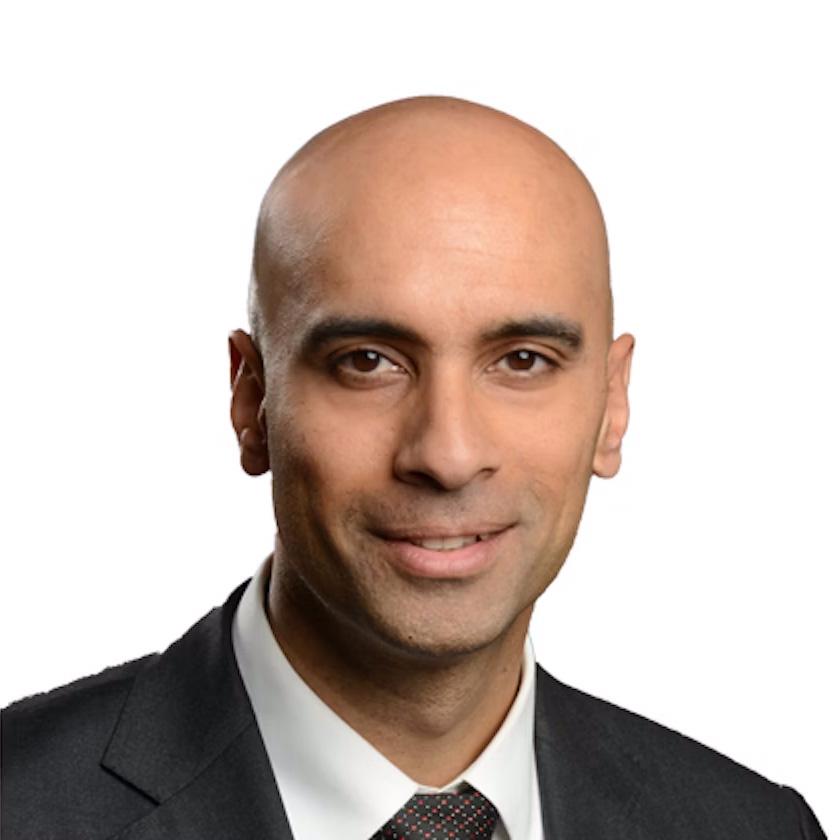
In an Economic update Amber Kanwar, Host of the In the Money Podcast interviewed Bipan Rai, Head of ETF & Structured Solutions Strategy at BMO ETFs. Rai said the protectionist measures being imposed by the Trump administration have “not been seen since the Great Depression.” In the U.S. tariffs are now north of 20%, or ten times the 2% average tariffs that were previously in place.
Asked what will happen next, Rai said probably one of three things: Trump might rescind the Tariffs, or there will be a massive expansion of U.S. fiscal policy to fund its Tax Cuts, or the Federal Reserve will cut rates. But he doesn’t think a U.S. recession will show up this year, as its economy is “too dynamic.”
BMO ETFs Bipan Rai
However, Rai was less confident that Canada won’t face a Recession: “I’m very concerned about the Canadian economy in coming quarters.” The two most recent scenarios from the Bank of Canada are mixed: one is “far more benign,” the second “more malignant.” He thinks the former is more likely, with a few negative quarters of GDP growth but not likely exhibiting Stagflation risk. 70% of Canada’s GDP is generated from trade, “most of it with the U.S. As much as [Prime Minister Mark] Carney talks about diversifying away from the U.S., that’s not going to happen. The U.S. is way too big and is right next door. We may do more with the United Kingdom but it and the European Union won’t replace the U.S. Jobs may be lost, especially in the auto sector.”
Asked if he expects more rate cuts from central banks around the world, Rai said he thinks the BOC is likely closer to the end, with one or two more rate cuts, after which fiscal stimulus will kick in. England or the ECB may cut a few more times, then Japan and a few “others divorced from the rest.”
How retail investors can play Defence
Kanwar also probed the views of two experts in a session titled Playing Defense: Positioning Your Portfolio in today’s environment. Now that the U.S. market has rebounded 18% from the lows around early April’s Liberation Day, Kanwar asked how Do-it-yourself [DIY] investors can deal with volatility. Jimmy Xu, Head of Liquid Alternatives & Non-linear solutions, BMO ETFs, said it depends on investor goals. Those with a long-term 20- or 30-year time horizon before Retirement would be “best to sit tight,” Xu said, “Overtrading is the enemy of growing assets and market timing is hard.”
Freelance writer Tony Dong, founder of ETF Portfolio Blueprint, said volatility is the price of admission to create investment returns that are superior to risk-free treasury bills. Betting on certain sectors may expose DIY investors to uncompensated risk, Dong said. Even equal-weight products provide imperfect exposure to the size premium commanded by small- and mid-cap stocks. But investors can overweight less volatile stocks concentrated in structurally defensive sectors like health care, utilities and consumer staples. Jimmy Xu said sector-agnostic low-volatility strategies can help investors get around this problem. BMO’s low-volatility ETFs own low-volatility stocks that have a low beta relative to the broad market, which amounts to “a better tool than picking top sectors.” Continue Reading…
Looking to break away from the traditional 9-to-5 path to Financial Independence? In this expert roundup, professionals share the platforms and resources that helped them explore alternative ways to build wealth, from niche investment tools to entrepreneurship communities.
Whether you’re just starting out or refining your strategy, you’ll find practical insights and trusted recommendations to guide your journey.
Prioritize Autonomy Over Liquidity
The Motley Fool: Comprehensive Financial Education
Tim Ferriss Show: Disciplined Wealth-Building Systems
Side Hustle School: Practical Income Ideas
Mad Fientist: Balanced Approach to Saving
NAPFA: Personalized Financial Guidance
Morningstar: Diverse Investment Strategies
Prioritize Autonomy over Liquidity
Frameworks that map autonomy before liquidity targets have reshaped how to allocate personal capital. For example, layering $25,000 into private credit offerings that yield predictable monthly payments has more impact on Financial Independence than a $300,000 retirement account you cannot touch for 20 years. This logic came from dissecting how quiet operators generate cash flow without public scale or visibility. Their systems work because they are boring, consistent, and mechanical. That mindset shift pulled me away from chasing numbers and toward protecting hours.
Skip platforms that market freedom as a finish line and look for models that treat Financial Independence as a structural asset class. Follow people who explain how they built repeatable systems with clean numbers: no fluff, no pitch. If someone makes $900 monthly from a vending machine route and spends 4 hours managing it, study that. It might be low-scale, but the math still applies. What I am getting at is this: financial freedom shows up in how your time behaves, not how your balance sheet looks. — Eric Croak, CFP, President, Croak Capital
The Motley Fool: Comprehensive Financial Education
One resource that has been crucial for my understanding of alternative financial paths is The Motley Fool. This site provides wide-ranging content around personal finance, investing, and wealth-building processes, encouraging me to be a more critical thinker regarding the diversification of my financial portfolio. While my experience has centered so far around the precious metals exchange, The Motley Fool‘s observations about stock, bond, and market trends have made my thinking about various ways of wealth-building more comprehensive.
What makes The Motley Fool stand out is that it offers a synthesis of research, educational articles, and investment analysis that contains actionable tips to realize Financial Independence. The ongoing posts about current market conditions and performances of individual stocks have proven particularly useful in judging risk and uncovering emerging opportunities. It has assisted me in streamlining my investment plan and made me comfortable venturing outside my original area of interest in order not to be heavily reliant on a given asset class.
For anyone interested in designing financial liberty, I recommend researching The Motley Fool’s publications. They foster a balanced attitude toward building wealth through a combination of long-term investing and general financial advice. Whether you are a new investor or a professional investor, the site provides simple techniques and information that are easily understandable and implementable into any financial process. The most important thing to take away is to stay educated, diversified, and calculated in your choices. — Brandon Thor, CEO, Thor Metals Group
Investopedia: Up-to-Date Financial Knowledge
One of the most useful resources I have used is the Investopedia website. I recommend that others explore this resource and the various articles it offers, specifically in the personal finance category. This is a website that is constantly updated with new information that is relevant and comprehensive. When learning about alternative paths to financial independence, it’s important to have a source that contains a network of resources covering all financial levels. For some people, this is a site to learn about the basics of finance, while for others like me, it allows us to constantly get updates within the field we work in. — Peter Reagan, Financial Market Strategist, Birch Gold Group
Indie Hackers changed my approach to business and entrepreneurship. The content on Indie Hackers provides examples of how independent creators and small business owners develop digital products, content brands, or niche services that support their independence.
As someone running a blog rooted in curation and personal shopping, it’s given me real-world examples of monetization through affiliate content, digital products, and community building. If you’re even a little curious about earning independently through content or software, I’d say spend a weekend exploring Indie Hackers. — Danilo Miranda, Managing Director, Presenteverso
Reddit: Diverse Financial Wisdom
One of the key resources that has been instrumental in informing my road to financial freedom is the collaborative platform, “Personal Finance Subreddits.” These forums are filled with experiences from individuals at various points in their financial journeys, sharing straightforward advice on topics such as the best investing tips and how to shed costly habits. The diversity of experience gained has served me well in challenging conventional financial wisdom and in innovating more freely toward building wealth.
What is interesting about these subreddits is their emphasis on real-world strategies individuals implement to accumulate wealth. Whether learning to take advantage of tax benefits, following stock market trends, or investing in alternative assets such as precious metals and cryptocurrencies, these communities offer actionable information. I discovered that engaging in dialogue around alternative investments, especially in sectors such as precious metals, has been instrumental in informing Alloy’s financial product approach.
If you are considering venturing into alternative routes to fiscal freedom, I highly recommend exploring these kinds of forums. They have a treasure trove of information at your fingertips, which tends to be backed up by real-world case studies and anecdotes. You’ll find techniques that defy mainstream wisdom and encourage you to think differently about how to build your wealth. The icing on the cake is that all these communities evolve continuously, which means you stay informed about current trends and thinking as they emerge. — Brandon Aversano, CEO, The Alloy Market
X: Direct Access to Wealth-Building Minds
I’ve explored countless resources for alternative wealth-building paths. The platform that has been absolutely game-changing for me is Twitter (now X).
Most people use Twitter incorrectly: they scroll mindlessly or argue about politics. However, when you curate your feed with the right financial minds, it becomes an incredible learning tool that costs nothing but attention.
What makes Twitter invaluable is the real-time access to people who have actually built wealth through unconventional means, not just theory. You get daily insights from entrepreneurs, investors, and creators who are doing the work right now.
For example, I learned about affiliate marketing strategies that helped me scale by following people who were transparent about their successes and failures. No nonsense, just practical advice you can implement immediately.
The beauty of Twitter is that it’s not just consumption: you can directly engage with these people. Ask questions, share your progress, build relationships. That kind of access used to require expensive masterminds or conferences.
If you’re serious about Financial Independence, start by following 20-30 people who have built what you want to build. Don’t just follow the big names: find the practitioners who are openly sharing their journeys. Then actually implement what resonates, don’t just collect information.
Remember though: no platform will make you wealthy if you’re just consuming content. The magic happens when you take what you learn and actually execute on it consistently. — John Talasi, Entrepreneur, JohnTalasi.com
One resource that has really stood out to me is ChooseFI, both the podcast and the broader community around it. It’s not flashy, but it’s full of practical, real-world conversations that challenge traditional ideas of work and retirement. As someone who works in the construction value stream, I appreciate systems thinking, and ChooseFI breaks down Financial Independence like a process: identifying waste, streamlining inputs, and looking for long-term sustainability.
It helped me rethink how I approach personal finance, not just for myself but in advising others on business efficiency and risk. What really makes it valuable is the variety of stories — teachers, tradespeople, small business owners — people who found unique paths to build security and freedom, often without earning six figures.
I’d recommend diving into the early episodes where they lay out the core principles. Even if you’re not aiming for full early retirement, the mindset shift around intentional spending, value-based living, and building flexibility into your life is incredibly useful. It’s not just about money: it’s about designing a life that actually works for you. — Andrew Moore, Director, Rubicon Wigzell Limited
Reframe Expenses in Hours Worked
Reddit’s r/financialindependence has reshaped how I think about money, especially after reading a post where someone broke down the true cost of their car in hours worked, not just in dollars. They added up the loan payment, insurance, and maintenance, then compared it against their take-home pay. It came out to roughly 21 hours a month just to keep the car. That hit me harder than any financial advice I had read before, because it shifted the decision from, “Can I afford this?” to, “Is this worth that much of my life?”
I took that same method and applied it to a few things in my own budget. I started with recurring costs like software subscriptions and monthly meals out. Some of them made sense. Others felt absurd once I saw the time attached to them. That one shift made it easier to simplify without turning everything into a sacrifice. Framing expenses through time instead of just money gave me a cleaner way to decide what stayed. The posts in that subreddit don’t offer perfect answers, but they push you to ask sharper questions. That’s what I keep returning for. — Robbin Schuchmann, Co-founder / SEO Specialist, EOR Overview
Podcasts: Accessible Financial Insights
I’m always on the lookout for tools and resources that offer fresh perspectives, both for my clients and myself. One that has consistently stood out over the years is podcasts. They’re accessible, insightful, and often make complex financial ideas feel surprisingly relatable. Two podcasts I frequently recommend are The Ramsey Show and Odd Lots from Bloomberg.
The Ramsey Show is a great example of how powerful simple financial habits can be. It focuses on helping people get out of debt, live within their means, and build a strong foundation for long-term Financial Independence. It’s full of real-life stories that remind you you’re not alone in trying to figure it all out. Financial freedom doesn’t always require complex strategies; it often starts with small, consistent steps.
Odd Lots, on the other hand, offers a deeper dive into the financial world. It’s ideal for anyone curious about how investing, markets, and the wider economy work. It’s helped me, and many on our team, stay informed and engaged with the broader forces that shape our clients’ financial plans. Continue Reading…
In mid-April, my monthly Retired Money column for MoneySense looked at the experience of new retirees who have just shifted from RRSPs to Registered Retirement Income Funds (RRIFs), including my own.
Now my followup May column has been published, and it looks in more detail at how such new retirees should handle their Asset Allocation, particularly in light of this volatile Trump Trade War era we are now in. You can find the full column by clicking on the highlighted headline: How to allocate a RRIF for Secure Income in Retirement.
The column begins with an old rule of thumb that advisor John De Goey says is now obsolete: that your age should roughly equal your Fixed-Income exposure. So, for example, that rule would suggest a new RRIF owner aged 71 might have 71% fixed-income and just 29% stock exposure.
I bounced that off De Goey, who recently aired his views on Trump’s second reign of Error in this recent Findependence Hub blog: The Gangster in the White House.
A new Rule of Thumb for Retirement Asset Allocation
He introduced me to a novel formula that was new to me and perhaps to most readers. “I believe longevity has made that [previous] rule of thumb out of date for at least a generation now. My view, after taking longevity into account, is that you should use age times the decimal of your age until you get to RRIF age (71). This assumes that the client is not particularly risk averse. The portfolio still has to be suitable.”
So under this new rule and assuming the other qualifications apply to your personal -circumstances, a 50-year-old should be 50 x .50 = 25% in fixed income; a 60-year-old should be 60 x .60 = 36% in income; and a 71-year old-should be 71 x .71 = ~ 50% in income. However, beyond that age, De Goey thinks 50% fixed income is the maximum. “People over the age of 71 should be able to withstand having half their money in equities even if they’re in their 90s, because the risk associated with the 50/50 portfolio is quite low.
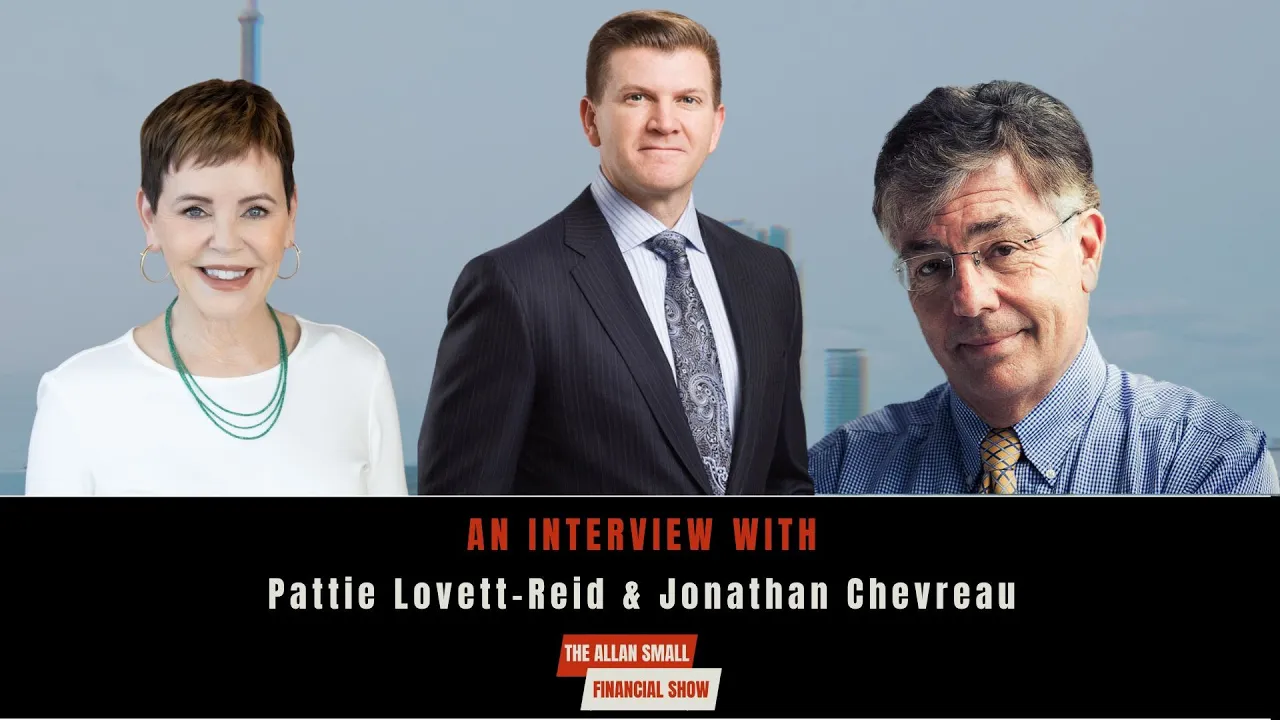
I was recently interviewed by Allan Small on his Allan Small Financial Show, along with financial commentator and broadcaster Patricia Lovett-Reid, formerly a TD Waterhouse senior vice president and later CTV commentator. Allan, who is Senior Investment Advisor for Scarborough-based IA Private Wealth Inc., probed us about current investor psyche and how to position for the global trade war.
Coping with the Triple T
Patricia coined the term Triple T: for Trump, Trade and Tension. Reviewing past investor panics, she said it is “different this time in that we have an individual wreaking havoc on a global platform.” Even so, she suggested staying the course with quality holdings, albeit being a more defensive with utilities, telecom, financials and Gold. Since we may all spend a third of our lives in Retirement, retirees should not abandon the “stocks for the long run” stance, she said. If you can’t sleep at night, ask your advisor what you can do about it but personally, Lovett-Reid says she has not made any drastic changes to her family’s Asset Allocation.
One focus of the interview, some of which also aired on CFRB 1010 Radio, was our “crystal ball” for markets by the end of the year. All three of us thought they would likely be a bit higher from where they were in late April. Patricia said the TSX should outperform for the rest of 2025, based on its resource and materials stocks (Gold, Oil). My view assumed Trump would partly back down from his harder-nosed Tariff positions but if he doesn’t, I said, “Look out below.”
One observation was that those with Defined Benefit pension plans can consider those to be a form of fixed income. That leaves more room to take risk with equities in other parts of one’s retirement portfolio. In a followup email, Patricia told me that “As someone with a DB [pension], I tend to skew toward more equities. And yet I do like the 60/40 split (equities to bonds). I’m very much about asset protection versus accumulation, so we are erring on the cautious side.”
What role can Annuities play?
The full MoneySense column closes with a look at annuities, which resemble Fixed Income.
In the past, I have referenced retired actuary Fred Vettese’s suggestion in various Globe & Mail columns that – at least for those who don’t have employer-sponsored Defined Benefit pension plans – they should partly annuitize when their RRSP must be converted to a RRIF. Continue Reading…
Relying on stock predictions today to forecast future market trends is likely to cost you money. Follow this advice instead: Focus on share value and using our three-part investing philosophy to profit
TSInetwork.ca
We think it’s a mistake to let stock predictions today guide your investments, but especially so at times like now, when new ideas and differences of opinion are continually streaming into the markets. They make more choices available to you if you are trying to create or update a prediction. This is hard on investors who focus on predictions. When more predictions are floating around, predictions fans have more ways to guess wrong.
The best way around this problem is to quit making predictions. Forget about trying to pinpoint future events or developments. Everybody who tries often enough will wind up making some good guesses. However, no one can foresee the future.
Instead, take a close look at what we know about the current investment situation. Then, try to spot investments that seem to offer attractive opportunities under a variety of future conditions.
No one can consistently make stock predictions today — or any other time
In investing, it pays to avoid relying on stock market predictions. Successful predictions can pay off enormously, of course. But nobody can consistently or even frequently predict the future in individual stocks or the market. The more your investment success depends on predictions, the greater the risk you face.
On the other hand, it’s possible to assess investment conditions in a general sense. That way you may recognize when it’s a good time to buy stocks, if you can afford to hold them for the next couple of years or longer. If you do most of your buying in times like that, you’ll wind up making a lot of money over the course of your investing career.
Keep a long-term view in mind when considering stock predictions today and “a good time to buy”
Mind you, “a good time to buy” is an opinion on a long-term probability. It doesn’t mean the market will go up right away. For that matter, you may buy just prior to one of the market’s occasional downturns. You have to accept this risk if you want to profit from the stock market’s ability to turn middle-income people into well-off retirees over the course of a few decades.
The funny thing is that many people hurt their prospects by going at it backwards. Instead of looking for good times to buy, which are relatively plentiful, they fixate on avoiding the market’s relatively rare downturns. They try to do that by hunting for reasons to stay out of the market. Continue Reading…
How often should you rebalance your portfolio? There’s good news on that front as less is more. We’ll take a look at a very telling chart from Frederick Vettese. And I take another look at the very telling perfomance table for the core Tangerine Portfolios. In this post I will also take you through my top observations of the week – by way of my Twitter / X Tweets. That includes – bonds vs GICs, big dividends under attack, my U.S stock portfolio returns, and what’s in store for the Canadian banks.
Courtesy of Fred Vettese in the Globe and Mail, a look at rebalancing a core ETF portfolio.
Here’s the link for those who have a Globe subscription.
On April 1, 2013, $1,000 was invested in each of four exchange-traded funds: a U.S. stock ETF, denominated in Canadian dollars (stock symbol XUS), a Canadian stock ETF (XIC), an international stock ETF (XEF) and a Canadian bond ETF (XBB). The initial asset mix is therefore 75-per-cent equities and 25-per-cent bonds.
Fred’s test showed almost identical results for rebalancing every quarter and once a year. That suggests that you can save yourself some time and effort (and perhaps trading costs) by rebalancing just once a year.
We can also see that when the unbalanced portfolio performed better during a period of robust stock returns. That said, the portfolio risk level has increased.
I have been evaluating portfolios for many years (decades) and more often find that rebalancing once a year often leads to greater returns. It allows a successful asset to go on a greater run before the money is moved to the under performing asset.
You might also consider rebalancing based on thresholds – perhaps when an asset is 5% or more about your target allocation.
The lessons of the Tangerine Portfolios
I had another look at the index-based Tangerine Portfolios. As you may know I was an advisor and trainer with Tangerine for several years. Those are a wonderful solution for those who want lower-fee managed portfolios and investment advice.
There are many lessons that can be learned or observed from the returns of the portfolio models. I offered some ideas in this Twitter thread.
While you can check out that thread, and yes you should follow me on Twitter / X I will strip out the main lessons (shown below).
Lesson 1: Risk and returns
Investors were rewarded for taking on more risk. The risk/reward proposition.
An all-equity portfolio might earn in the area of 9% annual, while a balanced growth model is more 7%’ish and a balanced model more 6%’ish. Keep in mind that the start dates for the balanced portfolios was terrible – just before the financial crisis in 2008. Continue Reading…


 Posted By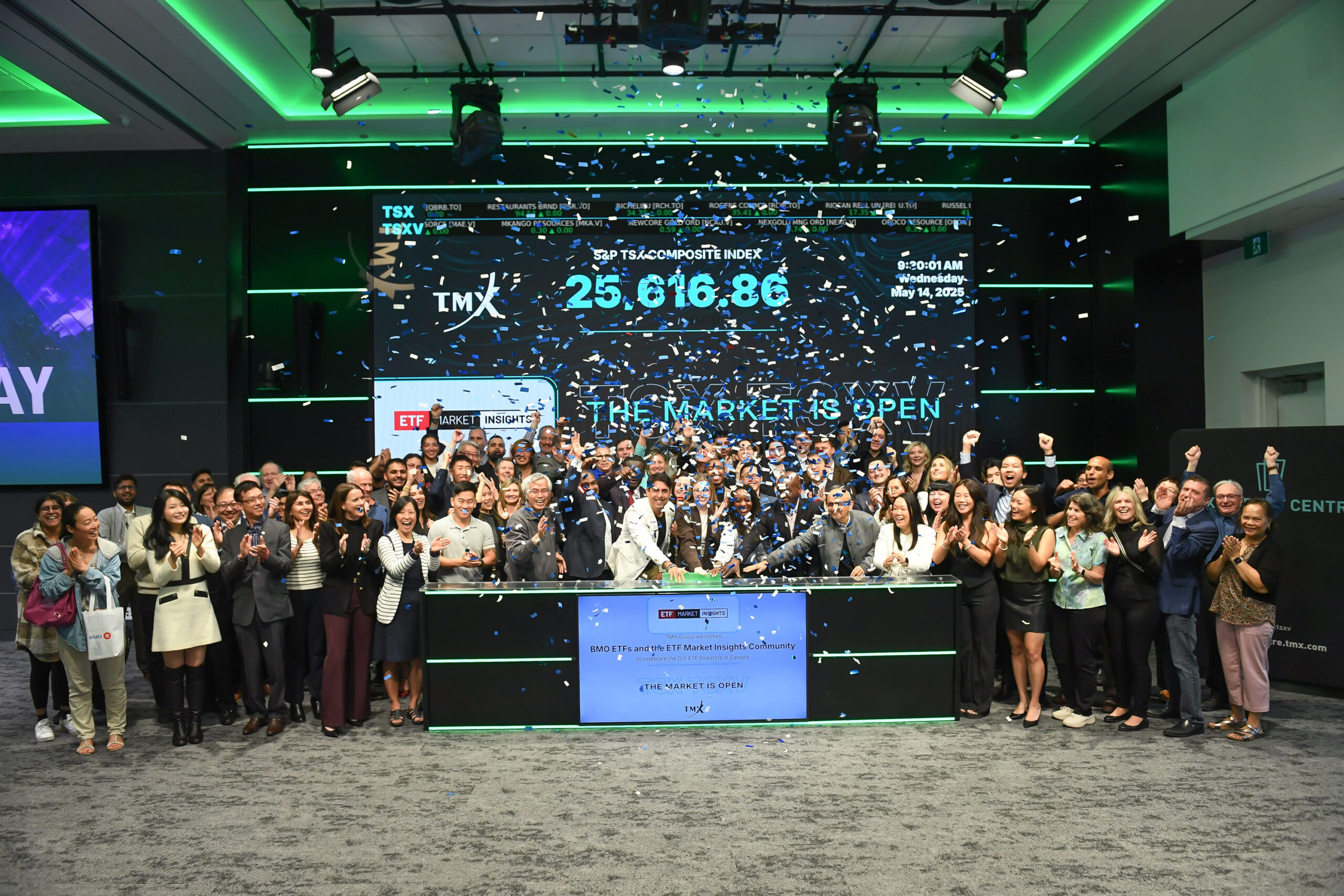
 Posted By
 Posted By