Stock market volatility can and will happen, which can really spook many investors.
To help with that, should you use an all-weather portfolio for changing market conditions?
Would an all-weather portfolio be best long-term?
How would I build an all-weather portfolio using Canadian ETFs?
Read on and find out our take, including the pros and cons of this all-weather investing approach.
The portfolio is designed for all seasons
If you prefer a more passive approach to investing, building an all-weather portfolio may be right for you. While this portfolio is designed to perform well during all seasons of the market, from an economic boom or bust and the messy stuff in between, we’ll see below that this approach is not without some flaws and drawbacks – just like any investing approach. Further, you could be missing out on some important aspects or assets for investing entirely.
Understanding how an all-weather portfolio works can help you to decide if this path could be right for you, or even if a blended all-weather approach could make much more sense.
What Is an All-Weather Portfolio?
Just as the name sounds, an all-weather portfolio is a portfolio that’s built to do well, regardless of changing market conditions.
This investing approach was popularized by Ray Dalio, a billionaire investor and founder of Bridgewater Associates, the largest hedge fund in the world. At the time of this post, Bridgewater currently manages over $140 billion in assets.
(FYI – this sounds very impressive of course, but we don’t invest in hedge funds and neither should you!)
Dalio’s all-weather philosophy is largely this:
Diversify your investments, hold specific asset classes in certain allocations, such that the portfolio can perform consistently throughout most economic conditions.
This includes periods of increasing volatility, rising inflation, and more. More specifically, this portfolio strategy is designed to help investors ride out four specific types of events:
Inflationary periods (rising prices)
Deflationary periods (falling prices)
Rising markets (bull/booming markets)
Falling markets (bear/busting markets)
How an All-Weather Portfolio Works
Based on back-testing, essentially Dalio and his Bridgewater team came up with a model after studying the relationship between asset class performance and changing market environments. The result of this relationship crystallized the following asset class allocation that would investors to benefit whether the market is moving up or down or sideways.
Here is the asset class breakdown:
We’ll provide more detailed funds to mimic this portfolio in a bit.
One thing you’ll realize from the portfolio above is the all-weather portfolio takes a much different approach than age-based allocations (i.e., more bonds as you get older in your portfolio), the traditional 60/40 balanced portfolio, or other popular couch potato approaches. It essentially ignores an investor’s personal need for changing risk appetite. A drawback we’ll discuss more in a bit.
The theory of the All-Weather Portfolio is that:
The equity portion will thrive in bull markets.
Commodities and gold should support the portfolio for inflation.
Bonds will help investors when stock market growth is suffering…
Here are some of the ways ETFs can be used strategically to help you sleep better at night.
Image courtesy BMO ETFs/Getty Images
By Erin Allen, VP, Online Distribution, BMO ETFs
(Sponsor Blog)
Volatility is often seen as the price of admission for achieving investment returns, but too much of it can feel like paying a hefty fee for a ride on an intense roller coaster, only to find yourself feeling queasy by the end and unable to enjoy the rest of the amusement park.
If the recent stock market turbulence in early August has left you contemplating panic selling, take a moment to breathe. Market corrections are a normal and healthy aspect of investing, and your portfolio doesn’t have to experience such dramatic ups and downs.
Why? Well, various defensively oriented ETFs can offer strategic ways to manage and mitigate risk, helping you stay the course and remain invested through the market’s inevitable fluctuations. Here are some ideas featuring BMO ‘s ETFs lineup:
Low-volatility ETFs
Imagine the broad market, such as the S&P 500 index, as a vast sea where the waves represent market volatility, and your investment portfolio is your boat navigating these waters.
How your boat responds to these waves is dictated by its beta, a measure that indicates both the direction and magnitude of your portfolio’s fluctuations relative to the market.
To put it simply, if the market’s “waves” have a beta of 1, and your portfolio also has a beta of 1, this means your portfolio will typically move in sync with the market, rising and falling to the same degree.
Now, consider if your boat were lighter and more susceptible to the waves, symbolized by a beta of two. In this scenario, your portfolio would be expected to swing twice as much as the market: more pronounced highs and lows.
Conversely, imagine your boat is a sturdy cargo ship with a beta of 0.5. In this case, your portfolio would react more calmly to market waves, experiencing only half the ups and downs of the market. This stability is what low-beta stocks can offer, and they can be conveniently accessed through various ETFs.
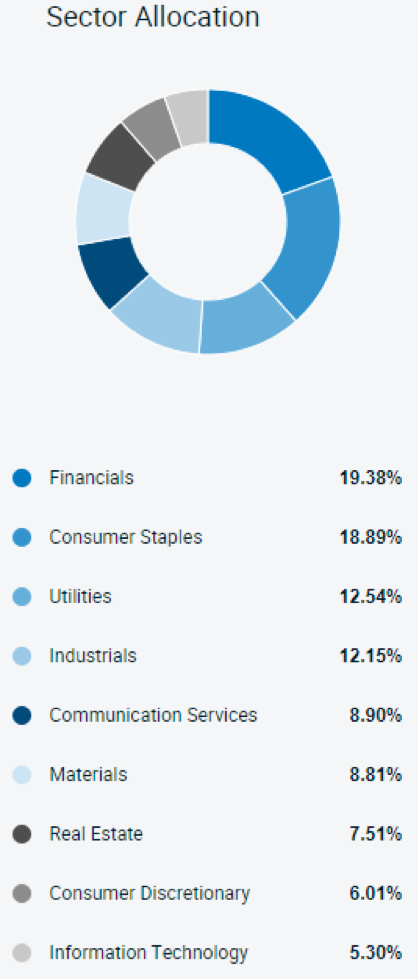
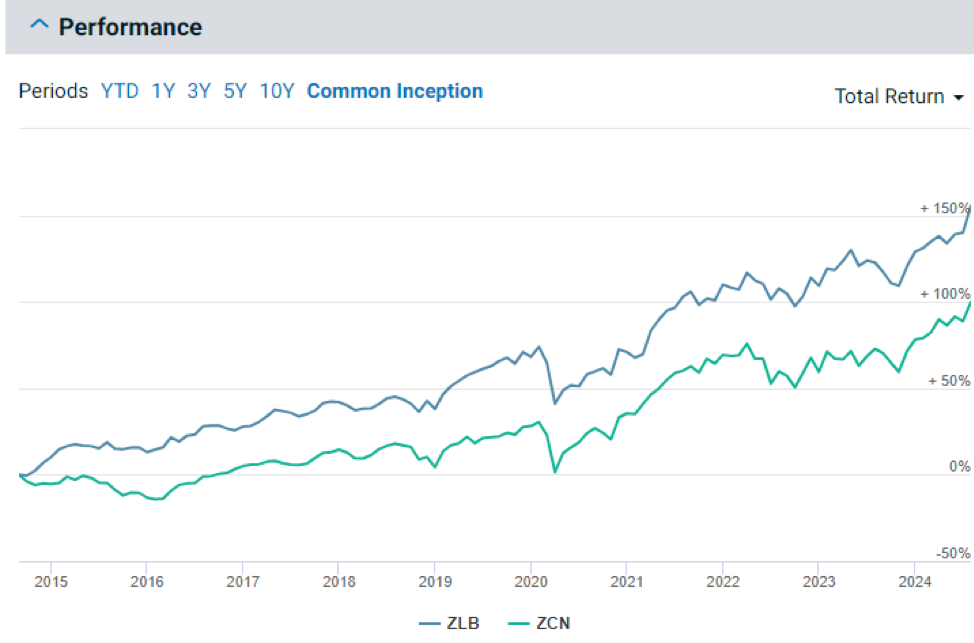
One such example is the BMO Low Volatility Canadian Equity ETF (ZLB)1, which selects Canadian stocks for their low beta. Compared to the broad Canadian market, ZLB is overweight in defensive sectors like consumer staples and utilities, which are less sensitive to economic cycles.
Holding allocations are as of August 19, 2024; sourced here1.
This ETF not only offers reduced volatility and smaller peak-to-trough losses compared to the BMO S&P/TSX Composite ETF (ZCN)2 but has also managed to outperform it — demonstrating that it is very much possible to achieve more return for less risk2.
While ETFs like the ZLB1 are engineered for reduced volatility through low-beta stock selection, it’s important to remember that they still hold equities.
In extreme market downturns, such as the one experienced in March 2020 during the onset of COVID-19, these funds can still be susceptible to market risk. This is pervasive and unavoidable if you’re invested in stocks; it affects virtually all equities regardless of individual company performances.
To fortify a portfolio against such downturns, diversification into other asset classes, particularly bonds, is crucial. However, not just any bonds will do — specific types, like those held by the BMO Ultra Short-Term Bond ETF (ZST)6, are particularly beneficial in these scenarios.
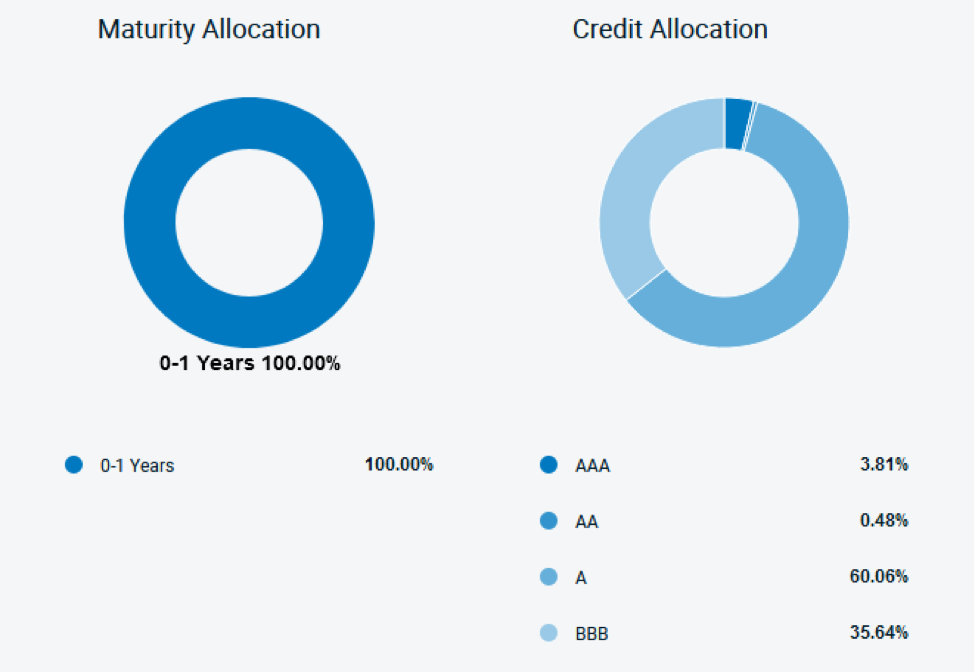
ZST, which pays monthly distributions, primarily selects investment-grade corporate bonds6. The focus on high credit quality, predominantly A and BBB rated bonds, is critical for reducing risk as these ratings indicate a lower likelihood of default and thus, offer greater safety during economic uncertainties.
Moreover, ZST targets bonds with less than a year until maturity6. This short duration is pivotal for those looking to minimize interest rate risk. Short-term bonds are less sensitive to changes in interest rates compared to long-term bonds, which can experience significant price drops when rates rise.
Charts as of July 31st, 2024 6
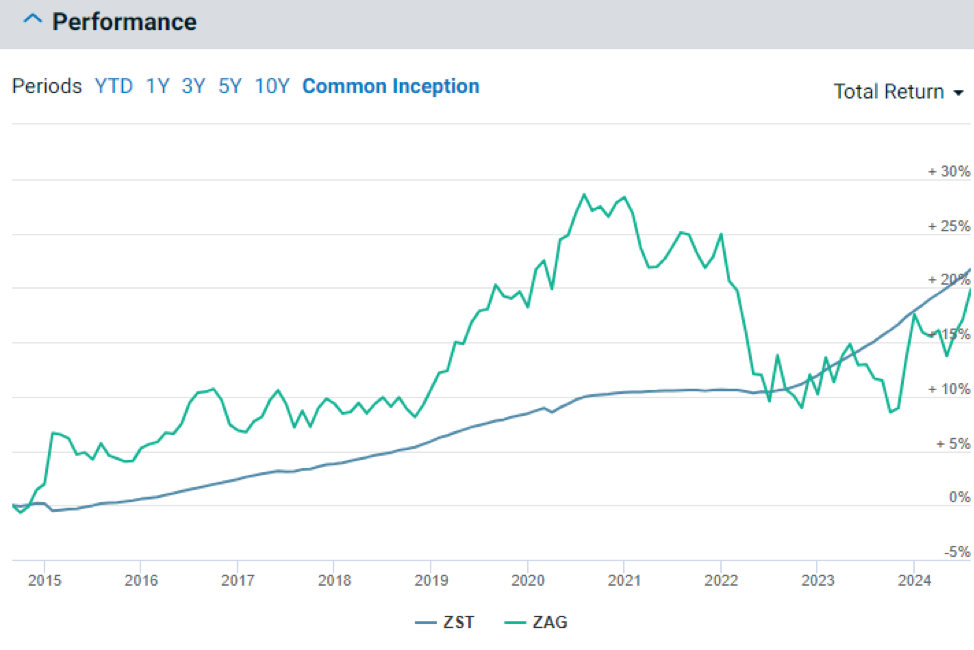
This strategic combination of high credit quality and short maturity durations7 is why, as demonstrated in the chart below, ZST has been able to steadily appreciate in value without experiencing the same level of volatility as broader aggregate bond ETFs like the BMO Aggregate Bond ETF (ZAG)8.
Buffer ETFs
If you recall the days of using training wheels when learning to ride a bike, you’ll appreciate the concept of buffer ETFs. Just as training wheels keep you from tipping over while also limiting how fast and freely you can ride, buffer ETFs aim to moderate the range of investment outcomes — both up and down.
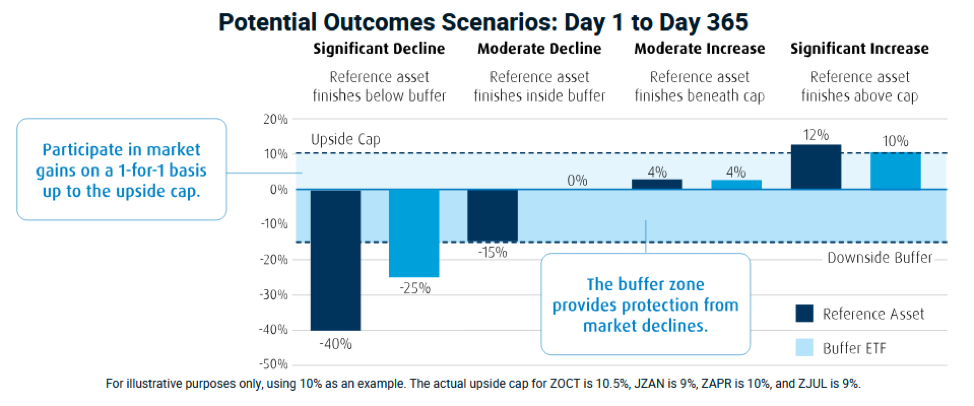
Buffer ETFs may sound complex, but the principle behind them is straightforward. These ETFs utilize options to limit your downside risk while also capping your potential upside returns.
For example, a buffer ETF might offer to limit your exposure to a maximum 10% price return of a reference asset (like the S&P 500 index) over a year while absorbing the first -15% of any losses during the same period.
If the reference asset rises, your investment increases alongside it, up to a 10% cap. However, if the reference asset declines, the ETF absorbs the first 15% of any loss. Only after this “downside buffer” is exhausted would you start to experience losses.
BMO offers four such buffer ETFs, each named according to the start month of their outcome period when the initial upside cap and buffer limits are set. These include: Continue Reading…
As an engineer by education & training and an analytical person, it shouldn’t come as a surprise to readers that I ponder a lot. I like to think about something carefully before deciding or reaching a conclusion. Although this approach may not work in all situations, I enjoy being analytical on major life decisions.
The other day I woke up with this interesting idea in my head. The idea simply wouldn’t escape from my head and I ended up thinking about it for the entire day.
The interesting idea is simple: Should we go all in on QQQ with our RRSPs?
Since this is an interesting idea, I thought I’d turn it into a blog post, analyze the idea thoroughly, and hopefully come to a conclusion.
Things to consider
A few things before we dive into the analysis.
An RRSP is a tax-deferred account. When you contribute to one, you get a tax deduction for 100% of your contributions. If you contribute $10,000 to your RRSP, it will reduce your net income by $10,000, and potentially bring you down to the lower tax bracket.
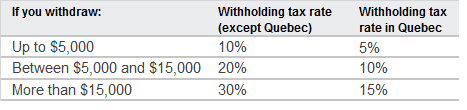
When you withdraw money from your RRSP, you will be subject to withholding tax. The amount of withholding tax is based on how much you take out.
The net amount after the RRSP withholding tax is then taxed at your marginal tax rate.
You also must convert an RRSP to a retirement income option such as a RRIF by the end of the year that you turn 71. Although there are no mandatory withdrawal requirements in the year you set up your RRIF, you must start withdrawing money the year after setting up your RRIF (effectively at age 72). Furthermore, there’s a minimum withdrawal rate for RRIF. The withdrawal rate increases as you age.
Note: You can convert your RRSP before age 71. If you do, there’s a minimum withdrawal rate starting at age 55.
Just like the RRSP, money withdrawn from an RRIF is taxed like working income, or at 100% of your marginal tax rate.
In other words, it doesn’t matter whether the money is from capital gains or dividend income, money withdrawn from an RRSP and an RRIF is taxed at 100% of your marginal tax rate. You don’t get any preferential dividend tax treatment like in non-registered accounts.
When we do start living off our investments (aka live off dividends), our withdrawal strategy is very similar to Mark from My Own Advisor – NRT. This means drawing down some non-registered (N) assets along with registered assets (R), leaving TFSAs (T) for as long as possible.
More details:
N – Non-registered accounts – we most likely will work part-time to keep ourselves engaged and live off dividends to some degree from our non-registered accounts. The preferential dividend tax credits will come in handy.
R – Registered accounts (RRSPs) – we plan to make some early withdrawals from our RRSPs slowly. We may collapse our RRSPs entirely before age 71. We may also convert our RRSPs to RRIFs. This is not entirely decided (if we do convert to RRIFs, we want to make sure the dollar amount is relatively small). Early withdrawals will help us from having a large amount of money in our RRSPs and having a big tax hit when we start withdrawing. In other words, this will help smooth out our taxes.
T – TFSAs – since any withdrawals from TFSAs are tax-free, we intend not to touch our TFSAs for as long as possible so they can compound over time.
Note: if you’re interested in this retirement projections service, mention TAWCAN10 to Mark and Joe to get a 10% discount.
We may also do an RNT (Registered, Non-Registered, then TFSA) withdrawal strategy but will need to crunch some numbers. Whether it’s NRT or RNT, the important part is that we plan to slowly withdraw money from our RRSPs.
Current RRSP Holdings
Although RRSPs are best for holding U.S. dividend stocks to avoid the 15% withholding tax, we hold U.S. and Canadian dividend stocks and ETFs inside our RRSPs.
At the time of writing, we hold the following stocks and ETFs inside our RRSPs:
Our RRSPs consist of 18 U.S. dividend stocks, 10 Canadian dividend stocks, and 2 index ETFs.
In terms of dollar value, my RRSP makes up about 70% while Mrs. T’s RRSP (spousal RRSP) makes up about 30%. Ideally, it would be great if our RRSP breakdown were 50-50 (I’m ignoring my work’s RRSP so in reality the composition is more like a 25-75 split).
Because we started Mrs. T’s RRSP a few years later than mine it hasn’t had as much time to compound. Furthermore, I converted over $120,000 worth of CAD to USD in my RRSP when CAD was above parity. Over time, this gave my self-directed RRSP an automatic 30% performance boost.
In addition, because the exchange rate hasn’t been as attractive, the only U.S. holdings Mrs. T has are Apple and QQQ. The rest of her RRSPs are all in Canadian dividend stocks.
We purchased QQQ earlier this year inside Mrs. T’s RRSP. Dollar-wise, it makes up a very small percentage of our combined RRSPs.
Some info on QQQ
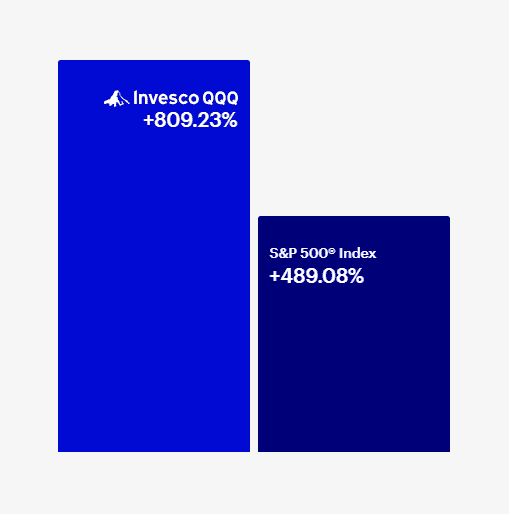
For those readers who aren’t familiar with QQQ, it’s an ETF from Invesco. Since launching in 1999, the ETF has demonstrated a history of outperformance compared to the S&P 500.
QQQ tracks the Nasdaq 100 Index. The fund is rebalanced quarterly and reconstituted annually. At the time of writing, QQQ holds 101 stocks with the top 10 holdings being Microsoft, Apple, Nvidia, Amazon, Meta, Broadcom, Alphabet Class A & C, Tesla, and Costco. The top 10 holdings make up 47.01% of the fund.
The top 11 – 20 holdings for QQQ are AMD, Netflix, PepsiCo, Adobe, Linde, Cisco, Qualcomm, T-Mobile US, Intuit, and Applied Materials. These holdings make up 15.71% of QQQ.
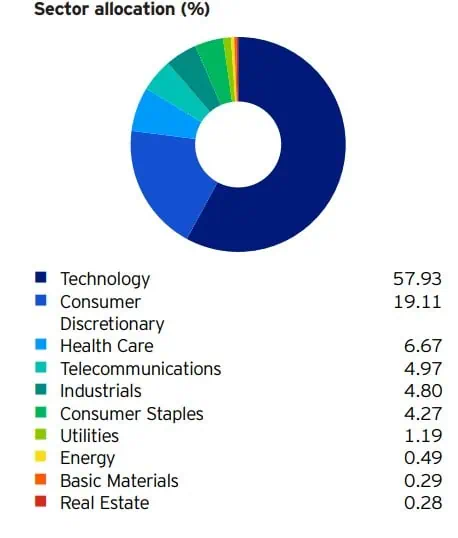
Due to the nature of the Nasdaq 100 Index, QQQ is heavily exposed to technology and consumer discretionary sectors.
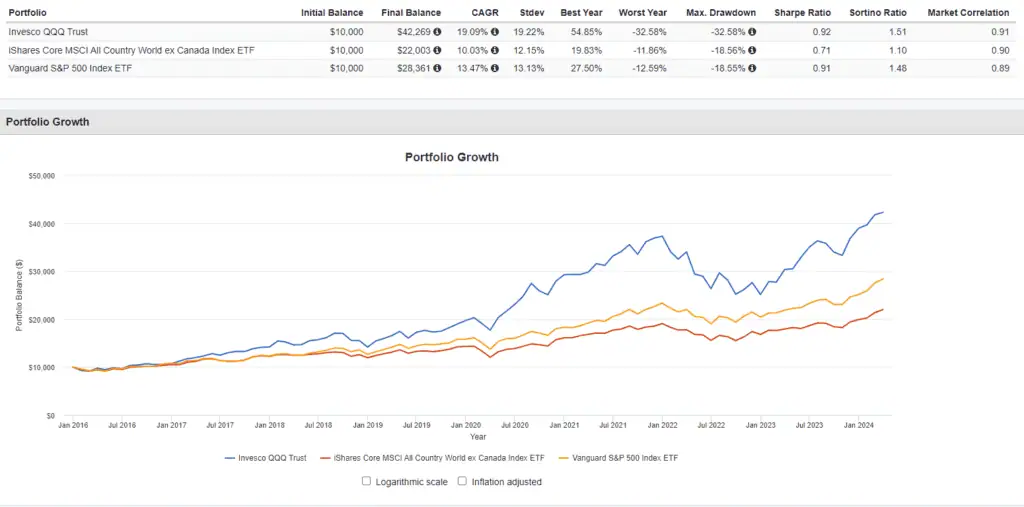
As you can see from below, it also outperformed XAW and VFV significantly. This is the key attraction of QQQ, as the fund has historically outperformed many major indices.
Source: Portfolio Visualizer
As you can see from above, $10,000 invested in QQQ in 2016 would result in over $42,000 in 2024 whereas the same amount invested in XAW and VFV would result in less than $30,000.
Case for going all-in on QQQ
Why would we consider going all in on QQQ?
Because QQQ has done very well historically compared to the major U.S. and Canadian indices.
Per the chart above, QQQ had an annualized return of 19.09% since 2016. In the last 20 years, QQQ has had an annualized return of 14.03% and an annualized return of 18.12% in the last 10 years.
Assuming we invest $150,000 in QQQ and enjoy an annualized return of 15% for the next 10 years, we’d end up with $606,833.66, assuming no additional contributions. On the flip side, if we have the same money and have an annualized return of 10% (long-term stock return), we’d end up with $389,061.37. This means investing in QQQ would result in more than $217.7k of difference in return on capital or 56%. This is a pretty significant difference.
Yes, historical returns don’t guarantee future returns. However, the high exposure to technology stocks should allow QQQ to continue the superior return for years to come.
Due to the fact that RRSP and RRIF withdrawals are taxed 100% at our marginal tax rate, it makes sense to attempt to maximize the total return inside of RRSPs/RRIFs instead of a mix of dividend income and capital return.
Case against going all in on QQQ
The biggest case against going all in on QQQ? Our dividend income would take a big hit.
Our RRSPs contribute about 30% of our annual dividend income. With our 2024 target of $55,000, selling everything in our RRSPs and holding QQQ only would reduce our total dividend income to about $38,500 (ignoring QQQ distributions completely).
But focusing on dividend income alone is a bit silly when we should be considering total return and the total portfolio value.
Out of the 18 U.S. stocks that we hold in our RRPS, QQQ holds 9 of them already. The stocks that QQQ doesn’t hold are:
Abby
Johnson & Johnson
Coca-Cola
McDonald’s
Procter & Gamble
Target
Visa
Waste Management
Walmart
These 9 stocks make up about 25% of our RRSP in terms of dollar value. Since we purchased these stocks many years ago, they have all done very well, with a few of them being multi-baggers. I would hate to sell the likes of Visa and Waste Management.
Investing in QQQ does mean that when we start to live off our investment portfolio, rather than withdrawing mostly from dividends inside our RRSPs in the first few years (to increase our margin of safety), we’d need to sell QQQ shares and touch our principal.
If there are a few years of poor returns at the beginning of our retirement, this could cause a significant reduction in our portfolio value. Essentially, selling shares may not have as much margin of safety compared to relying on withdrawing dividends only.
Another case against going all in on QQQ is that QQQ is currently highly concentrated in technology stocks so it’s not all that diversified compared to other index ETFs like XAW. The latest AI hype has significantly bumped up the share price of many technology stocks. Would we see a Dot Com type of bubble in the future and hamper the return of QQQ? That’s certainly possible.
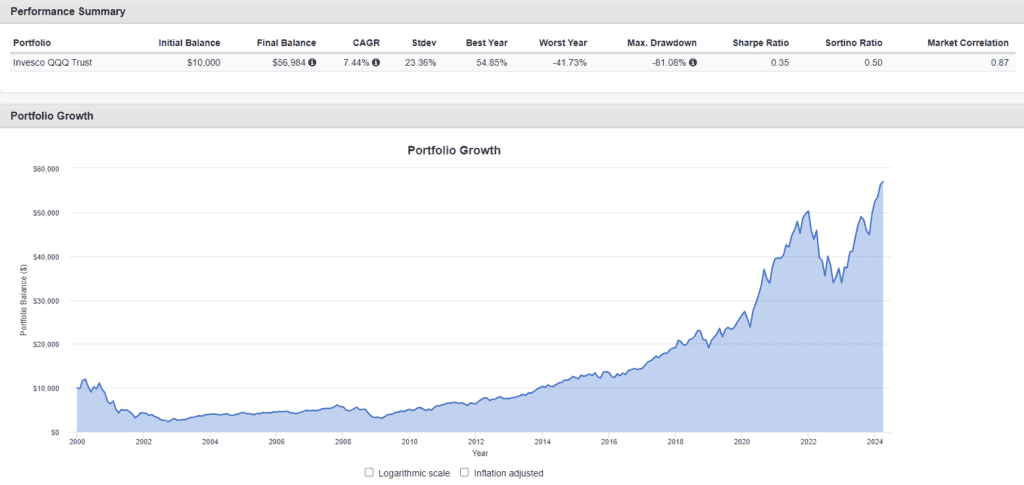
QQQ historical return
As you can see from the chart above, QQQ didn’t recover from the Dot Com bubble for about 14 years. This is a risk we would take on if we were to go all in on QQQ.
Potential Alternatives to going all-in on QQQ
Instead of going all in on QQQ, there are some potential alternatives.
First, we can simply add more QQQ shares in the next few years to have QQQ make up a larger percentage of our dividend portfolio. This is already our plan of record but we stay focused on this goal instead of purchasing more dividend paying stocks in our RRSPs.
Second, since we hold QQQ inside of Mrs. T’s RRSP and she holds mostly Canadian dividend stocks in her RRSP, we can consider closing out these positions and using the money to buy QQQ shares.
If we were to do that, we’d only lose about 12% of our forward annual dividend income, going from $55,000 to $48,400. Assuming QQQ continues the superior performance over other indices, holding only QQQ and Apple in Mrs. T’s RRSP and continuing to contribute to her RRSP only may mean that we have a higher chance of ending up with a 50-50 RRSP split down the road.
Some additional logistics to consider
The second option mentioned above is quite intriguing. But there are some logistics to consider if we were to forward with this option.
The first thing to consider is that we’d need to sell all 9 stock holdings in Mrs. T’s RRSP. At $4.95 per trade at Questrade, this would cost us $44.55. Not a significant amount of money but it would be cheaper if we were to transfer her RRSP to Wealthsimple.
Second, we’d need to convert CAD to USD and take a hit on the exchange rate. Utilizing Norbert’s Gambit would allow us to save on the additional current exchange fees. The alternative solution would be to journal as many of the holdings to the U.S. exchange, close the positions, and end up with USD.
Another option is to consider the Canadian equivalents, like XQQ, ZQQ, HXQ, or ZNQ to avoid currency conversion. As many of you know, I’m all for simplicity and straightforwardness, so it makes sense to hold the original ETF QQQ instead of other alternatives.
Conclusion – Should we go all in on QQQ?
So, have I reached a decision after all the considerations?
I’ll admit, the second option mentioned (holding only QQQ in Mrs. T’s RRSP) is very intriguing to me. But I am going to sleep on it for a bit and discuss the idea with Mrs. T before making any major decisions. In the meantime, we will continue to add more QQQ shares in Mrs. T’s RRSP so QQQ makes up a bigger percentage of our dividend portfolio.
Readers, what would you do? Would you go all in on QQQ?
Hi there, I’m Bob from Vancouver, Canada. My wife & I started dividend investing in 2011 with the dream of living off dividends in our 40’s. Today our portfolio generates over $2,700 in dividends per month. This post originally appeared on Tawcan on July 15, 2024 and is republished on the Hub with the permission of Bob Lai.
By Erin Allen, Vice President, Direct Distribution, BMO ETFs
(Sponsor Blog)
As of May 31, 2024, the U.S. stock market accounts for approximately 70% of the MSCI World Index1, making it a significant component of global equity markets: and likely a substantial portion of your investment portfolio as well.
While Canadian investors often favour domestic stocks for tax efficiency and lower currency risk2, incorporating U.S. stocks can enhance exposure to sectors where the Canadian market — predominated by financials and energy — falls short, particularly in technology and healthcare.
For Canadian investors looking to tap into the U.S. market affordably and without the hassle of currency conversion, there are numerous ETF options available. Here are four strategic ways to build a U.S. stock portfolio using BMO ETFs, catering to different investment objectives.
Low-cost broad exposure
If your objective is to gain exposure to a broad swath of U.S. stocks that reflect the overall market composition, the S&P 500 index is your quintessential tool.
This longstanding and highly popular benchmark comprise 500 large-cap U.S. companies, selected through a rigorous, rules-based methodology combined with a committee process, and is weighted by market capitalization (share price x shares outstanding).
The S&P 500 is notoriously difficult to outperform: recent updates from the S&P Indices Versus Active (SPIVA) report highlight that approximately 88% of all large-cap U.S. funds have underperformed this index over the past 15 years.3
This statistic underscores the efficiency and effectiveness of investing in an index that captures a comprehensive snapshot of the U.S. economy.
For those interested in tracking this index, BMO offers two very accessible and affordable options: the BMO S&P 500 Index ETF (ZSP) and the BMO S&P 500 Hedged to CAD Index ETF (ZUE), both with a low management expense ratio (MER) of just 0.09% and high liquidity.
While both ETFs aim to replicate the performance of the S&P 500 by purchasing and holding the index’s constituent stocks, they differ in their approach to currency fluctuations.
ZSP, the unhedged version, is subject to the effects of fluctuations between the U.S. dollar and the Canadian dollar. This means that if the U.S. dollar strengthens against the Canadian dollar, it could enhance the ETF’s returns, but if the Canadian dollar appreciates, it could diminish them.
On the other hand, ZUE is designed for investors who prefer not to have exposure to currency movements. It employs currency hedging to neutralize the impact of USD/CAD fluctuations, ensuring that the returns are purely reflective of the index’s performance, independent of currency volatility.
Large-cap growth exposure
What if you’re seeking exposure to some of the most influential and dynamic tech companies in the U.S. stock market, often referred to as the “Magnificent Seven?”
For investors looking to capture the growth of these powerhouse companies in a single ticker, ETFs tracking the NASDAQ-100 Index offer a prime solution. As of June 27, all of these companies are prominent members of the index’s top holdings4.
The NASDAQ-100 Index is a benchmark comprising the largest 100 non-financial companies listed on the NASDAQ stock exchange. This index is heavily skewed towards the technology, consumer discretionary, and communication sectors, from which the “Magnificent Seven” hail.
BMO offers two ETFs that track this index: the BMO Nasdaq 100 Equity Hedged to CAD Index ETF (ZQQ) and the BMO Nasdaq 100 Equity Index ETF (ZNQ). Both funds charge a management expense ratio (MER) of 0.39%. Again, the key difference between them lies in their approach to currency fluctuations.
Low-volatility defensive exposure
You might commonly hear that “higher risk equals higher returns,” but an interesting phenomenon known as the “low volatility anomaly” challenges this traditional finance theory.
Research shows that over time, stocks with lower volatility have often produced returns comparable to, or better than, their higher-volatility counterparts, contradicting the expected risk-return trade-off. Continue Reading…
What’s the point of investing, anyway? We invest our money for future consumption, with the idea that we’ll earn a higher rate of return from investing in a portfolio of stocks and bonds than we will from holding cash.
But where does this equity premium come from? And how do we capture it without taking on more risk than is needed? Moreover, how do we control our natural instincts of fear, greed, and regret so that we can stay invested long enough to achieve our expected rate of return?
For decades, regular investors have put their trust in the expertise of stockbrokers and advisors to build a portfolio of stocks and bonds. In the 1990s, mutual funds became the investment vehicle of choice to build a portfolio. Both of these approaches were expensive and relied on active management to select investments and time the market.
At the same time, a growing body of evidence suggested that stock markets were largely efficient, with all of the known information for stocks already reflected in their prices. Since markets collect the knowledge of all investors around the world, it’s difficult for any one investor to have an advantage over the rest.
The evidence also showed how risk and return are intertwined. In most cases, the greater the risk, the higher the reward (over the long-term). This is the essence of the equity-risk premium – the excess return earned from investing in stocks over a “risk-free” rate (treasury bills).
Evidence-based investing also highlights the benefit of diversification. Since it’s nearly impossible to predict which asset class will outperform in the short-term, investors should diversify across all asset classes and regions to reduce risk and increase long-term returns.
As low-cost investing alternatives emerged, such as exchange-traded funds (ETFs) that passively track the market, the evidence shows that fees play a significant role in determining future outcomes. Further evidence shows that fees are the best predictor of future returns, with the lowest fees leading to the highest returns over the long term.
Finally, it’s impossible to correctly and consistently predict the short-term ups and downs of the market. Stock markets can be volatile in the short term but have a long history of increasing in value over time. The evidence shows staying invested, even during market downturns, leads to the best long-term investment outcomes.
Evidence-based Guide to Investing
So, what factors impact successful investing outcomes? This evidence based investing guide will reinforce the concepts discussed above, while addressing the real-life burning questions that investors face throughout their investing journey.
Questions like, should you passively accept market returns or take a more active role with your investments, should you invest a lump sum immediately or dollar cost average over time, should you invest when markets are at all-time highs, should you use leverage to invest, and how much home country bias is enough?
To answer these questions, I looked at the latest research on investing and what variables or factors can impact successful outcomes. Here’s what I found:
Passive vs. Active Investing
The thought of investing often evokes images of the world’s greatest investors, such as Warren Buffett, Benjamin Graham, Peter Lynch, and Ray Dalio: skilled money managers who used their expertise to beat the stock market and make themselves and their clients extraordinarily wealthy.
But one man who arguably did more for regular investors than anyone else is the late Jack Bogle, who founded the Vanguard Group. He pioneered the first index fund, and championed low-cost passive investing decades before it became mainstream.
Jack Bogle’s investing philosophy was to capture market returns by investing in low-cost, broadly diversified, passively-managed index funds.
“Passive investing” is based on the efficient market hypothesis: that share prices reflect all known information. Stocks always trade at their fair market value, making it difficult for any one investor to gain an edge over the collective market.
Passive investors accept this theory and attempt to capture the returns of all stocks by owning them “passively” through an index-tracking mutual fund or ETF. This approach avoids trying to pick winning stocks, and instead owns the market as a whole in order to collect the equity risk premium.
The equity risk premium explains how investors are rewarded for taking on higher risk. More specifically, it’s the difference between the expected returns earned by investors when they invest in the stock market over an investment with zero risk, like government bonds.
Bogle’s first index fund – the Vanguard 500 – was founded in 1976. At the time, Bogle was almost laughed out of business, but nearly 50 years later, Vanguard is one of the largest and most respected investment firms in the world. Who’s laughing now?
In contrast, opponents of the efficient market hypothesis believe it is possible to beat the market and that share prices are not always representative of their fair market value. Active investors believe they can exploit these price anomalies, which can be observed when trends or momentum send certain stocks well above or below their fundamental value. Think of the tech bubble in the late 1990s when obscure internet stocks soared in value, or the 2008 great financial crisis when bank stocks got obliterated.
Comparing passive vs. active investing
Spoiler alert: there is considerable academic and empirical evidence spanning 70 years to support the theory that passive investing outperforms active investing.
The origins of passive investing dates back to the 1950s when economist Harry Markowitz developed Modern Portfolio Theory. Markowitz argued that it’s possible for investors to design a portfolio that maximizes returns by taking an optimal amount of risk. By holding many securities and asset classes, investors could diversify away any risk associated with individual securities. Modern Portfolio Theory first introduced the concept of risk-adjusted returns.
In the 1960s, Eugene Fama developed the Efficient Market Hypothesis, which argued that investors cannot beat the market over the long run because stock prices reflect all available information, and no one has a competitive information advantage. Continue Reading…


 Posted By
  By Mark and Joe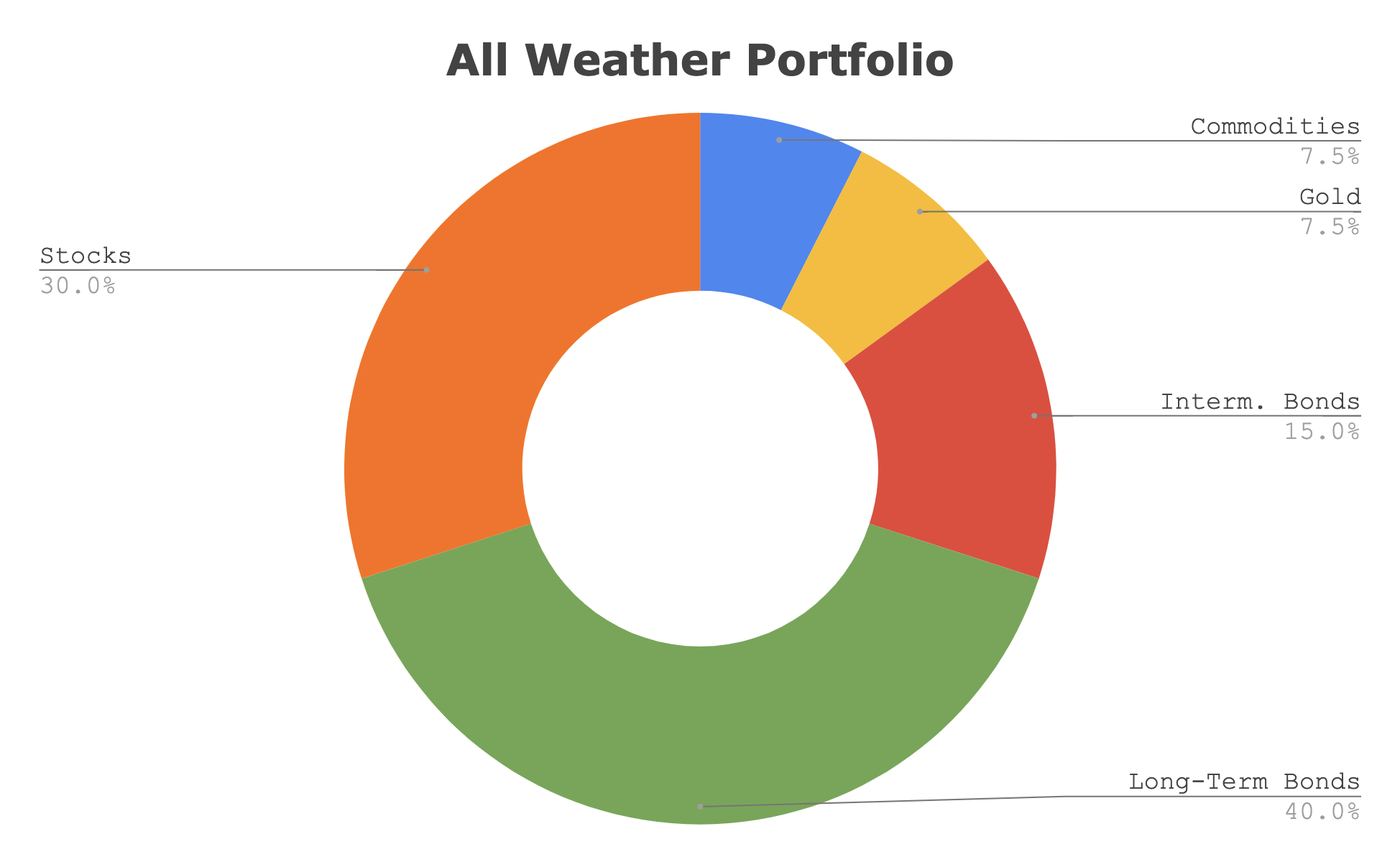




 Posted By