No doubt about it: at some point we’re neither semi-retired, findependent or fully retired. We’re out there in a retirement community or retirement home, and maybe for a few years near the end of this incarnation, some time to reflect on it all in a nursing home. Our Longevity & Aging category features our own unique blog posts, as well as blog feeds from Mark Venning’s ChangeRangers.com and other experts.
There are many factors that can affect your decision on whether to take CPP at age 60 or 70 or somewhere in between. Here I do a case study of my family’s CPP timing choice.
Both my wife and I are retired in our 50s and had periods of low CPP contributions because of child-rearing and several years of self-employment. So, neither of us is in line for maximum CPP benefits. If we both take CPP at age 60, our combined annual benefits will be $11,206 (based on inflation assumptions described below).
The “standard” age to take CPP is 65. If you take it early, your benefits are reduced by 0.6% for each month early. This is a 36% reduction if you take CPP at 60. If you wait past 65, your benefits increase by 0.7% for each month you wait. This is a 42% increase if you wait until you’re 70.
However, there are other complications. If you take CPP past age 60, any months of low CPP contributions between 60 and 65 count against you unless you can drop them out under a complex set of dropout rules. If my wife and I take CPP past age 65, we won’t be able to use any dropouts for the months from 60 to 65, so we’ll get the largest benefits reduction possible for making no CPP contributions from 60 to 65. Fortunately, CPP rules don’t penalize Canadians any further if they have no contributions from 65 to 70.
Inflation indexing
Another less well-known complication is that before you take CPP, your benefits rise based on wage inflation. But after your CPP benefits start, the payments rise by inflation in the Consumer Price Index (CPI). Over the long term, wage inflation has been higher than CPI inflation. So, when you start taking CPP benefits, you lock in lower benefit inflation.
In this case study, I’ve assumed 2% CPI inflation and 3% wage inflation. These assumptions along with the CPP rules and our contributions history led to our annual benefits of $11,206 if we take CPP at 60.
If we wait until we’re 70, our combined annual CPP benefits will be $29,901. However, don’t compare this directly to the figure at age 60 because they are 10 years apart. If we take CPP at 60, it will grow with CPI inflation for those 10 years. The following table shows our annual CPP benefits in the two scenarios: early CPP at 60 and late CPP at 70.
Age
Early CPP
Late CPP
Age
Early CPP
Late CPP
60
$11,206
75
$15,081
$33,013
61
$11,430
76
$15,383
$33,674
62
$11,658
77
$15,690
$34,347
63
$11,891
78
$16,004
$35,034
64
$12,129
79
$16,324
$35,735
65
$12,372
80
$16,651
$36,449
66
$12,619
81
$16,984
$37,178
67
$12,872
82
$17,324
$37,922
68
$13,129
83
$17,670
$38,680
69
$13,392
84
$18,023
$39,454
70
$13,660
$29,901
85
$18,384
$40,243
71
$13,933
$30,499
86
$18,752
$41,048
72
$14,211
$31,109
87
$19,127
$41,869
73
$14,496
$31,731
88
$19,509
$42,706
74
$14,785
$32,366
89
$19,899
$43,560
It would certainly feel good to start collecting CPP benefits when we’re 60, but by the time we’re 70, we’d never notice that our payments could have been 119% higher. That’s why we plan to wait until we’re 70 for our CPP benefits. Continue Reading…
There are numerous life insurance mistakes Canadians are making, and who qualifies better to talk about these mistakes than life insurance experts? We asked numerous life insurance experts to weigh in on the top life insurance mistakes they have seen throughout their careers.
You can find a summary of their replies in the above chart, with more detailed explanations following in their segments (% shows how often a particular mistake has been mentioned).
The top three mistakes are:
1.) Putting off your life insurance purchase until it is too late, or not getting life insurance at all (especially in your younger years).
2.) Not doing a needs analysis and not understanding all possible risks resulting from being underinsured.
3.) Not leveraging the benefits of a permanent life insurance policy due to its higher cost, though there are numerous benefits to this product in the long run.
Tony Bosch, Development Hub Financial
Tony Bosch – Executive Vice President Broker Development Hub Financial
“Life insurance is a key component in most financial and estate plans”
Three key mistakes people make when purchasing life insurance:
Not doing a needs analysis: The first step in any life insurance purchase should be to do a proper needs analysis. People often fail to look at the big picture when buying life insurance. The calculation of how much insurance you need should be more detailed than just having your mortgage paid off or replacing a certain multiple of your income. In determining your life insurance needs it is necessary to determine what amount is actually necessary to “allow your family to maintain their standard of living and pay off outstanding debt”under “less than ideal circumstances,” factoring in that the grieving process and the time to recover emotionally may take several months or even years. Life insurance should provide “financial confidence.” allowing a family time to adapt and adjust to life without a loved one.
Product selection: Life insurance, unlike most forms of insurance, can come in a variety of payment options from low cost term insurance to permanent policies that can build substantial tax sheltered cash values and can help solve estate planning needs and/or serve as an alternative investment. The problem arises when the product selection overrides the need. Clients with a limited budget may be attracted by product features causing them to choose a permanent product with a lower face amount than is required. A family with three kids may like the idea of a shiny sports car but may need a mini van. It is critical to first define the amount of protection required and then choose the product or combination of products that meet this need within a given budget.
Choosing a solution based on price and/or convenience rather than contract guarantees and flexibility: A simple example may be purchasing loan or mortgage insurance through a lending institution. Although this may seem like an easy and convenient solution, it may require additional underwriting at the time of claim, which could result in a claim being denied. A basic renewable and convertible term plan underwritten by an insurance company may take a little more time to set up, but in most instances provides a better and more flexible policy that can adapt to your changing needs.
Life insurance is a key component in most financial and estate plans. Working with an experienced and trusted independent advisor will help make sure you and your family get the life insurance you require with the flexibility to adjust to your changing needs.
Michael Liem, Canada Protection Plan
Michael Liem – Canada Protection Plan Regional Vice President
“Don’t put it off until it is too late.”
Putting it off until it is too late: Even though Canada Protection Plan can help get life insurance for people with medical or lifestyle issues, I think it is always best to get insurance when you don’t need it and when you are healthy. It’s not how much you can afford, but rather how healthy you are that gets you the best insurance options.
Not telling anyone about your life policy: People get a life insurance policy but when they pass away, some beneficiaries don’t even know about it. I always suggest that advisors should acquire contact information for the beneficiaries and where possible, introduce themselves because these beneficiaries will most likely be contacting the advisor to make a claim.
Regularly reviewing a client’s policy: So many advisors provide the initial policy but never review them. People’s lives are constantly changing and they may need to adjust or add more coverage. If an advisor never contacts their client, then they should not be surprised when the client switches their business to another advisor.
Lawrence Geller, L.I. Geller Insurance Agencies
Lawrence Geller – President of L.I. Geller Insurance Agencies
“Everyone has asked to either renew the existing policy or buy a new policy.”
Of the many people who have assured me over the years that they only needed life insurance for a maximum of 10 years, every one has asked to either renew the existing policy or buy a new policy to replace the one that was renewing. Even then, most have deluded themselves by thinking that they would not need the coverage when the term of the contract ended, and almost all have wanted coverage at the end of the term.
Not a single client who bought a guaranteed paid up whole life policy has ever told me that they made the wrong choice of coverage, although many have told me that they wished that they had purchased a larger amount of life insurance.
Daniel Audet – Vice President Assumption Life
Daniel Audet, Assumption Life
“Don’t gamble on being uninsured.”
The top life insurance mistake, from a consumer’s perspective, has to be the choice to gamble on being uninsured (or underinsured).
LIMRA reported a year ago in 2019 that 32 per cent of Canadian households do not have any life insurance coverage, while 56 per cent of Canadian households do not have any individual life coverage. Everyone would agree that there are more pleasant things to consider and address than the risk of dying prematurely, and that may be the reason why so many Canadians are shying away from a proper assessment. More likely, the observation comes from a knowledge gap of the risk and associated loss. Many Canadians would not necessarily consider themselves as gamblers, meanwhile the chosen approach of not buying insurance (or not buying enough) is very similar to that of a gambler’s behavior. The gambler “invests” a little wager with a small probability of a large payoff. In comparison the non-insured “saves” paying a small premium hoping he/she wouldn’t die with a significant financial burden. Both types of gamblers have small amounts involved when compared to what is at stake, and the odds of the event, while relatively small, can have a significant impact. They are just at both ends of the spectrum: the casino gambler hoping for the big win, and the life gambler neglecting to consider the major financial loss.
Turning a blind eye to the needs of paying final expenses, replacing income, paying off the mortgage, or paying the estate bills, and choosing not to be insured (or underinsured) is essentially just like gambling the financial state of the loved ones left behind. Several Canadians, when asked why they do not own life insurance, have stated they could not afford it (27 per cent) or that they had other financial priorities (25 per cent). Continue Reading…
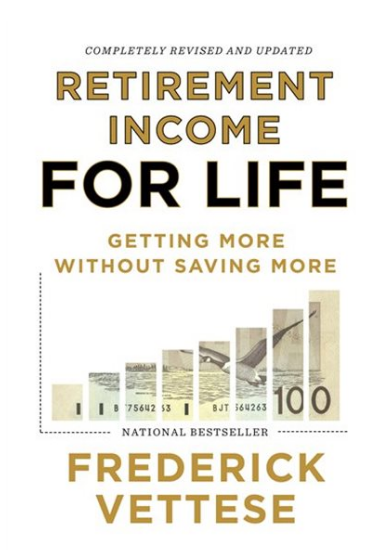
Recently I previewed Fred Vettese’s completely updated and revised edition of Retirement Income For Life. I’m giving away an extra copy of the book and asked readers to enter to win by sharing when they took (or plan to take) CPP. The results were interesting.
Deciding when to take CPP is a key consideration of your retirement income plan. What I found interesting about the responses was the rationale or the stories behind these decisions. For instance, there is a lot of misinformation about the Canada Pension Plan: that it is government run (it’s not), that it will become insolvent before you collect benefits (it won’t), and that you could do better investing the money on your own (not likely).
These misconceptions can lead to poor decisions. It’s estimated that just 1% of CPP recipients elect to take their CPP benefits at age 70. Clearly more education is required.
Several of the responses in favour of taking CPP early showed this lack of knowledge or a perceived bias around the CPP program.
Some retired early and took CPP early to “avoid too many zero contribution years.”
While it’s true that your calculated retirement pension may decrease with each year of zero contributions, the amount of the decrease is typically less than the amount of the increase you’d get by deferring CPP (0.6% per month to age 65 and 0.7% per month to age 70).
CPP expert Doug Runchey uses the example that by waiting you will receive a larger slice of a smaller pie, but you will almost always receive more pie.
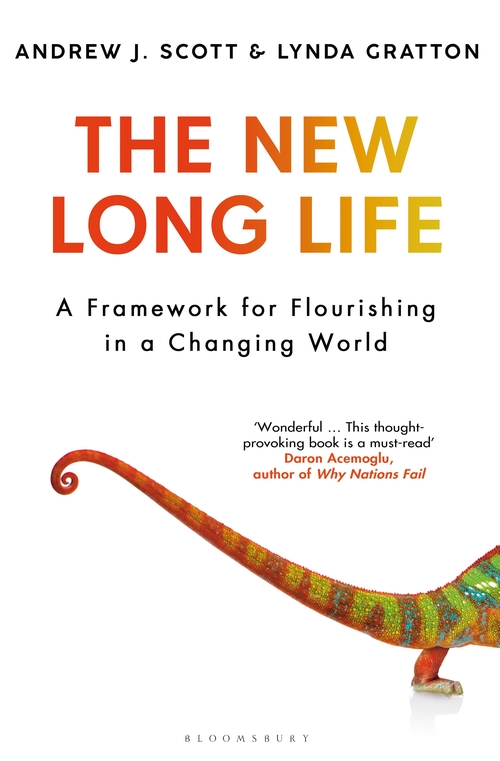
“In the face of longevity, if we want to reimagine age then we must first decouple the idea of a simple link between time and age. That requires imagining your age as malleable… It is this malleability that underpins the redesign of life stages.” Andrew J. Scott & Lynda Gratton, The New Long Life, 2020
Scott and Gratton challenged our minds, that if we were to look at the promise of living a longer life that would mean the lockstep three-stage experience would evolve and stretch, and we would have to reimagine a multi-stage life, more fluid, perhaps not so orderly. It would mean we would need to rethink how we finance this potential longer life, transform our personal journeys and as suggested now here in the sequel: rediscover our human ingenuity.
For all the side steps and jump-starts that a fluid and frequently interruptive multi-stage life may bring us, we will need to be better as masters of our own transitions.
“Human ingenuity has led us to extraordinary new technologies and substantial gains in healthy life expectancy. Yet … the answers to the question we have posed will be solved with social ingenuity.”
Continuous advance of technology and longevity
One of the great powers our two authors have is the ability to draw linkages between factors that are now shifting our society, and a prime example of that is both the continuous advance of technologies and longevity. By extension, this particular linkage recasts our notion of work and careers, wealth and health. What we do, where and how we work and for how long we choose to work. All this in mind the question left for us is: in what ways will we as individuals, employers, educators and governments reshape our society?
To answer that, The New Long Life poses leaning forward questions and threads many plausible possibilities around all this transitioning we will undoubtedly face regardless of age. Human questions is where the book begins and then nourishes our minds sprinkling ideas at us, somewhat like fish food for thought, right through each chapter. This is what makes this book together with the first, one masterful opus. Thus, my recommendation is to begin with a read of The 100-Year Life. (Reviewed by Mark here.) Continue Reading…
One of the new books is retired actuary Fred Vettese’s new revised edition of his book, Retirement Income For Life, which I first reviewed in 2018, and which you can find here. Vettese has revised and expanded the book to the spring of 2020, allowing him to look at the Covid-19 issue and how an extended Covid-related bear market could put further wrenches in retirement plans.
The book describes several “enhancements” to a base case of an average almost-retired couple with no DB pensions and roughly $600,000 in savings. This base case – Vettese dubs them the Thompson family — pay high investment management fees (on the order of 2%, typically via mutual funds).
Couples in his base case also tend to take CPP as soon as it’s on offer at age 60 and OAS as soon as possible at age 65. Vettese continues to pound the table about the value of these government pensions and recommends that people like the Thompsons delay CPP till age 70 if at all possible. Remember, in the absence of a DB plan, CPP and OAS are worth their weight in gold, being government-guaranteed-for-life sources of income that are inflation-indexed to boot.
Vettese is fine with ordinary average folk taking OAS at 65. However, and this seemed new to me, in a section for high-net worth couples (which he defines as having $3 million in investable assets), he suggests they should also delay OAS to age 70, along with CPP.
As an actuary, Vettese sees this enhancement as a simple case of transferring risk from a retiree’s shoulders to the government’s. Why worry about investment risk and longevity risk when the government can worry about it on your behalf?
Similarly, a related enhancement is to engage in the same type of risk transfer by converting a portion of registered savings to the shoulders of life insurance companies: he suggests 20% can be annuitized, ideally after age 70. That’s a bit less than the 30% his first edition he recommended immediately upon retirement.
One of Vettese’s enhancements to the base case is simple enough: to cut investment management fees. Larry Bates devoted an entire book to this theme: Beat the Bank, which I reviewed two years ago here.
Try the free PERC calculator
There are two other less compelling enhancements: knowing how much income to draw and having a backstop. Knowing how much income can be figured out with a free calculator that Vettese twigs readers to: PERC or the Personal Enhanced Retirement Calculator, available at perc.morneaushepell.com. Continue Reading…


 Posted By
  By Michael J. Wiener




 Posted By
 Posted By