
Building Wealth

For the first 30 or so years of working, saving and investing, you’ll be first in the mode of getting out of the hole (paying down debt), and then building your net worth (that’s wealth accumulation.). But don’t forget, wealth accumulation isn’t the ultimate goal. Decumulation is! (a separate category here at the Hub).

Why starting your own business is better than getting a job

By Savannah Wardle

Special to the Financial Independence Hub

Instead of getting a job, make a job. You can take a large vacant place where a business should have been and fill it with everything you’ve ever dreamed of. If you’re on the verge of a major career change, you have the unique ability to customize that change to your needs. It might be time for you to branch out on your own and do things for yourself: you can wind up better off for having done it.

It’s easier than it used to be

The internet revolutionized the way that people run businesses. It used to be that people were confined to working for someone else because they didn’t have the resources they needed to become fully independent. Now, almost everything you can’t do yourself can easily be outsourced to software, apps, or freelancers who know how to get things done the right way. It doesn’t matter if you need to hire a Twitter expert, have a catering website built, or find specialty garage door software. The internet has it, and you can use it to build your own empire.

You’re free to explore Innovation and Creativity

Think about all the aspects of your old job that were holding you back. Did you have bold new ideas that you were dissuaded from pursuing because they didn’t adhere to the company’s “play it safe” motto? You don’t have to worry about that anymore. You’re the one calling the shots, and if you know you have the potential to shake up your industry, no one is stopping you. You can try and try and try, even if you fail, and you don’t need to worry about the powers that be restricting you from exploration.

You can live the way you want  

If you used to work long hours and weekends, you probably felt like you were missing out on life. If you run your own business, you can be open from 9 to 5 on weekdays. Close up shop for dinner and the weekends and live your life. A lot of people cite work/life balance as being one of the reasons they opt for a career change, and if you’re one of those people, you can easily find the exact balance you want by becoming an entrepreneur or an independent contractor.

You get to build your dream team Continue Reading…
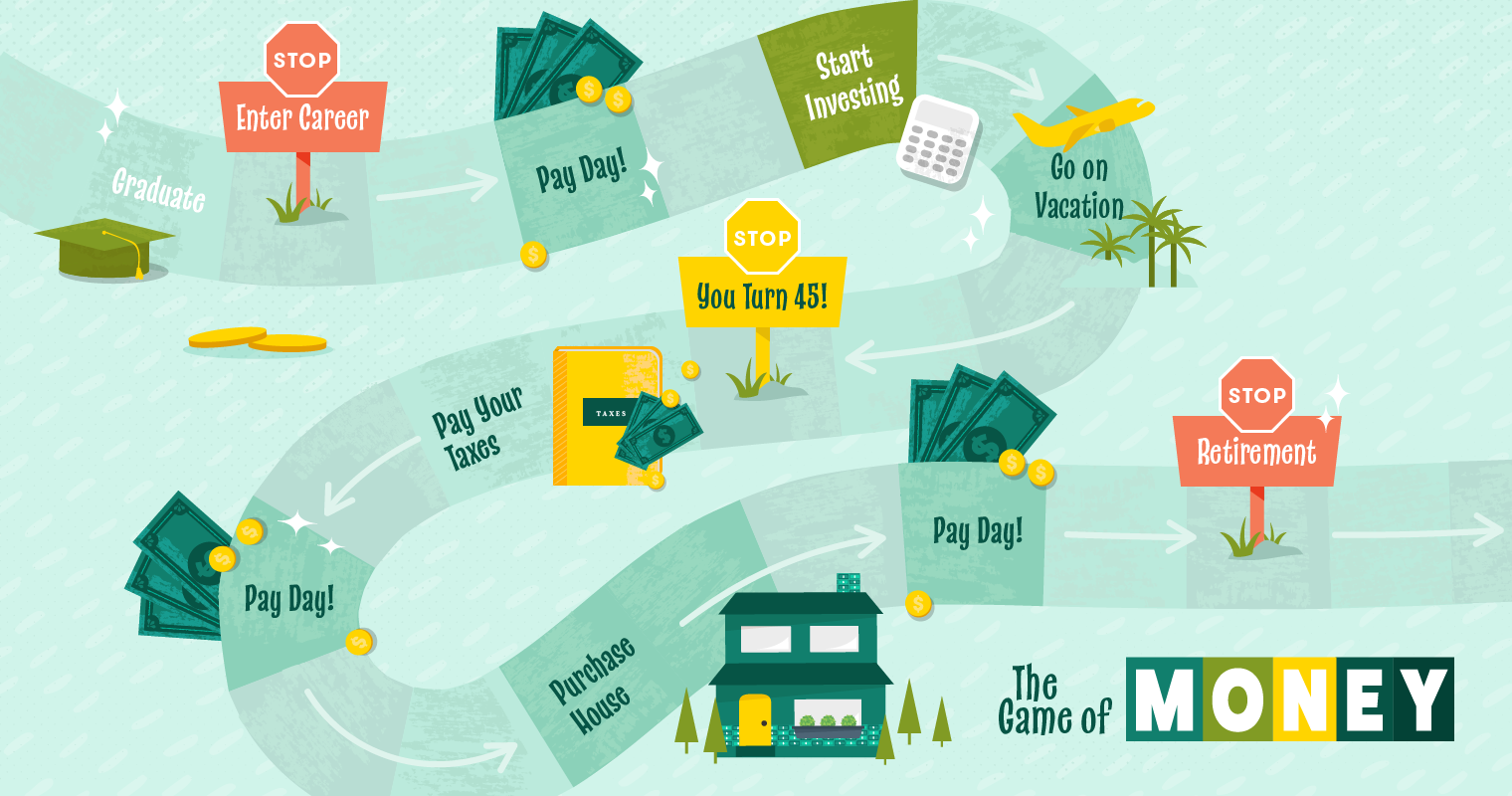
Investing for people over or under 45

By Tea Nicola

(Sponsor Content)

Your ideal investing strategy when you’re 25 just is not the same as when you’re 52.

That’s because what you earn is partly a function of what you’ve already managed to acquire. In Canada, about 85% of all financial assets are in the hands of people over age 45. Pension assets are held in the same proportions. On the real estate front, just 32% of all real estate value is in the hands of those under age 45. Meanwhile, fewer companies today offer a pension plan of any kind. The defined benefit pension plan is on its way to extinction.

What’s a young person to do? And for older investors who are going to retire earlier, how should their investment strategy change? What are the lessons that need to sink in when it comes to investing for people over or under 45?

What’s the investment strategy for Canadians under 45? Lower your fees!

You’re finished with school (at least for now). You’ve entered the job market and you’re starting to build up some savings. You’re diligently putting between 10 and 20 per cent of your salary into an RRSP. The younger you start to contribute to an RRSP, for instance, the sooner you can take advantage of compound interest.

Regardless, you want a good return on your investment and maybe you’ll get lucky and enjoy a bull market.

You can’t actually control that return, even if you’re investing in your own company … but if you’re using an investment platform like WealthBar or a traditional firm, you definitely can control how much you pay in fees.

For instance, with a WealthBar account, an investor might pay about 0.6% in management fees to WealthBar, versus 2.2% for a mutual fund at a bank. Put another way, an investor might pay $10 a month for WealthBar to manage $25,000, versus nearly $46 per month with a typical bank mutual fund.

Fees add up! While it may seem like the older generation controls the vast majority of assets (OK, they do), young people can at least control how much they pay a firm to manage their account. The right choice can literally save hundreds of thousands of dollars in value that would otherwise pad a financial adviser’s pocketbook.

But, should you race to the bottom? Perhaps not. Ensure that your strategy is still sound and diversified in order to achieve your goals in time. So, do not invest all your money into that 0.05% US Equity ETF. Some fees are ok, if they provide value such as diversification, cash flow, currency alignment and liquidity.

What’s the investment strategy for Canadians over 45? Reduce your risk!

Perhaps you’re one of the lucky Canadian investors over 45 who has had a good run. A pride-inducing chunk of that 85% chunk of financial assets are in your account. Continue Reading…

How to develop a Financial Independence mindset if your parents were reckless spenders

By Alex Lawson

Special to the Financial Independence Hub

Our parents are our first teachers. We learn our values, our habits, life skills, relationship skills, and many other things from our parents, long before we venture out on our own.

One of the things that people pick up on is financial habits, good or bad. If your parents were reckless spenders, chances are you’re already headed down the same path. The good news is that it’s possible to change your mindset and learn to manage your finances so that you don’t make the same mistakes they did.

Separate yourself from them

The first thing you need to do is realize that you are your own person capable of making your own choices. Don’t tell yourself you’re irresponsible with money just because that’s how you grew up. Make the decision to be different and start telling yourself the opposite. Reinforce the idea that you can be financially responsible and independent regardless of how you grew up, and you’ll be able to start making better choices.

Decide on your goals

Many people that had financially irresponsible parents have never been taught to think about the future. Planning for retirement should begin as soon as you leave college. Do you think you’ll want to retire with enough money to live comfortably as you have been, or are you planning on securing complete financial independence by the time you’re 30? The process for saving and investing will be completely different based on your goals. Begin saving aggressively when you’re young so that your money will have more time to grow.

Make saving a priority

If your parents were reckless spenders, they probably didn’t teach you anything about saving. One of the biggest keys to financial independence is learning how to save properly, so that you can be prepared for both unexpected problems and for your future. Build savings into your budget before you even look at what type of housing you can afford. A good rule is to start saving 10% of every paycheck and live off what is left over until you reach the goal of three times your monthly income. Then, when your car breaks down or if you lose your job, you will have an emergency fund to rely on without having to go into debt. Continue Reading…

The 7 most common trading mistakes

By Alana Downer

Special to the Financial Independence Hub

With the ever-increasing popularity in trading, be it stocks, Forex or cryptocurrency, more and more people are becoming involved. Some are getting rich while others find themselves learning the hard way. Of course, beginner mistakes are almost inevitable when a new trader enters the market, but with some research and careful planning, some mistakes can easily be avoided. Here are seven of the most common trading mistakes you should recognise and avoid in 2018.


1.) Catch a falling knife

As a new trader, a common mistake is thinking that a dip has run its course. A common mentality, especially in crypto trading is to “buy the dip,” however just because an asset is cheap, be it stock, a forex trade or cryptocurrency, doesn’t mean it can’t get cheaper. Many people buy in, anticipating a reversal, only to see the price drop further.

It’s much better to have a “price confirmation” approach, where you wait for the market to reverse before you enter. To do this effectively, you need something that can be objectively defined such as a price moving above an average or the completion of a head and shoulder pattern.

2.) Holding on to losing trades

Another popular crypto mentality is to “Hodl”, which is simply a misspelling of hold. This isn’t exclusive to crypto, however, and most new traders have likely lost money this way. A trade going against you, especially as a new trader, never feels good and instead of getting rid of it, as you may have planned, you hold on to it, hoping it will reverse.

One simple tactic to avoid hanging on to a losing trade is to ask yourself “would I enter this trade today, at this level?” If the answer is no, it’s probably best to get rid of it.

3.) Listening to hot tips or FUD

The internet, your friends and your family may be full of advice and “hot tips.” Trade recommendations for all markets can be found everywhere. The rumours might be right, or they might be horribly wrong but it’s important to remember they’re just rumours. Do your own research, and decide if it’s something you agree with. At the end of the day you’re trading with your own money, so your choices need to be your own.

Similarly, there can be a lot of fear, uncertainty and doubt (FUD) floating around in today’s climate of viral and fake news. Again, do your own research and learn as much as you can about any recommendations you are following.

4.) Taking uncomfortable risks Continue Reading…

7 steps to Financial Independence

By Laura Martins

Special to the Financial Independence Hub

Financial Independence (aka “Findependence”) is something that many of us are working towards, but which very few actually achieve. Having a high-paying job alone does not guarantee financial independence. While making more money does make Findependence easier to achieve, the important thing to focus on is what you do with your money, rather than how much you earn.

It’s also important to understand that financial independence will take time and planning. With the right goals and steps in place, Findependence can be achieved, but it’s important to be persistent and patient.

In most cases, financial independence doesn’t mean you won’t work ever again, but it brings freedom so you can enjoy your life and work on the things that matter to you. Here are seven key steps to develop financial independence.

1.) Get to know your money

Before you can begin to work on your financial independence, it’s imperative that you know exactly what your money is doing. You must know how much is coming in, and how much and where you are spending it.

Develop a habit of checking your bank account. Ignoring it is one of the fastest ways to lose track and lose money. It might seem obvious, but developing financial independence means spending less than you earn.

Spend a few weeks or months tracking your finances and create a budget. It’s important that it’s realistic so you can stick to it.

2.) Remove non-essentials

Once you understand your finances, it’s time to find the areas where you can save more. This is one of the hardest parts on the journey to financial independence, but also one of the most important steps.

Look at your spending and assess what you don’t need. In other words, you should try to minimize your non-essential expenses. That might mean cancelling your gym membership, reducing the amount of streaming services you pay for or making more meals at home. While these things might seem small, they will all add up, and after a few months it might make a noticeable difference to your bank account.

3.) Increase your income

Now that you understand your finances and have your spending under control, it’s time to start saving more. Continue Reading…