Building Wealth

For the first 30 or so years of working, saving and investing, you’ll be first in the mode of getting out of the hole (paying down debt), and then building your net worth (that’s wealth accumulation.). But don’t forget, wealth accumulation isn’t the ultimate goal. Decumulation is! (a separate category here at the Hub).

Gail Bebee releases third edition of No Hype book

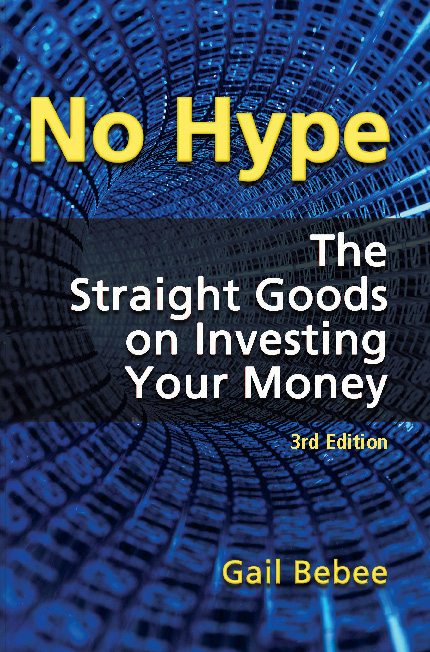
NoHypeCoverToday’s Hub review is a bit unusual in that we’ve allowed an author to review her own book. I originally reviewed No Hype: The Straight Goods on Investing Your Money when it came out almost a decade ago and found it a useful addition to the genre, seeing as so many financial books these days are written by financial professionals.

It was refreshing to see a book written by a pure financial consumer like Gail, who like the rest of us has to sort the financial wheat from the chaff and has no real axe to grind. As she says on her web site, she’s an independent voice.

Hopefully we’ll review it in the more traditional manner over the coming weeks or months but in the meantime, it’s nice to know the book is still out there and has been revised.

Incidentally, and as noted in Saturday’s weekly wrap, Gail and I are among six speakers at The Financial Show in Mississauga later this month. Joining us will be Gordon Pape,  Pat Bolland, Jim Ruta and Scot Blythe. — Jonathan Chevreau

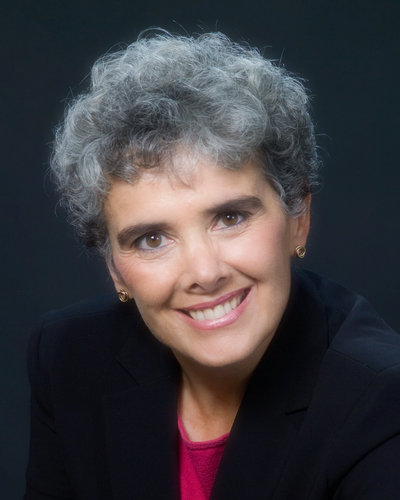
By Gail Bebee,

Special to the Financial Independence Hub
Gail_Bebee_Soft_editing_copy
Gail Bebee

When I set out in 2006 to write the original No Hype – The Straight Goods on Investing Your Money, my goal was to create a readable book that set down all the investing basics for Canadians, without a financial industry bias. It was born from my frustration at not finding such a book when I decided to take control of investing my money.

Thousands of books and two sold-out editions later, the students taking my Investment Planning night school course at Toronto District School Board still need a good reference, and retail investors are still looking for an objective, understandable book on all the investing basics written expressly for Canadians. Continue Reading…


Weekly Wrap: Happiness without ambition, learning from divorce, how to hire a caregiver

Ambition road sign

Can you be happy without ambition? That’s probably not a question many of us ask ourselves, but it was posed by Joe Udo the other day at his Retire by 40 site: Can you be happy without ambition?

I don’t know about Joe’s professed lack of ambition but in my view, achieving early Findependence by 40 and running a web site about how you did it qualifies as ambitious. And as I’ve often argued, such activities really do not constitute retirement in the sense of doing absolutely nothing all day long. Joe and the many other Early “Retirement” gurus are still working, and from what I’ve experienced the past year, are probably working pretty hard. Same with writing books and giving paid speeches. It’s still work  but there is some freedom being outside the corporate gilded cage.

Continue Reading…

Fed up: Latest Fee Grab Enrages Banking Customers

robb-engen
Robb Engen, Boomer & Echo

By Robb Engen, Boomer & Echo

Special to the Financial Independence Hub

For years Canada’s big banks have walked all over their retail customers without fear of repercussion. They’ve raised account fees and hiked minimum balance thresholds at will, invented new charges for moving our money around, and generally nickel-and-dimed us to death just because they can.

Related: 10 fees you can avoid

Banks get away with it because of the perception that it’s difficult and inconvenient to switch. Typical Canadians, we grumble about the fee grab for a while,  then quietly return to our normal everyday routine.

But this time it feels different. While banks continue to enjoy record profits – particularly from their retail banking operations – consumers are paying higher fees and earning lower interest on savings deposits. Continue Reading…

US Large Caps top Templeton asset-class chart but remember Winners Rotate

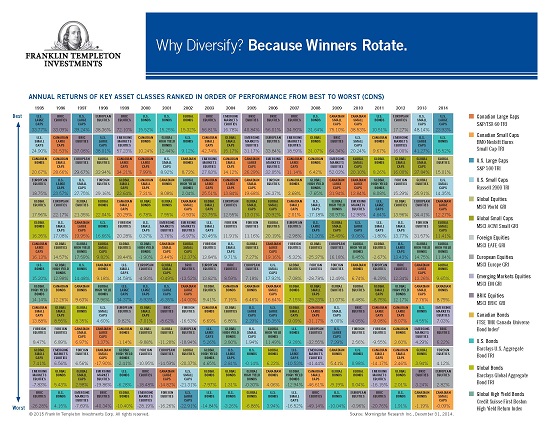
Here’s my latest MoneySense column, entitled Why Diversify? This chart shows you why. I used to write about this chart back at the Financial Post, and tacked the chart up on my cubicle wall. An updated version of the chart later followed me to my office at MoneySense, and the one below is now in my Editor-at-Large’s home office. Click on the above link to get to the chart, which can be further enlarged on your monitor.

The Hub’s version of the blog below also shows a second chart at the bottom about Risk. As you’ll see, it’s more predictable, living up to Franklin Templeton’s assertion that risk is more predictable than returns. I’ve always found it a useful reminder of the futility of chasing last year’s winners or attempting to predict next year’s winning asset classes. If you can’t get the charts  free through your financial advisor, you can download them here.

By Jonathan Chevreau

Franklin Templeton Why Diversify_low resolution

Continue Reading…

How to get the new TFSA limit to work for you

Illustration depicting a red and white road sign with a taxt free concept. Blue blurred sky background.

By Jonathan Chevreau

Financial Independence Hub

Here’s my latest column from the print edition of MoneySense magazine, written right after the federal budget: Get the new TFSA limit to work for you.

Click on the link for details, but in a nutshell — and has been extensively reported in the media, such as this piece by Gordon Pape (subscribers only)  — there’s no reason why you can’t add another $4,500 to your Tax Free Savings Account right now, in addition to $5,500 you may have contributed anytime on or after Jan. 1, 2015. (Note to American readers: the TFSA is the equivalent of Roth IRAs, providing no upfront tax deductions but which let you eventually withdraw money tax-free in Retirement or for other purposes).

That means a whopping $20,000 per couple. Now while Liberal Leader Justin Trudeau seems to think only “rich” people have that kind of money available, the fact is that many hard-working middle class people have been saving and investing for the better part of two or three decades, and built up substantial non-registered or “taxable” portfolios. Even though they may have paid income tax to acquire the capital in the first place, over those decades they have been paying annual taxes on interest, dividends and (often) capital gains generated by that capital.

As the column points out, those who have built such “open” portfolios don’t have to use new cash to put $10,000 per annum into their TFSAs. They merely have to start transferring their non-registered securities into their TFSAs. This is called a “transfer-in-kind” Continue Reading…