
Building Wealth

For the first 30 or so years of working, saving and investing, you’ll be first in the mode of getting out of the hole (paying down debt), and then building your net worth (that’s wealth accumulation.). But don’t forget, wealth accumulation isn’t the ultimate goal. Decumulation is! (a separate category here at the Hub).

Why you may wish to own a U.S. Dollar Investment Account

Royalty-free image courtesy Justwealth

By James Gauthier

(Sponsor Blog)  


Many Canadians are aware that you can open a U.S. dollar bank account at most Canadian financial institutions.

But did you know that you can also open a U.S. dollar investment account through many different investment companies?

The following are reasons why you may wish to consider opening a U.S. dollar investment account.


Reduce the cost of U.S. dollar conversion

Every time that you convert Canadian dollars to U.S. dollars (or vice versa), you will pay a fee to the financial institution that makes the conversion for you. That fee is known as the currency spread, and can usually be noticed by looking at the difference between the “bid” and the “ask” prices displayed by the financial institution.

For example, if the current spot exchange rate is quoted as $1.35 Canadian for each U.S. dollar, the bid (or price that you will receive for selling U.S. dollars) might be $1.32 and the ask (or price that you must pay to purchase U.S. dollars) might be $1.38. So, every time you buy or sell U.S. currency you lose 3 cents per dollar. If you are regularly converting currency, that becomes very expensive!

Buying or selling U.S.-listed securities in a Canadian dollar investment account is a common example of Canadians paying unnecessary currency conversion costs, allowing the broker to pocket the currency spread on buys and sells, dividends or interest paid. The more that you buy and sell, the more that you lose. These costs can be eliminated by simply owning your U.S.-listed securities in a U.S. dollar investment account instead since there is no need to convert currency on every transaction.

Hedge the impact of currency exchange rates

Have you ever felt like you had to limit your spending on travel to the U.S. because the value of the Canadian dollar was depressingly low? Or how about not ordering that item located in New York on eBay because it was priced in U.S. dollars which made it too expensive? The value of the Canadian dollar relative to the U.S. dollar has fluctuated greatly over time. In the past few decades alone, the exchange rate has ranged from more than $1.60 Canadian per U.S. dollar to less than $1.00 – yes, the Canadian dollar has on occasion been worth more than the U.S. dollar!

But why leave it to chance? If you have a portion of your investments denominated in U.S. dollars, you can always draw from it when you need it. You won’t pay conversion costs, and the current exchange rate should not matter because you don’t have to convert anything. For folks who require the frequent use of U.S. dollars for business, travel, or shopping, a U.S. dollar investment account can make a lot of sense.

For a simple illustration, consider a shrewd Canadian investor who vacations in Orlando, Florida for one week in February every year. The typical expense for this trip each year is about $5,000 U.S. dollars. This investor opened a U.S. dollar investment account and invested $100,000 U.S. dollars in an income-oriented investment portfolio that consistently earns 5% per year. This investor should never have to worry about exchange rates, or conversion costs since $5,000 U.S. dollars can easily be withdrawn every year!

Eliminate PFIC reporting (for U.S. citizens living in Canada)

Unfortunately for U.S. citizens living in Canada, Uncle Sam requires you to continue filing U.S. income tax returns. Also unfortunately, the I.R.S. requires additional reporting requirements for Passive Foreign Investment Corporations (PFICs), which may result in additional taxes owing. If you own any mutual fund or exchange traded fund issued by a Canadian company, it is considered a PFIC. Regulations require that all mutual funds purchased in Canada, must be issued by a Canadian company. Unless you enjoy the extra reporting requirements, this can be problematic for some investors. Continue Reading…
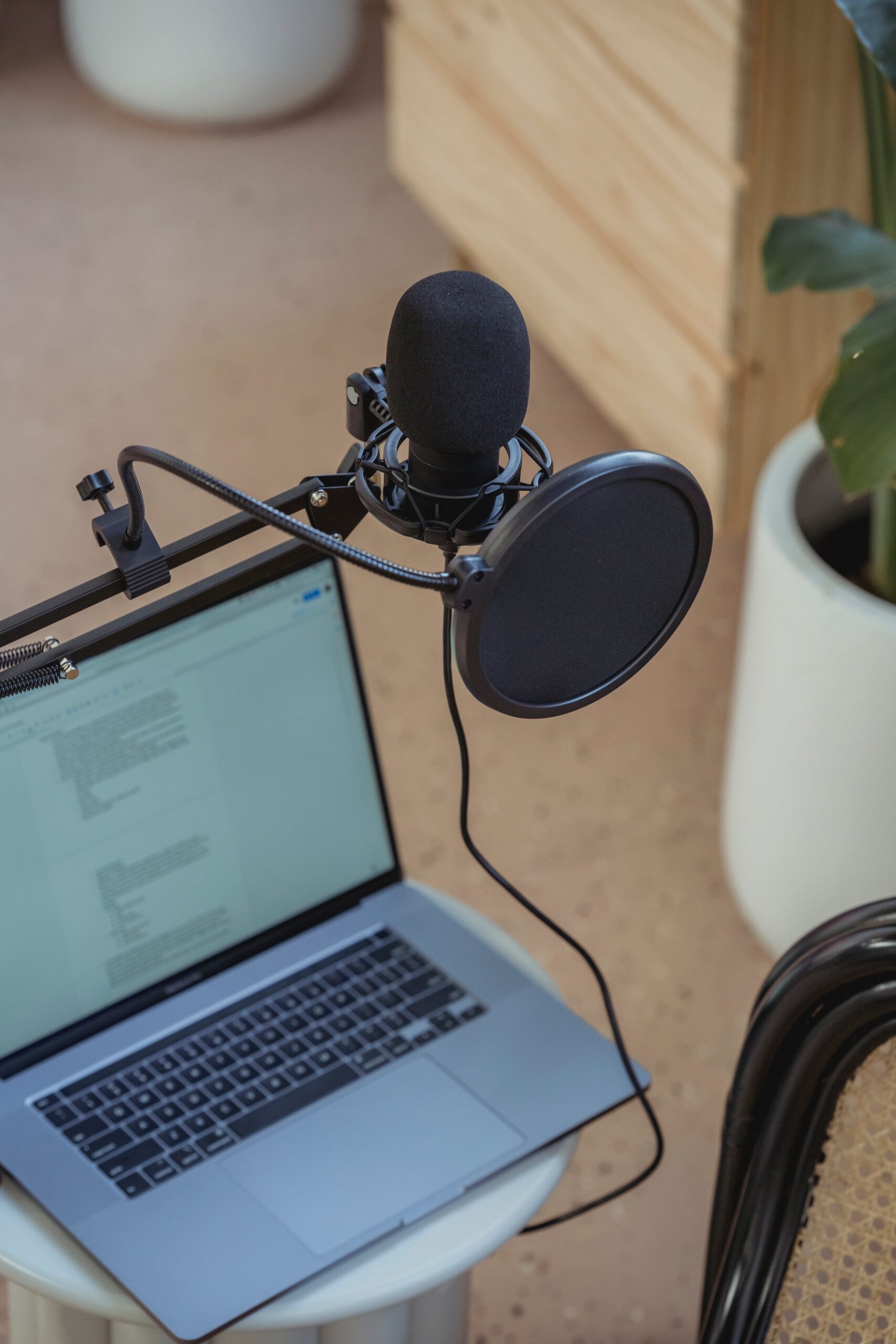

Creating your own Podcast Studio: A Step-by-Step Guide

Image courtesy Canada’s Podcast/unsplash royalty free

By Philip Bliss

Special to Financial Independence Hub

In the ever-expanding world of podcasting, creating a professional and efficient podcast studio is essential for producing high-quality content that captivates your audience.

Whether you’re a seasoned podcaster or just starting out, building a dedicated podcast studio can elevate your production value and enhance the overall podcasting experience.

In this guide, we’ll walk you through the essential tasks, equipment, and strategies to not only set up your podcast studio but also effectively promote your podcast.


Tasks

  1. Define Your Niche and Audience:
  • Identify your target audience and the niche you want to focus on.
  • Research competitors in your niche and understand what sets your podcast apart.
  1. Create a Content Plan:
  • Develop a content calendar outlining topics, guests, and episode release schedule.
  • Plan for regular, engaging content to keep your audience coming back.
  1. Design Your Studio Layout:
  • Choose a quiet and dedicated space for your podcast studio.
  • Consider acoustic treatment to minimize echo and external noise.
  1. Invest in Quality Recording and Editing Software:
  • Choose reliable recording software like Audacity, GarageBand, or Adobe Audition.
  • Invest time in learning the basics of audio editing for polished episodes.
Image courtesy Canada’s Podcast/unsplash royalty free

Equipment

  1. Microphone:
  • Invest in a high-quality microphone like the Shure SM7B or Blue Yeti.
  • Consider a pop filter and shock mount to enhance audio clarity.
  1. Headphones:
  • Choose closed-back headphones to prevent audio leakage during recording.
  • Opt for comfortable and studio-grade headphones like Audio-Technica ATH-M50x.
  1. Audio Interface:
  • Select a reliable audio interface such as Focusrite Scarlett 2i2 for clear audio signal processing.
  1. Mixing and Monitoring Equipment:
  • Include a mixer if you plan to have multiple hosts or guests.
  • Invest in studio monitors for accurate sound monitoring.
  1. Recording Accessories:
  • Use a sturdy microphone stand or boom arm for convenience.
  • Consider a portable vocal booth or isolation shield for noise reduction.

Promotion Strategies: Continue Reading…

Bitcoin & Cryptocurrencies: Still not an asset class to which investors need to pay attention

The Michael James on Money blog was skeptical about Bitcoin and Cryptocurrencies as long ago as 2018, as this post demonstrates. He hasn’t changed his opinion since then.

Deposit Photos

By Michael J. Wiener

Special to Financial Independence Hub

As noted above, Jon Chevreau asked if it was okay to republish this post that I wrote way back in 2018. As little has changed since then, here it is, without further changes or commentary.


The technology used to create Bitcoin comes from the field I used to work in professionally. I’ve followed Bitcoin from its obscure beginnings to its recent bubble-like rise. After fielding so many questions about cryptocurrencies, it’s about time I organized my thoughts about Bitcoin as an investment and as a currency.

To understand Bitcoin, you don’t have to understand the technology behind it. The big problem anyone can see with digital money is that after you spend it you still have a copy of it, so you can spend it again. Much of the effort in creating digital money centers on preventing this double-spending. Bitcoin does this with some clever cryptography and computer protocols called blockchain.

Another feature of Bitcoin is that more money gets created over time. Those who do enough calculation with their computers get more Bitcoins. This is called mining, and is intended to roughly mimic mining for gold.

Bitcoin as an investment

Before Bitcoin’s meteoric rise, the few people who’d heard of Bitcoin understood that it is a currency, and is intended to be used like money. Now most people have heard of Bitcoin, and they tend to think of it as an investment. Some in the financial world suggest that cryptocurrencies should be considered an asset class. This is nuts.

It makes no more sense to invest in Bitcoins than it does to invest in Somali shillings, Indian rupees, or British pounds. The typical person should think of these things as currencies, not investments. The fact that the Bitcoin exchange rate is so volatile should make us stay away, not dive in.

Bitcoin as a currency

The digital and cryptographic nature of Bitcoin sets it apart from more familiar currencies like dollars. But this doesn’t really capture the important difference. After all, most transfers of dollars are digital and use cryptography.

Bitcoin isn’t backed by any particular government. No such backing is necessary. The U.S. government backs U.S. dollars, and it can impose rules about how dollars are used. If a bank doesn’t play by the rules, the U.S. government could cut that bank out of the dollar system. There is no easy way for the U.S. government or any government to regulate Bitcoin.

One thing governments do with their currencies is demand that electronic transfers not be anonymous. A certain amount of anonymous transfer is possible with physical cash, but this is limited. For the most part, if governments want to trace large money flows, they can do so. Continue Reading…

Why Debt-to-Market-Cap matters more than Debt-to-Equity

Understanding the Importance of the Debt-to-Market-Cap Ratio in Stock Analysis

Image courtesy TSINetwork.ca

When evaluating stocks, it’s crucial to assess their resilience during economic downturns and their potential for future prosperity. While the commonly used debt/equity ratio offers insights into a company’s financial leverage, it fails to capture certain nuances. In this article, we explore the significance of the debt-to-market-cap ratio in stock analysis and why it surpasses the debt/equity ratio.

By understanding the intricacies of this approach, investors can make more informed decisions and increase their chances of identifying companies poised for long-term success.

I was recently asked why I use debt-to-market-cap in my analyses, which is different from the debt/equity ratio seen in most other reports. My answer is two-fold. In analyzing a stock, you need to form an idea of how much it would get hurt in a recession. To put it another way, how likely it is to survive a business slump and go on to prosper when good times return? To do that, you need to look at a number of factors. These include the interest rate on its debt, how sensitive it is to the economic cycle, its pluses and minuses in relation to competitors, its vulnerability to adverse legal and regulatory decisions, its credit history and current credit rating … and so on.

Analyzing Debt-to-Equity Ratio

Many successful investors start by looking at the debt/equity ratio. This ratio comes in several variations, but the basic idea is that you measure a company’s financial leverage by comparing its debt with its shareholders’ equity. You assume an attractive company can earn a higher return on its total capital than the interest rate it pays on the debt portion of its capital. If so, the excess goes to shareholders’ equity, raising the total return to shareholders.

But leverage works both ways. If the total return falls short of the interest costs, the difference comes out of shareholders’ equity. When a company loses money, it still has to pay the interest and one day settle the debt. Generally, it does so by dipping into shareholders’ equity. In extreme cases, losses wipe out shareholders’ equity, and the stock becomes worthless. Then bondholders and lenders take over the assets to try to get back their investment. A high ratio of debt to equity increases the risk that the company (that is, the shareholders’ equity in the company) won’t survive a business slump.

However, this ratio can mislead because it compares a hard number with a soft one. Debt is usually a hard number. Bonds and other loans generally come with fixed interest rates, fixed terms of repayment and so on. Equity numbers are softer or ‘‘fuzzier.’’ They mostly reflect asset values as they appear on the balance sheet (minus debt, of course). But the balance-sheet figures may be misleading. They may be too high, if the company’s assets have shrunk in value since the company acquired them (that is, lost more value than the company’s accounting shows). In that case, the company may need to correct its balance sheet figures by cutting them or “taking a writedown.”

Or the equity value may be too low if the company’s assets have gained value since the company acquired them. This can happen with real estate, patents and other assets (which we refer to as “hidden assets”).Much of a company’s real value may rest in its “goodwill” — its brands, or the reputation and relationship it has built with customers over the years. This value would only appear on the balance sheet if it was bought rather than built up by the company’s operations.

Analyzing Debt-to-Market-Cap

Efficient market theory also leads us to favour debt-to-market-cap over debt-to-equity. This theory says that it’s impossible to beat the market, because the market is efficient and eventually reflects all information, good or bad. This idea had a lot to do with the creation of index funds. Market cap — the value of all shares the company has outstanding — benefits from the “wisdom of crowds.” Continue Reading…

How Side Hustles can speed Financial Independence for Family Planning

Image by Andrea Piacquadio on Pexels.com

Seeking financial independence, we gathered insights from entrepreneurs and small business owners on their side hustles and how these ventures have shaped their financial journeys.

From joining affiliate programs for extra income to diversifying income with e-books, discover the diverse strategies these twelve professionals have employed to bolster their family’s finances.


  • Join Affiliate Programs for Extra Income
  • Balance Side Gigs with Full-Time Work
  • Invest in Real Estate for Early Retirement
  • Create Digital Financial Courses
  • Focus on One Project at a Time
  • Turn Your Passion into a Full-Time Job
  • Develop Skills Through Polling Side Hustle
  • Boost Income with Short-Term Rentals
  • Leverage Social Media, Newsletters, and Podcasts
  • Supplement Income with Title Searches
  • Diversify Income with E-Books 

Join Affiliate Programs for Extra Income

I was enrolled in an affiliate marketing program for an AI-based question-generation platform, PrepAI. Since I blog about tools for educating children, I found their product resonated with my goals. I chose to apply for their program and earned some handsome payouts. I tracked my commissions through their dashboard and was confident about it. 

These commissions were my savior; they funded the course I was taking and helped save some bucks for my family. If financial independence is what you are craving, join an affiliate program like I did and help your family. –– Tejeswini N, Digital Marketing Intern, DataToBiz

Balance Side Gigs with Full-Time Work

When I first graduated, I struggled to find a full-time job. With a BA in visual arts, my options seemed limited to being a struggling artist, working as regular staff at local art galleries, or trying to get into art auctions, which didn’t align with my passion. Fortunately, I had been dancing since the end of high school, and I had developed my skills enough to pick up side gigs, including teaching dance, choreographing, and working as a professional backup dancer for different shows. 

By applying for any dance-related opportunities that came my way, I started earning around HKD 30,000 per month, which was triple what I would have earned as a regular office worker. During this time, my father was bedridden, and without this side hustle, I wouldn’t have been able to support myself or later save up enough money to also take care of my widowed mother. 

However, relying solely on side hustles wouldn’t have helped me achieve financial stability. I found a balance by having a mixture of both a full-time job that paid less but offered a better future career path, and investing in side gigs that provided extra income and served as backup plans if I ever found myself without a 9-to-5 job. 

This approach did take a toll on my work-life balance, but after seven years, my full-time job paved the way for me to gain enough experience and secure a much better salary. With that, I had the option to let go of my side gigs and eventually leverage my diverse experiences to start my own business, where I now work for myself. — Joyce Tsang, Content Marketer and Founder, Joyce Tsang Content Marketing

Invest in Real Estate for Early Retirement

I’m a pharmacist by profession, but I started investing in real estate as a side hustle in 2016. Specifically, I invest in student housing, which means I buy properties in college towns and convert as many rooms as possible into bedrooms to maximize my income. 

Using this strategy, I’ve been reinvesting my returns and buying an additional rental property every year. And now, I’ve been able to retire in my early thirties thanks to real estate. It’s given me complete financial independence, and that’s why I started a real estate coaching business to help others do the same. — Ryan Chaw, Founder and Real Estate Investor, Newbie Real Estate Investing

Create Digital Financial Courses

I delved into creating digital financial courses, leveraging my expertise. This side gig significantly bolstered our family’s income, accelerating our path to financial freedom. Crafting courses allowed for flexible hours and reached a broad audience, bringing in a steady stream of passive income. 

This venture not only diversified our earnings but also empowered others to enhance their financial literacy. The impact was profound, creating both financial stability and a sense of fulfillment in aiding others on their financial journeys. — Danielle Roberts, Co Founder, Boomer Benefits

Focus on One Project at a Time

Over the past couple of years, I have tried over 10 different side hustles and online business models. The biggest takeaway? Avoid that shiny-object syndrome and don’t spread yourself too thin. I was juggling so much that I hardly had any time left for my family or a social life. It felt like I was constantly running on a treadmill—always working, but not really getting anywhere.

The real kicker was, despite all the hustle, I felt like I wasn’t doing enough. It was a fast track to burnout, and at the end of the day, I didn’t have much to show for it. At some point, I had to put a stop to it and put most of my side projects on hold to stay sane.

Now, I focus on one thing at a time. And let me tell you, it’s amazing how much you can achieve when you pour 100% of your attention and energy into a single project. In the last several months, this approach has made more difference in my family’s financial success than everything I did in the previous three years. —Juliet Dreamhunter, Founder, Juliety. 

Turn your Passion into a Full-Time Job

After graduating from college, I started working as a fitness writer and made people aware of yoga through my writing. Blogging was something that I really loved from the beginning, and it turned into my side hustle. 

As for my journey, Yogi Times is proof of how my interest turned into a full-time job and made me an entrepreneur. If it weren’t for that blogging, I wouldn’t have realized how much this field makes me happy. Through Yogi Times, I get to teach others about yoga, publish my own work, and create a positive community for fitness enthusiasts. No matter what age they are, this community is for everyone. — Jean Christophe Gabler, Founder, Yogi Times

Develop Skills through Polling Side Hustle

My first steps toward financial independence began with a career as a pollster, conducting online, telephone, and in-person surveys. Besides financial support, this side hustle has been instrumental in developing my professional path, which has oscillated around HR, public relations, communication, and content creation.  Continue Reading…