

 Posted By
The following is a question-and-answer session conducted via email with advisor John De Goey following his recent talk at the MoneyShow in Toronto, which we reported here. Some of the questions and answers also appeared in my recent MoneySense Retired Money column here.
Jon Chevreau, Findependence Hub: How defensive do you think low-volatility ETFs (i.e., BMO’s, iShares, Harvest) are?
John De Goey: Let’s say the market pulls back by 25%. If you can handle that, then you don’t need a low-volatility ETF. In short, low-volatility products are more defensive than market (cap)-weighted products, but it all depends on how investors react and behave when things go south.
Chevreau Q2.) Most of those are overweight utilities, consumer staples and healthcare stocks. Do you advocate that investors do this themselves with sector ETFs?
De Goey – I generally don’t recommend buying utilities as a stand-alone product/strategy. That said, if you already own cap-weighted products and want to be more conservative, it would likely be more tax effective to simply add utilities rather than sell cap-weighted products in order to buy low-vol products. Same net result, but less tax on the way.

Chevreau Q3.) If U.S. stocks are so richly priced, do you advocate owning a Value U.S. ETF to compensate, or simply sell down some U.S. or and add more International/Canada? Or other factor funds?
De Goey – I recommend getting out of the U.S. entirely. If you cannot do that then, at the very least, I’m worried that there’s an AI bubble much like what we saw with .com a quarter-century ago.
Chevreau Q4.) What range of asset allocation do you recommend for retirees, especially those who are middle-of-the-road and risk-averse?
De Goey: I think all portfolios should have alternatives. Pension plans like CPP, OMERS and HOOP all have over 33% in alternatives. But for MOR retail investors, I’d opt for something like 20% alternatives, 30% income, and 50% equity.
Chevreau Q5.) Can investors and especially retirees rely on global Asset Allocation ETFs to keep them out of too many over-valued U.S. stocks?
De Goey: I wouldn’t use the word ‘rely.’ Such products will soften the blow, but right now the U.S. represents almost 2/3 of global stock market capitalization. So, if all your stocks were in a single global ETF or mutual fund with a cap-weighted mandate, you’d have massive exposure to a massively over-valued market.
Chevreau Q6.) What about annuitizing a portion of an RRSP/RRIF?
De Goey: Maybe. But rather than using annuities, I’d go for the Purpose Longevity Fund which offers pension-style diversification and aims to replicate annuity payments for the remainder of the unit holder’s life.
Chevreau Q7.) What’s your view of the legality of Trump’s Tariffs and recent legal cases that threaten to reverse them? Or is the damage done either way?
De Goey: There’s no doubt in my mind that all the courts have been right in their interpretation that Trump is acting beyond the purview of his office. Unfortunately, when Trump loses a ruling he simply appeals to a higher court and has done so repeatedly. The final determination will be made by the Supreme Court, and he has appointed a number of people to that court, many who may owe their appointment to ruling in his favour. There’s no firm evidence of that, of course, but you’d be naive not to think it was a factor. But yes, irrevocable damage has been done.
Chevreau Q8.) What’s your view of using TACO (Trump Always Chickens Out) to predict Trump’s next move?
De Goey: I prefer to use the acronym TUDIE – Trump Usually Does It Eventually. He’s made an entire political career out of being unpredictable and chaotic. I don’t believe he will chicken out, but that he will continue to be predictably unpredictable.
Chevreau Q9.) Citing an ad that appeared in The Globe and Mail, you suggest that the media is bullish, along with advisors. Do you see more objective sources of financial info out there for investors? Reddit, for example?
De Goey: I do not. That’s part of the insidiousness of the problem. The call is coming from within the house. Once an entire population has been socialized into thinking it is reasonable to be bullish, there is a risk that everyone has let their guard down. I challenge the phrase “optimism is the only realism.” To me, steely-eyed realism is the only way forward. In an environment of Trump manufacturing bullshift (i.e., firing anyone in charge of public information who doesn’t actively spread disinformation), we quickly move to a world where those who are not excruciatingly vigilant can be seduced by a false narrative precisely because they want to feel good and be seduced.
Chevreau Q10.) In lieu of Trump measures and possible inflation or stagflation, what protection do you see in gold and precious-metals funds, both bullion and miners?
De Goey: In the current environment you should absolutely have exposure to this. My current clients have about 10% exposure to gold and 8% exposure to resources. In fact, my resource product – the ETF with ticker MORE from MacKenzie – is up over 33% this year, the first year of its existence. Gold, in particular, is a hedge against inflation, against real and perceived uncertainty, and against the U.S. dollar sliding as a global reserve currency.
Chevreau Q11.) Assuming that Trump rips up the current Canada-US trade agreement in the next year, how dangerous might Canadian equities be for the investor?
De Goey– I think the whole world will be negatively impacted when the full weight of the tariffs becomes apparent. CUSMA can be abrogated with six months notice, and any renegotiated pact will be a huge threat to Canada in terms of both our political and economic sovereignty. This is an existential threat and I can’t overstate that enough.
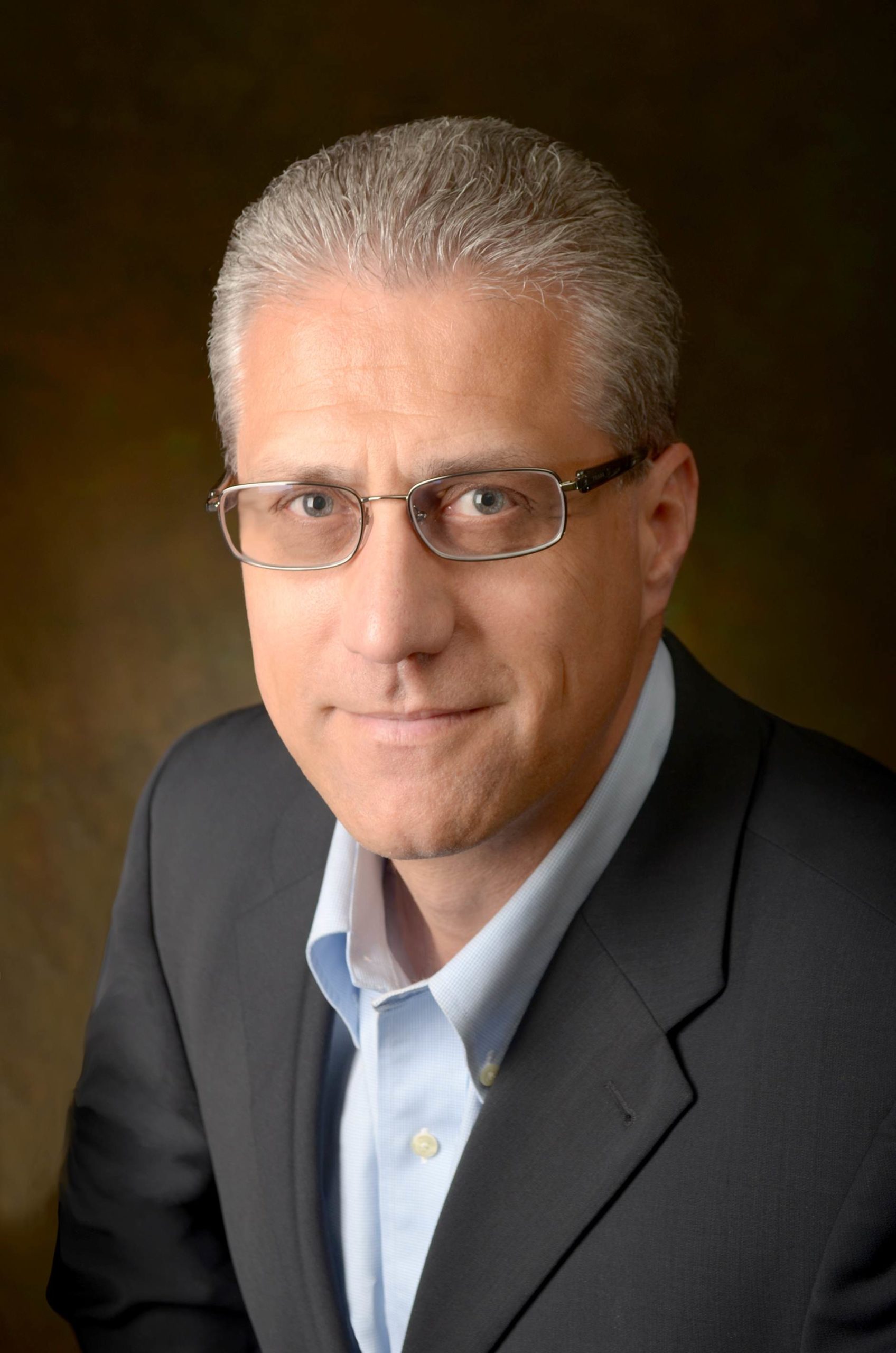 John De Goey, CIM, CFP, FP Canada™ Fellow, is a Portfolio Manager with Toronto-based Designed Wealth Management. He is the author of three books on the financial industry: The Professional Financial Advisor, Standup to the Financial Services Industry and most recently, Bullshift. You can find John’s personal website here.
