Tag Archives: investing

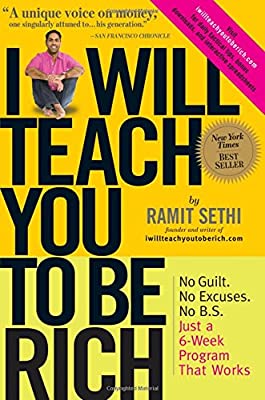
I Will Teach You to be Rich (Review)

Amazon.ca

By Michael J. Wiener

Special to Financial Independence Hub


There aren’t many financial gurus willing to call out financial companies by name for their bad behaviour, but Ramit Sethi is one of them.  In his book I Will Teach You to be Rich, he promises “a 6-week program that works,” and he includes advice on which banks to use and which to avoid.

The book is aimed at American Millennials; Canadians will learn useful lessons as well, but much of the specific advice would have to be translated to Canadian laws, banking system, and account types.  The book’s style is irreverent, which helps to keep the pages turning.

It may seem impossible to fix a person’s finances in only 6 weeks, but this is how long Sethi says it will take to lay the groundwork for a solid plan and automate it with the right bank accounts and periodic transfers.  The execution of the plan (e.g., eliminating debt or building savings) will take much longer.

Sethi is rare in the financial world because he will say what he really thinks about banks.  “I hate Wells Fargo and Bank of America.”  “These banks are pieces of shit.  They rip you off, charge near-extortionate fees, and use deceptive practices to beat down the average consumer.  Nobody will speak up against them because everyone in the financial world wants to strike a deal with them.  I have zero interest in deals with these banks.”  For the banks he does recommend, “I make no money from these recommendations.  I just want you to avoid getting ripped off.”

People have many reasons why they can’t save and are in debt, but Sethi sees them as just excuses in most cases.  “I don’t have a lot of sympathy for people who complain about their situation in life but do nothing about it.”  “Cynics don’t want results; they want an excuse to not take action.”  He urges readers to “put the excuses aside” and get on with the business of making positive changes.

The Program

The first step in the program is to “Optimize Your Credit Cards.”  I found it interesting that Sethi focused on credit card perks before he covered eliminating credit card debt.  He wants readers to “play offense by using credit cards responsibly and getting as many benefits out of them as possible” instead of “playing defense and avoiding credit cards altogether.”  This approach sets him apart from many other experts on getting out of debt.  While he does teach methods of eliminating debt, his focus is more on building wealth steadily.

The second step is to open “high-interest, low-hassle accounts.”  Interestingly, he wants readers to open a chequing account at one bank and a savings account at another bank.  Among his reasons are that the psychology of a separation between accounts makes us less likely to raid savings.  Some might think opening a savings account is pointless if they have no money to deposit, but Sethi insists that you need to lay the groundwork now for a better future, even if you’ve only got $50 to deposit.

The third step is opening investment accounts.  The author favours very simple investments, such as a Vanguard mutual fund account invested in a target date fund.  “Don’t get fooled by smooth-talking salespeople: You can easily manage your investment account by yourself.”  Unfortunately, Vanguard mutual funds are only available to Americans.  Canadians can find one-fund solutions with certain Exchange-Traded Funds (ETFs).

To create the cash flow to reduce debt and invest, the fourth step is about “conscious spending,” which is “cutting costs mercilessly on the things you don’t love, but spending extravagantly on the things you do.”  Achieving this involves tracking spending in different categories, but not traditional budgeting. Continue Reading…

Timeless Financial Tips #6: Aligning your Investments with your Time Horizon

Lowrie Financial: Canva Custom Creation

By Steve Lowrie, CFA 

Special to Financial Independence Hub

I’ve spent my entire career railing against the dangers of market-timing — i.e., dodging in and out of markets based on current conditions. But there is a time when “timing” of a different sort matters. I’m talking about your investment time horizons.

Today, let’s look at how to use your personal time horizons to successfully separate today’s spending from tomorrow’s future wealth.

Spending and Investing over Time

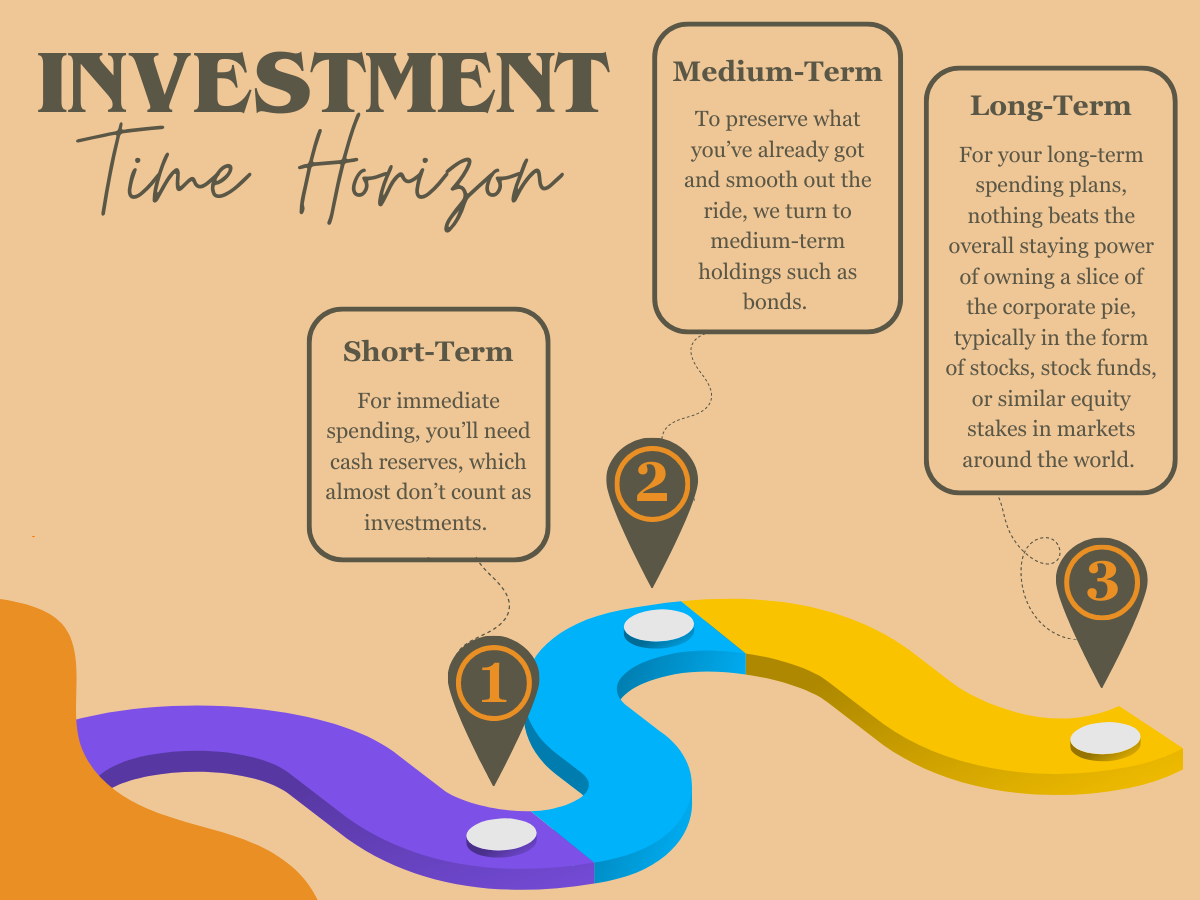
One of the reasons we advocate for holding a diversified investment portfolio is because your investment horizons are diverse as well:

  1. For immediate spending, you’ll need cash reserves, which almost don’t count as investments.
  2. To preserve what you’ve already got and smooth out the ride, we turn to medium-term holdings such as bonds.
  3. For your long-term spending plans, nothing beats the overall staying power of owning a slice of the corporate pie, typically in the form of stocks, stock funds, or similar equity stakes in markets around the world.

On that last point, global equity markets are relatively dependable in one sense: by delivering on the success of collective human enterprise, they’ve delivered strong, inflation-busting returns in the long run. But these same markets are also quite chaotic in the near-term, with big, unpredictable price swings along the way. This means not all your dollars belong in this arena to begin with: only the ones you’re prepared to invest in for a good, long while. In other words:

Your cash reserves are for spending sooner than later. Your long-term investments are there for your future self, rather than as an ATM-like source for immediate spending.

Market-Timing vs. Financial Planning

How do you determine how long is “long-term” for your investments? Unfortunately, many investors use market-timing instead of personalized financial planning to decide when it’s time to move their money in and out of various positions. They pile into the action when markets surge and flee as they plummet. This is a timeless timing tragedy that foils the ability to preserve, if not grow, wealth over time.

Instead, use your own goals and investment timeframes to decide how much of your wealth to invest in pursuit of higher expected returns, as well as how much to shelter against the uncertainty.

  • For upcoming spending needs, your money may be best kept in cash or similar humdrum holdings. That way, it’s there when you need it. The catch is, cash and cash-like reserves aren’t expected to keep pace with inflation over time, which means your spending power gradually shrinks. So …
  • For spending that’s still years away, you’ll want to own positions that are expected to generate new wealth, rather than just maintain a status quo. That’s where the wonder of global enterprise comes in — aka, stocks. The catch here is, you must commit to keeping your future money patiently invested and ride out the downturns along the way.

Estimating your Time Horizon

Even if you’re committed to financial planning, it’s surprisingly common to underestimate how much time you’ve actually got to invest. For a couple retiring at age 65, there is a 50% chance one of you will live past age 90, which means your retirement timeline could be 25–30 years, or more. Extend it even further if you’d also like to leave a substantial financial legacy. Continue Reading…

How to Invest your way to Findependence


By Devin Partida

Special to Financial Independence Hub

Today’s economic and job-growth landscape might have you turning to investing as a prominent option.

It takes patience and effort, but anyone can save up enough through intelligent investments.

How do you begin the Investment Process?

As of 2023, the average American makes around US$57,000 annually, which is lower for minority groups. Even if you’re careful with your spending, becoming financially independent with that salary can take a long time.

The average person from the United States only has about $5,000 in savings. Before beginning the process, you must consider how much money you can invest. The ultimate goal is financial independence [aka “Findependence” on this site], but getting there can take a while. Only put in what you’re willing to lose because things might not pan out as expected.

The formula for Findependence takes your yearly spending and divides it by your safe withdrawal rate to calculate your goal savings figure. Then, it subtracts the amount you’ve already saved and divides that amount by how much you can save each year. It’s only an estimation, but it can help you know how much your investments need to make.

What Investments should you Consider?

There are plenty of investment types. The stable ones often have lower returns and you usually need to take some risk to see a high reward quickly.

1.) Real Estate Investment Trust

A real estate investment trust (REIT) receives money from investors to purchase and manage property. Most generate revenue through rental income and pay dividends in return for the initial payment you made. It’s similar to owning by yourself, but you pool funds for the purchase and let someone else take care of the tenants. There are also other REIT types, so you have more options than rental properties.

2.) Stocks

The stock market usually requires more attention to detail because you must keep up with it. Anything from an upcoming brand deal to an overseas political event can affect this investment type. You should frequently check the stocks you hold and the businesses they belong to so you can quickly respond to changes.

The Canadian stock market differs from the United States version. Firstly, you need a brokerage account. Most brokerages charge about $5 to $10 per trade, with average commission fees of $6.95. It might seem minor, but paying to invest or shift your stocks around puts you at a loss before you begin. The flat rate cut you must pay can also make investing smaller amounts challenging because it takes a higher percentage the less you put in. Continue Reading…

A Self-Checkup on your Financial Health to help your Mental Wellbeing

Image courtesy FPCanada


By Sahar Abdul Zahir, BlueShore Financial

Special to Financial Independence Hub

Many people view money as simply numbers that get you from point A to point B, and may not make a connection between how finances can also impact mental and physical health. However, FP Canada’s 2022 Financial Stress Index survey found that 38% of Canadians believe finances are their biggest source of stress, ahead of both health and relationship issues. More alarmingly, FP Canada’s study also found that 43% of respondents had lost sleep over financial anxiety.

There are a variety of reasons why many of us do not seek professional advice for our financial problems, ranging from not thinking we need the help, to being embarrassed, or not knowing where to go. Regardless of the reason, there is a clear link between finances, anxiety, stress, and mental health, and avoidance of the problem is not the answer. The good news is, there are many steps you can take today to help get yourself back on track.

Understand your relationship with money

Many people still believe that talking about money is taboo, or feel embarrassed to discuss financial troubles, even with a professional. Financial literacy should begin at an early age and continue as a lifelong learning process. Having an open dialogue around finances and money management as a family can be a good thing as your experience with money, or lack thereof, in your childhood can impact your attitude and emotions towards money later in life. Make note of impulse buying behaviour and what may trigger it: perhaps a hard day at work, or an argument with your partner. Understanding these spending patterns will allow you to find better ways to manage these stresses and adjust accordingly.

Financial health checkups

Just like doing a regular physical health checkup, having periodic financial wellness checkups is important for detecting any areas that you should focus on. This can be done by completing a thorough audit of finances, budgets, and plans with an advisor. An annual checkup can help you better prepare for the future and minimize the impact of any surprise events. Also utilizing online advice tools such as BlueShore’s Financial Wellness Checkup tool can help get you started, by providing an assessment of how you are doing, and advice on where you need to improve along your path to financial wellness.

Small cuts for long-term impact

We have all heard the latte-a-day and avocado toast analogy. While these items can seem like small expenses that are not likely to make a big impact on our overall financial health, they are really representative of our spending habits. Cutting out your morning coffee is not going to make you wealthy, but you may have some ongoing small expenditures that quickly add up and could affect your long-term financial goals. Continue Reading…

Timeless Financial Tips #2: Rising above the Noisy News

Lowrie Financial: Canva Custom Creation

By Steve Lowrie, CFA

Special to Financial Independence Hub

In investing and life, information overload, aka “noisy news,” has long been a thing. In fact, before the Internet came along, I used to publish a hardcopy newsletter called “Rising Above the Noise.” Because even then, investors seemed awash in TMI (too much information).

If media noise was a problem back then, imagine the implications today. Which brings me to today’s Play It Again, Steve – Timeless Financial Tip #2.

To be a successful investor, it’s as important as ever to dial down all the noisy news you invite into your head.

News versus Noise

These days, we’re all familiar with the term “clickbait.” Long before that term came along, the popular press already knew it could profit similarly by embracing an “if it bleeds, it leads” approach to delivering the news. The more eyeballs or clicks scored, the higher the potential advertising revenue.

Driven by profit motivations, popular newsfeeds have long been incented to showcase that which will elevate your excitement. They care more about whether you look, than what you’re seeing. This means our duty as informed consumers remains the same:

Consider the true incentives for any given news source.

Are they aligned with yours? If not, it’s best treated as noise rather than news.

Noise versus Knowledge

We’re not advocating that you stop learning. Rather, a successful, long-term investor’s goal is to tune out the pointless distractions, so we can tune into more thoughtful action. What’s the difference?

The noise we’re exposed to from never-ending newsfeeds is …

  • Demanding: New news arrives at a breakneck pace and insane volume that never lets up. Don’t you dare blink.
  • Distracting: The constant stream delivers endless lures to STOP whatever you’re doing and tune right in, lest you miss right out. (There’s a reason the popular media’s favorite crawler is: “BREAKING NEWS.”)
  • Fleeting: News is inherently new. By the time you hear it, something else has probably already happened to change it. Over and over again, forever.
  • Inaccurate: Given the speed of the spin, rumors and half-baked hunches are more frequent than facts. All the conjecture feeds on our fears and preys on our emotions.
  • Incoherent: Even when information is correct, it comes in so fast and furious, we can’t possibly make sense of it all in real time.

Where noise is loud, wisdom is quiet …

Acquiring knowledge calls for the opposite of all this commotion. Knowledge takes reflection. It takes selectivity. Perhaps most of all, it takes time:

  1. Time to translate the reams of random information into meaningful insights.
  2. Time to separate fact from fiction.
  3. Time to distinguish reputable sources from biased blather.

What’s the Problem with Noisy News?

In his post “Why You Should Stop Reading the News,” Knowledge Project podcast host Shane Parrish explains why news-based noise can be so damaging to an investor’s well-being:

“Our obsession with being informed makes it hard to think long-term. We spend hours consuming news because we want to be informed. The problem is, the news doesn’t make us informed – quite the opposite. The more news we consume, the more misinformed we become.”

Put another way, the more noise you encounter, the harder it becomes to make good investment decisions. Good investment decisions are the kinds guided by your own goals rather than market noise. They’re the kind you can more readily trust, because they’re grounded in solid evidence and feel built to last. They help you stay focused and on track. Continue Reading…