

 Posted By
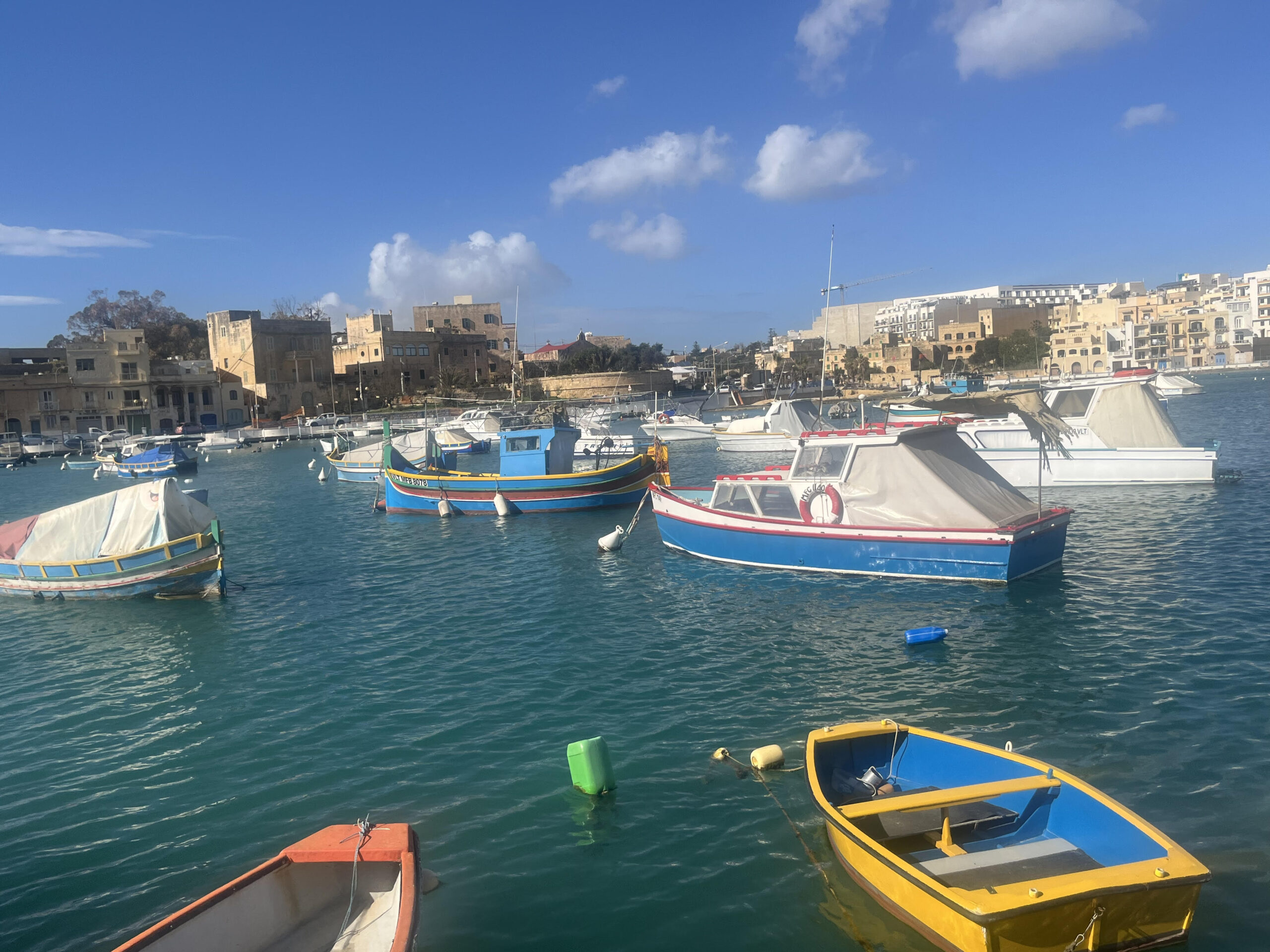
 Back in March, soon after our family took a winter break in Malta and Italy, regular Findependence Hub contributor Devin Partida penned the following intriguing blog: Can you pursue Financial Independence without giving up Travel?
That blog inspired me to reach out to multiple financial experts and business owners, with the assistance of Linked In and Featured.com, which has been supplying this site with quality content for several years.
Here’s how we posed the question:
Can you pursue Financial Independence (or Retirement or Semi-Retirement) without giving up Travel? See this blog for one opinion on this topic:
This particular topic attracted 84 comments by the April 20th deadline: this blog presents 25 or so that I selected. It’s long so I’ve summarized the main points with subheadings.
Note also that my latest MoneySense Retired Money column summarizes some of the main points, more succinctly as there is limited space for that column (about 1300 words, compared to the nearly 6,000 words that appear in the particular blog you are now reading).
To ease the reading burden, I’ve added subheads, some of which include:
Geoarbitrage: Live where cost of Living is lower
Renting RVs for Extended Travel Stretches
Make Travel a regular fixed expense you plan on incurring every month
Treat Travel as a budget category, not a luxury to eliminate
Embrace slow travel, house-sitting, points travel hacking and off-season destinations
Buy property in tourist spots to fund Travel
Majority of Professionals can now work remotely
The “goal isn’t to eliminate travel, but rather to make it more intentional.”
“Bleisure”: Let your career fund your transit
 As President of Safe Harbors Travel Group, I’ve spent decades helping organizations use strategic logistics and “Bleisure” to explore the world without draining the bottom line. You can reach Financial Independence by letting your career fund your transit; we often help clients integrate vacation days into business trips to eliminate personal airfare and lodging costs.
A key strategy for the budget-conscious traveler is utilizing “humanitarian airfares,” a specialized airline product Safe Harbors provides that offers significant savings for anyone doing charitable, religious, or mission-based work. These fares are a powerful hack for those pursuing a purpose-driven life while keeping their personal travel expenses at a minimum.
By leveraging our elite tech partnerships for data-driven booking, you can ensure “duty of care” and response speed that prevents the costly emergencies often associated with unmanaged travel. This structured approach allows you to focus on wealth building while Safe Harbors handles the complexities of your global footprint. — Jay Ellenby, President, Safe Harbors
Build Travel into the system, not just a later Reward
 Yes: you can chase FI or semi-retirement and keep travelling if you build travel into the system instead of treating it like a reward you “earn later.” I’ve run logistics/transportation businesses for years and now my wife and I host 15 furnished units in Detroit/Chicago, so I’m used to designing operations that still run when I’m not physically there.
What made it work for us is shifting travel from “big expensive trips” to “repeatable, planned mobility.” We use our Detroit-focused blog as a planning engine: when we travel, we test neighborhoods, transit (Q-Line/SMART/MoGo), and local routines the same way a guest would: then we bake that learning back into listings and guest guides so travel time also improves the business.
The practical FI move is making your income less dependent on your daily presence. Guest reviews told us people wanted clearer walkthroughs, so we added walkthrough videos to each property page and saw a 15% increase in booking conversions: less back-and-forth, fewer preventable questions, more freedom to be away while keeping standards consistent.
If you want one tactic you can copy: record a 5-8 minute “first night in the unit” walkthrough (lockbox – thermostat – Wi-Fi – parking – trash) and reuse it forever. That single asset cuts support load while you’re on the road, and it’s the difference between “I can travel” and “travel breaks my cashflow.” — Sean Swain, Company Owner, Detroit Furnished Rentals LLC
Geoarbitrage: Live where cost of Living is lower
 Geoarbitrage allows you to live in an area with a lower cost of living for your family while allowing your investment portfolio to grow. The combination of using travel rewards on credit cards and traveling during less expensive times reduces your travel costs. This approach to finding money saving ways to see the world makes international exploration a viable way to maintain your lifestyle versus making it a luxury. — Zack Moorin, Founder, Zack Buys Houses
Geoarbitrage and the Second Act Advantage
 In The Second Act Advantage, I show how geoarbitrage lets anyone achieve financial independence without sacrificing travel: in fact, it makes travel the strategy. By earning in strong currencies while living and exploring more affordable parts of the world, everyone can enjoy a richer, more adventurous life while actually spending less. The book teaches readers how to design a life where freedom, fulfillment, and financial efficiency all work together. — Jay Samit, Bestselling Author, The Second Act Advantage
Transitioning from Vacationing to Geo-arbitrage

The Travel-First Strategy: Designing FI Without Sacrifice
A common misconception in the FIRE (Financial Independence, Retire Early) community is that travel is a luxury to be deferred until the finish line. However, in my experience advising lifestyle-focused entrepreneurs, pursuing financial independence without giving up travel isn’t just possible it’s often a more sustainable strategy for preventing burnout.
Shifting from Consumer to Global Resident
The key is transitioning from vacationing to Geo-arbitrage. Traditional travel involves paying retail prices for short-term stays, which can cripple a savings rate. A strategic traveler focusing on FI prioritizes medium-term stays in regions where the cost of living is lower than their home base. By spending months in hubs like Portugal, Mexico, or Southeast Asia, you can often live a high-quality lifestyle for 40% less than in major Western cities. In this model, travel actually accelerates your path to financial independence by lowering your monthly burn rate.
Leveraging Credit Strategy as an Asset Class
From a PR and financial positioning standpoint, we should treat travel rewards not as points, but as a shadow asset class. A sophisticated FI seeker uses strategic credit card optimization to ensure that their transportation and lodging line items remain near zero. When flights and hotels are covered by systemic spending, travel stops being a drain on investment capital and becomes a tool for lifestyle maintenance.
The Semi-Retirement Pivot
The all-or-nothing approach to retirement is becoming obsolete. We are seeing a rise in Coast FIRE, where individuals reach a baseline of savings and then transition into remote-first or consulting roles. This allows for perpetual travel while the core nest egg continues to compound undisturbed. By integrating travel into the pursuit of FI rather than viewing it as a reward for the end of it, you create a life you don’t feel the need to escape from. This ensures that when you finally reach full independence, you already possess the global literacy to enjoy it. — James Tech, SEO Marketer, TripFrog
58% of Millennials and GenZ prioritize Travel over Material Accumulation
 Financial Independence and travel are not mutually exclusive; in fact, they increasingly reinforce each other when approached strategically. A growing body of research highlights the rise of “geo-arbitrage,” where professionals leverage remote work or location flexibility to reduce living costs while continuing to explore new destinations.
According to a 2024 report by Deloitte, nearly 58% of Gen Z and millennials prioritize experiences like travel over material accumulation, reshaping traditional financial planning models. At the same time, the World Tourism Organization notes a steady increase in long-stay and work-from-anywhere travel patterns, indicating that travel is no longer viewed as a luxury pause but as an integrated lifestyle choice.
From a workforce perspective, continuous upskilling and digital proficiency — particularly in areas like project management, agile practices, and cybersecurity — enable professionals to maintain income streams while remaining location-independent.
Financial independence, therefore, is less about restriction and more about intentional design: aligning income strategies, skill development, and lifestyle priorities in a way that sustains both economic security and personal fulfillment. — Arvind Rongala, CEO, Invensis Learning
Renting RVs for Extended Travel Stretches
Absolutely yes: and I’ll tell you why from an angle most people overlook: your cost of living on the road can actually shrink dramatically while you’re building toward FI.
I run DFW RV Rentals, placing travel trailers for displaced families and insurance claims. What I see constantly is people discovering — often during the worst moments of their lives — that a well-equipped travel trailer is genuinely livable, comfortable, and cheap compared to a mortgage or apartment lease.
Here’s the FI angle nobody talks about: renting an RV for an extended travel stretch eliminates storage fees, maintenance headaches, depreciation, and insurance costs that crush RV owners. I’ve watched people romanticize ownership, buy a unit, and watch it become a financial anchor: whereas someone renting strategically keeps capital free and mobile.
If you’re pursuing FI and want travel woven in, think of RV rental as a variable living expense you control, not a lifestyle luxury. A few months on the road in a rented trailer can cost less than your fixed housing back home: and that gap is real money compounding toward independence. — Jonathan Dies, Owner, DFW RV Rentals
Maintenance-free Retirement communities
 As Executive Director of The Village at Mint Spring and Stuarts Draft Retirement Community for over 16 years, I’ve guided hundreds toward maintenance-free retirement living that supports financial goals without homeownership burdens.
Yes, financial independence or semi-retirement pairs perfectly with travel when you eliminate upkeep costs like repairs, lawn care, snow removal, and property taxes: freeing budget and time for trips.
Our residents use the shuttle for local outings while traveling afar, knowing onsite care partners like Visiting Angels handle needs back home.
Fall incentives like up to $3,500 moving allowance make the shift easier, letting you lock in FI sooner and explore without stress. — David Brenneman, Owner, The Village at Mint Spring
Adopt a “Cash Rules Everything” mindset
 As an advisor to business owners earning $400K+, I’ve found that financial independence is about aligning your strategy with your personal values rather than following generic industry models. I build plans for my clients that prioritize clarity and lifestyle flexibility, ensuring travel is a core component of the strategy rather than a sacrifice.
When the April 2025 market volatility caused equities to waver due to new tariffs, clients with high-liquidity strategies avoided the “dash for cash” and kept their travel plans intact. I focus on a “cash rules everything” mindset during periods of uncertainty to ensure market jitters don’t interrupt your personal milestones or global adventures.
I use the Altruist platform to give my clients a technology-driven, transparent view of their wealth from any location. This allows entrepreneurs to monitor their progress toward retirement and make confident decisions via mobile tools without being tethered to an office.
True financial guidance starts with understanding your long-term vision so your portfolio serves your life, not the other way around. By creating a practical action plan focused on stability and growth, you can pursue financial freedom while maintaining the lifestyle you have already worked to build. — Daniel Delaney, Owner, Seek & Find Financial
Make Travel a regular fixed expense you plan on incurring every month
 Many people misunderstand the idea of being financially independent as a way to have nothing but austerity during their time of independence; however, the reality is that it’s just about allocating your money in a conscious manner. Too often, people will make travel an ‘additional’ expense that must be eliminated in order to achieve their savings goals: this can lead to burn out and a living arrangement that does not continue.
The problem is that travel is often treated as an item that has been paid for with ‘loose change’ after all of the other ‘necessary’ expenses have been paid each month; therefore when budgeting, travel should be included as a regular fixed expense you plan on incurring every month.
To have travel as part of your work-life balance, you will need to establish your savings plan with this in mind. Business places do this as well; you do not build a business just by lowering your cost structure, you have to build a company based on what gives you the highest return on your investment for the long-term. The same should be true for any travel related goal that you desire to achieve. One of the pitfalls that many individuals fall into when comparing their way of saving to the ways that people in the ‘lifestyle’ mode of saving demonstrate is that they fail to establish their own pace and their definition of ‘enough.’
Finding that work-life balance about not simply doing the math correctly, but making certain to build a lifestyle in which you would prefer to ‘Get up and do it!’ every single day. — Abhishek Pareek, Founder & Director, Coders.dev
Treat Travel as a budget category, not a luxury to eliminate
 The premise that you have to choose between FI and travel is mostly a myth.
Travel doesn’t have to be expensive. Most people conflate “travel” with “expensive travel.” Business class flights, five-star hotels, and $40 cocktails at the pool bar are optional. A $500 round-trip flight and a $60 per night Airbnb in a country where your dollar goes three times as far, is still travel.
The real question is whether you’re optimizing your spending toward what actually matters to you. I’ve watched people drive $70,000 trucks and tell me they can’t afford to save more. Those same people have never left the country. The truck is the problem, not the FI goal.
The FIRE community can get this partly wrong too. Some of the most dogmatic FI people cut every possible expense in the name of reaching the number faster. But if travel is core to your life, gutting it for 15 years to retire three months sooner is a bad trade. You want FI so you can live well, not so you can deprive yourself until some arbitrary date.
What actually works is treating travel as a budget category, not a luxury to eliminate. Know what you spend on it. Optimize it without gutting it. And if you’re serious, look at geo-arbitrage. Spend a few months a year somewhere your dollar stretches. Your savings rate improves and you get more travel, not less.
FI and travel aren’t enemies. Bad budgeting is the enemy. — Josh Wahls, Founder, InsuranceByHeroes.com\
Unexamined lifestyle inflation is the enemy of Findependence, not Travel
 Travel is not the enemy of financial independence. Unexamined lifestyle inflation is.
The mistake people make is treating travel like a reckless luxury when, in reality, it’s often a values test. I think of it as “experience leakage”: people cut the spending that gives life meaning, then quietly keep the spending that gives them nothing but maintenance. Expensive cars, oversized housing, subscription creep, convenience spending, status purchases. Those habits do far more damage to long-term freedom than a well-planned trip ever will.
I’ve seen people make faster progress toward semi-retirement by traveling smarter, not by traveling less. They go off-season, stay longer instead of hopping constantly, use points well, and build travel into the plan instead of treating it like a financial failure. That matters because a sustainable path to independence usually beats an extreme one you eventually resent. The blog’s core point is right: travel and financial independence can coexist if the strategy is intentional.
The real question is not, “Can you afford to travel while pursuing freedom?” It’s, “Are you spending in a way that still feels worth your life?” — Omer Malik, CEO, ORM Systems
Embrace slow travel, house-sitting, points travel hacking and off-season destinations
 Absolutely: I get this all the time with MintWit readers who believe Financial Independence means being a monk. The trick is progressing from pricey, knee-jerk travel to planned-out travel that helps you achieve your FI goals.
What we tell people instead is to embrace slow travel, house-sitting, credit card points travel hacking and off-season destinations: not cutting out travel altogether. I’ve seen readers who keep healthy travel schedules and use it to grow their wealth, by approaching travel as an expense category they optimize rather than eliminate: the two-week European trip for points and airbnb over a week at an all inclusive in exchange for more experience per dollar-while staying on their FI timeline. — Scott Brown, Founder, MintWit
The real question is “Can I afford to build income streams that travel with me?”
 Absolutely you can, and the people who think you have to choose between Financial Independence and travel are operating on outdated math.
The real question isn’t “can I afford to travel?” It’s “can I afford to build income streams that travel with me?”
I’ll give you a concrete example. Before David and I started Magic Hour, I spent years helping my parents market their small businesses. They’re immigrants from China, settled in Pennsylvania, built everything from scratch. They never took real vacations because they believed the business couldn’t survive without them physically present. That mental model, where income requires your body in a specific location, is the thing that kills both travel and Financial Independence simultaneously.
What changed everything for me was realizing that AI and digital tools collapse the cost of producing value to near zero. I was making AI-generated videos as a side project, posting daily, and reaching over 200 million people. I wasn’t tied to a desk. I wasn’t tied to a city. The work traveled with me because the tools traveled with me. David and I now run a platform with millions of users as a two-person team from wherever we happen to be.
The old framework says: save aggressively, cut expenses, retire at some magic number, then travel. That’s backwards. The new framework says: build skills and income sources that don’t require geographic presence, then travel becomes a near-zero marginal cost on top of a life you’re already living. Prompt engineering, content creation, freelance AI work, these are skills anyone can pick up that generate real income from a laptop in Lisbon or a coffee shop in Chiang Mai.
The frugality-obsessed corner of the Financial Independence community treats travel as a luxury line item to eliminate. I think that’s a failure of imagination. Travel is an investment in pattern recognition, creativity, and mental health. Every founder I respect travels constantly, not because they’re rich, but because exposure to different environments makes them sharper.
The unlock isn’t choosing between saving and living. It’s building a life where your income isn’t chained to one place. Financial Independence without travel is just a well-funded cage. — Runbo Li, CEO, Magic Hour AI
Done right, Travel can actually cost less than staying home

Most people think Financial Independence and travel are in conflict. Caro and I have found the opposite: travel, done right, can actually cost less than staying home.
This year alone we have completed three house sits and have another three lined up. That adds up to 216 days of free accommodation across four European countries. At an average of 100 euros a night, house sitting has saved us over 21,000 euros this year alone. In countries like Australia, the US and across Europe, listings are so plentiful that you could realistically chain sits back to back, making food your only major daily expense.
When we are on the road between sits, driving thousands of kilometres across Europe in our VW T4, we spend around 1,200 euros a month, mostly on fuel. When we are stationary on a house sit, that drops to 300 to 400 euros a month on food. That is it.
We didn’t arrive here by accident. We saved from working, kept our set-up deliberately lean and built income streams we can run from anywhere: digital products, affiliate commissions, content. They are small right now but growing, and already enough to cover our costs. We eat local market food, use affordable SIM plans and drive a van that sips fuel. We live what feels like a rich life simply by reducing what that life costs.
My philosophy on all of this comes from a difficult moment. I ran out of money in Iceland during COVID. I could have given up, but instead I took work in travel accommodation, stayed consistent for three years and came out the other side with savings and a plan. Difficult situations are not roadblocks, they are lessons. That mindset is what eventually made this life possible.
Caro and I are now six months into full-time travel across Europe with at least another six months ahead of us. Financial independence does not have to mean waiting until retirement. It can mean building a life today that simply costs less than the one you left behind. — Konrad Warzecha, Housesittersguide.com
The secret to traveling without going broke is building a decoupled income stream
 Financial independence communities are obsessed with penny-pinching. They tell you to quit your job, move to a cheaper zip code, and sleep in hostels to stretch your portfolio. That isn’t independence. That is poverty with a passport. If your retirement plan relies on house-sitting for strangers just so you can afford a flight, your math is broken. You haven’t bought freedom. You’ve just traded a corporate boss for a spreadsheet.
The actual secret to traveling without going broke is building a decoupled income stream. You need a digital asset that prints cash while you sleep. When I built Insurance Panda, the goal wasn’t to eventually cash out and hoard index funds. The goal was to build automated lead pipelines and SEO moats that pay me regardless of my physical coordinates. If you want to travel comfortably, stop trying to shrink your travel budget. Shrink your operational hours instead.
And don’t fall for the completely “passive” income myth. Passive just means highly leveraged. You still have to monitor the machine. But you can do that from a hotel in Tokyo or a beach in Mexico. Force your business to run on tight software automation and third-party APIs. Then you can book the nice resort instead of a cheap Airbnb. Real financial independence should feel like a massive upgrade. Never a downgrade. — James Shaffer, Managing Director, Insurance Panda
It’s a myth that Travel is a Threat to Financial Independence
 The framing of travel as a threat to Financial Independence is mostly a myth built around the most expensive version of travel. Five-star hotels and premium flights are a choice, not a requirement. The actual variable is cost-of-living arbitrage, and once you understand that, the math changes completely. If your investments are generating dividend income or your business runs with any degree of location independence, the question stops being whether you can afford to travel and starts being where your money goes furthest.
The answer to that question varies significantly depending on passive income range and lifestyle expectations, but the options are broader than most people operating from a US or Western European cost baseline realize. Parts of Latin America and Southeast Asia offer a standard of living that would be genuinely difficult to replicate domestically at any income level, let alone on a lean financial independence budget. The people I know who have figured this out are not roughing it. They are living well on income that would feel modest in a high cost of living city and building wealth faster because their burn rate dropped without their quality of life following it.
The article is right that this is a design problem, not a sacrifice problem. The constraint is not travel, it is the assumption that your financial life has to be anchored to one expensive place. Build passive income, reduce fixed overhead, and the world becomes considerably more accessible than the conventional FIRE math suggests. –– Rex Freiberger, Editor-in-Chief, Kibble Facts
Buy property in tourist spots to fund Travel
 I work on luxury real estate in Bali and noticed something interesting. People buy property in tourist spots to fund their travel habits. I tried it myself and the rental income covered my flights and food while abroad. If you pick the right spot and hire good management, you don’t have to choose between seeing the world and saving money. You can actually do both. — Stanislav Sadovnikov, Founder, Magnum Estate
Have a Flexible Setup and the Right Tech
 Working in SaaS taught me that you really can travel while keeping a job. One guy on my team managed all his clients from different countries using just cloud apps. He kept getting paid while seeing the world. It comes down to having a flexible setup. If you sort out your finances and use the right tech, you can hit the road without killing your income. –– Richard Spanier, President & CEO, Performance One Data Solutions (Division of Ross Group Inc)
Majority of Professionals can now work remotely
 Financial Independence and travel are often framed as competing priorities, but that assumption no longer reflects how modern careers and income models function. The rise of remote work, portfolio careers, and location-independent income streams has fundamentally changed the equation.
According to a 2024 report by McKinsey & Company, nearly 58% of professionals now have the option to work remotely at least part-time, enabling income continuity without geographic constraints. In parallel, research from Statista shows that digital nomadism and flexible work adoption continue to grow year-over-year, particularly among knowledge workers.
From a financial perspective, the key shift lies in redefining “retirement” as a phased or flexible milestone rather than a hard stop. Travel no longer needs to be deferred; instead, it can be integrated into a lifestyle supported by intentional earning, disciplined saving, and strategic cost-of-living arbitrage. Many professionals are choosing to earn in stronger currencies while spending in more affordable regions, effectively accelerating savings while maintaining quality of life.
In the corporate training space, a clear trend has emerged: professionals are actively investing in skills that support income portability — such as digital marketing, cloud computing, and project management — rather than roles tied to physical locations. This shift signals a broader mindset change. Financial Independence is increasingly about building adaptable income systems, not just accumulating savings. Within that framework, travel becomes less of a trade-off and more of a design choice. — Arvind Rongala, CEO, Edstellar
Travel worry-free with Annuities
 With over 35 years licensing in insurance and financial services, I’ve helped Ohio retirees build “slow and steady” retirement income using annuities, protecting principal from market losses so they can travel worry-free.
Yes, you can chase financial independence or semi-retirement without ditching travel by rolling 401(k)s into fixed annuities for guaranteed lifetime payouts: no stock volatility, no outliving your money. Clients deposit funds tax-deferred, earning rates like the current 5-year guarantee at 5.5%, then annuitize for monthly bank deposits they can’t outlive.
One retiree I guided shifted his rollover into a fixed annuity, creating pension-like income that covered final expenses and trips to see grandkids. He travels seasonally now, stress-free, because his money’s safe and predictable.
Structure a portion of savings this way — principal protected, no fees on fixed options — and travel becomes part of retirement, not a risk. — Scott Lunsford, Owner, Lunsford Insurance
The “goal isn’t to eliminate travel, but rather to make it more intentional.”
 Most people equate Financial iIdependence with no vacations, no experiences, and no fun until a future date when they retire.
I think that mindset is just what causes people to burn out and walk away from the plan.
Travel isn’t the problem. Not planning for it is.
There is a difference between being reactive and being planned about travel. As I write in my book Freedom For Doctors: A Physician’s Guide to Financial and Personal Liberation, the calculated person builds the trip into the plan. The reactive person overspends on random trips and then feels guilty about it.
This goal isn’t to eliminate travel, but rather to make it more intentional. It could be traveling less but traveling better, redeeming points and miles, traveling during off-peak times, or starting a travel fund account that is automatically contributed to. If travel is important to you, it should be a line item in the monthly budget rather than being an expense you buy without thinking.
I also think physicians don’t appreciate the benefits to their quality of life and the burnout reduction that travel can provide. It’s a dangerous strategy to wait until your life is supposed to begin at 65. In your 20s and 30s, you may be in training, often have high student debt, and start investing later. It’s important to find balance between these.
The aim of Financial Independence is to build the life you want, not to escape from it. It’s about building a life you don’t need a vacation from every month. — Dr. Joseph Ryan Smolarz MD, MBA, Founder, The Medicine & Money Show
“The model of slow travel as a cost-of-living strategy alters the figures completely.”
 The majority of the population shapes it in the form of a cost issue when travelling. It is in fact a planning problem. Starting a home care organization enables you to learn quickly that sustainable business and personal financial sustainability is a shared logic. Full-price expenses model budgets that fail. The miscalculation not only leads to the abandonment of travel by most people in pursuit of financial independence. Full-rate trip planning during peak season increases perceived travel costs, on average, by 40-60 percent over and above anyone who deliberately incorporates geographic flexibility in their plan.
The model of slow travel as a cost-of-living strategy alters the figures completely. Three months in a lower cost-of-living nation costs between $2,500 and 4,000 per couple all inclusive. The same time in a mid-level city in the USA costs $6,000 or higher. These tradeoff calculations are already routinely made by families coping with aging parents, who are at home. The gap is discovered by the planners.
The remaining distance is bridged by part-time remote work. Travel expenses in most international destinations of $1,500 to 2,500 per month are borne by the retained advisory or consulting income without having any impact on the invested assets. The transferable skills of home care operators who shift to semi-retirement are prices that are in the precise range in remote consulting agreements. — Stephen Huber, President and Founder, Home Care Providers
“It all comes down to to creating ‘Mobile Cash Flow.’ “
 Absolutely! And it all comes down to creating “mobile cash flow.” Set yourself up so you have passive revenue streams that bring in let’s say $6,000 a month with zero attachment to location and keep your baseline expenditures to about $3,500 allowing yourself to move at will.
With travel becoming a flexible expense rather than a disruption to your life. You can travel heavy for 2 months in location A spending $2,000 total. Then take it easy the following month so you can rebalance. Your monthly income is more valuable than your net worth in this scenario. Location becomes irrelevant if you know you have an incoming deposit every 30 days.
Trust me there’s a different mindset once you get yourself setup this way. Rather than doing quick 7-day trips you find yourself stretching your stays to 45 days because you don’t want to stop traveling. And you won’t likely increase your yearly budget by more than 10% to 15%. There’s less decision fatigue when you know you’ve got accommodations food and transportation locked down for longer periods of time. You become accustomed to a new normal of consistency while hopping around, which creates a nice cycle with your confidence and bank account. — Jason Conway CCIM, SVP – Development & Investments, Becknell Industrial
Travel “can be a primary motivator for building a more resilient and flexible financial life.”
 I believe the pursuit of financial independence is often misunderstood as a life of extreme deprivation when it should actually be seen as a tool for intentional living. Travel does not have to be the enemy of a growing net worth; in fact, it can be a primary motivator for building a more resilient and flexible financial life. I have found that the conflict between saving and exploring only exists if we view travel through a traditional consumerist lens of luxury resorts and expensive short term convenience.
The key is to shift from being a tourist to being a mindful traveler. This means treating travel as a lifestyle choice that can be optimized just like any other household expense. By embracing slow travel, you can significantly reduce the largest costs associated with being on the move. Staying in one location for a month or more often unlocks substantial discounts on accommodations and allows you to live more like a local, which naturally lowers daily spending on food and entertainment.
I also see great value in decoupling work from a specific desk. Modern professional mobility allows many to earn a consistent income while moving through regions with a lower cost of living, effectively accelerating the path to independence through geographic arbitrage. Whether through remote consulting or managing digital assets, generating capital while traveling turns a perceived drain on resources into a sustainable cycle of growth. Ultimately, financial independence is about having the freedom to choose your environment, and there is no reason to wait for a distant retirement date to start exploring the world if you design your strategy with balance from the very beginning. — Sovic Chakrabarti, Director, Icy Tales
Separate Travel into 2 Categories
 This question hits close to home for me. Working at MacPherson’s Medical Supply, I’ve been working toward Financial Independence for several years, and travel has always been part of my life that I wasn’t willing to give up. The good news is that travel and Financial Independence aren’t mutually exclusive. It just requires being intentional about both.
The first thing I did was separate travel into two categories. There’s restorative travel, the trips that recharge me and create lasting memories, and there’s lifestyle creep travel, the vacations taken just because everyone else is or because a deal popped up on my feed. Once I cut the second category, my travel spending dropped by nearly half without feeling like I was sacrificing anything meaningful.
I also shifted my travel strategy to focus on fewer but longer trips rather than frequent short getaways. A two-week trip costs much less per day than four weekend trips. When I visit a place for longer, I can stay in vacation rentals with kitchens, cook some of my own meals, and avoid the premium pricing that comes with short-stay hotels and tourist restaurants.
From a savings perspective, I automated my retirement contributions and investment deposits first, then built my travel budget from what remained. This way, my Financial Independence timeline stays on track and travel comes from discretionary funds. I use a dedicated travel savings account and contribute to it monthly, treating it like a bill rather than an afterthought.
The article linked in the question makes a valid point about travel hacking and credit card rewards.
I’ve used points and miles to cover flights and hotel stays, which dramatically reduces out-of-pocket costs without changing the quality of the experience.
In the medical supply industry, I see patients who delayed their own financial planning and now face difficult choices in retirement. That motivates me to stay disciplined with savings while still enjoying the present. You don’t have to choose between financial freedom and seeing the world. You just have to plan for both deliberately. — Rina Gutierrez, Marketing Coordinator, MacPherson’s Medical Suppy
