

 Posted By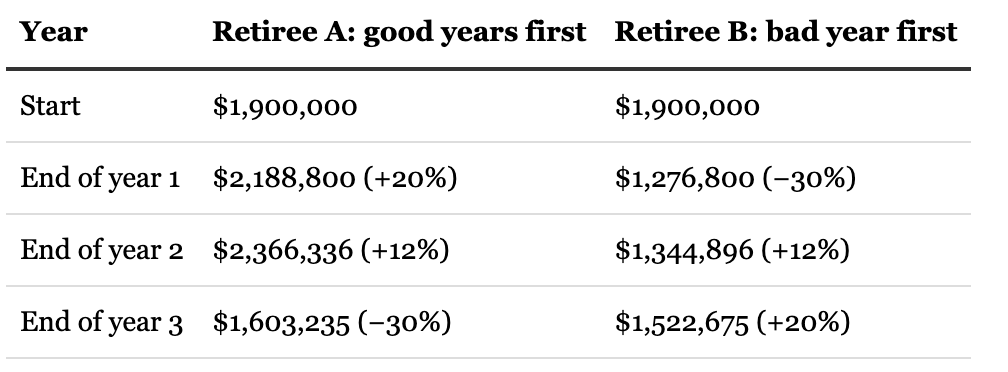
My latest MoneySense Retired Money column touches on a number of blogs that regular readers of Findependence Hub may already have seen, but ties together a few disparate threads that may warrant revisiting. Click on the highlighted headline here for the full article: The CAPE ratio, the 4% rule and retirement anxiety.
The focus is on the 4% Rule, Sequence of Returns Risk early in Retirement, and stock valuations measured by the CAPE Ratio.
The 4% Rule is one of those Personal Finance chestnuts, a topic we explored in Retired Money as recently as late 2025 (here.) My Findependence Hub blog on the 4% Rule appeared late in July here.
Robert Shiller’s CAPE Ratio: the Cyclically Adjusted Price-to-Earnings ratio (CAPE), is a measure of how fairly valued or overvalued stocks may be. The blog on the CAPE Ratio ran late in August here. Both are under my byline: Each contains full raw quotes from a variety of business owners and investment professionals on both sides of the border, gathered on Linked In and a service called Connectively, formerly Featured.com.
A useful primer on the CAPE Ratio was provided by blogger Michael J. Wiener, on his Michael James on Money blog (from early August), also republished here on Findependence Hub in August. He says the CAPE Ratio is “just the current price divided by the average inflation-adjusted earnings over the past decade.” Investopedia defines the CAPE Ratio as “a valuation measure that uses real earnings per share over a 10-year period to smooth out fluctuations in corporate profits.” You can find more on CAPE here on Wikipedia.
See also this recent Findependence Hub blog by Stefano Starkel titled the The Alternative to the 4% Rule isn’t a different number: It’s a different mechanism. There, Starkel argues that “the fragile part of a fixed-withdrawal plan is Sequence-of-Returns risk.” He shows a chart [shown above] that demonstrates how early losses in Retirement can have a dramatically negative impact on returns and thus Retirement income.
Stay Calm
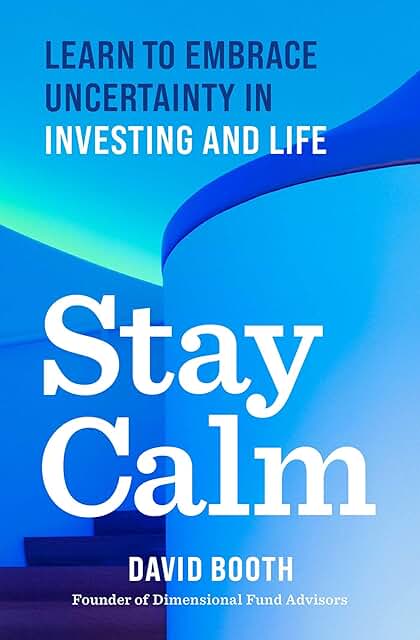 Sure, proper diversification and asset allocation should allow you to Stay Calm, which happens to be the title of a new book published early in September by David Booth: he’s a founder of Dimensional Fund Advisors (DFA), one of the better indexing companies out there. I have finished reading it and plan to review it for MoneySense in the near future.
The main principles of the DFA approach to investing is to keep costs low by minimizing trading and using passive investing vehicles like ETFs, and above all trust the markets over the long term while avoiding picking individual stocks and attempting to time financial markets.
Tune out the Noise
 For the most part this means tuning out the noise from stock-picking and market-timing pundits disseminating their views 24/7 on mass media and social media. Speaking of which, you may want to check out a full-length documentary film which is all about DFA investing principles, with interviews from most of the founders and inner circle, including Ken French, Eugene Fama, Booth himself, Rex Sinquefield and many more. Produced by Errol Morris, it’s titled Tune out the Noise, and is available free on YouTube here. More on this in the next Retired Money column in October.
