All posts by Financial Independence Hub

The 6 phases of Financial Independence

By Mark Seed, MyOwnAdvisor

Special to the Financial Independence Hub

The term “financial independence” has many meanings to many people.

To some, this means the ability to work on your own terms.

To others, it boils down to not working at all but instead having “enough” to meet all needs and possible wants.

Where do I stand on this subject?  This post will tell you in my six phases to financial independence.

Retirement should not be the goal: Financial security and independence should be

Is retirement your goal?  To stop working altogether?  While I think that’s fine I feel the traditional model of retirement is outdated and quite frankly, not very productive.

As humans, even our lizard brains are smart enough to know we need a sense of purpose to feel fulfilled.  Working for decades, saving money for decades, only to come to an abrupt end of any working career might work for some people but it’s not something I aspire to do.

With people living longer, and more diverse needs of our society expanding, the opportunities to contribute and give back are growing as well.  To that end, I never really aspire to fully “retire”.

Benefits of financial independence (FI)

In the coming years, I hope to realize some level of financial security and eventually, financial independence.  For us, this is a totally worthwhile construct.  The realization of FI can bring some key benefits:

  1. The opportunity to regain more control of our most valuable commodity: time.
  2. Enhanced opportunities to learn and grow.
  3. Spend extra money on things that add value to your life, like experiences or entrepreneurship.

Whether it’s establishing a three-day work week, spending more time as a painter, snowboarder, or photographer, or you desire to get back to that woodworking hobby you’ve thought about: financial independence delivers a dose of freedom that’s hard to come by otherwise.

FI funds time for passions.

FI concepts explained elsewhere

There are many takes on what FI means to others.

There is no right or wrong, folks: only models and various assumptions at play.

For kicks, here are some select examples I found from authors and bloggers I follow.

  1. JL Collins, author of The Simple Path to Wealth, popularized the concept of “F-you money”. This is not necessarily financially independent sums of money but rather, enough money to buy a modest level of time and freedom for something else.
  2. Various bloggers subscribe to a “4% rule”* whereby you might be able to live off your investments for ~ 30 years, increasing your portfolio withdraws with the rate of inflation.

*Based on research conducted by certified financial planner William Bengen, who looked at various stock market returns and investment scenarios over many decades. The “rule” states that if you begin by withdrawing 4% of your nest egg’s value during your first year of retirement, assuming a 50/50 equity/bond asset mix, and then adjust subsequent withdrawals for inflation, you’ll avoid running out of money for 30 years. Bengen’s math noted you can always withdraw more than 4% of your portfolio in your retirement years however doing so dramatically increases your chances of exhausting your capital sooner than later.

For simplistic math, such bloggers calculated your “FI number” could be approximately your annual expenses x 25.  So, if you’re annual expenses are about $40,000 per year (CDN $ or USD $ or other), then your “FI number” is a nest egg value of $1,000,000.

Using that framework, there are levels of FI some bloggers have adopted:

  • Half FI – saved up 50% of the end goal (in this case, $1 M).
  • Lean FI – saved up >50% of end goal to pay for very lean but life’s essentials like food, shelter and clothing (but nothing else is covered).
  • Flex FI – saved up closer to 80% of the end goal, this stage covers most pre-retirement spending including some discretionary expenses.
  • Financial Independence (FI) – saved up 100% of the end goal, you have ~ 25 times your annual expenses saved up whereby you could withdraw 4% (or more in good markets) for 30+ years (i.e., the 4% rule).
  • Fat FI – saved up at or > 120% of your end goal (in this case $1.2 M for this example), such that your annual withdrawal rate could be closer to 3% (vs. 4%) therefore making your retirement spending plan almost bulletproof.
  1. There is the concept of “Slow FI” that I like from The Fioneers. The concept of “Slow FI” arose because, using the Fioneers’ wording while “there were many positive things that could come with a decision to pursue FIRE, but I still felt that some aspects of it were at odds with my desire to live my best life now (YOLO).”  They went on to state, because “our physical health is not guaranteed, and we could irreparably damage our mental health if we don’t attend to it.”

Well said.

My six phases of financial independence

(Picture from our catamaran cruise, Barbados 2019)

To the “Slow FI” valuable points, since we all only have one life to live, we should try and embrace happiness in everything we do today and not wait until “retirement” to find it. Continue Reading…

How fast will your portfolio shrink in Retirement?

By Michael J. Wiener

Special to the Financial Independence Hub


Once you’re halfway through retirement, you’d expect about half your savings to be gone, right? This turns out this is very wrong when we don’t adjust for inflation. The return your portfolio generates causes your savings to hold steady for a while and then fall off a cliff.

I read the following quote in the second edition of Victory Lap Retirement:

“A recent Employee Benefit Research Institute study found that people in the U.S. who retired with more than  $500,000 in savings still had, on average, 88 percent of it left eighteen years after retirement.”

Frederick Vettese provided further detail. This 88% figure is the median rather than the average.

This statistic was used as proof that retirees aren’t spending enough. After all, if you planned on a 35-year retirement, half the money should be gone after 18 years, right? Not even close. Below is a chart of portfolio size based on the following assumptions.

– annual portfolio return of 2% above inflation
– annual withdrawals of 4% of the starting portfolio size, rising with inflation each year
– inflation of 2.12% (the average U.S. inflation from 2001 to 2018)


So, to be on track for a 35-year retirement, your remaining portfolio 18 years into retirement should be 83% of your starting portfolio size. This is a far cry from an intuitive guess that about half the money should be left.

Still, the earlier quote said the average retiree who started with at least half a million dollars had 88% of their money left 18 years into retirement. Further, thanks to a reader named Dave who found the original EBRI study online, we know that the 88% figure is inflation-adjusted. Continue Reading…

How Canadians are impacted by rising home prices: National Survey


By Penelope Graham, Zoocasa

Special to the Financial Independence Hub

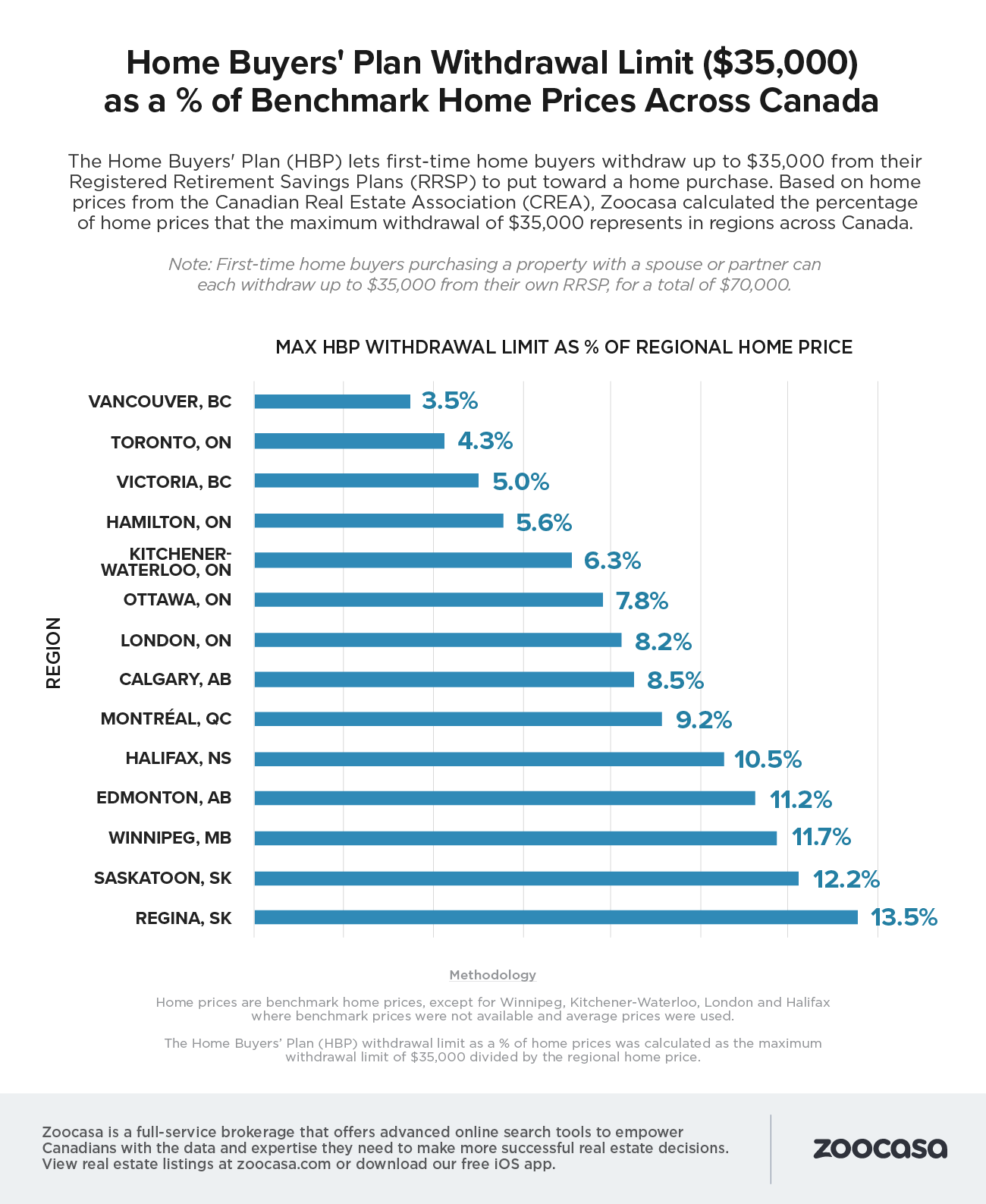
Election season may have come and gone, but the need for affordable housing remains a top-of-mind issue for Canadians, regardless of governing political party. According to a recent national survey conducted by Zoocasa, a whopping 84% say they feel the ability to afford a home is a major issue that’s negatively impacted the population: and 78% feel the government needs to make it a priority focus.

As well, the survey findings reveal that anxiety around affordability extends beyond those who wish to get onto the property ladder; while renters express particularly strong feelings of uncertainty (93%), current homeowners are also feeling the squeeze from spiralling home values, with 80% in agreement.

Let’s take a look at the top concerns indicated by Canadians.

Incomes can’t keep pace with Real Estate prices 

It’s no secret that prices for houses for sale in markets across Canada have seen enormous growth over the last five years. According to the Canadian Real Estate Association, the national average home price now exceeds half a million dollars, at $515,500 (though it should be noted that removing Vancouver and Toronto houses and condos from the equation would trim that total to $397,000).

This has left the majority of Canadians – 91% – feeling as though home prices have outstripped wages in their city or town, while another 92% say they feel rising home prices have reduced the ability of middle-class Canadians’ abilities to purchase a home.

As a result, in order to seek out greater affordability, more than half of first-time buyers said they’d leave their current location and move to a market with lower home prices, contributing to what’s referred to in real estate circles as “driving until you qualify.”

Other homeownership hurdles

But rising home prices only tell a portion of the story: while 70% of respondents agree they’re the largest obstacle to getting on the property ladder, the inability to save enough for a down payment also ranks highly on the list of challenges. Continue Reading…

Give the powerful gift of Decluttering to your Loved Ones

By Akaisha Kaderli, RetireEarlyLifestyle.com

Special to the Financial Independence Hub

Stuff, stuff, and more stuff!

My sisters and I were fortunate.

My Mother was a very forward-thinking individual. Years before she (and my Father) died, Mom started going through her closets, her paperwork, her jewelry, the items in her safe, her garden area and the storage shed next to it.

She tossed items that were outdated, expired, and the things that were no longer useful to her household. She gave away cherished items, met with a lawyer, updated her will, and made funeral arrangements.

Neighbors and friends thought it was odd but comforted themselves by saying “that’s just Betty.”

Mom, on the other hand, knew exactly what she was doing.

The years were passing by, and she didn’t want her daughters to be burdened with having to clear out piles of stuff from her home after she and her husband died. She had the foresight to put her affairs in order before the events of their deaths.

These days, the courtesy and care of what my Mom was doing now has a name. It’s called dostadning, a hybrid of the Swedish words for death and cleaning.

Not everyone is on board

My Father was much more of a patterned man. He liked his routines and his schedule. Mom? She was a tornado.

I truly think it made him nervous to have familiar (but no longer useful) items be given away or tossed out. He learned long ago not to quibble, and he picked his battles. He didn’t help Mom prepare for the inevitable, but he didn’t stand in her way, either.

Differing styles of dealing with life and death

Over the years since my parents’ passing I have watched friends and other family members deal with the demise of loved ones: in-laws, close friends, siblings or their own Mother or Father. In every case, the chaos left after a death was totally overwhelming.

In the situations where the loved one downsized after retirement, it was easier. Few people would carry pay stubs from the 1940’s into a newer, smaller home. But that was not always the case.

Many people get comfortable – not being able to let go of the past – with children’s bedrooms not touched since they left the house and married. Or countless boxes in the attic of holiday items that are no longer used, or grandchildren’s drawings and painted rocks jealously kept for their loving memories.

All well and good … except that when one passes on, these mementos are left for family members to sort out.

When the adult children go through all this — stuff — full-blown emotional meltdowns or something close to it can happen during the process. Sorting through a loved one’s home after a death is the last thing anyone feels like doing.

Morbid or renewing?

I get it.

No one wants to be chased by the idea of the Grim Reaper at their door. But keeping what you love – and getting rid of what you don’t – isn’t morbid. It’s more like a relief, like a renewal.

There is something very empowering and healthy about taking care of your own space and making it more organized. Clutter is really just a bunch of decisions that you’ve put off making. Most of the junk we have is simply stuff screaming out for a place to be or a decision to be made. Keep it (not countless duplicates) in its place or get rid of it.

Approaches to clearing your clutter

There are lots of ways to get started. There’s the brutal approach, the simple approach, and everything in between.

Brutal begins like this: If your home burned down, what would you replace? Continue Reading…

The rise of the Side Hustle: 4 gig ideas for supplementing your income

By Katie Dunsworth-Reiach

Special to the Financial Independence Hub

 For many of us, the cost of calling cities like Toronto and Vancouver home has made a side hustle a true necessity. This is something I embraced after I purchased a home in Vancouver, and quickly felt the weight of a new mortgage and shrinking savings account take effect.  Creating an extra income source seemed like a great idea, but the concept of working a second job or picking up a weekend shift also seemed to defeat the purpose of city living.  How can you enjoy the best a city has to offer when you have to work around the clock just to afford it?

Enter the sharing economy.  From Uber to Airbnb there’s a growing list of stand-out ways to leverage existing assets and skills to make a second income.  I began dabbling with the idea when I first started hearing about the sharing economy.  I liked the simplicity of signing up and being able to run my side hustle off my phone. The main appeal was that I could set my own hours, rates, and accept or decline the offers that appealed to me. It also exposed me to new people and interests and sometimes barely felt like work.  Making extra income actually became a passion.

Five years later, I have multiple side hustles on the go and have been able to increase my savings by more than $20,000 a year: something that has allowed me to pay down my mortgage faster and make room for more travel and retirement investments.

With a simple sign-up, and sometimes a quick background check, most reputable sites will have access to a network of clients, and you can start earning income within a few weeks or less.

My favorite ways side hustle gigs have come from:

1.) Rover.com

Dog walking to dog sitting, this pet care app has uncovered the massive need for loving pet care.  Rover gives pet parents and non-pet parents alike the chance to be temporary pet parents, all while earning a little extra cash. Touted as the AirBnB of pet care, Rover matches pet owners with pet sitters and walkers in their area via the app. Sitters create a profile and set their own rate and service offerings, from walking to overnight boarding. Pet parents can pick their ideal sitter and leave reviews post-pet care. Extra income and a play date with a dog is a match made in heaven for many. Considering sixty-five percent of Canadian households own at least one pet and Canada’s pet care industry is worth roughly $7 billion, Rover solves the problems of the pet care demand.

2.) Poshmark

Popular social commerce platform, Poshmark, has 50 million users and recently entered Canada, allowing people to easily sell new and gently used clothing, accessories and home goods. Continue Reading…