All posts by Financial Independence Hub

Pay less and get the most out of your Auto Insurance

By Gary Bordeaux

Special to the Financial Independence Hub

Auto insurance can be a costly affair. Getting car insurance is important because it is a legal requirement and it can be a financial benefit if you are involved in an accident. Over 203 million Americans spend about US$125 every month to insure their car. So, what can you do to lower your car insurance cost? Read on to find out.

Shop around

Check out several companies for deals and offers, as insurance cost can differ between motor insurance providers. For example, the average annual rate for drivers insured with State Farm and Geico  is US$1327 and US$1667 respectively. Online sites are a perfect place to research insurance price, discounts, welcome bonus, and other requirements. Keep in mind that a cheaper option for one driver may turn out to be costly for another driver.

Don’t add younger drivers to your policy

Drivers aged 15-25 years are 32% more likely to cause an accident than older drivers. Therefore, younger drivers are likely to pay more for their insurance than older drivers. If your kids are ready to drive, get them their own insurance and encourage them to accumulate their no claims bonus. You can convince your co-workers or parents to become co-driver on your insurance policy. Also, add additional drivers to your insurance policy only when they need to use the vehicle.

Protect your car

Some of the details you will divulge to the insurance company when signing up for a car insurance policy include where you park the car at night and the car’s security features. The insurance companies may use insurance document management software to store your details. Drivers who keep their car in a garage and have installed a plethora of security features are likely to enjoy subsidized insurance premiums.

Group Insurance

 It is common for employers to provide health insurance for their employees. However, it is possible to acquire auto insurance through the same means. Group insurance is when many individuals, usually co-workers or family members, jointly apply for an insurance policy. As a result, the group is able to utilize the benefits of collective bargaining to get discounts and lower premiums. The only downside is that you don’t have the liberty to choose your preferred insurer. Large corporations, alumni associations, fellowships, and hobby groups are some of the entities that are eligible for group insurance.

Do away with unnecessary coverage

Legally, you are only obligated to sign up for liability insurance in the United States. This is the type of insurance required to cater for damages and injuries inflicted on third parties. Some drivers choose to add other types of coverage to the liability coverage. For instance, you may get collision coverage to offset the cost of the destruction your vehicle suffers in a motor accident. Continue Reading…

Trick or Treat: How much does the average consumer spend on Halloween?


By Mike Brown

Special to the Financial Independence Hub

LendEDU’s third annual study also included price comparison research that found consumers can save a good chunk of money by shopping for Halloween on Amazon rather than Walmart.


While our level of involvement may differ, most of us will be taking part in Halloween festivities in some capacity.

For the youth, enthusiasm for Halloween begins in September when costume ideas start taking shape. Once it starts, the fun doesn’t end until the candy-induced stomach ache kicks in roughly three hours after that last Twix.

While young adults may bypass the trick-or-treating, Halloween still offers a great excuse to dress up, look silly, and have a night out on the town.

Adults, who are often less excited than children, play an integral role when it comes to Halloween. Without them, who would chaperon the trick-or-treaters, hand out candy, cover houses in spooky decorations, or design the outfits that win the school costume competitions?

Like most holidays, Halloween will always have naysayers, but for the most part, it is seen as an enjoyable night that kicks off the holiday season. And according to LendEDU’s third annual Cost of Halloween survey, it is actually a day that will be forcing many to cough-up a decent-sized chunk of change.

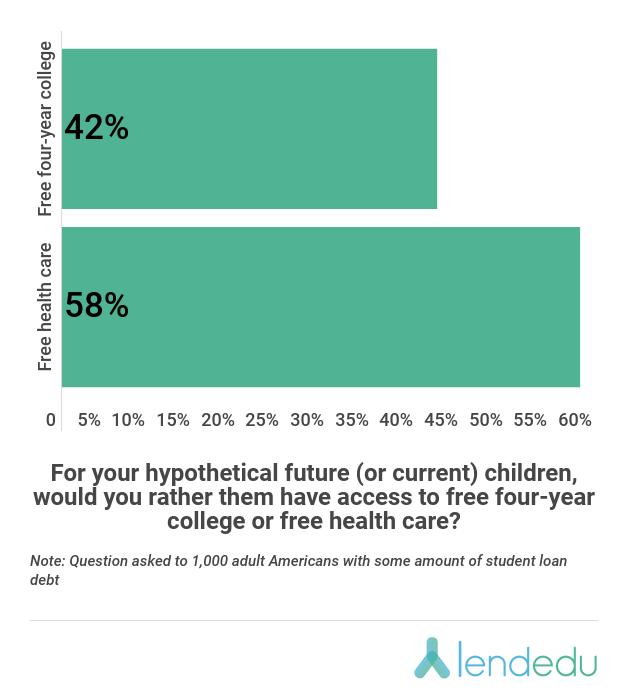
Average American will spend US$162.29 on Halloween in 2019

With Halloween just hours away, LendEDU wanted to figure out how much families are spending on this holiday characterized by candy, costumes, and scary decorations.

​To do this, we asked 1,000 Americans that were planning on celebrating Halloween in 2019 the following question: “How much do you expect to spend celebrating Halloween this year?”

After averaging together all 1,000 responses, we found that in 2019 the average American is expecting to spend US$162.29 on Halloween. (All dollar amounts below, including graphics, are in US$).

It turns out that all of the fun brought on by Halloween comes at a price that may scare a few people away before the haunted houses even have a chance. $162.29 for a few hours of spirited and spooky celebrations is nothing to sneeze at.

>> Read More: How to Save on Halloween

​So, what is making the cost of Halloween so unexpectedly high? Continue Reading…

Avoiding blind spots in financial advice

By Darren Coleman

Special to the Financial Independence Hub

In my last blog, I took on those Questrade TV commercials where the client schedules a meeting with their financial advisor to tell them they’re fired. While people don’t normally schedule a meeting with an advisor to do such a thing, I think the real story is that the client does not experience value from the relationship. And if that’s the case, not paying the fee and moving on makes perfect sense.

But that doesn’t mean doing it yourself is the best idea. Investment management and financial planning is more complicated and intricate than people realize. Having access to tools doesn’t make you an expert; I can buy everything I need to renovate my house or rewire my kitchen, but that doesn’t mean I should. Better to leave this to Mike Holmes. Here are some key areas when an excellent financial advisor can add great value.

Fire Drills

We all want to plan for a happy future with a comfortable retirement, maybe a new car, or an exotic holiday. People associate these things with creating a financial plan, largely due to multi-million-dollar ad campaigns by mutual fund companies. But life is not a Cialis commercial and bad things happen.

With Christmas coming get ready for media stories about the family whose house burnt down with all their possessions, including presents under the tree, going up in blazes. Then we’re told they didn’t have insurance and donations are being taken for them at the local bank branch.

To prevent misfortune from turning into tragedy, a good Financial Advisor will first have their client pay attention to planning for things going wrong. Indeed, assessing key risks to one’s financial health (i.e., premature death, disability, loss of employment, liability, critical illness) should be the primary component of a financial plan.

We also must look at documents and processes such as a will and Power of Attorney that describe what happens when we can’t speak for ourselves. Unfortunately, these are things most people do not do on their own. And if they do, they usually don’t do them with skill and adequate preparation.

A great, and valuable, Financial Advisor does more than just inquire about insurance and other documents. They run a ‘fire drill’ on the family.

Let’s say someone doesn’t come home one day because of illness or sudden death. What happens next? Who gets the call? What documents are needed and where exactly are they? Along with all this are other important questions.

  • What income is going to come into the household to replace those lost wages?
  • What paperwork needs to be filed?
  • Who’s going to do it?

Your employer is legally bound to run a fire drill at least once a year. Shouldn’t your financial plan do the same?

Budgets don’t balance themselves

Despite Prime Minister Justin Trudeau’s statement, I can assure you that budgets do not do this. We all have multiple and often competing demands on our time, money and energy. And when we combine the wishes, desires and needs of other family members, things may and will get derailed. Continue Reading…

How to avoid the hidden costs of school

By Tara Thompson

Special to the Financial Independence Hub

If you have school-age children, you know that when fall rolls around there will be additional costs added to your budget. Hopefully, you planned for this increase in the budget when the school year began, but as we all know there are always unexpected costs that we didn’t think of. Here are a few things to expect as well as a few ways to save.

Clothes

When we send our kids off to school we already know about many of the costs. Back-to-school shopping can be crazy. New clothes are important if we want our kids to fit in with their peers. New shoes are also a popular item and they often need multiple pairs. If you live in an area that has cold weather or rain they will need coats and jackets. If possible try to reuse some of your kid’s clothes. I know they always want new clothes but try to mix in some new with some of the old, and don’t forget to utilize hand-me-downs if you have more than one child.

Supplies

Then there are the dreaded school supplies. A long list that never seems to end and probably a new backpack and lunchbox to go with them. There are ways to save money by finding good sales and also by re-using supplies from the previous year. I keep a plastic bin with unused and used school supplies that can still be used during the year and the following year if I still have them. This saves money and is a good way to be green. Continue Reading…

Why chasing a high credit score is a waste of time and money

By Richard Moxley

Special to the Financial Independence Hub

This might sound weird, as our society has become obsessed with this mystical three-digit number, but it is true. Chasing a high credit score is really a waste of time and money. Here’s why.

The score you have access to is not the one the bank uses

While I agree that having good credit is extremely important, the score can be very deceiving. The biggest problem is that consumers do not have access to the credit score that the banks uses. I know that sounds weird and it shocks everyone when they hear it, but Equifax has recently updated its website with the following notice:

The Equifax Credit Score is intended for your own educational use. It is also commercially available to third parties along with numerous other credit scores and models in the marketplace. Please keep in mind third parties may use a different scorewhen evaluating your creditworthiness. (Emphasis mine)

As you can see, the credit score you have access to as a consumer is for “educational” purposes only and can be completely different than what a lender will see.

For example, when you log onto your profile with your bank or a third-party app like Borrowell, Credit Karma, or Mogo the three-digit number you see is for “educational” purposes and not the score the bank will use on your next credit application. It is even worse, when you find out that the score you are paying for directly on Equifax.ca and TransUnion.ca is not what your lenders uses. Unfortunately, it is common to see over a 100-point difference between the “educational score” and what the bank actually uses. This is just one reason why the credit score provided to Canadians is very misleading.

A high score doesn’t mean you have good credit

An 800-credit score (which is really good) doesn’t mean you’ve been approved for best rates and terms. The score is just one aspect the banks are looking for. Continue Reading…