All posts by Financial Independence Hub

The importance of Global Health Insurance for Canadians moving abroad

By David Tompkins

Special to the Financial Independence Hub

More and more Canadians are either moving overseas or are contemplating life abroad. It may be a dream for many to work or retire overseas. Many others may travel for an extended period or become a digital nomad, which is someone who can live and work anywhere they have digital access to work back home.

There are a lot of preparations to make before you move abroad for both yourself and your family members: schools, housing, tickets, visas, taxes, selling your house, moving expenses and much more. It can all get very daunting.

One of the most important preparations for your life abroad is to secure your family from large medical expenses: meaning obtaining a global health insurance plan.

Don’t rely on Canadian medical coverage if you are a Canadian Expat

Most Canadians are fully covered by their provincial medical plans such as OHIP in Ontario or MSP in British Columbia. They may even have individual or employer-based extended medical and dental coverage. However, those plans do not cover someone living abroad as an expat. Canadian travel insurance plans will only cover emergency claims and can only cover you as long as you keep your provincial medical coverage in place. As you may know, provincial medical coverage has limited or no coverage beyond Canada. Most Canadian expats will eventually lose their provincial medical plan once they are no longer a Canadian resident, so it makes sense to purchase an international health insurance plan.

What is Global Medical Insurance?

Well, the easiest way to think about it that it is the same as US healthcare, but it covers you globally. Or put another way, an expat health plan will probably cover everything your provincial plan covers (hospital, out-patient, doctors’ visits, scans) and the extended medical plans as well (medication, physio, travel, medical appliances). If you are going abroad as a Canadian expat, you will need global health coverage.

What about relying on Destination Country coverage?

Depending on where you are relocating, that may work. Your employer may provide coverage or you can get a local plan. However, there are often many disadvantages to such local plans:

  • You are only covered locally
  • Local medical care may be limited or sub-standard
  • The local insurer may be unreliable
  • Local insurance may not be available to expats
  • Expats are portable, local plans are not
  • You won’t have any coverage outside your destination country, but most expats want to be able to be treated when back home or regionally.
  • Any many more.

If you are an expat, you most likely need an expat health plan. Continue Reading…

OAS clawback secrets for the high-net-worth

By Aaron Hector, RFP

Special to the Financial Independence Hub

I’m going to start this off by saying that I’ve searched high and low for an article, website, blog – anything – that backs up some of the planning concepts I’m about to share with you on the subject of Old Age Security (OAS). I couldn’t find anything, so it’s with a certain degree of hesitancy that I find myself writing this. Even though I believe the concepts are factually correct, they’re largely unproven in practice.

I’ve come to realize that the majority of writing, thinking, and media coverage surrounding government pensions like OAS and CPP (QPP in Quebec) are targeted towards households in the middle-to-upper-middle-income or net-worth range, and the planning opportunities for high-income and high-net-worth households are often overlooked. With this article, I’m going to try and change that.

I’ll start with a bit of background information.

OAS deferral enhancement: choosing your start date

The introduction, in July 2013, of deferral premiumsfor Old Age Security has given Canadians and their financial planners a lot to think about. What was once a fairly standard ‘take it or leave it’ choice at age 65 has become a more complex decision. The complexity stems from the fact that for each month you delay the payment of your OAS past the age of 65, your lifetime monthly payment will be increased by 0.6%. This enhancement is maxed out at 36% if you postpone it to age 70. Don’t overlook the planning options available to you when choosing your start date. When you do the math, there are sixty potential start dates, and sixty potential payment amounts: one for each month between ages 65 and 70.

Choosing an effective start date: immediate vs. retroactive

Here’s another wrinkle. If you apply for OAS after age 65, you can choose a start date that’s up to one year earlier than the current date on your application. So, if you’re applying in January 2020, you could choose your OAS payments to begin as early as February 2019. All payments will be based on whatever age you were as of February 2019, and you’ll be paid a retroactive lump sum for the period between February 2019 and January 2020 (or whenever your application is approved and processed). Following the lump sum, you’ll get the regular ongoing monthly OAS payments, again, which will be based on your age as of February 2019.

Another important fact is that the retroactive lump sum payment is included on your T4A (OAS) slip in the year that it’s received. So, if you apply for a retroactive start date that reaches back to a prior calendar year, it will still be income for the current year when received. This is important because it lets you shift your initial OAS income from a less desirable tax year to a more desirable tax year. This would be of value if you retired in one year (while in a high marginal tax bracket), and shifted your OAS for the first year into the following year when you’re fully retired and in a lower tax bracket.

Understanding the clawback

It makes sense that most people would dismiss OAS planning for high-income and high-net-worth Canadians. After all, OAS is famously clawed back by 15 cents for each dollar that your net income exceeds a certain annual threshold and is entirely clawed back when it reaches another. The stated clawback range on the Government of Canada’s website for 2019 income is $77,580 to $125,937. I refer to these limits as the clawback floor ($77,580) and the clawback ceiling ($125,937). For a Canadian whose income is expected to always exceed $125,937, one might conclude that there’s nothing that can be done to preserve any OAS. That would be an incorrect conclusion.

OAS secret number 1 – the clawback ceiling is NOT $125,937 for everyone

Let’s review the math of OAS clawback. OAS is eroded at a rate of 15 cents for each dollar your net income exceeds the clawback floor in any given tax year. If you started your OAS at age 65, then in 2019 you would expect to receive OAS payments which total $7,253.50 (assuming OAS is not indexed in the fourth quarter of 2019, which is yet to be confirmed). The clawback ceiling is $125,937 because with a clawback floor of $77,580 and an erosion rate of 15 cents per dollar, your $7,253.50 of OAS is fully eliminated by the time your income reaches $125,937 ($125,937 minus $77,580 = $48,357, and $48,357 x 0.15 = $7,253).

I get frustrated when I see a reference to the OAS clawback ceiling because every article or resource that I’ve seen completely ignores the deferral enhancement. Due to the method with which the OAS Recovery Tax or clawback is calculated, a more robust OAS pension will result in a higher OAS clawback ceiling. So, while the clawback floor is a fixed number which is set each year by the CRA, the clawback ceiling is not a fixed number. Rather, it’s a sliding number based on the amount of OAS that you actually receive. Sure, if you take OAS at age 65 (like most people), your clawback ceiling for 2019 is going to be the stated $125,937. But if you’re receiving higher payments due to postponing your start date, you’ll have a higher clawback ceiling. For example, if you delay your OAS to age 67, you’ll actually have a ceiling of nearly $133,000, and if you delay your OAS to age 70, your clawback ceiling will exceed $143,000.

Source: Aaron Hector, Doherty & Bryant Financial Strategists

This enhanced clawback ceiling provides opportunities for some very interesting planning. Retirees who don’t expect to keep any of their OAS because they forecast that their retirement income will be in the $125,000 range might need to reconsider and potentially wait to start their OAS until 70. For others, it may be best to take OAS at age 65 because when their RRSP is converted to a RRIF, their income will exceed even the $143,000 range. Perhaps an early RRSP melt-down strategy combined with OAS postponement to age 70 will achieve the best result.

Ultimately, the right decision will depend on various individual metrics, such as your projected income in the years between ages 65 and 70, and into the future. The size of your RRSP and eventual RRIF will also be a factor, as well as your health and expected longevity (and that of your spouse, if applicable). There are truly too many factors to determine the best course for the broad population; my point here is simply that the enhanced clawback ceiling should be one factor to consider within the mix.

As an aside, the clawback ceiling is similarly lowered for those who do not qualify for a full OAS pension. This would be the case for those who have not met the full residency requirements. For example, someone who only receives half of the full OAS pension for 2019 ($3,627) will have their OAS fully clawed back when their income reaches $101,758.

OAS secret number 2 – how to create an OAS “super-ceiling”

Now that we’re all experts on OAS clawback, and we acknowledge that the OAS ceiling is not a fixed number but actually a range, we can consider some further niche planning opportunities.

For example, is there any way for someone with an expected retirement income of $150,000 per year to ever take advantage of OAS? This level of income exceeds the $143,000 upper ceiling range for someone who starts their OAS at age 70. The answer is yes. Continue Reading…

 How to improve the financial wellness of the Canadian workforce 

By Jean-Philippe Provost, Mercer Canada 

Special to the Financial Independence Hub

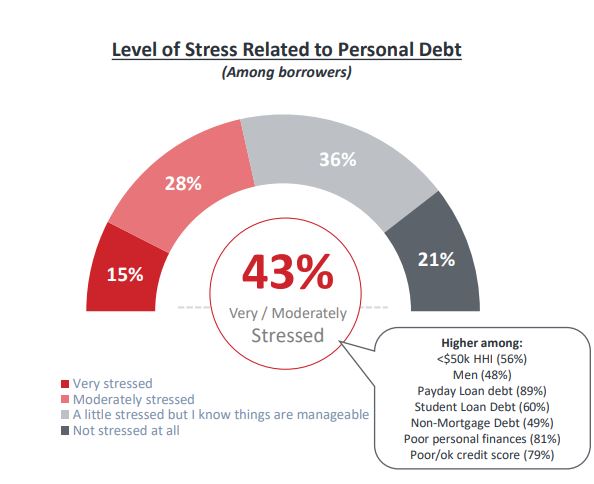
For Canadians, wealth management and financial decisions can represent an endless source of stress: whether putting money aside for an important purchase, paying off debt, or saving for retirement. Increasingly, this stress is interfering with workplace health and productivity. 

A company’s most productive asset is their people: when employees are unhealthy, financially or physically, the organization as a whole suffers. Helping employees feel confident about wealth management matters and guiding them towards financial wellness is not just a nice to have: it is a need to have. A healthy workforce means a healthy company: and a healthy bottom line. 

The impacts of financial stress on the workforce 

At Mercer, we have spent years studying the workplace trends, the evolving realities and the challenges faced by workers in Canada. Our most recent research into Canadians’ financial wellness found that if employers help employees achieve financial wellness, they too will reap the rewards, in terms of increased productivity, reduced absenteeism and improved morale. 

For example, our study showed that financial and physical health are tightly intertwined. With only 39% of employees with a low level of financial wellness reporting being in excellent or very good health (compared to 81% at the highest level), it is easy to see how this impacts entire organizations. 

Additionally, employees who don’t feel financially confident also often spend much of their time worrying, including while at work and are also less likely to pay attention to the features of their workplace benefits and the importance of their employee compensation package. 

Employers can and should help their employees successfully manage the steps towards achieving financial confidence. Providing easy-to-access resources to help to their workforce secure retirement savings and manage investments can lead to greater employee satisfaction. It can also strengthen their employee value proposition and help to attract and retain talents. 

Reducing employees’ financial stresses 

The most effective resources should be flexible enough to help all levels of employees meet their financial goals and milestones throughout their careers. Continue Reading…

Bitcoin Blues: How new cryptocurrencies are disrupting Tax Reporting obligations (to IRS and CRA)

By Elena Hanson

Special to the Financial Independence Hub

The latest buzzword is “disruption” and nothing has caused more disruption in the investment world than virtual currency, most commonly referred to as cryptocurrency. If you’re considering cryptocurrency as an investment option, there are a few things to know.

In a nutshell, cryptocurrency is a digital asset that can work as a medium of exchange. It uses cryptography to secure financial transactions, control the creation of additional units, and verify the transfer of assets.

The main difference between virtual currencies and traditional currencies is the decentralized control system. Cryptocurrencies like Bitcoin, which has been around since 2009, and Ether use distributed ledger technology such as block chain as a public database for transactions. Distributed ledgers are virtual ledgers that are decentralized across multiple locations, resulting in multiple copies of a transaction. While there is no central authority governing these transactions, the public nature of the ledger serves as a check and balance. However, having a currency that isn’t tied to any country or banking system can make regulation a challenge.

Just ask the 10,000 U.S. taxpayers who recently received letters from the Internal Revenue Service informing them that they may have improperly reported transactions involving virtual currencies and may owe back taxes on unreported cryptocurrency earnings.

The letters were accompanied by a stern warning from IRS Commissioner Chuck Rettig, who issued a press release on the matter. He said: “Taxpayers should take these letters very seriously by reviewing their tax filings and, when appropriate, amend past returns and pay back taxes, interest and penalties. The IRS is expanding our efforts involving virtual currency, including increased use of data analytics. We are focused on enforcing the law and helping taxpayers fully understand and meet their obligations.”

The IRS treats cryptocurrency like physical property and taxes it the same way. For example, if you receive a virtual currency as compensation from an employer, it is considered income subject to withholding and payroll taxes. And if you sell it, you could face capital gains tax. According to the IRS: “If you sold, exchanged, or disposed of virtual currency, or used it to pay for goods or services, you have engaged in a reportable transaction.”

CRA treats virtual currency much like the IRS

So, how does the Canada Revenue Agency treat virtual currency? Unfortunately, much like the IRS.

As far as the CRA is concerned, when cryptocurrency is used to pay for goods or services, it is subject to the rules for “barter transactions” or transactions that don’t involve legal tender. When accepted as payment for goods or services by a GST/HST registrant, the GST/HST portion must be calculated based on the fair market value at the time of the transaction. Continue Reading…

Canadian ETFs versus US ETFs


By Michael J. Wiener, Michael James on Money

Special to the Financial Independence Hub

When it comes to investing, we should keep things as simple as possible. But we should also keep costs as low as possible. These two goals are at odds when it comes to choosing between Canadian and U.S. exchange-traded funds (ETFs). However, there is a good compromise solution.

First of all, when we say an ETF is Canadian, we’re not referring to the investments it holds. For example, a Canadian ETF might hold U.S. or foreign stocks. Canadian ETFs trade in Canadian dollars and are sold in Canada. Similarly, U.S. ETFs trade in U.S. dollars and are sold in the U.S. Canadians can buy U.S. ETFs through Canadian discount brokers but must trade them in U.S. dollars.

Vanguard Canada offers “asset allocation ETFs” that simplify investing greatly. One such ETF has the ticker VEQT. This ETF holds a mix of Canadian, U.S., and foreign stocks in fixed percentages, and Vanguard handles the rebalancing within VEQT to maintain these fixed percentages. An investor who likes this mix of global stocks could buy VEQT for his or her entire portfolio without having to worry about currency exchanges. It’s hard to imagine a simpler approach to investing.

Investors who prefer to own bonds as well as stocks can choose other asset-allocation ETFs offered by Vanguard Canada, BlackRock Canada, or BMO. But the idea remains the same: we own just the one ETF across our entire portfolios. For the rest of this article we’ll focus on VEQT, but the ideas can be used for any other asset-allocation ETF.

Why would anyone want to own a set of U.S. ETFs instead of just holding VEQT? Cost. It’s more work to own U.S. ETFs and trade them in U.S. dollars, but their costs are much lower. To see how much lower, we need to find a mix of U.S. ETFs that closely approximates the investments within VEQT. Readers not interested in the gory details of finding this mix of U.S. ETFs can skip the end of the upcoming subsection. Continue Reading…