In part one of Fusion and Confusion of terminology, we presented a basic introduction of our individual professional backgrounds, Marie in the financial planning field and Suzanne in the field of gerontology. One thing in common that we both can say about each of these fields is that while practitioners do work on the front line with individual clients, there are also areas where professional services operate at a macro level. Almost like trying to explain – what is engineering? Likely several ways to drill that down (so to speak).
When it comes to our modern day discussion on aging, longevity, retirement, elder care and so on, there are many intersections where concerns such as health, mobility and financial security can, almost in equal measure, be found mentioned in the same sentence. We left you in our last post, pondering on the equation Financial + Gerontology=?
As mentioned in this post a week ago, Mike Drak and I will be participating in a 10-day virtual event called The Abundant Retirement Summit, which features interviews with more than 20 retirement experts between Feb. 15th and Feb. 26th.
This event was designed by our colleague and passionate business guru Kay Young (pictured above) with you in mind! She has gathered some of the world’s leading experts in expanding your money along with experts in finding joy & freedom through life transitions for this ground-breaking summit.
To get a front-row free pass, just register here. In addition, all the experts will be giving you a free gift designed to help you find joy and freedom while doing the things you are most passionate about.
Among other things, we’ll talk about:
• How to manage your money with ways to build, save and expand your assets
• How to enjoy life’s transitions by finding out & doing what you really love
• Which industries allow you to make money while being creative…on your own time
• Fabulous ways to improve your joy and productivity…even while you sleep
• Stories with amazing people who have had life experiences that touch & teach us all
Kay is going to deliver every one of the expert’s interviews to your inbox. If you miss one, you’ll have 72 hours to catch up on the interviews you’ve missed. Hop on over to the registration page by clicking on this link. We’re excited that you’ll be joining us on the summit! Continue Reading…
Some important homework is in store for those retiring during 2016. Age 65 was the normal age to begin receiving CPP/OAS pensions.
A few timelines have changed recently. The changes are about deferring CPP/OAS pension benefits to age 70.
Your finances will need review vis-a-vis the personal circumstances. Here’s my summary of pension deferrals (figures rounded):
CPP benefits
2016 maximum CPP pension is about $1,092/mo at age 65.
Starting CPP pension after age 65 increases benefits by 0.7%/month of deferral, up to age 70.
Individuals who start CPP at age 70 receive a maximum 42% more, versus starting it at 65.
Hence, delaying CPP from age 65 to 70 raises pension benefits near $1,550/month.
Electing to receive CPP before age 65 reduces the pension by 36% at age 60.
Those employed after age 65 can make voluntary CPP contributions up to age 70.
Requesting your “CPP Statement of Contributions” provides the personal estimates.
With millions of Baby Boomers poised to leave the workforce within the next decade, many of us want to find ways to contribute from our vast wells of experience and knowledge. We want more freedom of expression in our lives instead of continuing what might be a lukewarm commitment to a full-time job.
Yet there are those like Andrew Yarrow, vice president and director of Public Agenda, who’ve characterized retiring early as “profoundly selfish and unpatriotic.” However, we believe he is missing the mark completely, falling into painting a doom-and-gloom scenario instead of banking on the monumental range of creativity our age group has shown. After all, it was our generation who invented the life-changing personal computer and gave us rock and roll. We expect that we are quite capable of coming up with solutions to any difficult issues we may face in the future.
The Goldilocks scenario
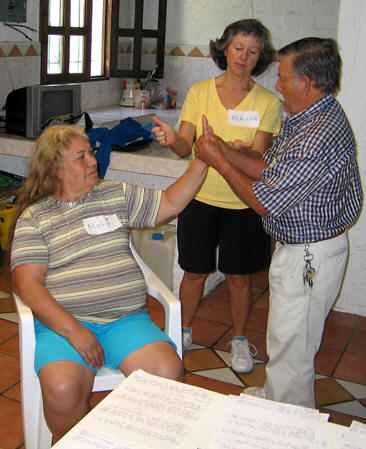
Akaisha teaching Thai massage in Mexico
Finding a satisfying middle ground between what Marc Freedman, the founder of Civic Ventures, calls “the fallacy of 30 years of R&R” and our significant need to find meaning through imparting our collective wisdom, the sheer numbers of 60-somethings are having an effect on how people actually live during retirement. Some would say they’re creating a new stage of life by choosing an encore career.
If you find yourself in this position of wanting to retire without giving up entirely on being active, there are more options for you now than ever before in history. You may want to seek out opportunities for heartfelt jobs, artistic pursuits, spiritual quests, volunteer vacations, or job adventures abroad such as the Peace Corps.
Websites now abound with information on how to help adults in the second half of life set a course, connect with peers, and find pathways to significant service.
Groups like Experience Corps work to solve serious social problems here in the U.S. You can even use Craigslist to help you get involved in your community and find flexible jobs or volunteer opportunities. Boomers simply won’t go quietly into the good night.
Nor should they.
Work or volunteer?
It’s the American Way to be original and productive, and our generation illustrates both of these qualities. Yet if you fear that America isn’t ready to deal with older workers, take heart — there is growing evidence to the contrary.
Websites like Retired Brains, Senior Job Resource, and AARP‘s Best Employers Program Honorees all provide information for those who are 50+ and want to work full or part time. And due to simple demographics, these positions are only going to become more plentiful.
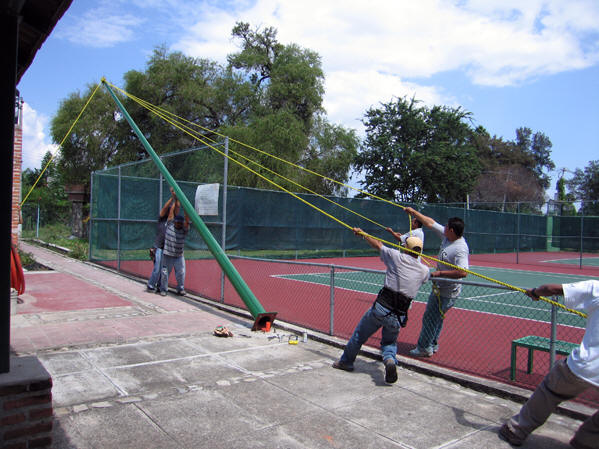
Billy built these tennis courts in Mexico
Looking at complete retirement can seem overwhelming to some. The idea of having no structure to their days — and the possible loss of ongoing relationships with patients or clients — can be a large detraction. The notion of forfeiting the intellectual and social stimulation of interacting with colleagues may seem like a kink in the perfect lifestyle away from work.
For these people, mentoring at SCORE, helping at Learning for Life, or volunteering time at your local hospice, food banks, or community colleges can also bring rewards beyond expectation. Money is not the only measure of wealth in a society.
The aim, we believe, is to activate the freedom to choose how to live your life no matter what stage you find yourself in — rather than letting someone else dictate your future ambitions. Once you’ve reached financial independence, you can easily move into a more rewarding position or challenge of your choice.
How you contribute to others in your retirement, and how you spend your time and your money is up to you and only you. Have confidence in yourself, know the value of your talents and endeavors, and build up your self-worth. After all, you’ve earned it.
It is from here that you will make all the difference in your world and in the world around you.
This is what we have done, and our personal lives have expanded significantly because of it.
About the Authors
Billy and Akaisha Kaderli are recognized retirement experts and internationally published authors on topics of finance and world travel. With the wealth of information they share on their popular website RetireEarlyLifestyle.com, they have been helping people achieve their own retirement dreams since 1991. They wrote the popular books, The Adventurer’s Guide to Early Retirement and Your Retirement Dream IS Possible available on their website or on Amazon.com
While tax season for calendar 2015 is just around the corner, the best time to influence your tax position for calendar 2016 is: right now. Here are the “Top 10” early tax planning tips for 2016 to help reduce your tax, contribute to your RRSP, help out family members, and also support your favourite charities.
Adjust Source Deduction amounts
Salaried employees have income tax deducted by their employers from each pay cheque. The amount of these deductions is computed on the assumption that the employee is only entitled to the basic personal exemption. Taxpayers with other exemptions such as children can fill out and give their employers a CRA form TD-1 http://www.cra-arc.gc.ca/E/pbg/tf/td1/README.html showing other deductions to which they are entitled, thereby reducing the amount of taxes that will be deducted at source. For deductions that don’t appear on the TD-1 form, such as spousal support payments or RRSP contributions, form T1213 Request to Reduce Tax Deductions at Source http://www.cra-arc.gc.ca/E/pbg/tf/t1213/README.html can be submitted to CRA.
Contribute to an RRSP as Soon as Possible
While many Canadians contribute to their RRSPs in the first 60 days of the year, the earlier the contribution is made, the more the RRSP benefits from the effects of compounding. If you don’t have a lump sum to make your annual contribution at the start of the year, consider making regular monthly payments. The RRSP limit for 2016 is the lesser of 18 per cent of 2015 earned income or $25,370.


 Posted By
  Marie Howes & Suzanne Cook, PlanetLongevity.com