
All posts by Financial Independence Hub

Protecting Your Nest Egg In Retirement

MarieEngen
Marie Engen, Boomer & Echo

By Marie Engen, Boomer & Echo

Special to the Financial Independence Hub

Investors who are in, or near, retirement are in a difficult position. They need their investments to provide them with steady cash flow to live on, but they also need their wealth to last for a potentially long life.

Retirees who are caught in a bear market don’t have the time to wait out temporary dips in stock prices, even if they have a greater risk tolerance. Being forced to sell investments that have plummeted in order to provide money to live could have a devastating effect on the sustainability of a portfolio.

Related: Buckets and Glidepaths – What to do with your money after retirement

Some investment advisors are mobilized to guide their pre-retirement clients out of equities and into bonds, in an effort to offer income and stability. But now that interest rates have reached historical lows, traditional bond portfolios will have a difficult time providing an acceptable level of income while protecting purchasing power over the next 25 to 30 years.

Structure your portfolio for both short- and long-term needs

Continue Reading…

The 5 Best Currency Exchange Options For Travellers

Barry bio 2014
Barry Choi

By Barry Choi

Special to the Financial Independence Hub

You’ve booked your flights, your itinerary is set and now all you need is some local money. Getting foreign currency is easy but choosing the right method could save you a ton of cash.

Here are the best currency exchange options for travellers:

1. Using ATMs

Using ATMs is the best currency exchange option to get cash at the lowest rate. ATMs are everywhere and the best part is they only charge the spot rate of the day plus 2.5%.

Your home bank might charge you an additional $2-5 for using a foreign ATM but this fee can sometimes be waived, depending on your account status. Don’t forget to call your bank and let them know you’ll be travelling;  otherwise they may block your card on suspicion of fraud. If the fee won’t be waived, just max out your daily withdrawal limit each time to avoid making excessive trips to the ATM.

To find out which foreign ATMs are affiliated with your bank, check the back of your debit card and look for the PLUS (VISA) or Cirrus (MasterCard) symbols. When you’re overseas, search for ATMs with the matching networks and you should be fine. Both VISA and MasterCard have ATM locators so you can find the right ATM before you even take off.

Not only is using ATMs the cheapest way to get money, it’s also the safest way since you’ll never be carrying large amounts of cash. Note that internationally, 4-digit pins are the standard for ATM cards so change yours before you depart if it differs.

2. Credit cards

Continue Reading…

An Aging Workforce is a Competitive Advantage

pinpoint__dsc1211_opt_367_x_326
Lisa Taylor

By Lisa Taylor, Challenge Factory

Special to the Financial Independence Hub

The dramatic impact of longevity on organizations was predicted decades ago. Indeed, in 1961, President John F. Kennedy put a formal structure in place to ensure that Congress would be attentive to the opportunities and challenges increased life expectancy presented to existing programs and policies. Since science had added years to our lives, Kennedy’s vision was to ensure added life to our years.

Longer life expectancy implies longer workspan

One corollary: increased life expectancy means longer work-life too. Continue Reading…

You think accumulating wealth was hard? Try this.

By Doug Dahmer, Emeritus Retirement Income Specialists

Special to the Financial Independence Hub

iStock_000000444538_Large

How you deploy your accumulated assets to fund the second half of your life is much harder than how you built them up in your accumulation years.

Read this again if you need to, but be sure you get this point.


First build an asset pool under the spell of “Dollar Cost Averaging over the long-term” — the favorite aphorism of the investment management salesperson. For the 30-odd years of your prime saving and accumulation years this mantra encourages you to keep giving money to them, disguises bad performance and promises you future success. Given enough time, however, let’s hope you have more than when you started.

That’s the easy part.

The hard part: making it last a lifetime

Continue Reading…

Life at the cottage: What you need to know BEFORE you buy

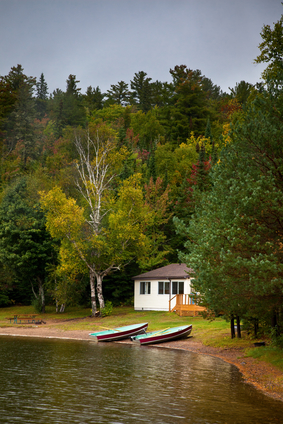
Cottage On The Carpenter Lake, British Columbia

By Erica Nielsen

Special to the Financial Independence Hub

After a long winter, summer is finally upon us For many, now is the time to look forward to the best part of summer: cottage season.

“Cottaging” has become a national pastime, and while there are many benefits to a family cottage, it’s important to fully understand the entire picture of owning and operating a home-away-from-home.

I learned firsthand how much was involved the first winter after we purchased our cottage when we were faced with repair costs for the road leading into our property.

When exploring the purchase of a cottage or vacation property, it’s important to consider all costs. These can range from the big ones like a down payment, to smaller costs that can add up — such as taxes, maintenance and winter plowing. In addition, if your cottage is not a primary residence, you may require a different type of mortgage and insurance.

Whether you’re experienced in the home buying process, or planning your first property purchase, there are some important considerations to evaluate before you buy the beach chairs:

Know the costs, all year round Continue Reading…