 Posted By
  Here’s my latest MoneySense blog, which looks at recent criticisms of Income Splitting for Families with children under age 18: aka the Family Tax Cut.
Its headline is Can the Family Tax Cut Entice Families to Work Less? Continue Reading…


Here’s my latest MoneySense blog, which looks at recent criticisms of Income Splitting for Families with children under age 18: aka the Family Tax Cut.
Its headline is Can the Family Tax Cut Entice Families to Work Less? Continue Reading…

By Jonathan Chevreau
Further to this morning’s guest blog about Boomer downsizing by realtor Linda Evans comes a poll by TD Canada Trust that shows wide generational differences in housing preferences.
While aging baby boomers are more likely to prefer small towns (21% do) or rural settings (18%), given the choice a third of Canadians would prefer to live in the city (aka “urban environment”) while almost as many (31%) lean to a more suburban environment.
As you might expect, it seems the younger you are the more you wish to be in the downtown core, while the older folk tend to flee to the burbs or the country. Thus, 38% of Millennials and 36% of Generation X lean towards urban settings, but Gen X is almost as likely to choose the suburbs (33%).
No doubt this breaks down into those with and without children: you’d expect young singles to congregate where the action is downtown, while those who have met “the one” and started to raise families would prefer a larger home further away once they have to accommodate kids. Downtowners typically have short commutes and easy access to public transit and can get by easily without bearing the expense of vehicle ownership. As most parents in the suburbs well know, one or even two cars are almost a necessity outside the downtown core, and a long commute will likely be another price they pay.
Boomers gravitating to small towns and rural settings
Indeed, the TD survey found 39% of Canadian parents and prospective parents would prefer to raise a family in the suburbs, while 26% would choose a more urban environment. Continue Reading…

By Linda Evans, Realtor, Slavens & Associates
Special to the Financial Independence Hub
Downsizing is a positive thing. Of course it’s a big decision and most of us will face this dilemma at some point in our lives. Should we downsize or stay in the family home?
We all have our reasons. The kids have moved out or just come home from university. The house is too big for two people, too expensive to maintain, the gardening, the snow shovelling and oh boy those stairs (my knees). Wouldn’t it be nice to just lock the door and go south for a few months in the winter and not worry about burst pipes or icy sidewalks? Downsizing can be an alluring option at a certain stage of life.
Severing the emotional attachments
The hardest part for most people is the emotional attachments that we have to the family home, not to mention all the ‘stuff’ we accumulate over the years. Treat yourself to a good chuckle and find the Youtube video by George Carlin where he does a hilarious standup on ‘Stuff.’

By Promod Sharma,
Special to Financial Independence Hub
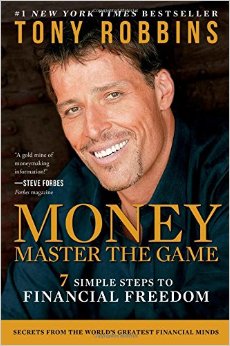 There are various criticisms of the book, such as:
Tony responded to some criticism in this interview for The Wall Street Journal.
At the other extreme, you’ll find gushing praise.
Do celebrities give better financial advice? Maybe not but Tony reaches the unreachable: people who get missed by conventional financial education. Even when Tony says things you’ve heard before, you might be more likely to believe them now. For instance, I’ve covered things like
We often know the keys about money (e.g., spend less than you earn, disaster-proof your life, save for the future). That doesn’t mean we do. Tony helps people change. He might get you to change too. He has a knack for making financial education engaging. He explains his terms and uses many examples.
Instead of writing a book, Tony could have created videos and an app. That’s what I thought before getting the book. I don’t see videos, but he has a free app (if you’re willing to give your contact information).
Instead of using a conventional publisher, Tony could have self-published. He could have made the book cheaper. He could have narrated the full audiobook, rather than portions.
Overall, what he did is fine.
Tony is paying for 50 million free meals. Besides donating all his book royalties, he’s made an additional personal financial contribution. That’s rare. Chances are good that you’ll end up on his mailing list, though. That gives him the opportunity to sell you his other stuff with the money you’re saving.
Tony tackles tough topics such as the conflicts of interest rampant in the financial sector. He gives solutions too. Think before you leap.
The stories from successes like Richard Branson are interesting but may not provide much practical guidance (e.g., how Honest Ed turned $212 into $100 million). Look for patterns rather than a guaranteed formula to financial independence.
I wasn’t expecting much from Tony’s book but because he’s popular, I knew that I had an obligation to read it. Overall, I’m impressed and highly recommend Money: Master The Game. There’s lots of practical advice.
Money books get stale. Tony’s book is new, which means now is the best time to read it.
PS Another must-read (or re-read) is Warren Buffett’s biography, The Snowball.
 By Dane O’Leary
Special to the Financial Independence Hub
When it comes to making huge decisions that amount to starting a new chapter in your life, financial planning is an essential precursor to such significant changes. In fact, it’s pretty irresponsible to, for example, buy a house before you’ve prepared yourself financially. Not only is it irresponsible, but in biting off more than you can chew you’re likely to choke; foreclosure isn’t just an empty threat your lender makes so you pay your bills on time.
In addition to buying a home, starting a family is another stage in your life that requires a thorough financial plan beforehand. Young adults who are ready to buy homes and start families are at an advantage because, by starting early, they have plenty of time to get their finances in order so huge life changes don’t lead to financial ruin.
However, many young adults don’t begin their preparation as early as they could despite experts who say it’s never too soon to get prepared. With that in mind, here are financial planning tips that will make buying a home and starting a family two of the best chapters in your life story.
Save, Save, Save Continue Reading…
