The Vanguard Retirement Income ETF Portfolio [VRIF/TSX] started trading Sept. 16th and offers retirees and near-retirees a 4% targeted — as opposed to guaranteed — payout. See also the Hub’s republication of Robb Engen’s preview on VRIF that appeared first on his BoomerandEcho site.
Positioned as a “Decumulation” product for retirees and near-retirees, it’s probably no coincidence that the 4% target is nicely in line with the long-established 4% Rule discussed on the Hub and MoneySense earlier this summer.
While a targeted return is NOT a guarantee – unlike the guaranteed but puny rates paid by GICs these days – Vanguard expects it will attract a fair amount of money from income-oriented investors suffering sticker shock when their GICs mature. Currently, many 1-year GICs pay around 0.5%, ranging from as little as 0.3% to no more than 1.1%. Even going out to 5-year terms, they’re typically paying only 1.4%, ranging from under 1% to 2% in the best case.
Technically, those GIC returns are “guaranteed” but a cynic might say they’re guaranteed to lose money on an after-tax, inflation-adjusted “real return” basis. Based on recent statements by the Bank of Canada and US federal reserve, this is not likely to improve before 2023. In the UK there are even renewed whispers of negative rates.
Of course, to achieve the 4% targeted payout, investors still have to bear some stock-market risk. VRIF consists of eight existing Vanguard stock and bond ETFs with an asset mix of roughly 50% stocks and 50% bonds.
VRIF has much lower fees than comparable income mutual funds and income ETFs
Monthly income mutual funds and ETFs have been around for years but as is typical, Vanguard aims to be the low-cost leader in the category. With such tiny returns from the fixed-income component, those costs are an important determinant of how much money is left for investors. The full MoneySense article recaps the fees relative to existing income mutual funds and income ETFs. Continue Reading…
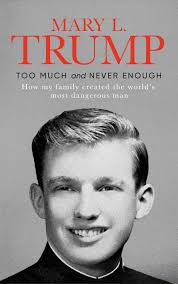
There are of course a glut of books about Donald Trump, especially now we’re fewer than two months away from the U.S. election. We have previously looked at several of these from an investment point of view, and most recently Mary Trump’s book, Too Much and Never Enough.
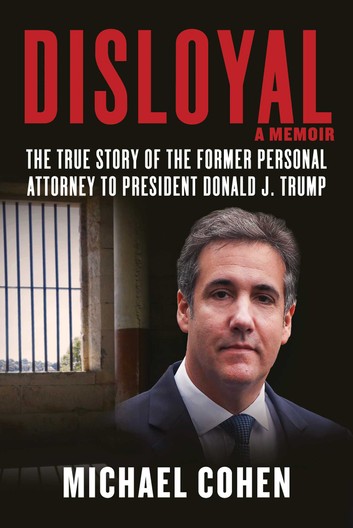
On the weekend I read Michael Cohen’s Disloyal, which — like Mary Trump’s book — provides the kind of insider perspective that outsider journalists and authors can’t quite match. Cohen spent a decade as Donald Trump’s personal lawyer and “fixer” and as he says in the book, “I know where the skeletons are buried, because I helped bury them.”
In its review this week, the Washington Post is a bit harsh on Cohen but I found the book to be among the most insightful I have read about Trump: certainly more enlightening than John Bolton’s snoozer, or some of the early journalistic books like Michael Wolff’s Fire & Fury.
Below are a dozen takeaways that provide either insights not before quite articulated, or which seem to bear repeating. While much of what follows may be known or hinted at it in earlier books and journalistic investigations, Cohen wraps it all up with his ten years of close observance of Trump as he evolved from real estate hustler to Reality Show “star” and now his turn as the Reality TV president.
Clearly, Cohen views Trump as a purely transactional beast who cares little for anything but his own hide and possibly his close family members. He doesn’t come out and say it explicitly but my own view of Trump is that he epitomizes the single-minded pursuit of the four goals cherished by many in this secular society: Money, Power, Sex and Fame. And give him credit for this if nothing else: he certainly has attained copious quantities of all four.
1.) Motivation to run in the first place was as a “lark and a PR stunt.”
Trump, largely at Cohen’s instigation, initially decided to run for president because “it would be cool” and as “a lark and a P.R. stunt.” Or as Cohen has famously said, the presidency would prove to be “the greatest infomercial in the history of politics.” Not exactly noble motivations and there’s not a hint of even pretending it was ever about “public service.” Even if Trump’s team thinks he deserves the Noble Prize (which his team infamously misspelled the other day, when the correct spelling of course is “Nobel,” after Alfred Nobel.)
2.) What’s with the Putin obsession?
Trump’s fascination for Russia’s Vladimir Putin is based on his perception that Putin is also the richest man in the world, and therefore hugely influential. He also serves as a model for the “dictator for life” aspiration Trump clearly harbours. And, Cohen insists that should he lose the November election, he will try to find a way not to leave.
3.) “a cheat, a liar, a fraud, a bully, a racist, a predator, a con man.”
No surprise here on this list of character traits. From page 15 of the e-book I read on SCRIBD:
“…. I bore witness to the real man, in strip clubs, shady business meetings, and in the unguarded moments when he revealed who he really was: a cheat, a liar, a fraud, a bully, a racist, a predator, a con man.”
It’s been previously reported how Trump has repeatedly stiffed contractors but Cohen cites several particular examples, including even those that backfired: like when he tried to welch on one of those famous $130,000 porn star payoffs covered by the tabloid National Enquirer.
4.) Pathological lying and baseless smears
The dirty tricks and pathological lying will continue. Cohen nicely recaps how the birtherism lie about Barack Obama originated, which first propelled Trump to media prominence. Similarly, he recaps the shameful smears that let Trump eliminate his Republican rivals in 2015-2016, ending with the smear about Ted Cruz’s father’s alleged (and ridiculous) role in the assassination of JFK.
5.) Sexual allegations
There’s plenty of salacious material about Trump’s sexual predator inclinations, both as the owner of beauty pageants and various ogling incidents, including ones about Cohen’s own daughter on a tennis court. That same daughter declared soon after Trump’s run was announced that he “wasn’t qualified” to become president. Out of the mouths of babes …. Continue Reading…
5G wireless will facilitate A.I., blockchain, Internet of Things, Smart Cities and other technologies.
My latest MoneySense Retired Money column looks at an investing theme that’s very popular in various newsletter services, and just now hitting the market: 5G, or Fifth Generation wireless Internet. Click on the highlighted headline to retrieve the full column: Investing in 5G.
One thing the Covid bear market has revealed is the popularity of technology in general, mostly epitomized by stocks trading on the Nasdaq exchange. True, the market has mostly recovered, but few think the tech wave is going away any time soon: certainly not the tens of thousands of young investors who flock to the Robinhood trading site.
5G is a key technology, not just for its own sake but because of several allied technologies it enables.
Recall that currently we are in 4G, which succeeded 1G, 2G and 3G. 1G was the technology that enabled the first cell phones; 2G brought text messaging, 3G was Internet access for cell phones and 4G higher speeds (albeit in overloaded networks.)
5G describes the technological innovations and infrastructure that will support the next era of connective technology. But don’t fall into the trap of thinking 5G is just 20% more powerful than 4G. In fact, it’s orders of magnitude more bandwidth, meaning blazing Internet speeds and almost no latency (waiting) times.
5G igniting explosion in AI, IOT, Blockchain and other technologies
The need for a quantum leap in Internet speed may have become apparent during the Covid lockdown, when the whole world discovered the benefits of work-from-home technologies like Zoom or Cisco’s Webex. Continue Reading…
MoneySense.ca; Photo created by senivpetro – www.freepik.com
My latest MoneySense Retired Money column looks at that perpetually useful guideline known as the 4% Rule. Click on the highlighted headline to access the full article online: Is the 4% Rule Obsolete?
As originally postulated by CFP and author William Bengen, that’s the Rule of Thumb that retirees can safely withdraw 4% of the value of their portfolio each year without fear of running out of money in retirement, with adjustments for inflation.
But does the Rule still hold when interest rates are approaching zero? Personally I still find it useful, even though I mentally take it down to 3% to adjust for my personal pessimism about rates and optimism that I will live a long healthy life. The column polls several experts, some of whom still find it a useful starting point, while others believe several adjustments may be necessary.
Fee-only planner Robb Engen, the blogger behind Boomer & Echo, is “not a fan of the 4% rule.” For one, he says Canadians are forced to withdraw increasingly higher amounts once we convert our RRSPs into RRIFs so the 4% Rule is “not particularly useful either … We’re also living longer, and there’s a movement to want to retire earlier. So shouldn’t that mean a safe withdrawal rate of much less than 4%?”
It’s best to be flexible. It may be intuitively obvious but if your portfolio is way down, you should withdraw less than 4% a year. If and when it recovers, you can make up for it by taking out more than 4%. “This might still average 4% over the long term but you are going to give your portfolio a much higher likelihood of being sustainable.”
Still, some experts are still enthusiastic about the rule. On his site earlier this year, republished here on the Hub, Robb Engen cited U.S. financial planning expert Michael Kitces, who believes there’s a highly probable chance retirees using the 4% rule over 30 years will end up with even more money than they started with, and a very low chance they’ll spend their entire nest egg.
Retirees may need to consider more aggressive asset allocation
Other advisors think retirees need to get more comfortable with risk and tilt their portfolios a little more in favor of equities. Adrian Mastracci, fiduciary portfolio manager with Vancouver-based Lycos Asset Management Inc., views 4% as “likely the safe upper limit for many of today’s portfolios.” Like me, he sees 3% as offering more flexibility for an uncertain future. Continue Reading…
There seems to be no end to the number of books devoted to America’s flawed president but certainly the two dominant ones this summer have been John Bolton’s The Room Where it Happened and now Mary Trump’s Too Much and Never Enough.
Bolton’s book topped the New York Times best-seller list last time I looked but I expect it will be knocked off shortly by Mary Trump’s intimate portrait of her uncle’s early days, and how his character and outlook has never really changed. Mary Trump’s book sold 950,000 copies within days of its release and should be nicely past a million by the time you read this.
I have copies of both books but confess to having given up on Bolton’s long snoozer once Mary’s much shorter and more entertaining book came out. Mary’s is just over 250 pages. Both books have been extensively reviewed since their release and of course the White House’s attempt to block publication of them and muzzle their authors only ended up backfiring and turning both books into bestsellers.
In Bolton’s case, I found the numerous reviews sufficient to get the gist of what he was saying: the book is just too pedantic and self-serving to tolerate unfiltered.
Mary’s book, on the other hand, is a compelling fast read, as you’d expect a book would be when written by someone actually in the Trump family. If indeed she believes Uncle Donnie is the world’s most dangerous man, then she’s a brave lady, as she demonstrated last Friday evening on CNN, when she ably rebutted Trump’s belated attempts on Twitter to discredit her.
I think most readers can safely disregard White House flack Kayleigh McEnany’s blanket dismissal of the book as “a pack of lies,” given that she also confessed at the same time she hadn’t read the book.
Perhaps Mary focuses too much on the early days of her father (Fred Junior) and his early death by alcoholism, largely caused by some abominable treatment by his younger brother (Donald) and their father, Fred Senior. But an understanding of this relationship is crucial to the book’s thesis, given that Mary notes near the end that “Vladimir Putin, Kim Jong-un, and Mitch McConnell, all … bear more than a passing psychological resemblance to Fred.”
I found the book more compelling the further you get into it. The last few chapters are especially insightful and pretty damning, judging by the extent to which I underlined it. Below are a few examples:
Protected from his many failures
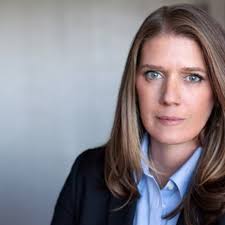
Author Mary Trump
The last full Chapter (14, A Civil Servant in Public Housing) starts with an idea I’ve not seen discussed elsewhere, as Mary sees parallel “through lines” from the House where the Trump family was raised to Trump Tower to the West Wing; and from Trump Management to the Trump Organization to the Oval Office. The first reveals a progression of controlled environments that took care of Donald’s material needs, while the second constituted “a series of sinecures in which the work was done by others and Donald never needed to acquire expertise in order to attain or retain power …. All of this has protected Donald from his own failures while allowing him to believe himself a success.”
Also intriguing is the interpretation that — far from Donald taking advantage of others, which he certainly did — “there was a line of people willing to take advantage of him.” This started with the New York tabloid press in the 1980s, which “discovered that Donald couldn’t distinguish between mockery and flattery and used his shamelessness to sell papers.”
By 2004, Donald’s finances were “a mess,” Mary writes, at which time his “empire” consisted of “increasingly desperate branding opportunities such as Trump Steaks, Trump Vodka, and Trump University.” And this made him an easy target for Mark Burnett, who saved his career by convincing Trump to be the star of the reality TV show, The Apprentice, where he played the part of the successful businessman he wasn’t in reality.
She also recounts the many times his father bailed him out, including at least one of his failing casinos (It seems the House always wins, unless Donald Trump owns it). As she notes:
“Nobody has failed upward as consistently and spectacularly as the ostensible leader of the shrinking free world.”
In short, Mary concludes, her uncle “was neither self-made nor a good dealmaker … His real skills (self-aggrandizement, lying, and sleight of hand) were interpreted as strengths unique to his brand of success.”
Mary’s credentials as a psychologist also make her observations relevant, such as this shocking sentence:
“Donald today is much as he was at three years old: incapable of growing, learning, or evolving, unable to regulate his emotions, moderate his responses, or take in and synthesize information.”
The stress of distracting from his vast ignorance
While his fundamental nature hasn’t changed, he has experienced more stress since taking on the presidency. However, she explains: Continue Reading…


 Posted By
  My latest MoneySense Retired Money column looks at Vanguard Canada’s new targeted 4% annual payout vehicle for retirees and near-retirees, provided by its new VRIF ETF. You can find the full article by clicking on the highlighted headline: The lowdown on Vanguard’s Retirement Income ETF: can you rely on its 4% payout target?