

 Posted By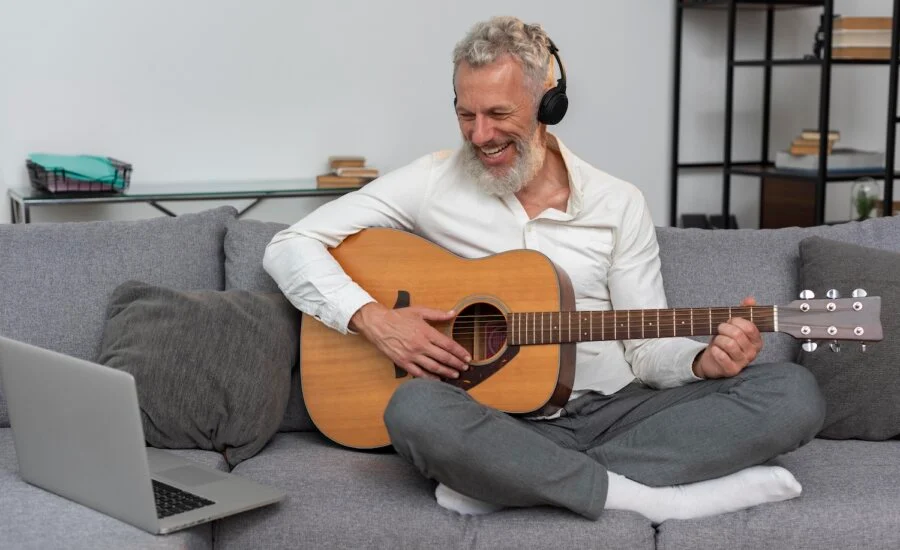
My latest MoneySense Retired Money column went live on Friday. You can read it by clicking on the hypertext link: Is AI the ultimate Retirement Hack?
The column was initially sparked by reading I am not a Robot, which is subtitled “My year of using AI to do almost everything.” While while author Joanna Stern’s focus is on using AI to enhance her worklife and personal and family life, my primary interest is on AI and retirees.
I was interested in what the experts might say about, first, how AI can be used by those hoping to retire to speed up the process and the planning; and second, once achieved, how AI can be used to help new retirees spend all that abundant leisure time.
Here on Findependence Hub, we once again reached out to almost 20 financial experts and business owners through Linked In and Featured.com. You can find the link to the full 6,000 word (or so) blog here, which presents the entire responses of 18 experts chosen from more than 50 submitted. The Retired Money column is shorter, touching on the highlights and my impression of the book and its implications for new retirees.
As more than one of the contributors noted, it’s ironic that getting up to speed on AI in all its aspects can itself become a full-time job; fortunately time is one commodity retirees should have plenty of! If pressed for time, you can skim the 18 topline headlines in the long blog, skipping to the content that interests you.
Stern’s book came to my attention via an interview with her by Jim Cramer in his Mad Money podcast. Cramer himself appears to be immersed in every AI tool from Claude to Google’s Gemini. The book quickly made it on to the NYT bestseller list.
As I confess in the MoneySense column, while my family members play around with some of these tools, I’ve not yet immersed myself in them, although I find AI to be an interesting theme as an investment, if only through an ETF like AIS , the VistaShares Artificial Intelligence Supercycle ETF.
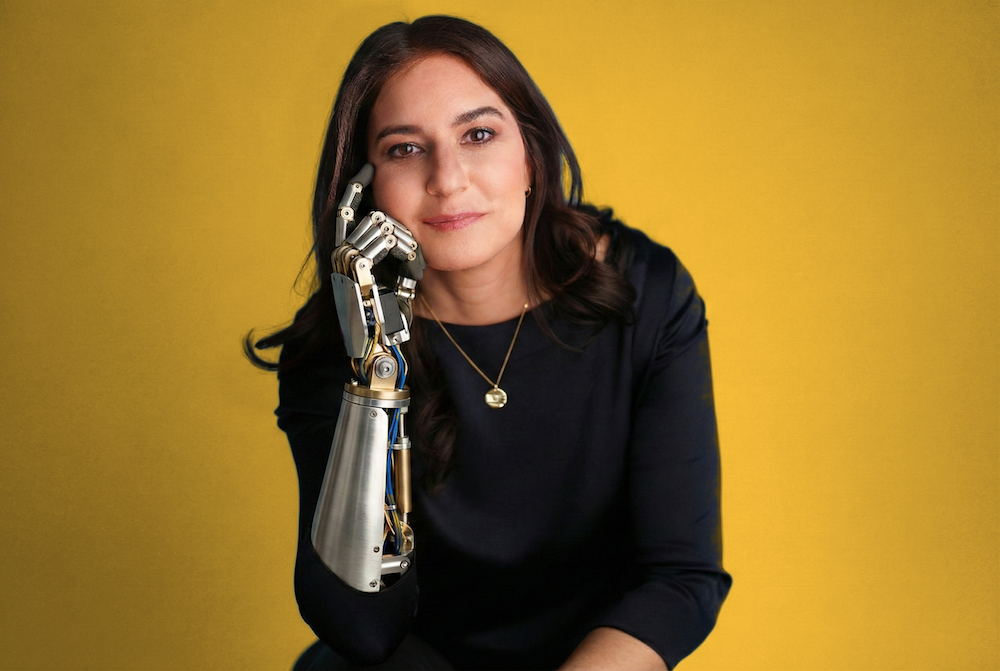
Indeed, Stern’s book reveals the daunting task of coming up to speed on AI, assuming you wish to try it in every aspect of your daily life, as the author did, if only for a year. Fortunately, our contributing experts have several ideas for focusing and making the task more approachable, even if you have the luxury of leisure time afforded by full-time Retirement or even, as in my case, Semi-Retirement.
Stern closes her book with 6 Rules for living in an AI world, starting with “working with AI, not for it. “Use it to move faster, spark ideas, automate the boring parts. But keep your weird, wonderful human judgement in the loop.”
Retirement is the ultimate unlock for AI
Most respondents on Featured.com mentioned Health, Finances, Travel, Senior Dating and Creative pursuits facilitated by AI. Wayne Lowry, CEO of Scale By SEO, put it well: “Retirees finally have something working folks don’t: time to actually learn the tool instead of just bolting it onto a busy day. That’s the unlock. AI rewards curiosity and iteration, and retirement is the perfect runway for both.”
Neill David Watson, Founder of APMZEE, observed that “the pattern I see is that people don’t lack interests later in life; they lack the patience for the friction, the research, the logistics, the learning curve that sits between ‘I’d like to’ and ‘I started.’ That friction is exactly what these tools dissolve.” Whether it’s learning to play a musical instrument, sketching out a plan to start a small business or writing the great American novel, “AI can compress the daunting setup into a first step you’ll actually take.”
After going through all these responses, my impression was that using AI in Retirement could itself become another full-time job. As is the case during our working years, it helps to prioritize. Most of the respondents see Health and Finances as the essential places to start.
Personally, I suspect I won’t immerse myself in creative AI projects until I’m fully retired. Right now, I’m happy to research AI and absorb the endless news on its effects on the workforce, productivity and government policy. Where it makes sense, I will continue to invest in certain AI stocks within the scope of a well-balanced diversified portfolio. On the creative front, I may dabble in things like AI Music; and while it’s been a long time since I contemplated writing another book (whether fiction or non-fiction) I will certainly enlist AI if and when that time comes.
