On Tuesday, I attended the Toronto instalment of BMO ETFs’ Spring Road Tour, the first of a 10-city Canadian tour that extends into early May.
The title is We’ve got you covered, which is a sly allusion to one of the main themes of the series: Covered Call ETFs.
Aimed primarily at financial advisors, the sessions are roughly an hour long, coinciding either with breakfast or lunch, depending on the city. There are three main segments:
Bipan Rai, Head of ETFs & Alternatives Strategy, provides insights into BMO’s current macroeconomic outlook, including positioning across asset classes and risk models
Jimmy Xu, Head, Liquid Alts and Non linear ETFs, manager of BMO’s flagship Covered Call ETFs, discusss these innovative solutions designed to help clients meet their cash flow needs while maximizing long term growth.
The road show ends with an introduction to BMO’s new Portfolio Consulting Services, designed to help advisors navigate an increasingly complex investment landscape. Senior Portfolio Consultant, Hilly Cutler shares how BMO supports advisors in optimizing their model portfolios—reducing costs, enhancing diversification, and managing risk as CRM3 approaches.
As the chart below summarizes, the road shows ends in Burlington on May 7th:
Except the Toronto event, which was a breakfast session, the other sessions all begin at either 12 pm or 1 pm. Below we reproduce some of the slides presented at the show.
Current Market outlook and Positioning by Bipan Rai
Bipan Rai, BMO ETFs
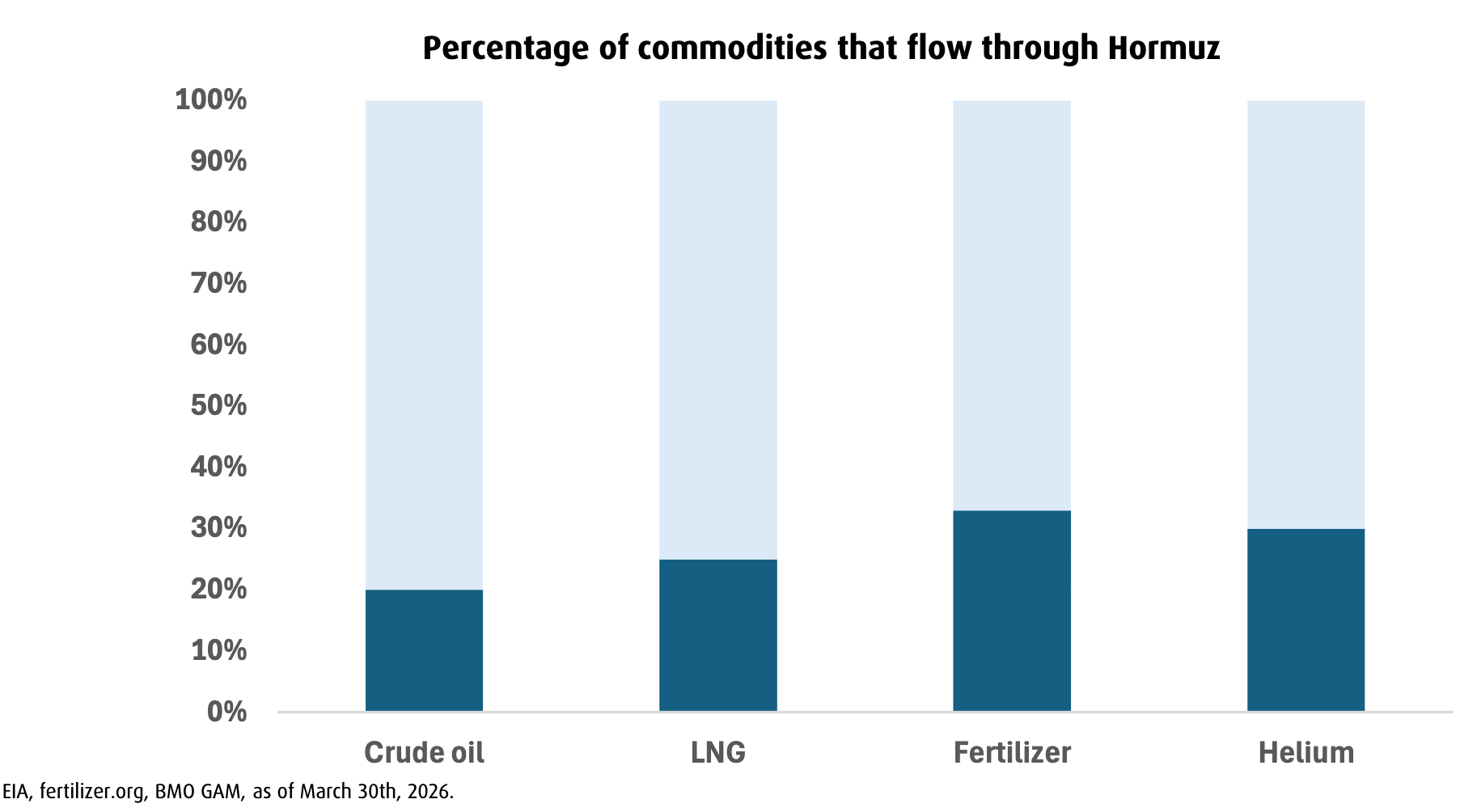
The sessions kick off with a current market outlook delivered by Bipan Rai, who focused on the impacts of the ongoing Iran war, which began at the end of February. He confessed to having a few sleepless nights about the closing of the Hormuz Strait. Not surprisingly most investors suffered negative returns in both stocks and bonds during March. Hormuz matters for the macroeconomic picture, not just because of oil, but also because of Liquid Natural Gas, fertilizers and Helium: the latter helps cool AI systems. (shown below).
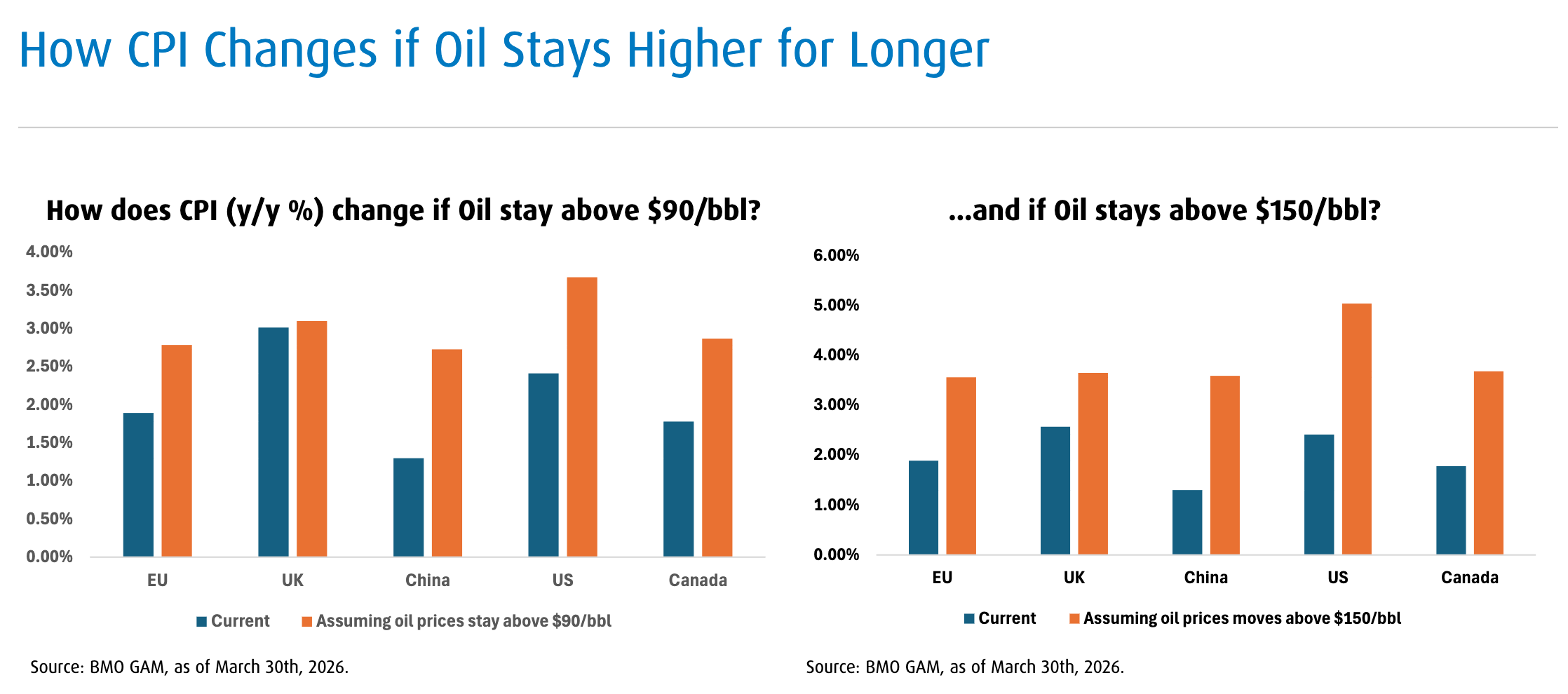
Rai also showed the following two charts, which illustrate how the Consumer Price Index changes the longer the price of oil stays higher. The longer the Strait is closed or traffic severely constrained, the more it will create inflation and create risks to economic growth.
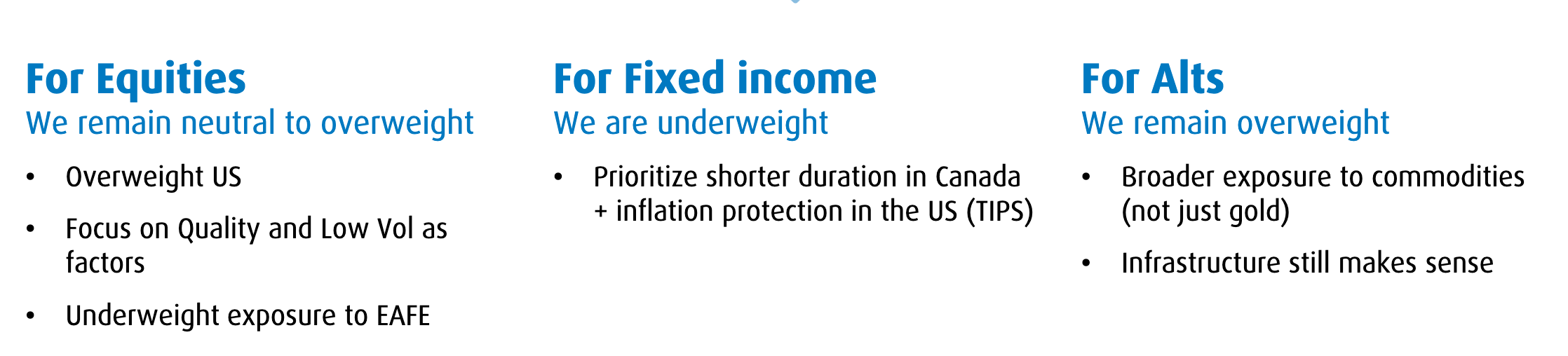
If the price of Oil does stay higher for longer, Rai commented that investors may want to take a more defensive tilt to equities, emphasize quality and low volatility as factors, diversify with Treasury Inflation Protected Securities and embrace broad commodities. BMO has of course ETFs for all of these: such as ZTIP (BMO Short-term US TIPS Index ETF) or the new ZCOM for broad commodity exposure.
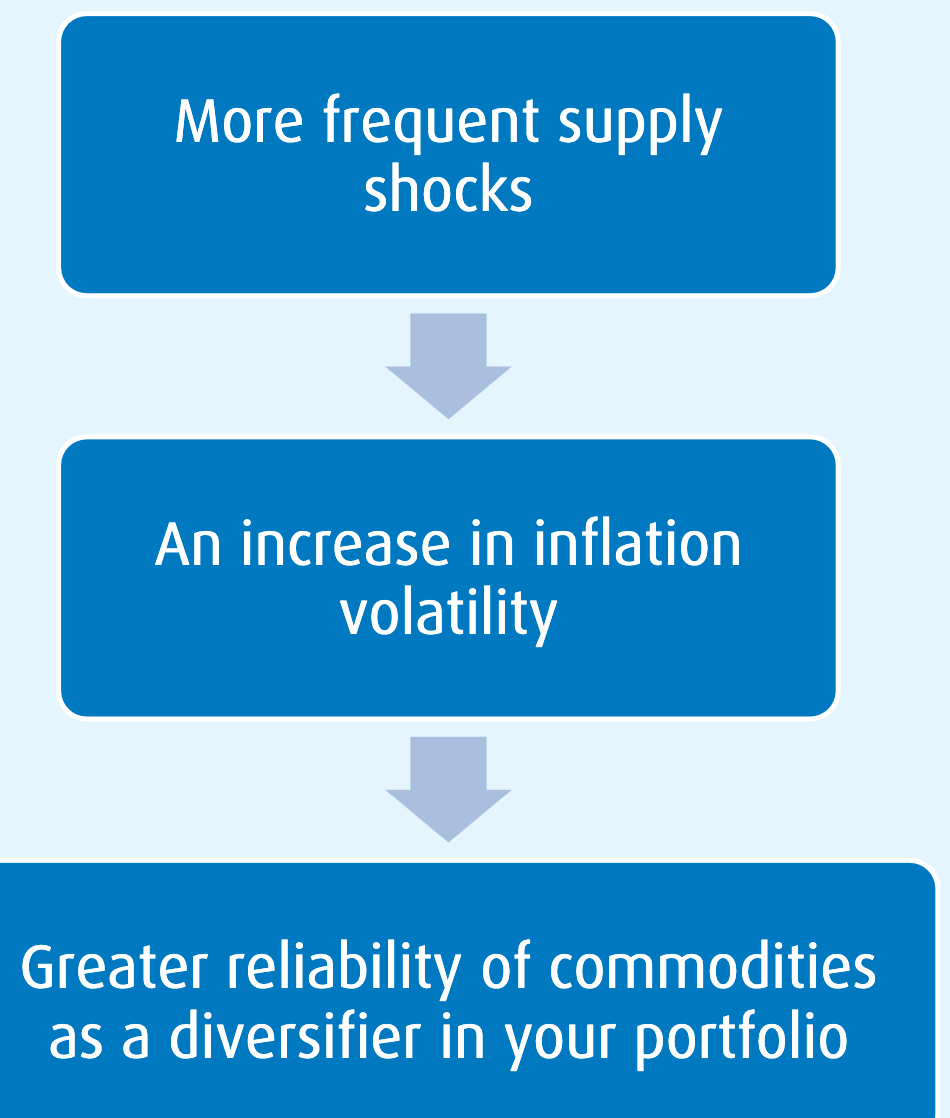
Rai’s “big takeaway” is that while Commodities are the “source of the shock,” they also “benefit from supply constraints, fiscal demand and de-globalization.”
Knowing that Inflation risks are “to the upside” and “growth risks are to the downside” Rai concludes that “We are most likely migrating from a ‘reflation’ to ‘mild stagflation.’ ”
He says we are likely in a transition from Strong Growth and High Inflation to Slower Growth and High Inflation, while North American banks are “likely to keep rates on hold.”
As a result, as shown below, BMO is neutral to overweight Equities, underweight Fixed Income, and overweight Alternatives:
Jimmy Xu on the Benefits of Covered Call ETFs
Jimmy Xu, CFA, BMO ETFs
The second talk is by Jimmy Xu, Head of Liquid Alts and Non linear ETFs. His focus was on Covered Call ETFs, which BMO has pioneered in the Canadian market. While investors often buy covered call ETFs just for yield, yield is not the most important consideration, Xu said. “Chasing yield is the quickest way to have unstable income, capital erosion and unhappy clients.” Continue Reading…
I’ve noticed a flurry of articles recently about how investors, including nearing or in the Retirement Risk Zone, might consider moving beyond the traditional 60/40 balanced portfolio of stocks and bonds to consider multiple alternative asset classes.
Indeed, here at FindependenceHub.com we have in the past week run two blogs on specific alternative assets classes: Gold and Bitcoin.
Click on the following headlines to read them if you missed them the first time around:
Admittedly both blogs have a strong point of view that comes from the respective authors. It happens that these two bloggers don’t think much of Gold and Bitcoin respectively. I value their opinion and felt it was worth passing along to readers, who can make their own judgements. Personally, I’ve always believed 5% in Gold or Precious Metals bullion and/or mining stocks is a risk worth taking. I’m a little more skeptical about cryptocurrency but have written in the past that for those inclined to take a flyer on Bitcoin, a 1 or 2% position could work. That 1% could soar and become 10% or more of a total portfolio but it’s also possible that it might indeed descend to zero.
The rest of this blog canvases a baker’s dozen of financial experts and business owners and you’ll see that several of them take a stance on gold and bitcoin, both positively and negatively, as well as numerous other asset classes, such as real estate, private equity, hedge funds and many more.
With the assistance of Featured.com, which has been supplying Findependence Hub with quality content for several years, we recently polled a number of these experts on LinkedIn, as you can see by clicking on their profiles below.
Here’s how we posed the question:
Beyond traditional stocks and bonds, represented in Balanced ETFs, what, if any, alternative asset classes do you recommend, and in what proportions? For example: precious metals (gold or silver bullion or related stocks, or ETFs holding the same), commodities in general, Bitcoin, Ethereum and other cryptocurrencies, real estate held directly or via REITs or certain publicly traded stocks, or any other alternatives not mentioned here, such as Private Equity or Hedge Funds.
1. I recommend gold primarily as geopolitical and inflation insurance, not as a growth asset. Allocate 5-10% of your portfolio to gold via ETFs like GLD or physical bullion if you have secure storage. Silver is more volatile and industrial, so treat it as a smaller speculative position (2-3%) if at all. Gold doesn’t pay dividends or interest, so it’s dead weight in a bull market, but it’s the ultimate “crisis hedge” when currencies or governments misbehave.
2. Direct real estate ownership is capital-intensive and illiquid, so for most investors, publicly traded REITs (Real Estate Investment Trusts) are the smarter play. They provide exposure to commercial, residential, or industrial property with daily liquidity and mandatory dividend payouts. I prefer diversified REIT ETFs like VNQ. This gives you inflation protection (rents rise with prices) and income generation without the headache of being a landlord. Avoid over-concentration here; real estate correlates heavily with the broader economy during downturns.
3. Crypto is not an investment; it’s a volatility lottery ticket with a philosophical thesis. I recommend limiting exposure to 2-5% of your portfolio, and only in the “blue chips” (Bitcoin and Ethereum). Treat this as venture capital: money you can afford to lose entirely. Do not buy crypto with debt, and do not FOMO into altcoins. Store it in a hardware wallet (Ledger, Trezor) if you hold significant amounts; exchanges are not banks. This allocation satisfies your urge to participate in the “future of finance” without risking your retirement if it all goes to zero.
4. Commodities (oil, natural gas, agricultural products) via ETFs like DBC provide inflation protection and diversification, but they are mean-reverting and volatile. Allocate 3-5% as a tactical hedge, especially during inflationary periods. Avoid direct futures contracts unless you are a professional; the contango and rollover costs will eat you alive.
5. Unless you are an accredited investor with $10M+ in liquid net worth, private equity and hedge funds are legally and financially inaccessible or impractical. They charge egregious fees (2% management + 20% performance), lock up your capital for years, and studies show most underperform public markets after fees. If you insist, access them via interval funds or publicly traded BDCs (Business Development Companies), but understand you are paying for illiquidity and complexity, not guaranteed outperformance. — Lyle Solomon, Principal Attorney, Oak View Law Group
Alternative investments should represent twenty per cent of an investor’s total portfolio. In terms of specific allocations, I recommend ten percent in physical gold as a hedge against loss or theft, five percent in real estate investment trusts (REITs) for income generation and three percent in Bitcoin for growth opportunities. Finally, I suggest two per cent be allocated to private equity for both capital gains and diversification purposes. A combination of these types of alternative investments will help protect investors from future inflationary pressures and contribute greatly to their long term performance. Geremy Yamamoto, Founder, Eazy House Sale
Put the most money into things you understand best
My bigger principle is this: Put the most money into the things you understand best.
In my case, that has always been real estate and housing because I know how value gets created there. I know what distress looks like. I know where the discount comes from. I know how people get in trouble. That matters. The more removed an asset is from your real-world understanding, the smaller it should probably be.
And one more thing. Liquidity matters. A lot. People forget that. An investment may look great on paper until you need cash and cannot get to it without taking a beating. That is why I like keeping things simple and staying out of anything that locks you up unless the reward is clearly worth it. — Don Wede, CEO, Heartland Funding Inc.
I’ll break the answer into two parts depending on what your goals are. Growing your assets is one thing, turning your capital into a lifetime income that never runs out is another and that is the #1 financial concern of the 50+ age group.
Purchasing Power Protection is the new Growth strategy:
Historically we used to achieve stable growth by balancing a risk-on asset class (equities) with a risk-off asset class (bonds). In good times the equities flew and the bonds did little; in bad times the bond performance offset declines in equities.
The problem is that in inflationary times, both fall. Inflation undermines the economics of established businesses which have to compete for limited resources that are increasing in price. Positioning for scarcity can insulate you against these circumstances. Gold, Silver and even Bitcoin are the most liquid scarce assets on the planet but they don’t move uniformly. Backing a portfolio with a scarce risk-on asset such as Silver or Bitcoin — while having the majority in a reliable, but occasionally boring, asset like gold — now gives you balance over the longer term. A 30/70 split seems to be the sweet spot.
Assets run out, Lifetime Income is forever:
70% of savers worry about one thing above all others. Can I afford my ideal lifestyle now at the risk of poverty if I live 25+ years? Not everyone will live 25+ years but if I spend now then I am betting against my own longevity. Insurers capitalize on this risk by pooling lives together and promising annuitants a fixed income for life. But fixed incomes lock in the loss of purchasing power. Your lifestyle is going to degrade over time.
It wasn’t always this way. Just over a century ago, 50% of U.S. households joined a longevity risk-sharing arrangement called a Tontine. Recent legislation has enabled modern Tontine Trusts which can be backed by assets that can resist inflation. The Tontine Trusts use your preferred assets to pay you a monthly income for life. When a member dies, their leftover assets top-up the trusts of survivors, typically enabling their monthly income to increase.
So the question the reader really needs to decide upon is: What matters most? The balance of the account or the lifestyle that I always want to enjoy. For generations past, the answer was not to play the markets but rather to invest in yourself.
[Potentially there is a far larger article here, contact us if you want to offer readers a $250 bonus and a similar reward for yourself] — Dean McClelland, Founder/CEO, Tontine Trust Europe KB Continue Reading…
My latest MoneySense Retired Money column looks at the Iran conflict that erupted suddenly late in February: you can find the full column here: How Retirees should respond to the Iran Crisis.
On Tuesday, the day after Trump TACO’d over his threat to attack Iran’s oil infrastructure (a 5-day reprieve that calmed stock markets at least for the week ending March 27th) Findependence Hub ran a blog that collected input from 14 financial advisors and business owners based largely in the United States. Those sources were collected via a partnership with long-time contributor Featured.com, which works with Linked In to select input. You can find the resulting column here: Financial Experts and Business Owners on what if any moves Retirees should consider if Iran War drags on.
You can get the gist of the messages those experts sent by quickly scrolling down through an admittedly long blog and reading the subheadings highlighted in Blue in the original post. Below I append my favourites, some of which I flagged on social media. If you find the headline summaries intriguing, you’ll find the accompanying observations useful, if not actionable:
Avoid Knee-jerk Liquidation
This is more of a rebalance-and-defend moment than a reason to overhaul the portfolio
Put Capital Preservation over Aggressive Growth
Seek Robust diversification across asset classes and sectors
Rebalance toward defense, yes. Blow up your entire strategy? No.
Make sure existing Allocation is suitably Defensive and Liquid
Don’t over-rotate into a single ‘safe’ bet that can whipsaw when the narrative changes
Remain diversified enough to absorb uncertainty
Reduce volatile individual Growth Names but maintain Diversified Index Funds
Move from Sector Rotation to Structural Resilience
Canadian perspective, with CUSMA renewal looming
The MoneySense column focuses more on the Canadian situation, with input from Toronto-based advisors like John De Goey, Matthew Ardrey and Steve Lowrie, all of which should be familiar to readers of this site and the Retired Money column.
See also a recent blog on Stagflation penned by Dale Roberts of the Retirement Club and cutthecrap investing. Among his many suggestions, the most valuable may be his emphasis on maintaining an “All-Weather Portfolio” catering to all four possible economic quadrants: Inflationary Growth, Disinflationary Growth, Stagflation and Deflation/Recession. Continue Reading…
Since we last polled financial experts and business owners about the prospects for investing throughout 2026, the surprise war in Iran late in February has decidedly upset the apple cart.
These experts were gathered with the assistance of Featured.com, which has been supplying Findependence Hub with quality content for several years. It has changed its procedure so editors like myself can request input on particular topics we think will interest our readership. The sources are all on LinkedIn, as you can see by clicking on their profiles below.
Here’s how we posed the question about how retired or almost-retired clients might approach their portfolios in light of the Iran conflict:
What defensive strategies do you suggest for retirement-age clients concerned that the Iran war will drag on long enough to impact their nest eggs? Defensive ETFs, gold, utilities or what? Any major shift in Asset Allocation?
Below are the 14 responses that caught my attention, but so many were coming in that I wanted to publish this blog before events overtook the observations and recommendations. I am also doing a followup Retired Money column for MoneySense.ca that will likely run in the next week, which focuses more on Canadian input from domestic experts. This site will run a “throw” to that column once it appears.
The events of the past weekend (March 21 – March 22nd) are typical of the chaos and uncertainty that abound under a rogue American president. Typically, the weekend began with a threat to bomb Iran’s power plants if they didn’t re-open the Strait of Hormuz in 48 hours.
That likely ruined the weekend for many investors but also typical, just hours before U.S. markets opened Monday, Trump provided a 5-day reprieve, causing stocks to surge and oil to fall back to more acceptable prices. As this was everywhere online and in broadcast media yesterday, and will be the main topic in Tuesday’s papers, I won’t recap further, beyond this observation:
This is of course another instance of the so-called TACO Trade: for Trump Always Chickens Out. Unless of course the next time he doesn’t.
So on with our perspective from U.S. business owners and financial experts, keeping in mind that these were submitted before this weekend.
“Protect purchasing power and smooth volatility while still allowing the portfolio to grow over time.”
For retirement age clients worried that a prolonged conflict could affect markets, most advisors focus less on drastic changes and more on defensive diversification and income stability. The goal is protecting capital and reducing volatility rather than chasing returns.
Here are a few commonly recommended strategies:
1. Increase exposure to defensive sectors
Sectors that provide essential services tend to hold up better during geopolitical or economic stress. These include utilities, healthcare, and consumer staples because people still need electricity, medicine, and basic goods regardless of the economy. ETFs tracking these sectors are often used as defensive holdings since they tend to have lower volatility and consistent dividends.
2. Add a modest allocation to gold
Gold has historically acted as a “safe haven” during geopolitical crises and financial instability. Many retirement portfolio strategies suggest holding around 5 per cent to 15 per cent in gold or gold ETFs as a hedge against market stress, inflation, or currency risk.
3. Maintain or increase high-quality bonds
Government bonds and investment grade bonds often act as a buffer when equities become volatile. Defensive retirement strategies typically include high quality bonds and dividend paying assets to stabilize portfolio income and reduce drawdowns.
4. Use defensive ETFs rather than individual stocks
Broad ETFs that track utilities, healthcare, real estate, and gold are often used to diversify risk. For example, defensive portfolios sometimes include sector ETFs tied to utilities or healthcare alongside treasury and gold exposure to hedge against market shocks.
5. Avoid major asset allocation shifts driven by headlines
Even during geopolitical tension, most advisors caution against dramatic portfolio changes. The focus is usually on gradual rebalancing, ensuring the portfolio is aligned with the investor’s risk tolerance and time horizon rather than reacting to short term events.
Bottom line: For retirees concerned about geopolitical risk, the typical approach is not a complete overhaul but a defensive tilt:
Maintain diversified equity exposure
Add defensive sectors
Keep a strong bond allocation
Consider a modest gold position
Focus on income-producing assets
This kind of structure helps protect purchasing power and smooth volatility while still allowing the portfolio to grow over time. — Omer Malik, CEO, ORM Systems
“Avoid Knee-jerk Liquidation.”
As an attorney who has guided clients through Desert Storm, 9/11, and the Great Recession, I move immediately to suppress the urge to panic. War is tragic for humanity, but historically, the stock market treats it as a temporary injunction rather than a permanent dismissal. The worst financial crime you can commit right now is a “knee-jerk liquidation.”
Selling your entire portfolio because of a headline is how you turn a temporary paper loss into a permanent reduction in your standard of living. History shows that while markets jitter at the sound of cannons, they often rally once the uncertainty resolves. Therefore, we do not make major shifts in Asset Allocation based on fear; we make minor tactical adjustments based on risk management.
For defensive strategies, I advise a pivot toward the “Boring Sector.” This means Utilities (XLU) and Consumer Staples (XLP). Regardless of what happens in the Strait of Hormuz, people still need to turn on the lights, brush their teeth, and wash their clothes. These sectors are the “tenured professors” of the market: they aren’t exciting, but they have reliable cash flow and pay dividends that can cushion the blow of a downturn. They act as a legal defense against volatility.
Regarding Gold, view it not as an investment, but as a “geo-political insurance policy.” Allocating 5% to 10% to a gold ETF (like GLD) or physical bullion is prudent. It creates a “hedge” because gold often moves inversely to the dollar and panic. However, do not go “all in.” Gold generates no cash flow; it just sits there looking pretty. It is the airbag, not the engine.
Finally, consider the specific nature of this conflict: Energy. Iran is a major energy player. If the conflict drags on, oil prices will likely spike. Holding a diversified Energy ETF (XLE) acts as a natural hedge for your personal budget. If you are paying more at the gas pump, you might as well be earning dividends from the oil companies to offset the pain. Combine this with short-term US Treasuries (SGOV or SHV), which are currently paying around 5% risk-free. This is your “dry powder.” It keeps your capital safe and liquid, allowing you to sleep at night while the world argues. The verdict? Stay diversified, embrace the boring, and turn off the news. — Lyle Solomon, Principal Attorney, Oak View Law Group
If you are worried a prolonged Iran war could affect your nest egg, I recommend focusing on securing retirement income and preserving short-term assets rather than chasing tactical bets like gold or sector ETFs.
Use a bucket approach to hold stable, low-volatility assets to cover several years of withdrawals while keeping a growth allocation for longer-term needs. Shift the portion of your portfolio needed soon toward preservation and lower volatility investments as you enter retirement.
Strengthen diversified income sources such as Social Security, pensions, and annuity income to reduce sequence-of-return risk. Pay attention to asset location so taxable, tax-deferred, and tax-free accounts are positioned to minimize taxes when you withdraw.
Finally, adopt a flexible withdrawal plan with guardrails so spending can be adjusted if markets or geopolitics worsen, instead of making a major permanent allocation shift based on one event. — Clint Haynes, Financial Planner, NextGen Wealth
Put Capital Preservation over Aggressive Growth
For retirement-age investors, the current conflict in Iran highlights the importance of capital preservation over aggressive growth. A prudent approach involves making modest, 5-20% tactical shifts into defensive assets like gold and short-term Treasuries, which provide a necessary hedge against geopolitical spikes and energy-driven inflation.
By prioritizing liquidity and stability now, retirees can cushion their nest eggs against immediate market shocks without abandoning their long-term recovery potential.
On the equity side, focusing on “all-weather” sectors like Utilities, Healthcare, and Consumer Staples offers a way to maintain steady dividend income even during broader market downturns. While small, satellite positions in energy or defense ETFs can offset rising oil prices, the key is to avoid emotional overreactions to the headlines. Maintaining a diversified, high-quality portfolio ensures that your capital remains protected while you stay positioned to benefit when markets eventually normalize. — James Sahagian, Certified Financial Planner, Ramapo Wealth Advisors
Seek Robust diversification across asset classes and sectors
For retirement-age clients worried that a prolonged geopolitical conflict like the Iran war might impact their nest eggs, a defensive posture typically emphasises diversification and capital preservation over aggressive growth. One core idea is to balance a portfolio so that it can withstand volatility without forcing major asset reallocations in response to headlines. Robust diversification across asset classes and sectors remains a foundational strategy for resilience during geopolitical stress.
1. Safe-haven assets
Many investors look to traditional safe havens such as gold or gold-linked ETFs (e.g., IAU or GLD) because gold has historically served as a store of value and tends to have low correlation with equities during times of uncertainty. Allocating a modest percentage of a portfolio to gold or precious metals can act as an insurance policy against market drawdowns and inflationary pressures that often accompany geopolitical risk.
2. Fixed-income and cash equivalents
Holding high-quality bonds, short-duration Treasuries, or cash/money-market funds can preserve capital and provide liquidity, which is especially important for retirees who may need to draw income over time without selling equities at depressed prices. Treasury securities, particularly short-term ones, can serve as defensive assets when stock markets are volatile.
3. Defensive sectors and ETFs
Allocations to utility, consumer staples, and healthcare sectors — typically included in defensive ETFs — can provide relative stability because these industries supply essential goods and services regardless of economic cycles. These stocks often exhibit lower volatility than growth or cyclical sectors during stress periods.
4. Core & satellite approach
Rather than making a sweeping shift, many advisers recommend a “core-and-satellite” strategy where the core of a retirement portfolio remains broadly diversified in quality equities and bonds for long-term growth, while the satellite portion can include tactical defensive positions like precious metals or short-term fixed income to manage near-term risk. This allows retirees to maintain growth potential while tempering volatility. — Daria Turanska, Legal Manager, FasterDraft
Move from Sector Rotation to Structural Resilience
My perspective: Moving from Sector Rotation to Structural Resilience
From an institutional research perspective, navigating protracted geopolitical conflicts requires a fundamental shift in how we define a “defensive” strategy. For high-net-worth investors managing retirement portfolios exceeding $500,000, simply rotating out of tech and into utility ETFs or defensive equities often leaves the portfolio exposed to broader, systemic market shocks tied to global supply chain disruptions.
The Institutional Approach:
When analyzing how large-scale custody accounts prepare for sustained geopolitical volatility, the focus shifts from standard paper asset allocation to structural preservation: specifically, integrating non-correlated, tangible liquidity.
Historical data from protracted conflicts indicates that institutional capital heavily prioritizes sovereign wealth strategies, primarily through IRS-compliant physical precious metals. In a self-directed IRA or 401(k) rollover, physical gold doesn’t just act as a hedge; it serves as a structural firewall. It operates outside the traditional banking system and is immune to the counterparty risks that affect even the most “defensive” equities during wartime.
Rather than trying to time the market with sector-specific ETFs, our research framework suggests that true defensive posturing requires verifying liquidity and securing a baseline allocation in physical, universally recognized assets governed by transparent custodial fee structures. — Steve Maitland, Founder & Independent Research Analyst, Maitland Wealth
Flexible Deferred Annuities for Defensive Income Building
For retirement-age clients worried that a prolonged Iran conflict could harm their nest eggs, I suggest considering a Flexible Deferred Annuity as a defensive, income-building option. Many financial institutions offer variations with a chosen performance cap rate and segment buffers, plus timelines tied to segment types such as the S&P or Russell 2000 with defined ceiling and floor features.
Those elements can minimize the percentage risk for a loss in down years while limiting upside in stronger years, which can help stabilize near-term retirement income. This approach is not right for every investor, so review it with your financial advisor to see if it fits your timeline and income needs. — Ashley Kenny, Co-Founder, Heirloom Video Books
Reduce volatile individual Growth Names but maintain Diversified Index Funds
For older retirement-age clients who are concerned about over-extended geopolitical conflict, I propose a more cautiously defensive posture than drastic portfolio changes.
Allocate 5-10% to precious metals ETFs like GLD or IAU as hedge, and increase exposure on defensive sectors via utility ETF (XLU) which usually provide stable dividends during volatile periods. Consumer staples and healthcare exchange-traded funds (ETFs) can also provide stability as those sectors are needed no matter what wars are going on in the world.
Instead of drastic asset allocation changes that jolt long-term retirement strategies, slowly pare off holdings in more volatile growth names while keeping a kernel investment in diversified index funds: this way, you protect your retirement timeline and give yourself some wiggle room from a market that is near term-fuzzy at best. — Scott Brown, Founder, MintWit Continue Reading…
The column originated from a mid-January Vanguard Canada briefing with two of its economists held for the Canadian media in downtown Toronto. You can find at least two news stories on the web filed shortly after the event by Bloomberg Newsand Investment Executive.
While the general thrust of the press conference was on the opportunities for Canada in A.I. and materials stocks (chiefly gold and silver miners), the Q&A allowed me to probe Vanguard about something that has intrigued me for the past year: As a semi-retired investor who recently started a RRIF, I regard one particular Vanguard ETF as a big part of my core portfolio, along with low-volatility ETFs from BMO ETFs, and income-oriented ETFs from vendors you may see in blogs on this site.
After the Liberation Day craziness of April 2025, I became more defensive, though my Asset Allocation is not (yet) to the point the Rule of Thumb that your age should equal your Fixed Income: that would suggest in my case I should have 28% in Equities and 72% Fixed Income.
One core fund for retirees is VRIF, the Vanguard Retirement Income Fund, which is one of several funds often mentioned by the Retirement Club (see this introductory blog on the Club co-founded by blogger Dale Roberts of . ) It trades on the TSX under the ticker symbol VRIF.
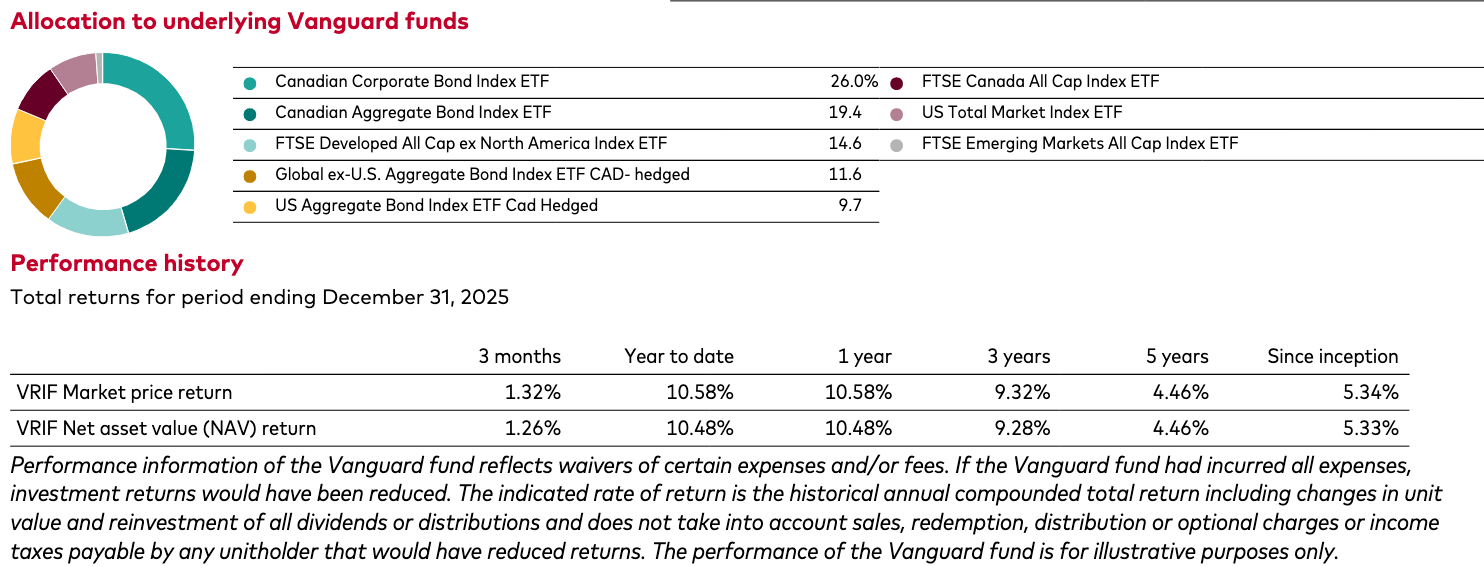
The screenshot below from Vanguard’s brochure shows VRIF’s holdings of Vanguard ETFs and performance to the end of 2025.
I first started a position in VRIF soon after its launch in 2020. At the time, its Asset Allocation seemed to be around 50% stocks to 50% bonds, spread around all geographies in the normal proportions.
However, as 2025 proceeded I noticed that VRIF had begun steadily to cut back on its equity exposure and raise its Fixed Income, almost to the point of 30/70. I’ve also noticed various YouTube videos from Vanguard’s U.S. parent that suggest similar caution: a cutting back from the big US growth mega cap stocks and a move more to other developed and emerging economies around the world.
If you read the VRIF launch news release, it emphasizes the objective is to provide income-seeking investors with a “targeted 4% annual payout.” That happens to be in line with William Bengen’s famous 4% Rule, which is “fine with me,” as I quipped at the media briefing.
In response to my query, Vanguard Canada spokesman Matthew Gierasimczuk said VRIF’s asset allocation varies over time” but the goal is the targeted 4% Return: Vanguard sees a “more optimistic outlook on bonds and Fixed Income: better to lock in without risk of equities.”
Kevin Khang, Vanguard
Then Kevin Khang, Vanguard’s head of global economic research [pictured left] reiterated that the ETF seeks to fund a “certain level of payout: bonds in our view can achieve the desired certain level of payout” and “the US stock market is pretty expensive for obvious reasons: the US is reasonably valued and bonds are very normally valued; which is a new thing.” From 2009 to 2022, since the Great Financial Crisis, bonds in general didn’t pay much, which upset people in 2022-223 when rates went up but now they are reasonably valued: relative to inflation they are paying a decent Real Return.”
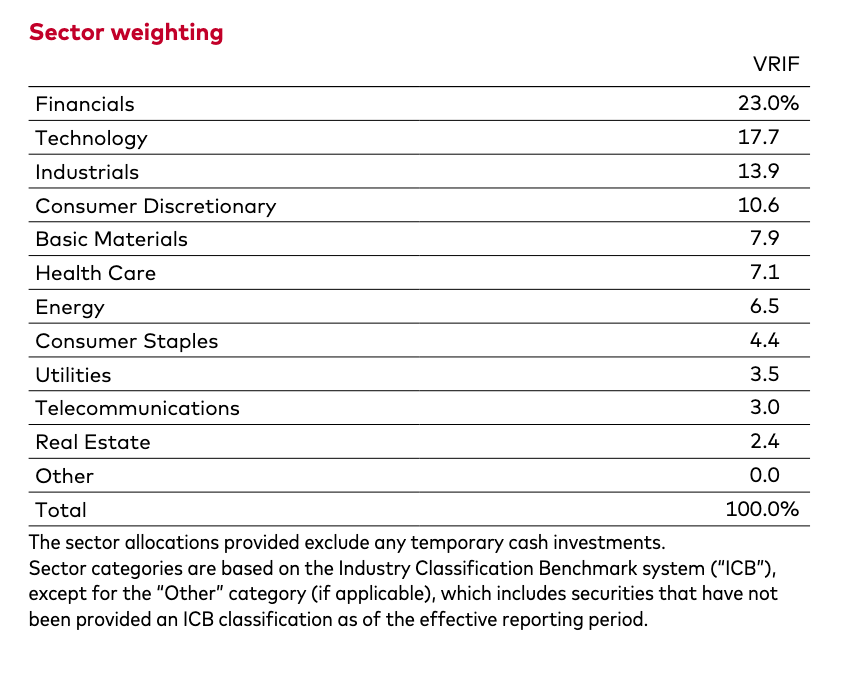
Here’s the sector weightings for VRIF at the end of 2025:
Vanguard rates its volatility as “low.” Notice the weightings of certain sectors often overweighted in pure low-volatility ETFs (like those from BMO and Harvest): Health Care, Consumer Staples and Utilities. As you can see above, the weightings in more volatile sectors like Technology and Financials is much higher.
For the MoneySense column I was subsequently referred to Head of Product for Vanguard Canada, Aime Bwakira. The rationale for VRIF’s high fixed-income exposure appears to be one of not taking more risk than you need to take, a stance which is apt for the retirees VRIF caters to. Bwakira confirmed Vanguard “has been leaning more heavily toward bonds — particularly higher quality and corporate bonds — than in past years while staying within its equity guardrails” of a minimum 30% and maximum 60%. This positioning “reflects the current environment and the results of our capital markets projections.”
3 reasons Vanguard is boosting Fixed Income in VRIF
The rationale is three-fold:
First is higher interest rates. Bonds — especially corporate bonds — are paying more than they did for many years post the 20008 Great Financial Crisis (GFC): “This makes them well‑suited to support VRIF’s 4% income target without taking on unnecessary stock-market risk. VRIF includes corporate bond exposure specifically to help enhance yield for investors.
Second, given today’s market outlook, the fund’s model has shifted toward fixed income because bonds “currently provide a more favourable balance of expected return and risk.” I was also referred to Vanguard’s current VCMM 10-year projections (VCMM = Vanguard Capital Markets Model) for various asset classes. It’s also published in the US for US investors Vanguard Capital Markets Model® forecasts | Vanguard.
Dated January 22, 2026, the document states that “Even at current stretched valuations, rising earnings growth could provide momentum for stocks in the near term. However, our conviction is growing stronger that long-term prospects for U.S. equities are subdued. Our model anticipates annualized returns of about 3.9% to 5.9% over the next 10 years.” It adds that “Our muted long-term return projection for U.S. equities is entirely consistent with our more bullish prospects for an AI-led U.S. economic boom.”
The third and most important point raised by Bwakira is that “a higher allocation to bonds helps VRIF deliver reliable cash flows, which is central to its mandate. Because income needs don’t disappear during market volatility, VRIF prioritizes stability and sustainability in its payout. VRIF aims to maintain the value of an investor’s initial investment over the long term. Tilting toward bonds during periods of elevated equity market uncertainty helps protect investors from large drawdowns while still supporting the payout.”
VRIF is one popular source of Retiree income at the new Retirement Club
This common-sense caution has not gone unnoticed by Canadian retirees seeking stable income. VRIF is a well-regarded ETF members of the Retirement Club, founded by Cutthecrapinvesting blogger Dale Roberts and partner Brent Schmidt. One of the club’s monthly Zoom presentations in the autumn of 2025 highlighted VRIF among several other income sources for retirees. Roberts has long championed VRIF, as in this blog on his site originally written after the launch, and subsequently updated: most recently in this version. Continue Reading…


 Posted By
  On Tuesday, I attended the Toronto instalment of BMO ETFs’ Spring Road Tour, the first of a 10-city Canadian tour that extends into early May.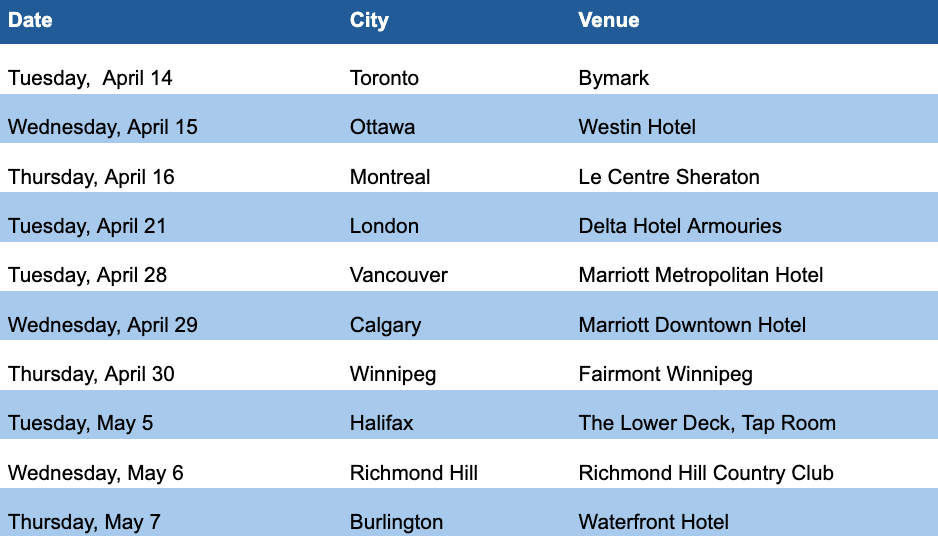

 Rai’s “big takeaway” is that while Commodities are the “source of the shock,” they also “benefit from supply constraints, fiscal demand and de-globalization.”