This will be a VERY short blog; nonetheless if you take the two resolutions seriously, you might well transform both your Wealth and Health. As Sandy Cardy wrote in a Hub blog, last week, Health IS true Wealth.
Resolution 1: Health
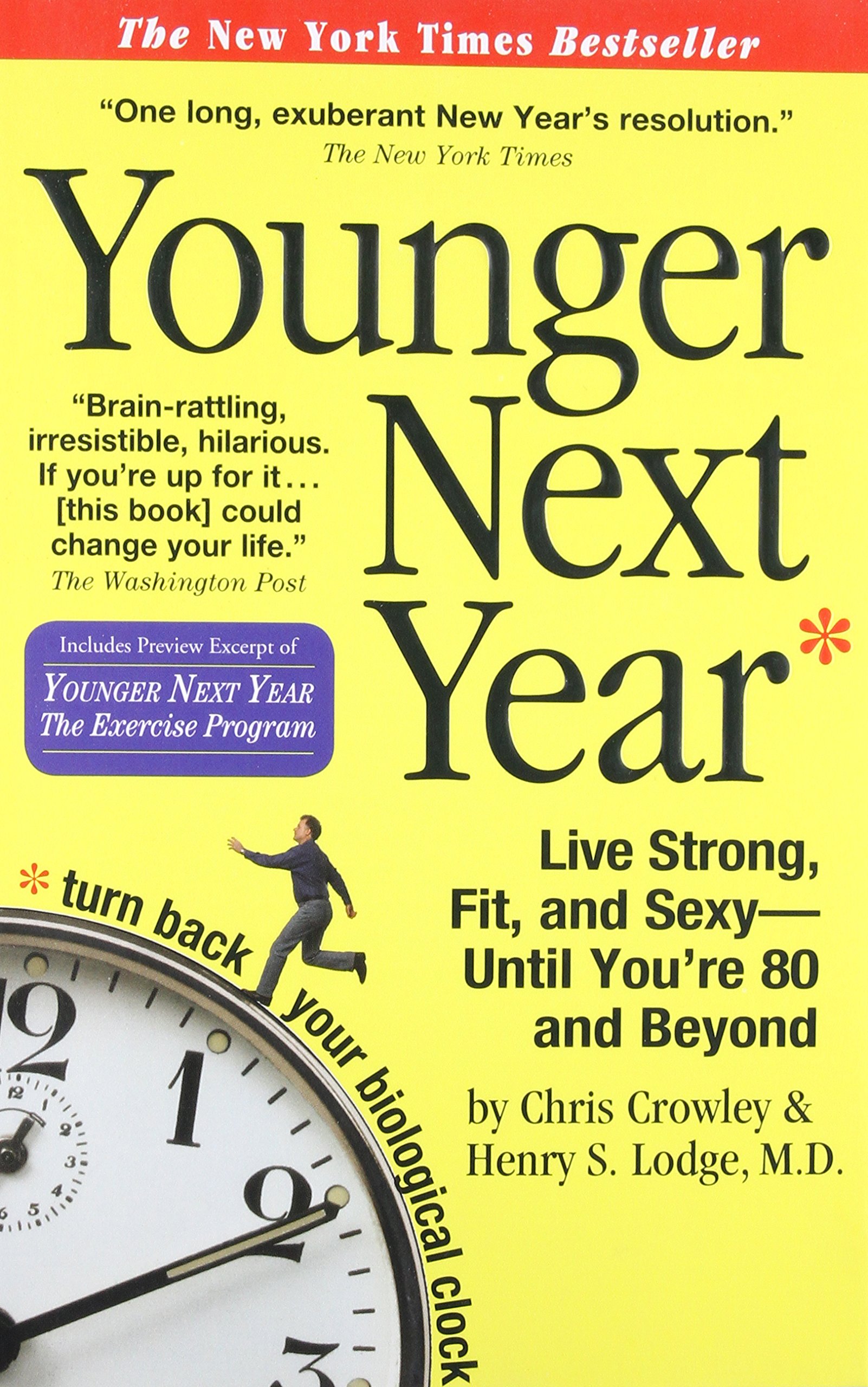
If I haven’t done it already, I will embark on a lifelong program to improve my nutrition and exercise daily, along the lines of the last Hub blog of 2017: Younger Next Year.
Resolution 2: Wealth
As of January 1st (if I have an online discount brokerage account, otherwise January 2nd or later this week), I will top up my Tax-free Savings Account (TFSA) by a further $5,500: the “new” TFSA contribution room that all adult Canadians qualify for as of the new year. This resolution applies to everyone from age 18 to seniors: especially to seniors and those in semi-retirement or approaching full retirement. The Hub’s second last blog of the year explains why: Retired Money — How TFSAs can give seniors more tax-free retirement funds.
That’s it: one short blog, two simple resolutions; yet with the potential to transform almost all aspects of your existence. So to all who read or contribute to the Hub, a very happy, healthy and wealthy new year. See you in 2018!
P.S. New Younger This New Year 2018 Facebook Group
I’d like to spread the word that this weekend’s Younger Next Year blog triggered via Twitter the creation of a new Facebook group called Younger Next Year – 2018. I believe I am member #5: thanks to Vicki Peuckert Cook for taking the initiative to create this. As with the Hub, the group consists (at least initially) of both American and Canadians. Hope to see you there!
The authors are a vibrant 70-year old (at the time of writing) and ex New York litigator Chris Crowley and his personal physician (25 years his junior), named Henry Lodge (Harry in most of the text; I should clarify that this is the late Henry Lodge, since he passed await at age 58 early in 2017 of prostate cancer. Ironic.)
The subtitle says it all: Live Strong, Fit and Sexy — Until You’re 80 and Beyond. I’m grateful to one of my sources — Hub contributor Doug Dahmer of Emeritus Retirement Strategies — both for twigging me to the book’s existence and to supplying me a copy. (He appears to have laid in a good stash of the book).
Take control of your Longevity
And for good reason. The book is all about taking control of your personal longevity, chiefly through proper nutrition but first and foremost by engaging in daily exercise: aerobic activity at least four days a week and weight training for another two days a week. Week in and week out, for the rest of your life. And the payoff is what is promised in the subtitle.
Apart from daily exercise and “Quit eating crap” (to use the authors’ phrase, one of Harry’s 7 Rules reproduced below) the authors urge readers to “Connect and Commit,” which means staying engaged even after formal retirement. In fact, as we argue in our own book Victory Lap Retirement, there’s a case to be made for never entirely retiring. Leaving the corporate workplace, probably, but semi-retirement and self-employment from home are certainly viable alternatives.
While Younger Next Year only touches on retirement finances, it certainly reinforces the main theme of this web site (FindependenceHub.com). It’s encapsulated in Harry’s 4th Rule: Spend Less Than You Make.
Harry’s Rules
I can see at this point that it’s best to simply list Harry’s 7 Rules, which formally appear in the book’s appendix (page 305 of my copy): Continue Reading…
This site has always been a strong proponent of Tax-free Savings Accounts (TFSAs) for young people. Starting at age 18, TFSAs are great vehicles for accumulating short-term savings for goals like saving a down payment for a home, buying a new car, or even going on to post-graduate studies or starting a business. And unlike RRSPs, the $5500 annual contribution room for TFSAs does not require having earned income the previous year. So as of next week, with the arrival of 2018, it’s highly advisable to add another $5,500 to your TFSAs. But not just if you’re young!
The MoneySense column makes the point that TFSAs are equally desirable for seniors in retirement, or for those in semi-retirement who are preparing for full retirement.
Why? First, unlike the RRIFs that many RRSPs become, and which generate taxable income, TFSAs generate no taxable income: neither on the withdrawals nor the investment income (whether dividends, capital gains or interest). In addition, TFSAs do not trigger clawbacks of means-tested government retirement income programs like Old Age Security or the Guaranteed Income Supplement.
But there’s another big benefit TFSAs confer on seniors and retirees: ongoing tax-sheltering of investment income well beyond age 71. In contrast, you can no longer contribute to RRSPs after the year you turn 71 and cannot contribute new money to RRIFs: they’re strictly vehicles that shelter what you’ve got until the next forced annual withdrawal limit, which escalates over time from 5.28% at 71 to 20% a year once you reach 95.
Unlike RRSPs and RRIFs, seniors can continue to add to their TFSAs each and every year even after age 71. Even if you live past 100, as my friend Meta has (and who, as the column relates, continues to use the TFSA herself!)
Two ways seniors can get money for TFSAs without having to find “new” money
“The more bells and whistles, the lower the monthly income,” from annuities, says Caring for Clients’ Rona Birenbaum,
My latest MoneySense Retired Money column looks at the case for laddering annuities in order to avoid the problem of committing funds to annuities at interest rates that are only now coming off their historic lows. You can retrieve the whole article by clicking on the highlighted text: A low-risky annuity strategy to beef up your retirement cash flow.
Many investors are already acquainted with the concept of “laddering” guaranteed investment certificates (GICs), or bonds with different maturities. Maturity dates are staggered over (typically) one to five years, so each year some money comes due and can be reinvested at prevailing interest rates. This minimizes the likelihood of investing the whole amount at what may turn out to be rock-bottom interest rates, only to watch helplessly as rates steadily rise over time.
The same applies when it comes time for retirees or near-retirees to annuitize. At the end
of the year you turn 71 you must decide whether to convert your RRSP into a RRIF,
cash out and pay tax (few do this), or thirdly to annuitize.
Fortunately, annuitization isn’t an all-or-nothing decision. You can convert some of your RRSP to a RRIF and some to a registered annuity. You can take a leaf from the GIC laddering
concept and buy annuities gradually over five, ten or even more years. As regular Hub contributor Patrick McKeough observes in the piece, laddering annuities can reduce the potential downside: “You could buy one annuity a year for the next five years. That way, your returns will increase if interest rates rise, as is likely.”
Tally up how many annuities you may already have
Mind you, few observers believe in converting ALL your disposable funds into annuities. After all, as another Hub contributor — Adrian Mastracci — notes, you need to take inventory of the annuity-like vehicles you already may have, or expect to have: such as employer-sponsored Defined Benefits, CPP or OAS. Some investors may have a high component of annuity-like income without realizing it, and many families may already have five or six such sources of annuity-like income.
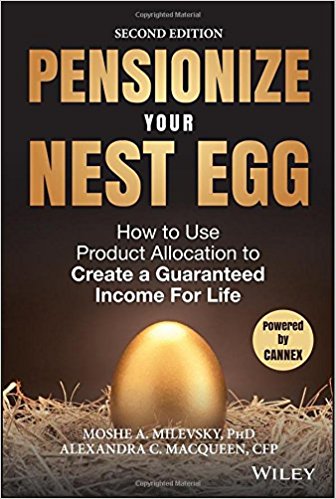
Certainly you need to consider both the benefits and drawbacks of annuities. The main benefit is they are a form of longevity insurance: making sure you never outlive your money no matter how long you live. There’s a case for having enough annuities that your basic “survival expenses” (shelter, food, heat, transport etc.) are taken care of no matter what. Finance professor Moshe Milevsky is also quoted in the article to the effect there are compelling financial and psychological reason to at least partly convert to annuities. And Milevsky is famous for making a distinction between “REAL” pensions (like DB pensions) that behave like annuities, as opposed to vehicles like RRSPs and TFSAs, which provide capital that only have the potential to be annuitized. Hence the title of Milevksy’s excellent book, Pensionize Your Nest Egg.
But annuities are not perfect. Apart from the common reluctance to commit to buying annuities at today’s still-low interest rates, there’s also the matter of the irreversible nature of the decision to convert some capital to an annuity. You’re handing over a large chunk of change to an insurance company and should you die earlier than expected, they in effect “win,” to the partial detriment of your estate. If on the other hand you live to 120, then YOU “win.”
My latest column in Wednesday’s Globe & Mail looks at a strategy called “Topping up to Bracket,” which can be useful to anyone who is temporarily in a lower tax bracket.
Click on the highlighted headline to access the online version, assuming you have Globe subscriber privileges or haven’t exceeded the monthly free click quota: A strong tax case for early RRSP withdrawals.
When might you be “temporarily” in a lower tax bracket than usual? This can of course happen when you lose a job or if you’re in your Sixties and transitioning between full employment (typically earning in higher tax brackets) and Semi-Retirement, when it’s tempting to “bask” in lower tax brackets.
Temporary because as Semi-Retirement progresses, you can end up moving back into higher tax brackets: for example, if you start to receive Old Age Security (OAS) at 65, then take Canada Pension Plan (CPP) a few years later, these are both taxable sources of income.
And the big hit can come at the end of the year you turn 71, when RRSPs must be converted to Registered Retirement Income Funds (RRIFs) or else annualized or cashed out. RRIFs entail forced annual withdrawal rates that keep rising between your 70s and your mid 90s.
So that makes “Topping up to Bracket” (a term used in a BMO Wealth Institute paper on the topic, published around 2013) a strategy not to be ignored. In practice it means making sure that in those low-earning years you at least bring into your hands each and every year the roughly $12,000 of untaxed earnings that’s called the Basic Personal Amount (BPA). And as the G&M column explains, it’s also a good idea to at least bring in the dollars that are in the lowest tax bracket (15% federally, 5% in Ontario), or roughly $42,000. There are of course higher tax brackets above that but the law of diminishing returns starts to kick in beyond the $42,000.
Note too that this is a “use it or lose it” proposition. If for example a year went by that you failed even to bring in even that $12,000 income that would not have been taxed, you can’t carry forward the opportunity to benefit from it the following year. You will of course have another opportunity for the BPA that year but it won’t double up because you neglected to earn low- or non-taxed income the previous year. Continue Reading…


 Posted By
  This will be a VERY short blog; nonetheless if you take the two resolutions seriously, you might well transform both your Wealth and Health. As Sandy Cardy wrote in a Hub blog, last week, Health IS true Wealth.