

 Posted By
  On Tuesday, I attended the Toronto instalment of BMO ETFs’ Spring Road Tour, the first of a 10-city Canadian tour that extends into early May.
The title is We’ve got you covered, which is a sly allusion to one of the main themes of the series: Covered Call ETFs.
Aimed primarily at financial advisors, the sessions are roughly an hour long, coinciding either with breakfast or lunch, depending on the city. There are three main segments:
- Bipan Rai, Head of ETFs & Alternatives Strategy, provides insights into BMO’s current macroeconomic outlook, including positioning across asset classes and risk models
- Jimmy Xu, Head, Liquid Alts and Non linear ETFs, manager of BMO’s flagship Covered Call ETFs, discusss these innovative solutions designed to help clients meet their cash flow needs while maximizing long term growth.
- The road show ends with an introduction to BMO’s new Portfolio Consulting Services, designed to help advisors navigate an increasingly complex investment landscape. Senior Portfolio Consultant, Hilly Cutler shares how BMO supports advisors in optimizing their model portfolios—reducing costs, enhancing diversification, and managing risk as CRM3 approaches.
As the chart below summarizes, the road shows ends in Burlington on May 7th:
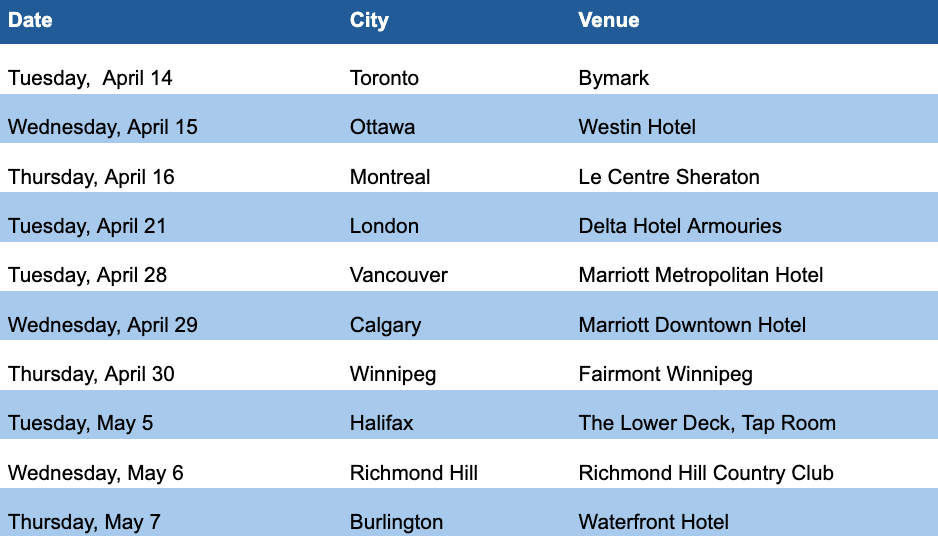
Except the Toronto event, which was a breakfast session, the other sessions all begin at either 12 pm or 1 pm. Below we reproduce some of the slides presented at the show.
Current Market outlook and Positioning by Bipan Rai

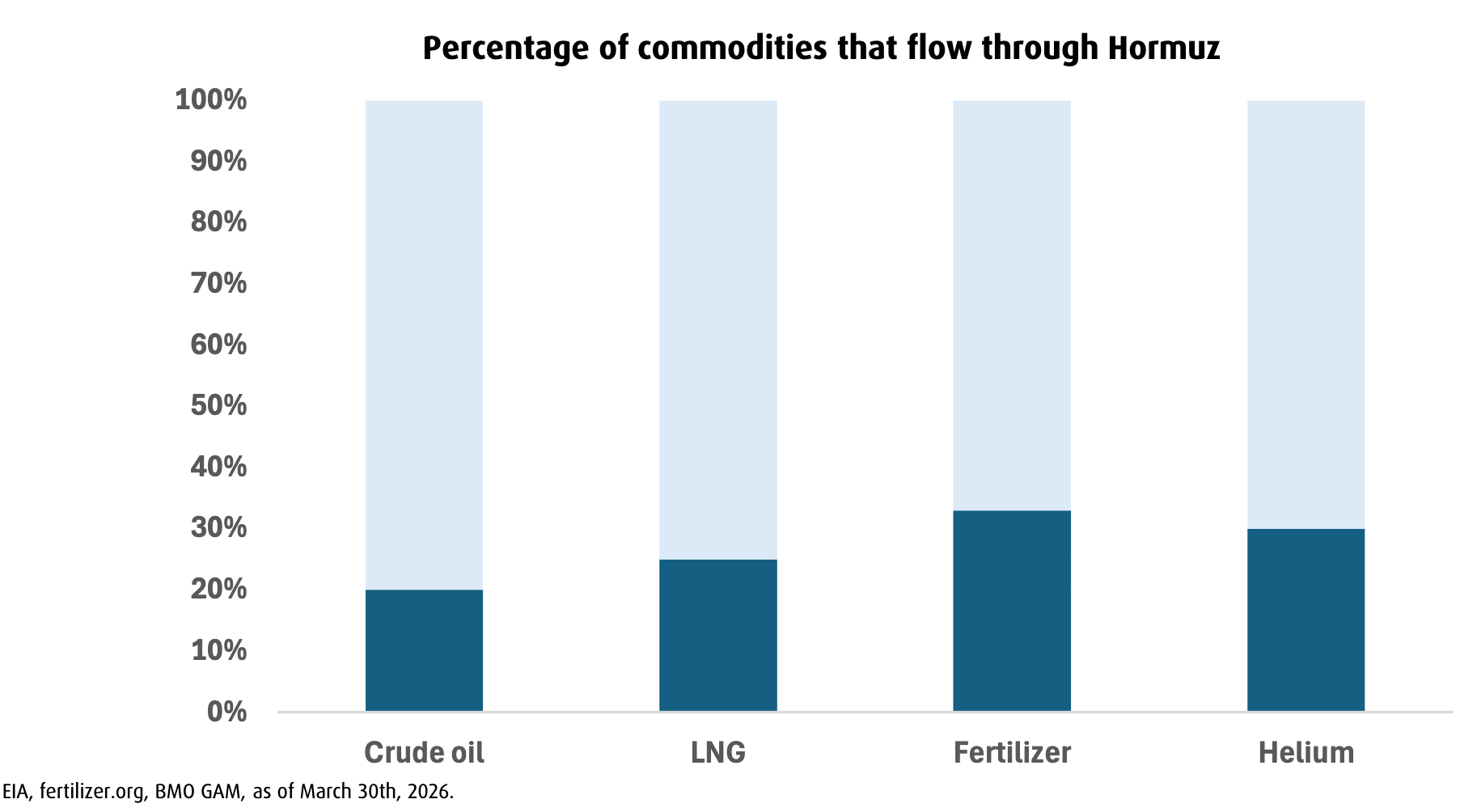
The sessions kick off with a current market outlook delivered by Bipan Rai, who focused on the impacts of the ongoing Iran war, which began at the end of February. He confessed to having a few sleepless nights about the closing of the Hormuz Strait. Not surprisingly most investors suffered negative returns in both stocks and bonds during March. Hormuz matters for the macroeconomic picture, not just because of oil, but also because of Liquid Natural Gas, fertilizers and Helium: the latter helps cool AI systems. (shown below).
Rai also showed the following two charts, which illustrate how the Consumer Price Index changes the longer the price of oil stays higher. The longer the Strait is closed or traffic severely constrained, the more it will create inflation and create risks to economic growth.
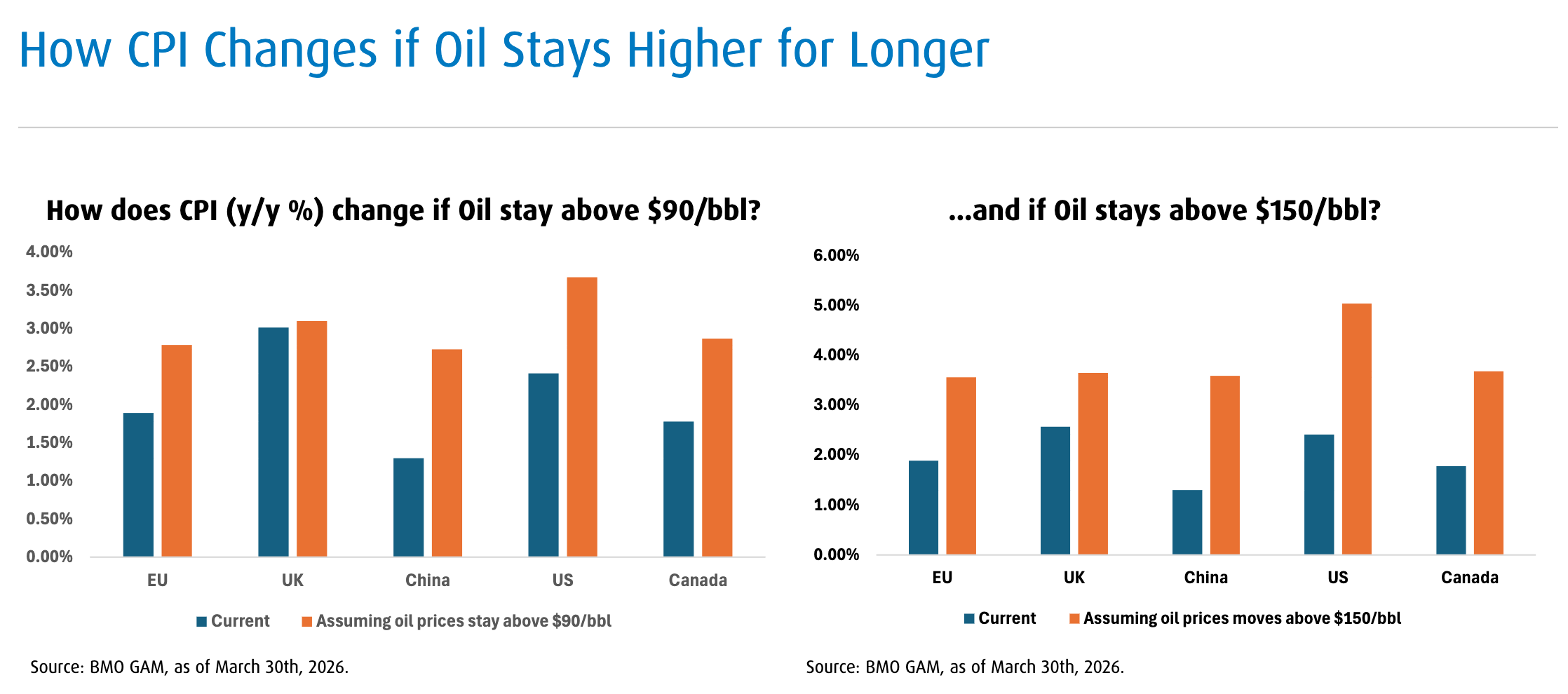
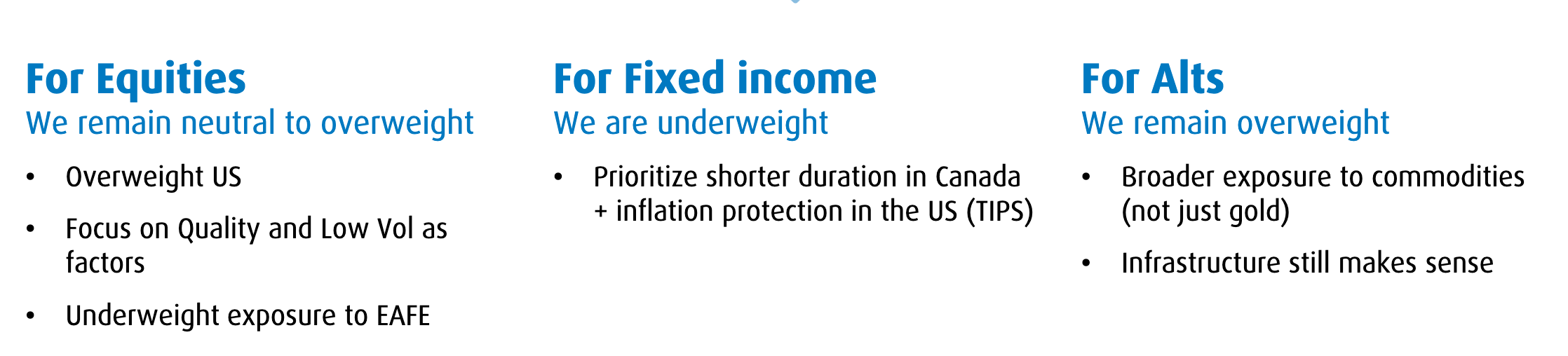
If the price of Oil does stay higher for longer, Rai commented that investors may want to take a more defensive tilt to equities, emphasize quality and low volatility as factors, diversify with Treasury Inflation Protected Securities and embrace broad commodities. BMO has of course ETFs for all of these: such as ZTIP (BMO Short-term US TIPS Index ETF) or the new ZCOM for broad commodity exposure.
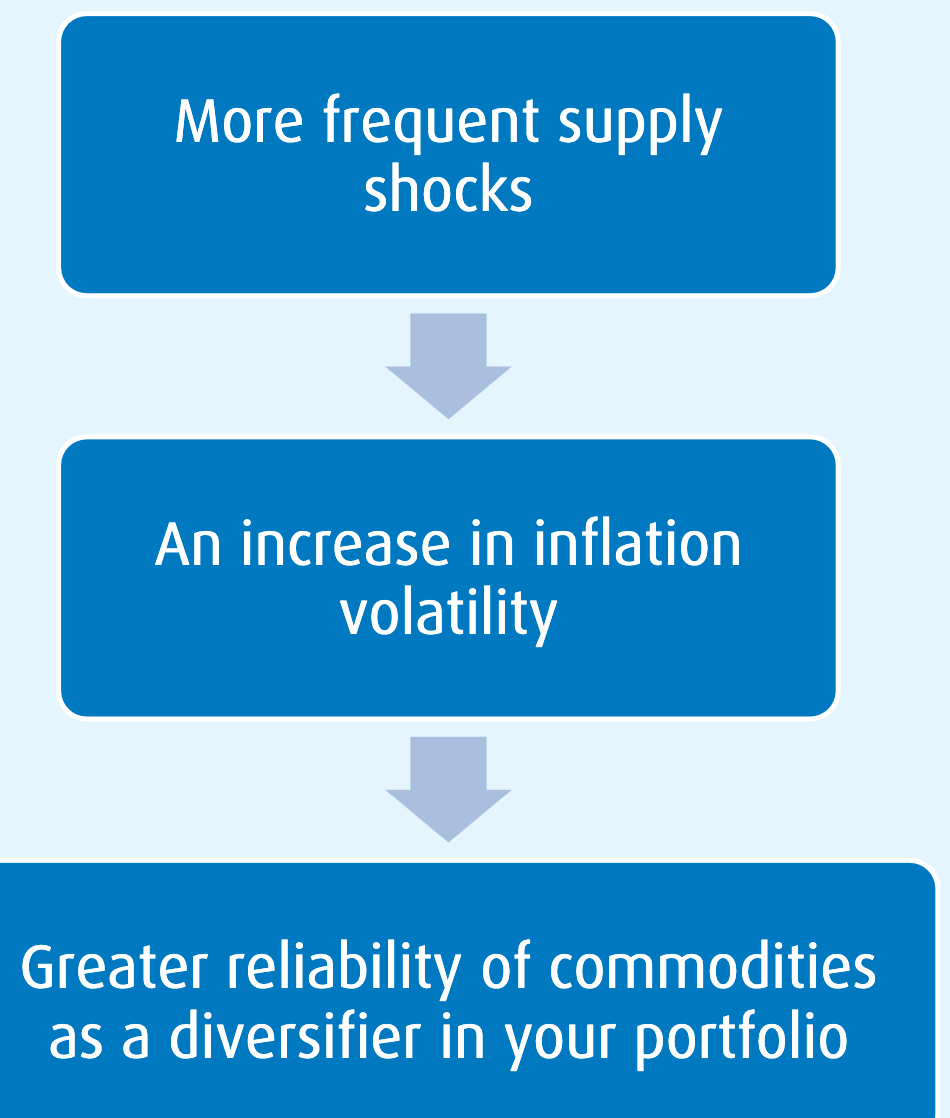 Rai’s “big takeaway” is that while Commodities are the “source of the shock,” they also “benefit from supply constraints, fiscal demand and de-globalization.”
Knowing that Inflation risks are “to the upside” and “growth risks are to the downside” Rai concludes that “We are most likely migrating from a ‘reflation’ to ‘mild stagflation.’ ”
He says we are likely in a transition from Strong Growth and High Inflation to Slower Growth and High Inflation, while North American banks are “likely to keep rates on hold.”
As a result, as shown below, BMO is neutral to overweight Equities, underweight Fixed Income, and overweight Alternatives:
Jimmy Xu on the Benefits of Covered Call ETFs

The second talk is by Jimmy Xu, Head of Liquid Alts and Non linear ETFs. His focus was on Covered Call ETFs, which BMO has pioneered in the Canadian market. While investors often buy covered call ETFs just for yield, yield is not the most important consideration, Xu said. “Chasing yield is the quickest way to have unstable income, capital erosion and unhappy clients.”
Instead, Xu urges investors and their advisors to shift the conversation from headline yields to a Total Return focus that determines how much can be paid out and for how long. That in turn comes down to process and people, both of which BMO appears to have in spades. The charts below are from his presentation:
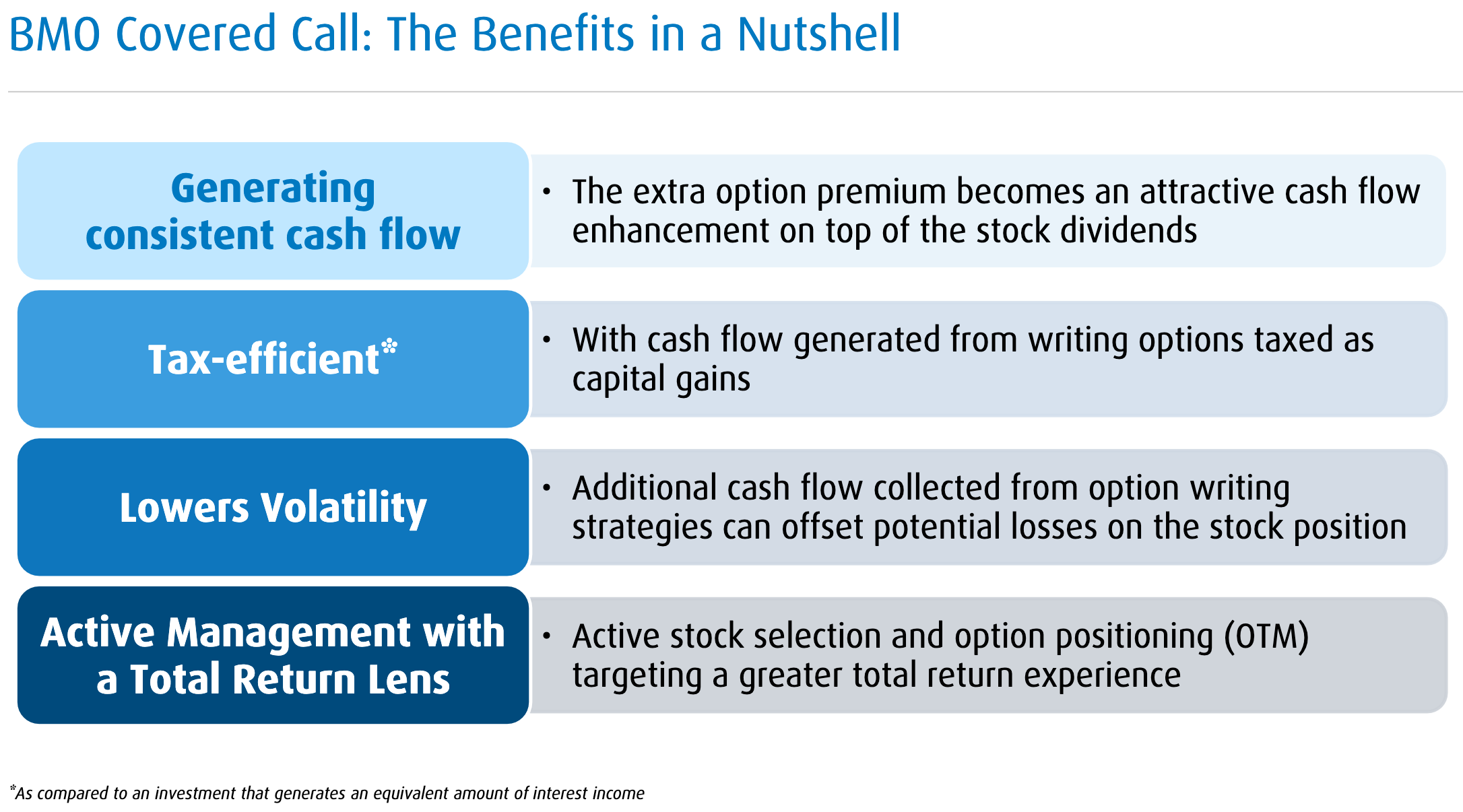
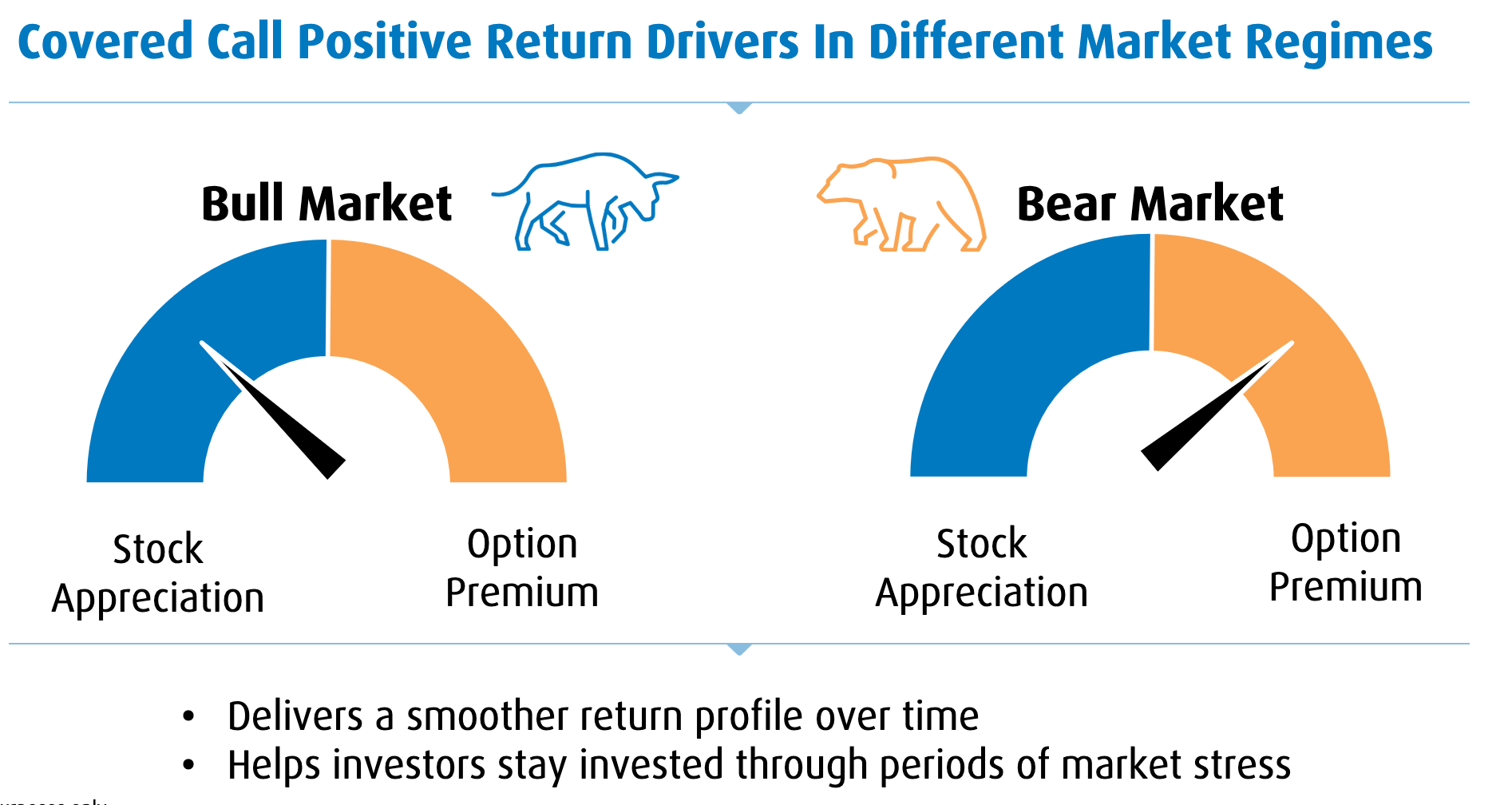
Covered Call funds generate option premiums that are taxed as capital gains. But in a strong bull market, the option premium is only part of the equation. You have to consider dividends, the option premium and net stock/option appreciation. Covered call managers have to balance the option premium and net stock appreciation in different markets.
 Covered call managers have more to work with in high-volatility sectors like energy or technology, when they don’t need to sell as many call options to generate premiums. For lower-volatility sectors like Canadian banks and utilities, the coverage ratio may be around 35%, but for health care, tech and higher volatility energy sectors, the covered call position maybe closer to 50%.
“Hire-a-CFA.”
The third and last component of the Road Show is a review of BMO’s Portfolio Consulting Services (PCS), which aims to blend rigorous model analysis with personalized consultations to empower Advisors. Hilly Cutler, Director of Portfolio Consulting, described this as the “Hire-a-Goalie” advantage, or in the case of PCS a complimentary “Hire-a-CFA.” This was fully described in a four-page flyer distributed at the event.
 Also look for a special BMO-sponsored ETF Issue in the April 2026 edition of Canadian Money Saver.
Here is the link to the full issue.
